Loading page, please wait…
ITBP Raising Day 2024 - UPSC Defence And Security
What is ITBP Raising Day 2024 in UPSC Defence And Security?
ITBP Raising Day 2024 is a key topic under Defence And Security for UPSC Civil Services Examination. Key points include: ITBP is a Central Armed Police Force (CAPF) under MHA, raised on 24th October, 1962, during the India-China War.. Specializes in high-altitude operations and guards the 3,488 km India-China border from Karakoram Pass to Jachep La.. Motto: “Shaurya-Dridhata-Karma Nishtha” (Valour, Steadfastness, Commitment to Duty).. Understanding this topic is essential for both UPSC Prelims and Mains preparation.
Why is ITBP Raising Day 2024 important for UPSC exam?
ITBP Raising Day 2024 is a Medium-level topic in UPSC Defence And Security. It is tested in both Prelims (factual MCQs) and Mains (analytical answer writing). Previous year UPSC questions have frequently covered aspects of ITBP Raising Day 2024, making it essential for comprehensive IAS preparation.
How to prepare ITBP Raising Day 2024 for UPSC?
To prepare ITBP Raising Day 2024 for UPSC: (1) Study the comprehensive notes covering all key concepts on Vaidra. (2) Practice previous year questions on this topic. (3) Connect it with current affairs using daily updates. (4) Revise using key takeaways and mind maps available for Defence And Security. (5) Write practice answers linking ITBP Raising Day 2024 to related GS Paper topics.
Key takeaways of ITBP Raising Day 2024 for UPSC
- ITBP is a Central Armed Police Force (CAPF) under MHA, raised on 24th October, 1962, during the India-China War.
- Specializes in high-altitude operations and guards the 3,488 km India-China border from Karakoram Pass to Jachep La.
- Motto: “Shaurya-Dridhata-Karma Nishtha” (Valour, Steadfastness, Commitment to Duty).
- Serves as 'First Responders' for natural calamities in the Himalayan region.
- Its mandate expanded in 2004 under the 'One Border One Force' policy, taking over from Assam Rifles in Sikkim and Arunachal Pradesh.
ITBP Raising Day 2024
Medium⏱️ 6 min read
defence and security
📖 Introduction
Introduction to ITBP Raising Day
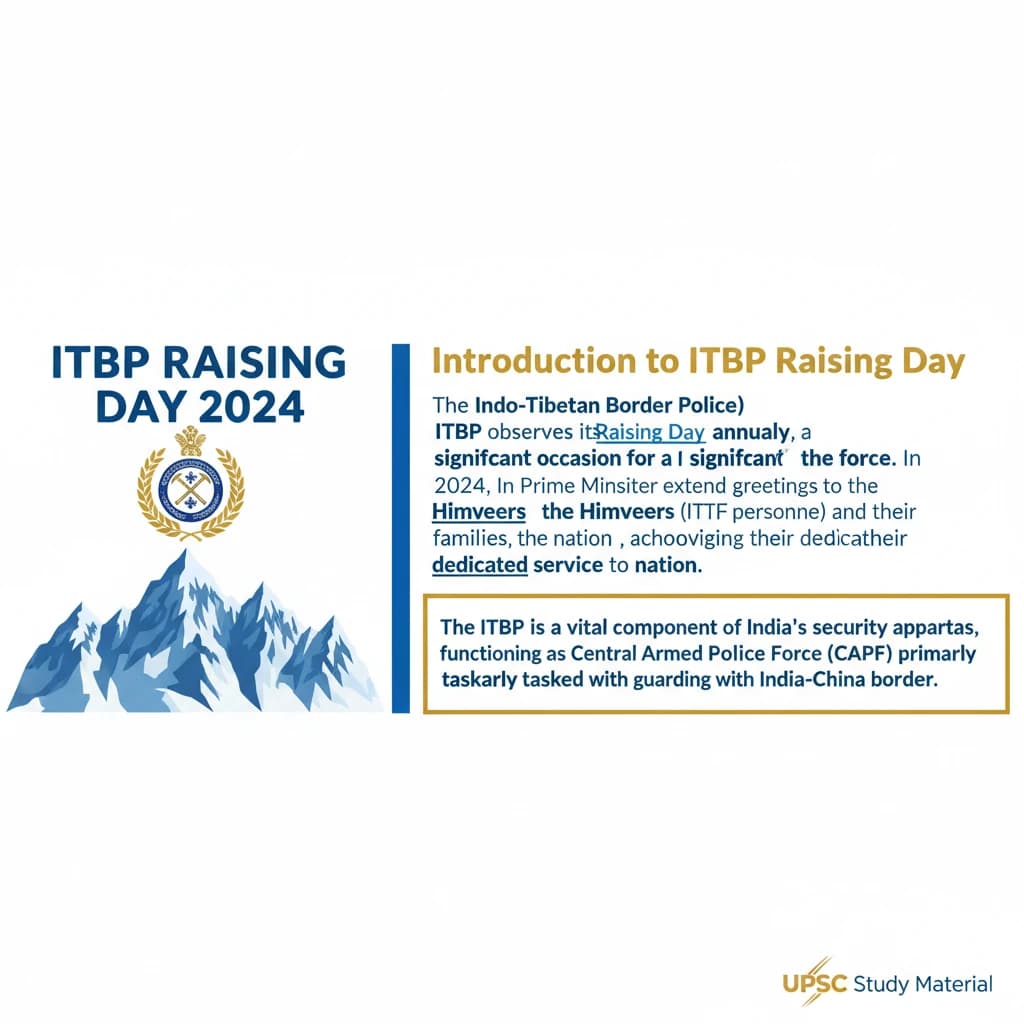
The Indo-Tibetan Border Police (ITBP) observes its Raising Day annually, a significant occasion for the force. In 2024, the Prime Minister extended greetings to the Himveers (ITBP personnel) and their families, acknowledging their dedicated service to the nation.
The ITBP is a vital component of India's security apparatus, functioning as a Central Armed Police Force (CAPF). It operates directly under the administrative control of the Ministry of Home Affairs (MHA).
Establishment and Core Role
The ITBP was established on 24th October, 1962, a critical period during the India-China War. Its primary mandate from inception has been to serve as a specialized border guarding police force.
The force is renowned for its exceptional expertise in high altitude operations. Its personnel are trained to endure and operate effectively in some of the world's most challenging mountainous terrains.
Geographical Mandate and Expansion
A significant expansion of the ITBP's operational area occurred in 2004. This was a direct result of the central government's “One Border One Force” recommendation, aimed at streamlining border management.
Under this policy, the ITBP was assigned the responsibility for guarding the entire 3,488 km India-China border. This vast stretch extends from the Karakoram Pass in Ladakh to Jachep La in Arunachal Pradesh.
Following this directive, the ITBP assumed border guarding duties from the Assam Rifles in the sensitive regions of Sikkim and Arunachal Pradesh, consolidating its presence along the northern frontier.
Current Deployment and Motto
Presently, the ITBP is strategically deployed across several Indian states and union territories. These include Jammu & Kashmir, Himachal Pradesh, Uttarakhand, Sikkim, and Arunachal Pradesh.
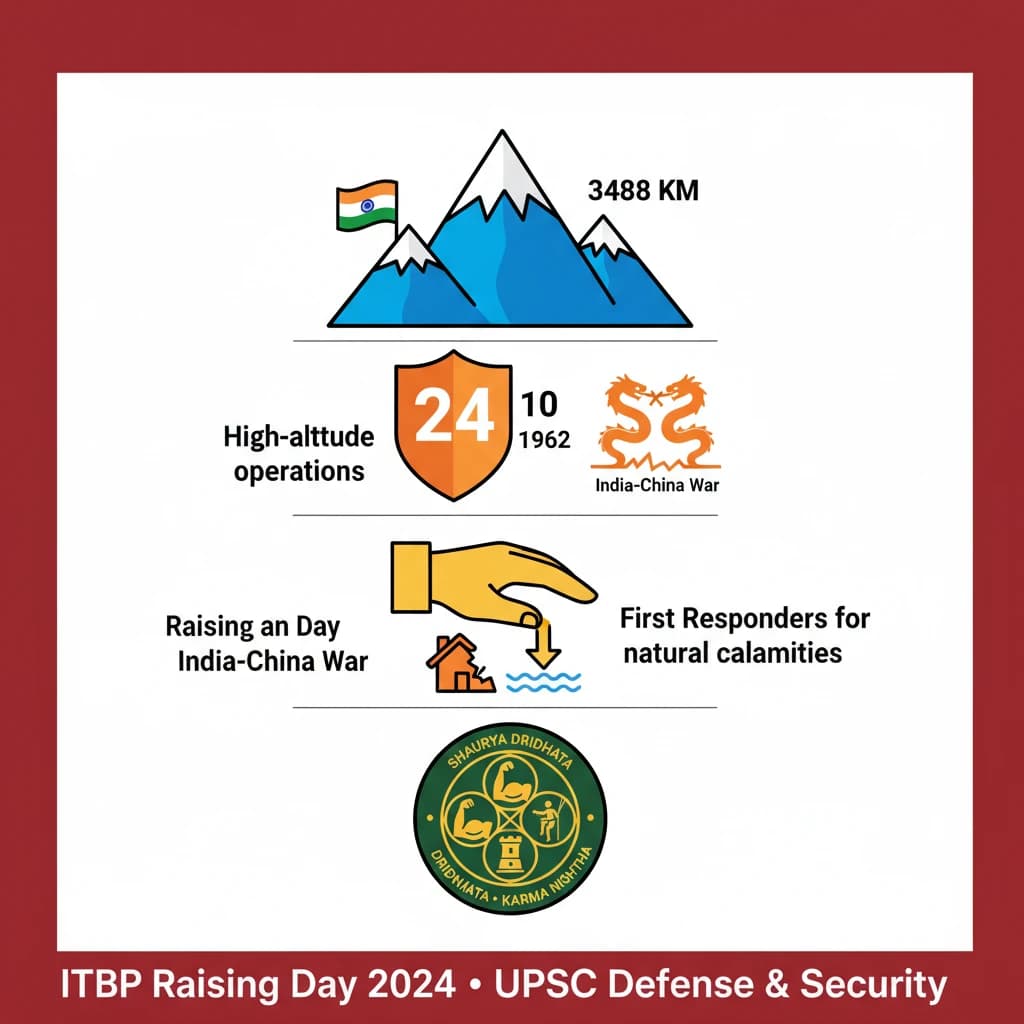
The inspiring motto of the ITBP is “Shaurya-Dridhata-Karma Nishtha”. This translates to Valour, Steadfastness, and Commitment to Duty, encapsulating the spirit of the force.
Additional Responsibilities: Disaster Response
Beyond its primary border guarding role, the ITBP also plays a crucial part in humanitarian efforts. It frequently conducts relief and rescue operations, especially in the challenging Himalayan region.
The force is often among the ‘First Responders’ during natural calamities such as earthquakes, landslides, and flash floods in these mountainous areas, providing vital assistance to affected communities.
UPSC Insight: Understanding the dual role of CAPFs like ITBP (border guarding and disaster management) is crucial for GS Paper III (Internal Security & Disaster Management). Note the specific regions of deployment and the historical context of its raising.
💡 Key Takeaways
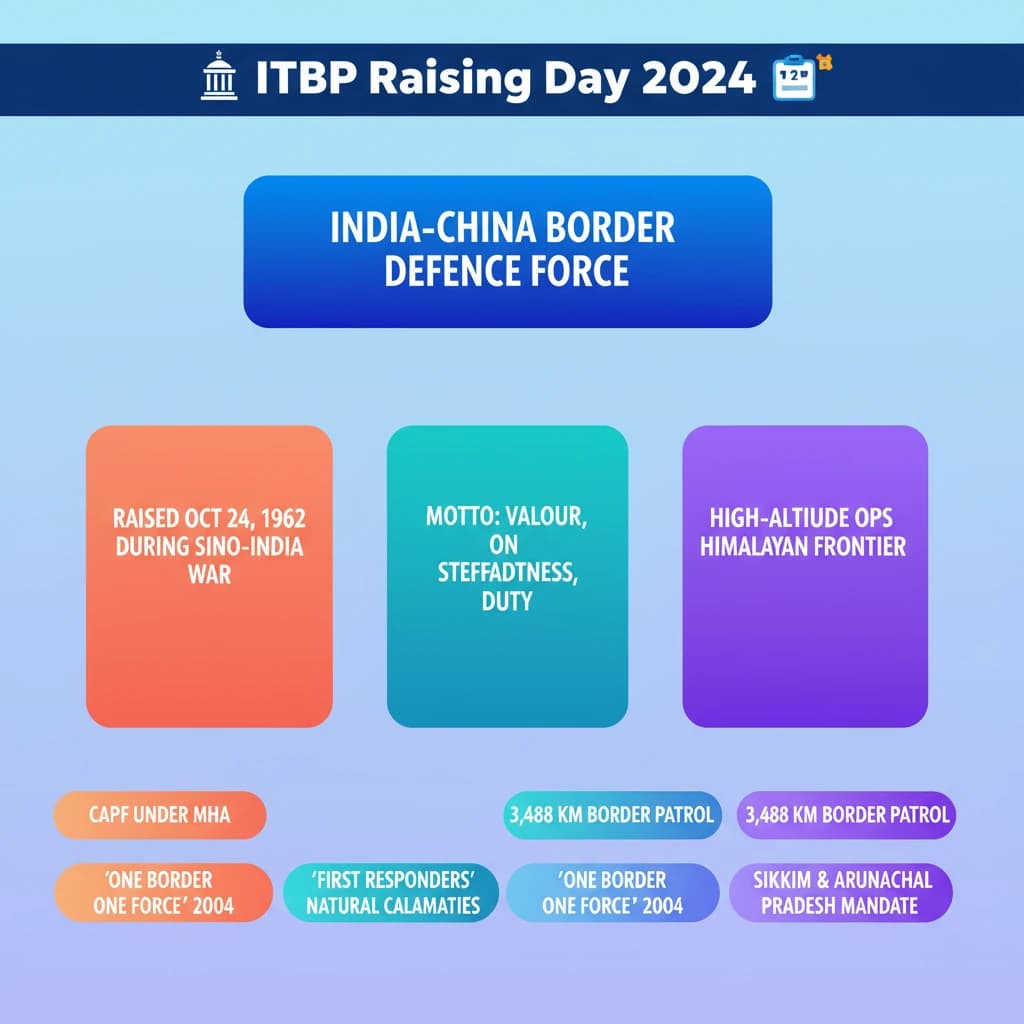
- •ITBP is a Central Armed Police Force (CAPF) under MHA, raised on 24th October, 1962, during the India-China War.
- •Specializes in high-altitude operations and guards the 3,488 km India-China border from Karakoram Pass to Jachep La.
- •Motto: “Shaurya-Dridhata-Karma Nishtha” (Valour, Steadfastness, Commitment to Duty).
- •Serves as 'First Responders' for natural calamities in the Himalayan region.
- •Its mandate expanded in 2004 under the 'One Border One Force' policy, taking over from Assam Rifles in Sikkim and Arunachal Pradesh.
🧠 Memory Techniques
98% Verified Content
📚 Reference Sources
•Ministry of Home Affairs (MHA) official documents on CAPFs
•Indo-Tibetan Border Police (ITBP) official website