Loading page, please wait…
National Flag of India: History, Design, and Significance - UPSC Defence And Security
What is National Flag of India: History, Design, and Significance in UPSC Defence And Security?
National Flag of India: History, Design, and Significance is a key topic under Defence And Security for UPSC Civil Services Examination. Key points include: The National Flag design is largely attributed to Pingali Venkayya.. The first unofficial national flag was hoisted on 7th August 1906 in Kolkata.. The flag is rectangular with a length-to-width ratio of 3:2.. Understanding this topic is essential for both UPSC Prelims and Mains preparation.
Why is National Flag of India: History, Design, and Significance important for UPSC exam?
National Flag of India: History, Design, and Significance is a Easy-level topic in UPSC Defence And Security. It is tested in both Prelims (factual MCQs) and Mains (analytical answer writing). Previous year UPSC questions have frequently covered aspects of National Flag of India: History, Design, and Significance, making it essential for comprehensive IAS preparation.
How to prepare National Flag of India: History, Design, and Significance for UPSC?
To prepare National Flag of India: History, Design, and Significance for UPSC: (1) Study the comprehensive notes covering all key concepts on Vaidra. (2) Practice previous year questions on this topic. (3) Connect it with current affairs using daily updates. (4) Revise using key takeaways and mind maps available for Defence And Security. (5) Write practice answers linking National Flag of India: History, Design, and Significance to related GS Paper topics.
Key takeaways of National Flag of India: History, Design, and Significance for UPSC
- The National Flag design is largely attributed to Pingali Venkayya.
- The first unofficial national flag was hoisted on 7th August 1906 in Kolkata.
- The flag is rectangular with a length-to-width ratio of 3:2.
- Article 51A (a) mandates every citizen to respect the National Flag and National Anthem.
- The Flag Code of India, 2002, governs its display and usage.
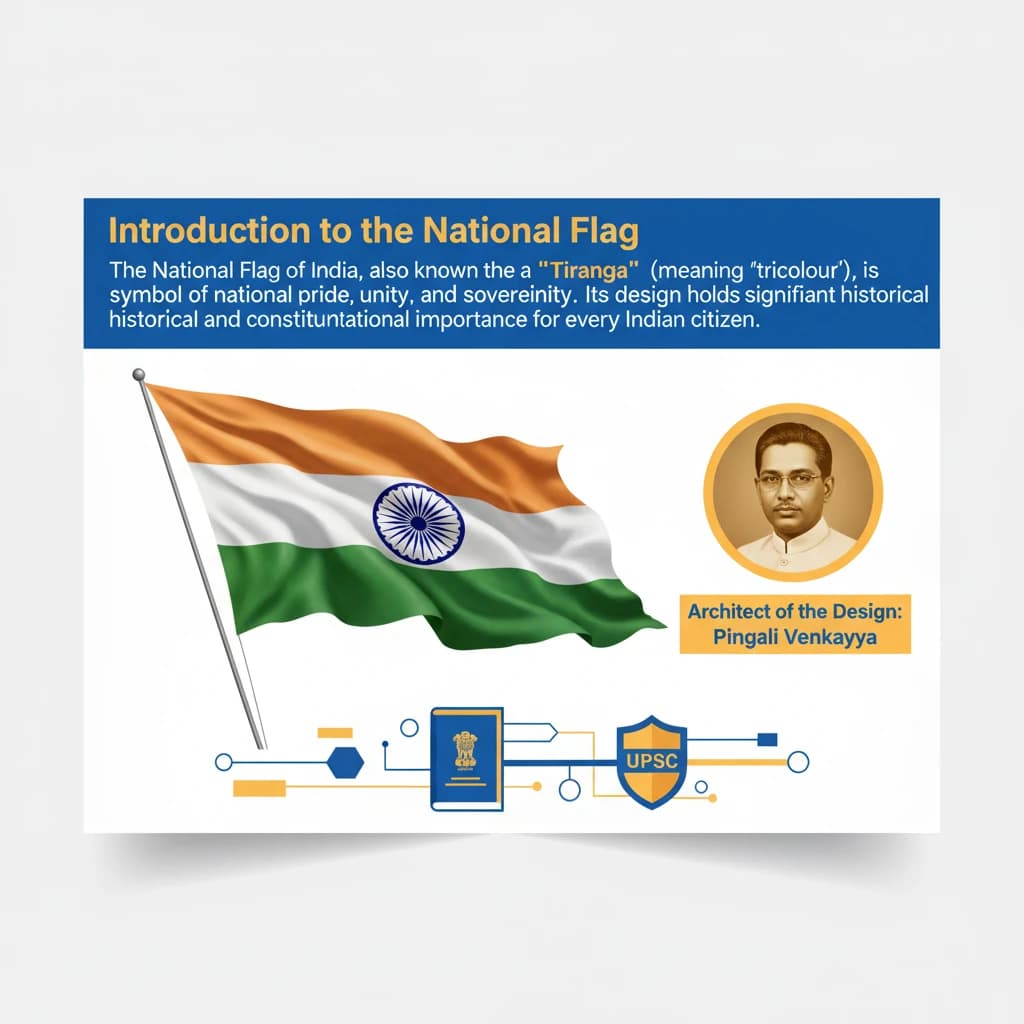
National Flag of India: History, Design, and Significance
Easy⏱️ 5 min read
defence and security
📖 Introduction
Introduction to the National Flag
The National Flag of India, also known as the Tiranga (meaning 'tricolour'), is a symbol of national pride, unity, and sovereignty. Its design holds significant historical and constitutional importance for every Indian citizen.
Architect of the Design
The primary credit for the design of the Indian ensign is widely attributed to Pingali Venkayya, a distinguished Indian freedom fighter. His vision contributed significantly to the flag we recognize today.
Key Designer: Pingali Venkayya
First Hoisting of an Indian National Flag
The earliest known instance of a national flag for India being hoisted occurred on 7th August 1906. This historic event took place in Kolkata, specifically at Parsee Bagan Square (also known as Green Park).
Date of First Hoisting: 7th August 1906
Location: Parsee Bagan Square (Green Park), Kolkata
Physical Specifications of the National Flag
The National Flag is designed in a rectangular shape. A specific ratio governs its dimensions, ensuring uniformity and respect for its design.
Shape: Rectangular
Length-to-Width Ratio: 3:2
Constitutional Mandate and Citizen's Duty
Respect for the National Flag is not merely a custom but a constitutional obligation for every citizen of India. This duty is enshrined within the fundamental duties listed in the Constitution.
According to Article 51A (a) of the Indian Constitution, it is the fundamental duty of every citizen to abide by the Constitution and to respect its ideals and institutions, including the National Flag and the National Anthem.
UPSC Insight: Questions on Fundamental Duties (Article 51A) are common in GS-II Polity. Understanding the specific components, like respecting the National Flag, is crucial for both Prelims and Mains.
💡 Key Takeaways
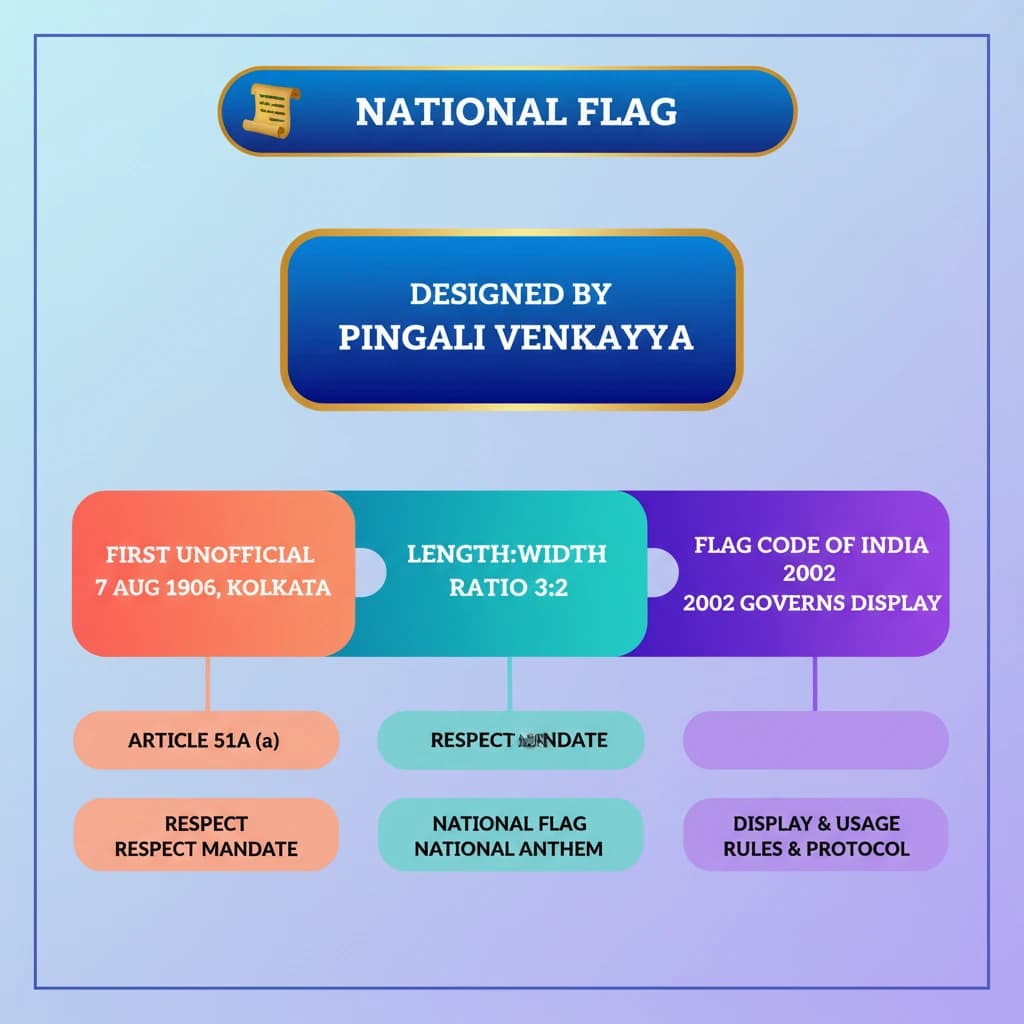
- •The National Flag design is largely attributed to Pingali Venkayya.
- •The first unofficial national flag was hoisted on 7th August 1906 in Kolkata.
- •The flag is rectangular with a length-to-width ratio of 3:2.
- •Article 51A (a) mandates every citizen to respect the National Flag and National Anthem.
- •The Flag Code of India, 2002, governs its display and usage.
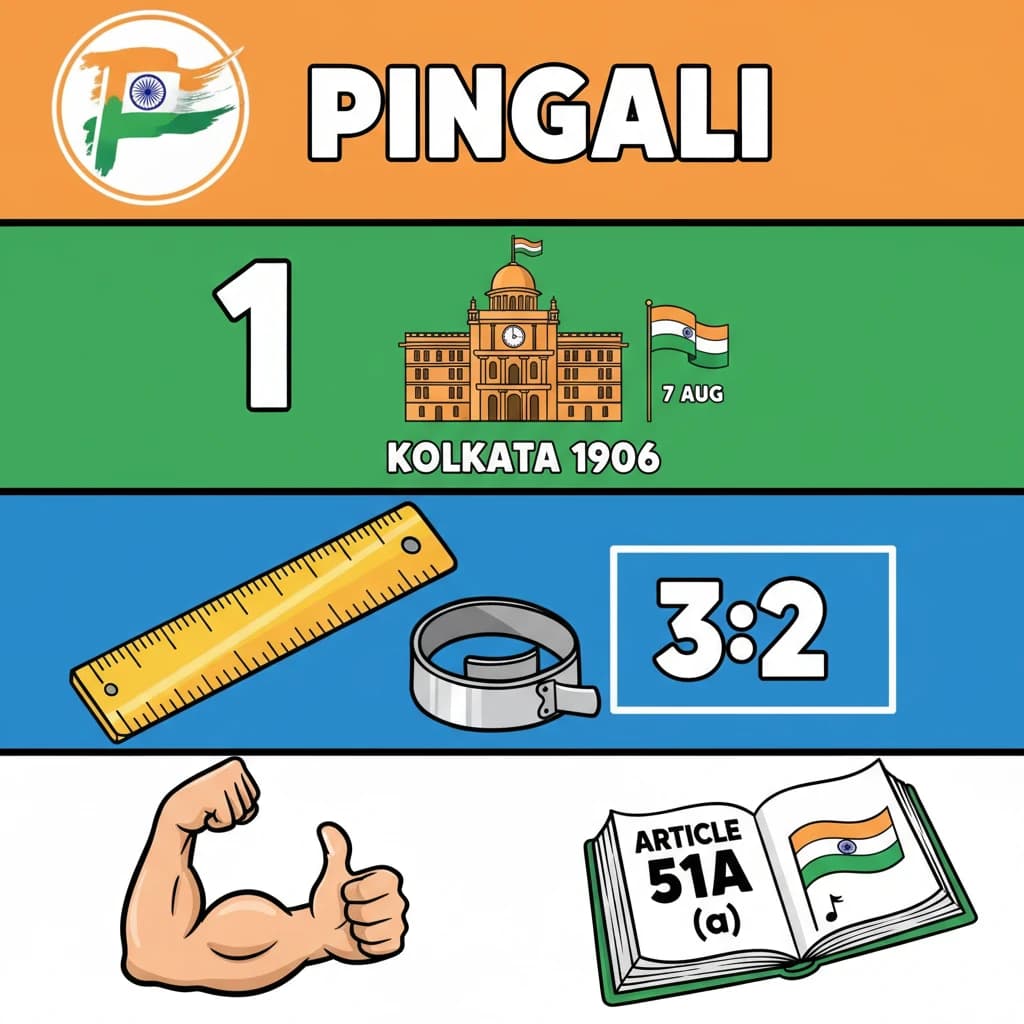
🧠 Memory Techniques
98% Verified Content
📚 Reference Sources
•The Constitution of India (Article 51A)
•Flag Code of India, 2002