Loading page, please wait…
Robotic MULE Inducted in Indian Army - UPSC Defence And Security
What is Robotic MULE Inducted in Indian Army in UPSC Defence And Security?
Robotic MULE Inducted in Indian Army is a key topic under Defence And Security for UPSC Civil Services Examination. Key points include: Indian Army inducted 100 Robotic MULEs for high-altitude combat zones.. MULEs can carry 150kg, climb steep terrain, operate in extreme weather, and use electro-optics/IR for surveillance.. Purpose: Enhance surveillance, deliver supplies, and reduce risk to human lives.. Understanding this topic is essential for both UPSC Prelims and Mains preparation.
Why is Robotic MULE Inducted in Indian Army important for UPSC exam?
Robotic MULE Inducted in Indian Army is a Medium-level topic in UPSC Defence And Security. It is tested in both Prelims (factual MCQs) and Mains (analytical answer writing). Previous year UPSC questions have frequently covered aspects of Robotic MULE Inducted in Indian Army, making it essential for comprehensive IAS preparation.
How to prepare Robotic MULE Inducted in Indian Army for UPSC?
To prepare Robotic MULE Inducted in Indian Army for UPSC: (1) Study the comprehensive notes covering all key concepts on Vaidra. (2) Practice previous year questions on this topic. (3) Connect it with current affairs using daily updates. (4) Revise using key takeaways and mind maps available for Defence And Security. (5) Write practice answers linking Robotic MULE Inducted in Indian Army to related GS Paper topics.
Key takeaways of Robotic MULE Inducted in Indian Army for UPSC
- Indian Army inducted 100 Robotic MULEs for high-altitude combat zones.
- MULEs can carry 150kg, climb steep terrain, operate in extreme weather, and use electro-optics/IR for surveillance.
- Purpose: Enhance surveillance, deliver supplies, and reduce risk to human lives.
- Aims to cut animal transport by 50-60% by 2030, though traditional mules remain vital in some areas.
- Reflects a global trend (e.g., China's robotic dogs) and potential new arms race in military robotics.
Robotic MULE Inducted in Indian Army
Medium⏱️ 6 min read
defence and security
📖 Introduction
Indian Army Inducts Robotic MULEs
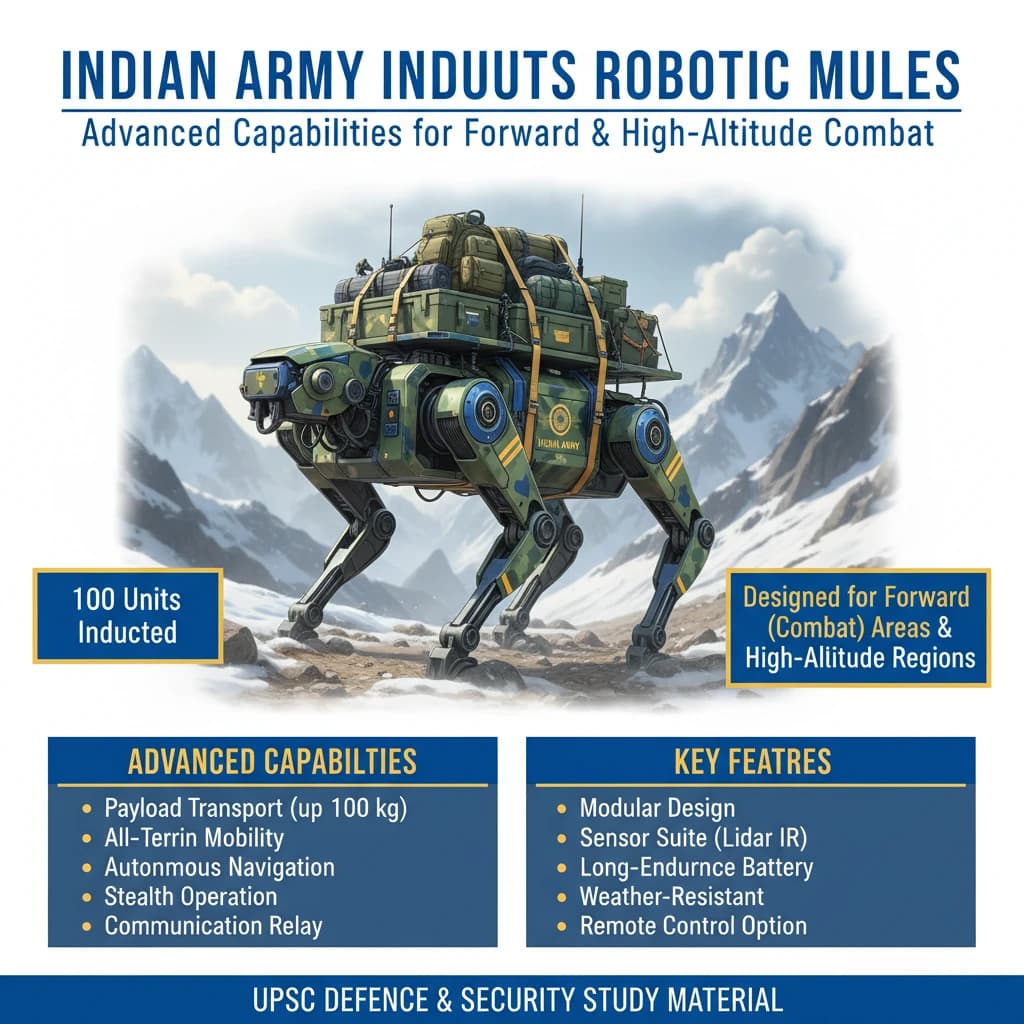
The Indian Army has significantly upgraded its operational capabilities by inducting 100 Robotic Multi-Utility Legged Equipment (MULE) units.
These advanced robots are specifically designed for deployment in forward (combat) areas, with a particular focus on challenging high-altitude regions.
Advanced Capabilities and Features
The Robotic MULEs are engineered for robust performance across diverse and extreme terrains.
Key Capabilities:
- Ability to climb stairs and navigate steep hills.
- Operational efficiency in extreme temperatures.
- Impressive payload capacity of 150 kg for essential supplies.
- Equipped with electro-optics and infrared technology for advanced object recognition.
- Designed for all-weather operations and capable of moving through and inside rivers.
Strategic Purpose and Benefits
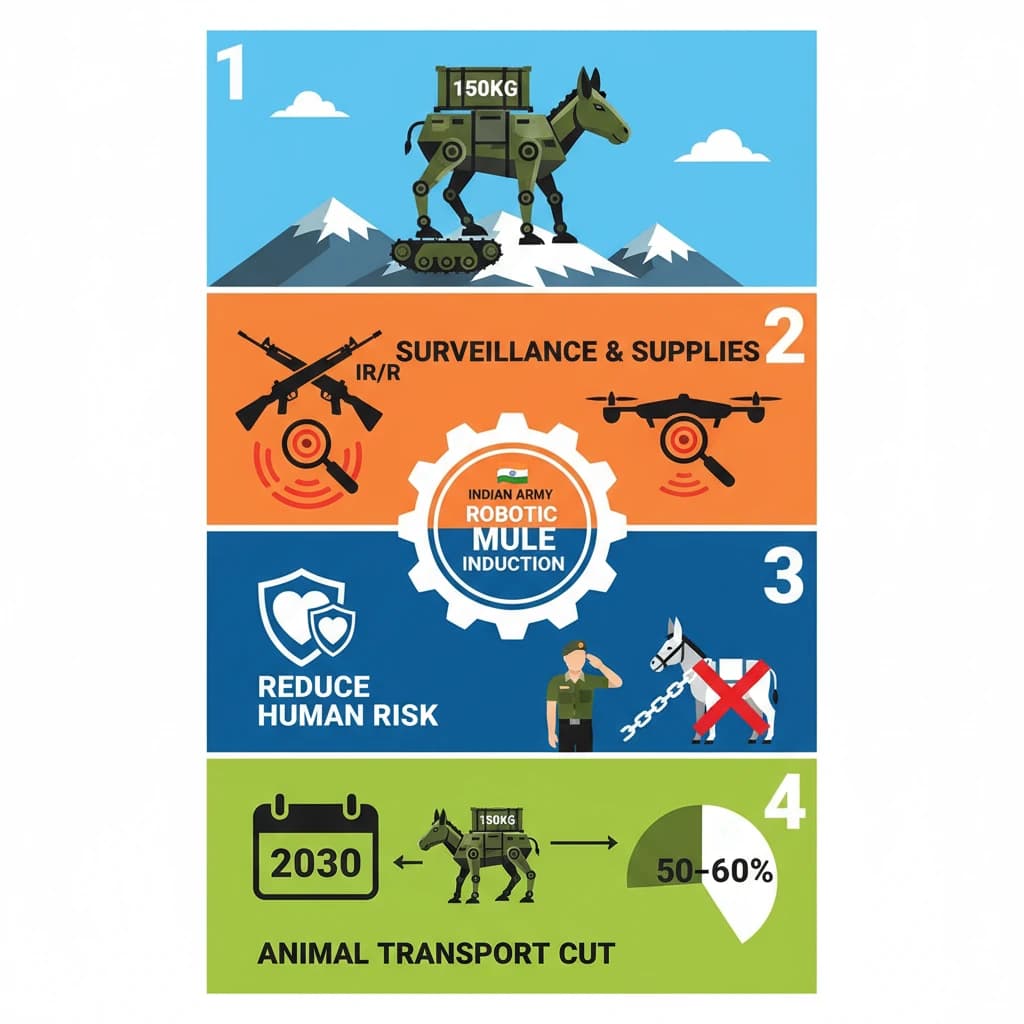
The primary objective of inducting these robots is to significantly enhance the Indian Army's surveillance capabilities.
This technological integration aims to achieve critical missions without risking human lives in hazardous environments.
Furthermore, the Robotic MULEs will ensure the timely and secure delivery of critical supplies to frontline soldiers, improving logistical support.
Evolution of Logistics: From Animals to AI
Traditionally, mules have been indispensable for supply delivery in high-altitude areas, constituting a substantial portion of the army’s animal transport.
The induction of robotic units marks a strategic shift, with the Indian Army aiming to reduce reliance on animal transport by 50-60% by 2030.
Despite this, traditional animal transport is expected to remain essential in many remote border regions where robotic deployment might still face limitations.
Global Context and Emerging Trends
The deployment of Robotic MULEs by India aligns with a global trend of increasing military robotics.
China has already integrated robotic dogs into its military operations, signaling a broader adoption of autonomous systems in defense.
This growing deployment of robots in military settings could potentially indicate the onset of a new arms race focused on advanced autonomous and robotic warfare capabilities.
In parallel, the Indian Army is also actively testing logistics drones to further improve support and transport mechanisms, particularly in challenging high-altitude terrains.
Understanding the transition from traditional methods to advanced robotics is crucial for questions on defense modernization and geopolitical shifts in UPSC Mains GS Paper 3.
💡 Key Takeaways
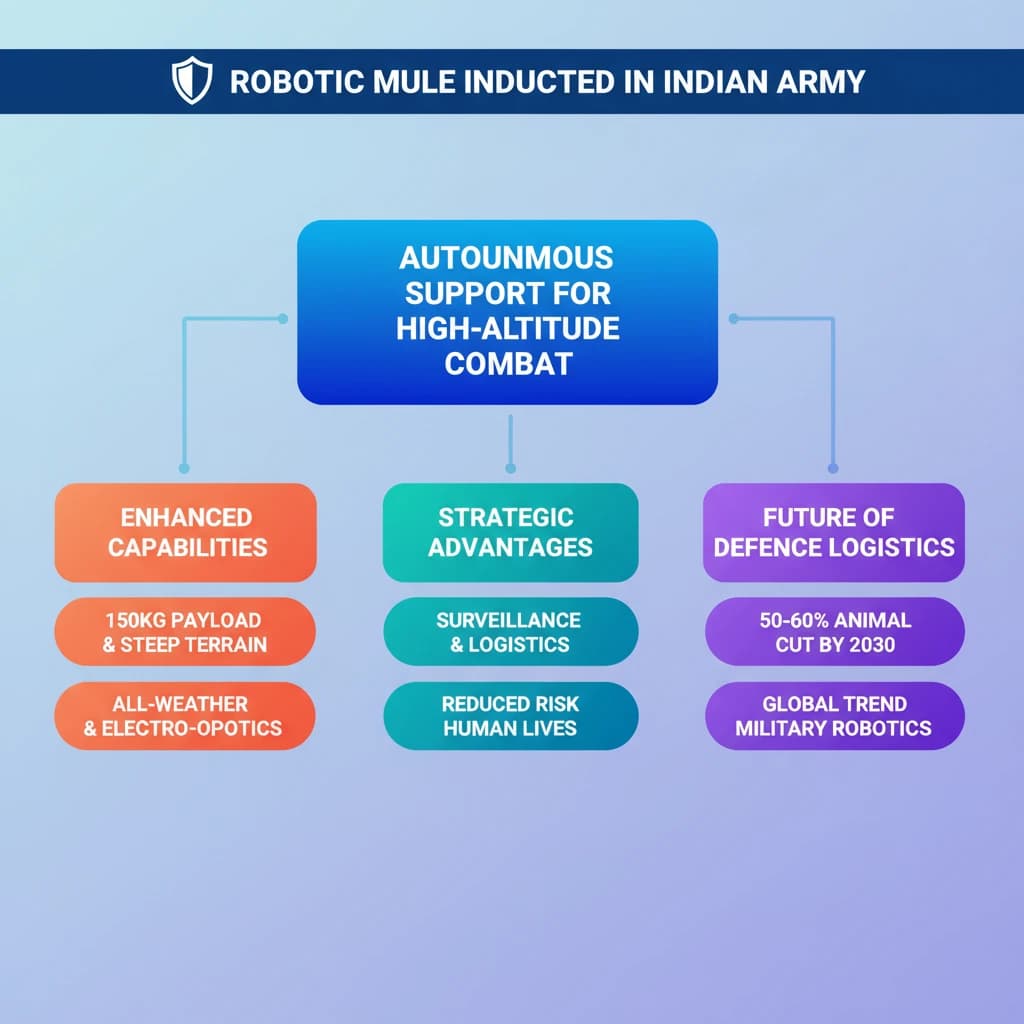
- •Indian Army inducted 100 Robotic MULEs for high-altitude combat zones.
- •MULEs can carry 150kg, climb steep terrain, operate in extreme weather, and use electro-optics/IR for surveillance.
- •Purpose: Enhance surveillance, deliver supplies, and reduce risk to human lives.
- •Aims to cut animal transport by 50-60% by 2030, though traditional mules remain vital in some areas.
- •Reflects a global trend (e.g., China's robotic dogs) and potential new arms race in military robotics.
🧠 Memory Techniques
95% Verified Content