Loading page, please wait…
RudraM-II: India's New Air-Launched Anti-Radiation Missile - UPSC Defence And Security
What is RudraM-II: India's New Air-Launched Anti-Radiation Missile in UPSC Defence And Security?
RudraM-II: India's New Air-Launched Anti-Radiation Missile is a key topic under Defence And Security for UPSC Civil Services Examination. Key points include: RudraM-II is a DRDO-developed, solid-propelled, air-launched, air-to-surface missile.. Successfully flight-tested from a Sukhoi-30 MKI fighter jet.. Key specifications: 300 km range, Mach 5.5 speed, 200 kg payload, 100+ km radar/RF detection.. Understanding this topic is essential for both UPSC Prelims and Mains preparation.
Why is RudraM-II: India's New Air-Launched Anti-Radiation Missile important for UPSC exam?
RudraM-II: India's New Air-Launched Anti-Radiation Missile is a Medium-level topic in UPSC Defence And Security. It is tested in both Prelims (factual MCQs) and Mains (analytical answer writing). Previous year UPSC questions have frequently covered aspects of RudraM-II: India's New Air-Launched Anti-Radiation Missile, making it essential for comprehensive IAS preparation.
How to prepare RudraM-II: India's New Air-Launched Anti-Radiation Missile for UPSC?
To prepare RudraM-II: India's New Air-Launched Anti-Radiation Missile for UPSC: (1) Study the comprehensive notes covering all key concepts on Vaidra. (2) Practice previous year questions on this topic. (3) Connect it with current affairs using daily updates. (4) Revise using key takeaways and mind maps available for Defence And Security. (5) Write practice answers linking RudraM-II: India's New Air-Launched Anti-Radiation Missile to related GS Paper topics.
Key takeaways of RudraM-II: India's New Air-Launched Anti-Radiation Missile for UPSC
- RudraM-II is a DRDO-developed, solid-propelled, air-launched, air-to-surface missile.
- Successfully flight-tested from a Sukhoi-30 MKI fighter jet.
- Key specifications: 300 km range, Mach 5.5 speed, 200 kg payload, 100+ km radar/RF detection.
- Aims to neutralise enemy assets and acts as a 'force multiplier' for India's air security.
- Potential indigenous replacement for Russia's Kh-31 missile on Sukhoi jets.
- Signifies India's progress in defence indigenisation and strategic autonomy.
RudraM-II: India's New Air-Launched Anti-Radiation Missile
Medium⏱️ 6 min read
defence and security
📖 Introduction
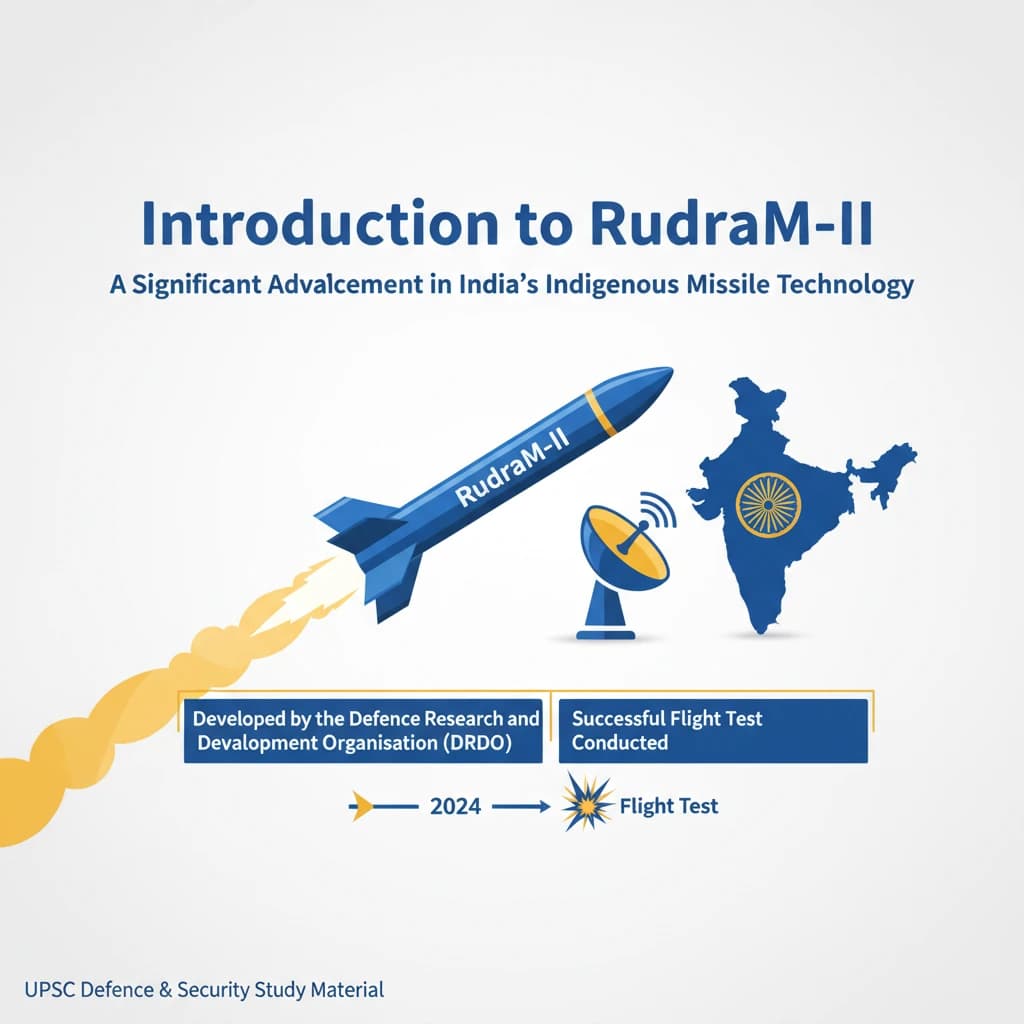
Introduction to RudraM-II
The RudraM-II is a significant advancement in India's indigenous missile technology. It represents a crucial component in strengthening the nation's air defence capabilities.
Developed by the Defence Research and Development Organisation (DRDO), this missile system recently underwent a successful flight test.
Successful Flight Test
The DRDO successfully conducted the flight test of the RudraM-II Missile. This critical evaluation took place from a Sukhoi-30 MKI fighter jet.
Test Platform: Sukhoi-30 MKI fighter jet
Developer: Defence Research and Development Organisation (DRDO)
Key Characteristics and Operational Role
The RudraM-II is a solid-propelled air-launched missile system. It is designed specifically for Air-to-surface operations.
Its primary objective is to neutralise various types of enemy assets, providing a strategic advantage in combat scenarios.
The missile is expected to play a vital role in strengthening India’s air security and defence preparedness. It acts as a significant ‘force multiplier’ for the Indian Air Force.
Performance Evaluation
The performance of the RudraM-II during its flight test was meticulously evaluated. This involved the use of advanced range tracking instruments.
- Electro-optical systems
- Radar
- Telemetry stations
Technical Specifications
| Specification | Detail |
|---|---|
| Range | 300 kilometres |
| Speed | Up to Mach 5.5 |
| Payload | 200 kilograms |
| Detection Capability | Can detect enemy radio frequencies and signals from radars from over 100 km |
Strategic Replacement
The RudraM-II is envisioned as a potential replacement for Russia’s Kh-31 missile. The Kh-31 is currently in service with India’s Sukhoi fighter jets.
Understanding indigenous replacements like RudraM-II for foreign systems is crucial for questions on defence indigenisation and strategic autonomy in UPSC Mains GS-III.
💡 Key Takeaways
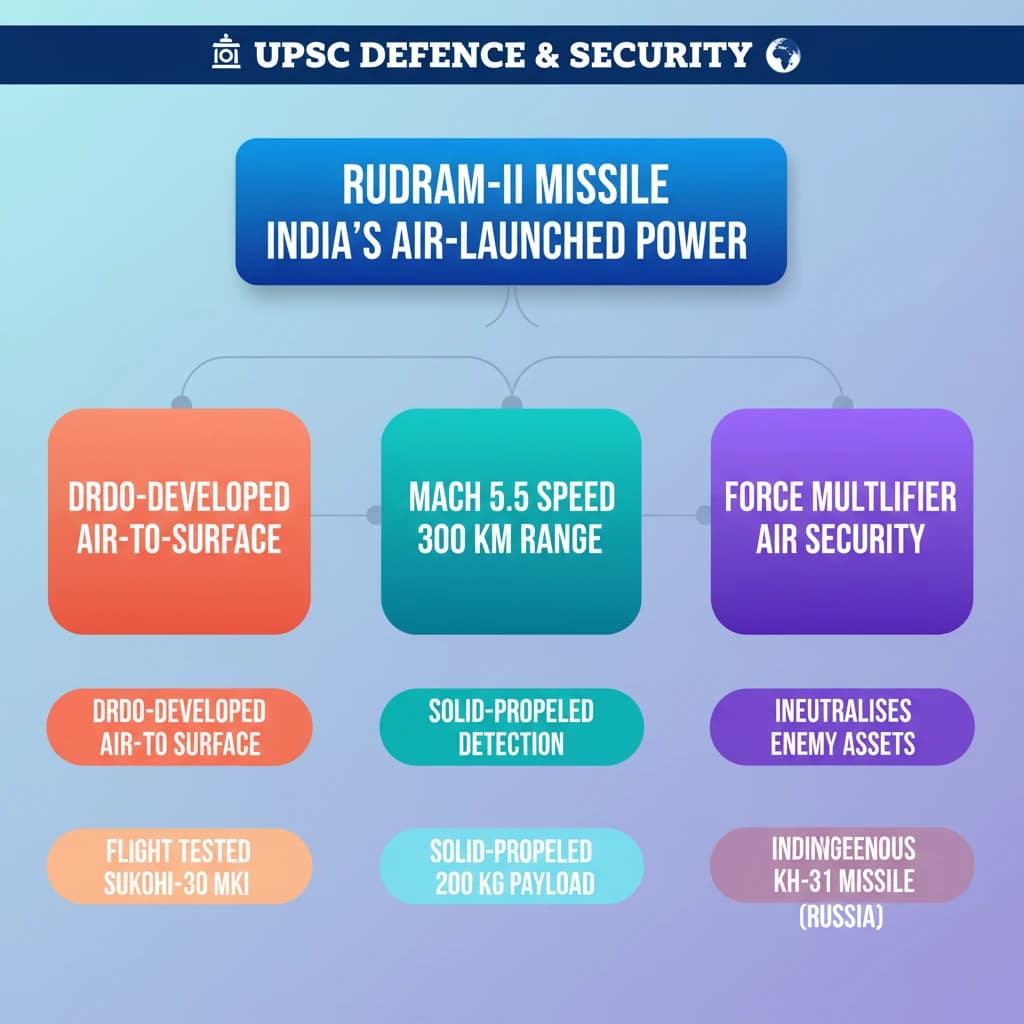
- •RudraM-II is a DRDO-developed, solid-propelled, air-launched, air-to-surface missile.
- •Successfully flight-tested from a Sukhoi-30 MKI fighter jet.
- •Key specifications: 300 km range, Mach 5.5 speed, 200 kg payload, 100+ km radar/RF detection.
- •Aims to neutralise enemy assets and acts as a 'force multiplier' for India's air security.
- •Potential indigenous replacement for Russia's Kh-31 missile on Sukhoi jets.
- •Signifies India's progress in defence indigenisation and strategic autonomy.
🧠 Memory Techniques

95% Verified Content
📚 Reference Sources
•DRDO Official Releases (implied by content)