Loading page, please wait…
Significance of Carrier Aviation - UPSC Defence And Security
What is Significance of Carrier Aviation in UPSC Defence And Security?
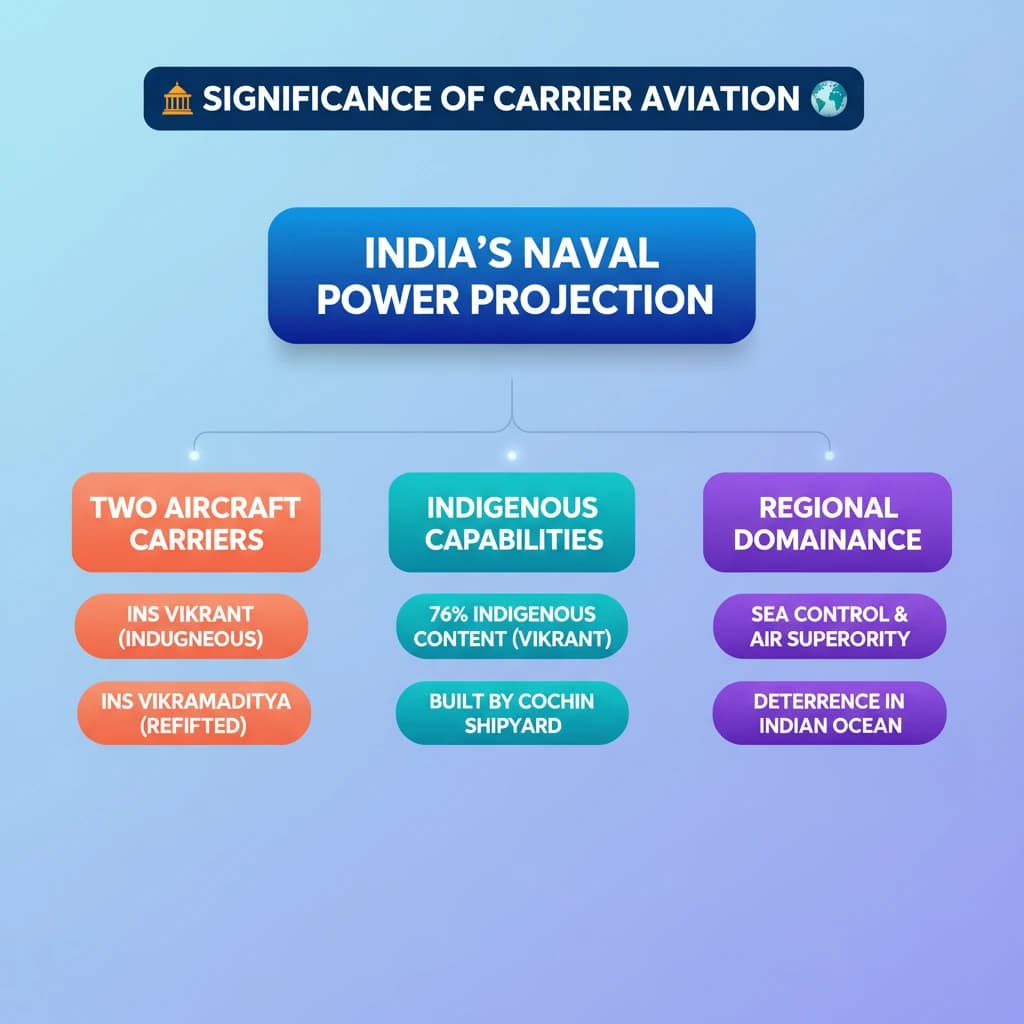
Significance of Carrier Aviation is a key topic under Defence And Security for UPSC Civil Services Examination. Key points include: India operates two aircraft carriers: INS Vikrant (indigenous) and INS Vikramaditya (refitted Soviet-origin).. Recent 'twin carrier operations' showcased India's advanced naval power projection capabilities.. INS Vikrant is a symbol of India's self-reliance, boasting 76% indigenous content and built by Cochin Shipyard Limited.. Understanding this topic is essential for both UPSC Prelims and Mains preparation.
Why is Significance of Carrier Aviation important for UPSC exam?
Significance of Carrier Aviation is a Medium-level topic in UPSC Defence And Security. It is tested in both Prelims (factual MCQs) and Mains (analytical answer writing). Previous year UPSC questions have frequently covered aspects of Significance of Carrier Aviation, making it essential for comprehensive IAS preparation.
How to prepare Significance of Carrier Aviation for UPSC?
To prepare Significance of Carrier Aviation for UPSC: (1) Study the comprehensive notes covering all key concepts on Vaidra. (2) Practice previous year questions on this topic. (3) Connect it with current affairs using daily updates. (4) Revise using key takeaways and mind maps available for Defence And Security. (5) Write practice answers linking Significance of Carrier Aviation to related GS Paper topics.
Key takeaways of Significance of Carrier Aviation for UPSC
- India operates two aircraft carriers: INS Vikrant (indigenous) and INS Vikramaditya (refitted Soviet-origin).
- Recent 'twin carrier operations' showcased India's advanced naval power projection capabilities.
- INS Vikrant is a symbol of India's self-reliance, boasting 76% indigenous content and built by Cochin Shipyard Limited.
- Both carriers deploy a potent mix of aircraft including MiG-29K fighters, Kamov-31, MH-60R, and ALH helicopters.
- Carrier aviation is crucial for sea control, air superiority, power projection, and deterrence in the Indian Ocean Region.

Significance of Carrier Aviation
Medium⏱️ 5 min read
defence and security
📖 Introduction
Significance of Carrier Aviation in Modern Naval Warfare
Recently, the Indian Navy’s two aircraft carriers, INS Vikramaditya and INS Vikrant, demonstrated “twin carrier operations.” This involved simultaneous take-offs of MiG-29K fighter jets from both carriers, followed by cross-deck landings.
This complex exercise underscores a capability possessed by only a select few nations globally. It highlights India's advanced naval prowess and strategic readiness.
The successful execution of twin carrier operations signifies India's enhanced power projection capabilities and its commitment to securing vast maritime interests.
Key Features of Indian Aircraft Carriers
India currently boasts two operational aircraft carriers, each contributing significantly to the nation's naval strength with unique histories and capabilities.
INS Vikrant: An Indigenous Marvel
INS Vikrant is India's first domestically built aircraft carrier, marking a historic achievement in indigenous defense manufacturing. It boasts an impressive 76% indigenous content.
The carrier was constructed by Cochin Shipyard Limited, serving as a powerful symbol of India’s growing shipbuilding prowess and self-reliance under the 'Aatmanirbhar Bharat' initiative.
Speed: INS Vikrant's design prioritises manoeuvrability, achieving a top speed of 28 knots.
INS Vikramaditya: A Refitted Veteran
INS Vikramaditya is a modified Kiev-class carrier, originally constructed for the Soviet Navy. Its acquisition significantly bolstered India's naval capabilities.
After undergoing extensive refitting and modernisation, it was officially inducted into the Indian Navy in 2013, becoming a cornerstone of the fleet.
Speed: INS Vikramaditya is capable of reaching impressive speeds of up to 30 knots.
Shared Firepower and Flexibility
Both INS Vikrant and INS Vikramaditya carry a similar and potent arsenal of aircraft, providing comprehensive air defense and strike capabilities.
- MiG-29K fighter jets: Utilised for both air defense and ground attack missions, forming the primary offensive and defensive air component.
- Kamov-31 Helicopters: Essential for airborne early warning (AEW), providing critical intelligence and situational awareness over vast maritime areas.
- MH-60R helicopters: Perform diverse multi-role operations, including anti-submarine warfare (ASW), anti-surface warfare (ASuW), and search and rescue.
- Indigenously built Advanced Light Helicopters (ALH): Employed for various utility tasks, logistical support, and special operations.
💡 Key Takeaways
- •India operates two aircraft carriers: INS Vikrant (indigenous) and INS Vikramaditya (refitted Soviet-origin).
- •Recent 'twin carrier operations' showcased India's advanced naval power projection capabilities.
- •INS Vikrant is a symbol of India's self-reliance, boasting 76% indigenous content and built by Cochin Shipyard Limited.
- •Both carriers deploy a potent mix of aircraft including MiG-29K fighters, Kamov-31, MH-60R, and ALH helicopters.
- •Carrier aviation is crucial for sea control, air superiority, power projection, and deterrence in the Indian Ocean Region.
🧠 Memory Techniques

95% Verified Content
📚 Reference Sources
•Official Indian Navy statements and press releases (as implied by the source summary)