Loading page, please wait…
What are the Narcotic Drugs and Psychotropic Substances Act of 1985? - UPSC Defence And Security
What is What are the Narcotic Drugs and Psychotropic Substances Act of 1985? in UPSC Defence And Security?
What are the Narcotic Drugs and Psychotropic Substances Act of 1985? is a key topic under Defence And Security for UPSC Civil Services Examination. Key points include: The NDPS Act, 1985, regulates manufacture, transport, and consumption of narcotic drugs and psychotropic substances.. It criminalizes financing illicit drug activities, including cultivation and manufacturing.. Penalties include rigorous imprisonment (10-20 years), fines (at least Rs. 1 lakh), and forfeiture of property.. Understanding this topic is essential for both UPSC Prelims and Mains preparation.
Why is What are the Narcotic Drugs and Psychotropic Substances Act of 1985? important for UPSC exam?
What are the Narcotic Drugs and Psychotropic Substances Act of 1985? is a Medium-level topic in UPSC Defence And Security. It is tested in both Prelims (factual MCQs) and Mains (analytical answer writing). Previous year UPSC questions have frequently covered aspects of What are the Narcotic Drugs and Psychotropic Substances Act of 1985?, making it essential for comprehensive IAS preparation.
How to prepare What are the Narcotic Drugs and Psychotropic Substances Act of 1985? for UPSC?
To prepare What are the Narcotic Drugs and Psychotropic Substances Act of 1985? for UPSC: (1) Study the comprehensive notes covering all key concepts on Vaidra. (2) Practice previous year questions on this topic. (3) Connect it with current affairs using daily updates. (4) Revise using key takeaways and mind maps available for Defence And Security. (5) Write practice answers linking What are the Narcotic Drugs and Psychotropic Substances Act of 1985? to related GS Paper topics.
Key takeaways of What are the Narcotic Drugs and Psychotropic Substances Act of 1985? for UPSC
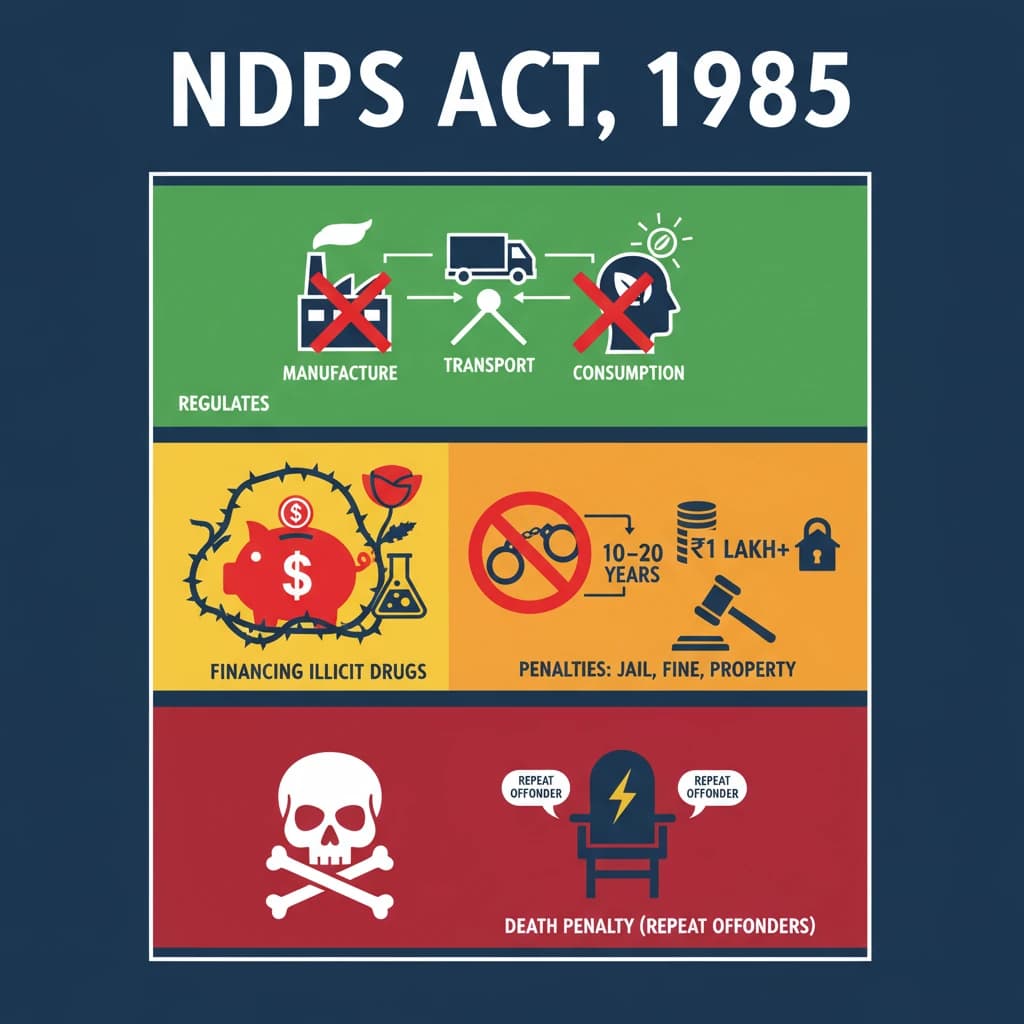
- The NDPS Act, 1985, regulates manufacture, transport, and consumption of narcotic drugs and psychotropic substances.
- It criminalizes financing illicit drug activities, including cultivation and manufacturing.
- Penalties include rigorous imprisonment (10-20 years), fines (at least Rs. 1 lakh), and forfeiture of property.
- The Act provides for the death penalty in certain cases for repeat offenders involved in severe drug trafficking.
- The Narcotics Control Bureau (NCB) was constituted in 1986 under this Act to enforce its provisions.
What are the Narcotic Drugs and Psychotropic Substances Act of 1985?
Medium⏱️ 7 min read
defence and security
📖 Introduction
Introduction to the NDPS Act, 1985
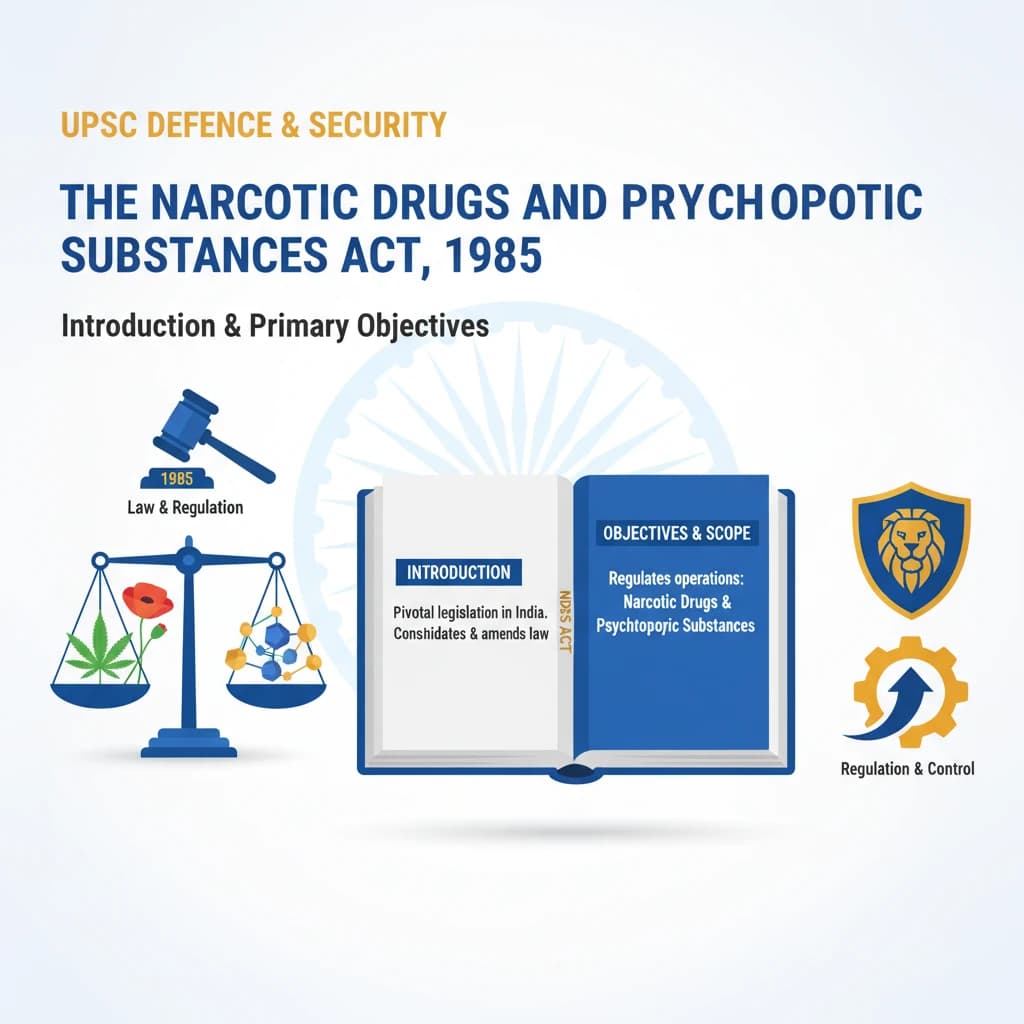
The Narcotic Drugs and Psychotropic Substances Act, 1985 (NDPS Act) is a pivotal legislation in India. It was enacted to consolidate and amend the law relating to narcotic drugs and psychotropic substances.
Primary Objectives and Scope
The NDPS Act primarily regulates various operations concerning narcotic drugs and psychotropic substances.
Key operations regulated include manufacture, transport, and consumption of these substances.
Offences Under the Act
The Act criminalizes a range of illicit activities involving narcotic drugs and psychotropic substances.
Specific offences include:
- Cultivating cannabis illicitly.
- Manufacturing narcotic drugs without authorization.
- Financing such illicit activities.
- Harbouring persons engaged in these illegal operations.
Penalties and Punishments
The NDPS Act prescribes stringent penalties for those found guilty of offences.
For financing illicit activities, the punishment includes:
- Rigorous imprisonment of at least 10 years, extendable up to 20 years.
- A fine of at least Rs. 1 lakh.
Beyond imprisonment and fines, the Act also provides for the forfeiture of property.
Property derived from, or used in, illicit traffic in narcotic drugs and psychotropic substances can be confiscated by the state.
Provision for Death Penalty
A significant provision of the NDPS Act is the inclusion of the death penalty in certain severe cases.
The death penalty is typically reserved for repeat offenders involved in large-scale illicit drug trafficking, underscoring the seriousness with which India treats drug-related crimes.
Enforcement Agency: Narcotics Control Bureau (NCB)
To effectively enforce the provisions of the NDPS Act, a specialized agency was established.
The Narcotics Control Bureau (NCB) was constituted in 1986 under the provisions of this very Act.
The NCB serves as the nodal agency for combating drug trafficking and abuse in India.
💡 Key Takeaways
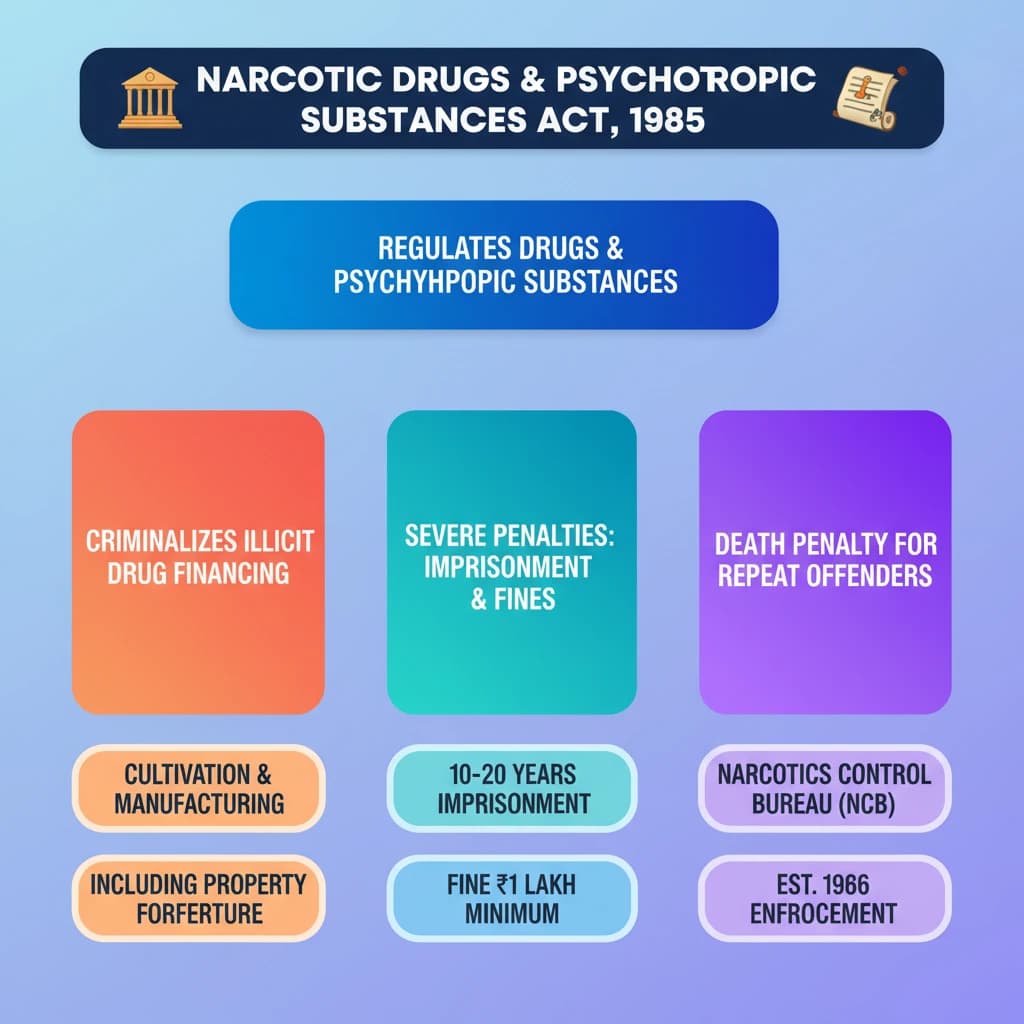
- •The NDPS Act, 1985, regulates manufacture, transport, and consumption of narcotic drugs and psychotropic substances.
- •It criminalizes financing illicit drug activities, including cultivation and manufacturing.
- •Penalties include rigorous imprisonment (10-20 years), fines (at least Rs. 1 lakh), and forfeiture of property.
- •The Act provides for the death penalty in certain cases for repeat offenders involved in severe drug trafficking.
- •The Narcotics Control Bureau (NCB) was constituted in 1986 under this Act to enforce its provisions.
🧠 Memory Techniques
98% Verified Content
📚 Reference Sources
•The Narcotic Drugs and Psychotropic Substances Act, 1985 (Official Text)
•Narcotics Control Bureau (NCB) official website