Loading page, please wait…
What is the National Automated Fingerprint Identification System (NAFIS)? - UPSC Defence And Security
What is What is the National Automated Fingerprint Identification System (NAFIS)? in UPSC Defence And Security?
What is the National Automated Fingerprint Identification System (NAFIS)? is a key topic under Defence And Security for UPSC Civil Services Examination. Key points include: NAFIS (National Automated Fingerprint Identification System) is India's web-based, centralized fingerprint database.. It assigns a unique 10-digit National Fingerprint Number (NFN) for lifetime tracking of individuals across all crimes.. NAFIS is integrated with the CCTNS database and replaced the older FACTS 5.0 system.. Understanding this topic is essential for both UPSC Prelims and Mains preparation.
Why is What is the National Automated Fingerprint Identification System (NAFIS)? important for UPSC exam?
What is the National Automated Fingerprint Identification System (NAFIS)? is a Medium-level topic in UPSC Defence And Security. It is tested in both Prelims (factual MCQs) and Mains (analytical answer writing). Previous year UPSC questions have frequently covered aspects of What is the National Automated Fingerprint Identification System (NAFIS)?, making it essential for comprehensive IAS preparation.
How to prepare What is the National Automated Fingerprint Identification System (NAFIS)? for UPSC?
To prepare What is the National Automated Fingerprint Identification System (NAFIS)? for UPSC: (1) Study the comprehensive notes covering all key concepts on Vaidra. (2) Practice previous year questions on this topic. (3) Connect it with current affairs using daily updates. (4) Revise using key takeaways and mind maps available for Defence And Security. (5) Write practice answers linking What is the National Automated Fingerprint Identification System (NAFIS)? to related GS Paper topics.
Key takeaways of What is the National Automated Fingerprint Identification System (NAFIS)? for UPSC
- NAFIS (National Automated Fingerprint Identification System) is India's web-based, centralized fingerprint database.
- It assigns a unique 10-digit National Fingerprint Number (NFN) for lifetime tracking of individuals across all crimes.
- NAFIS is integrated with the CCTNS database and replaced the older FACTS 5.0 system.
- It is a crucial component of the National Terrorist Database and Analysis Centre (NTDFAC), enhancing counter-terrorism efforts.
- The system enables real-time upload, tracing, and retrieval of fingerprint data, significantly boosting law enforcement efficiency.
What is the National Automated Fingerprint Identification System (NAFIS)?
Medium⏱️ 7 min read
defence and security
📖 Introduction
Introduction to National Automated Fingerprint Identification System (NAFIS)
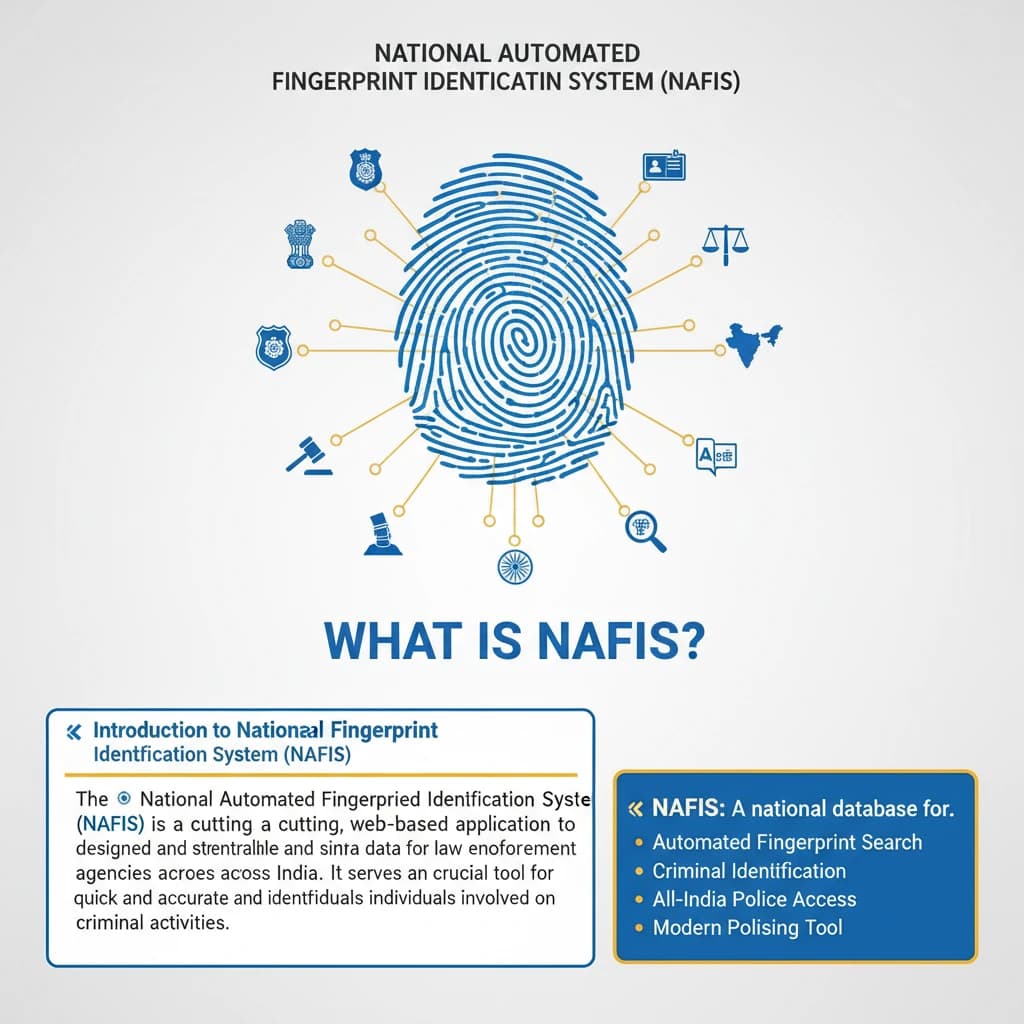
The National Automated Fingerprint Identification System (NAFIS) is a cutting-edge, web-based application designed to centralize and streamline fingerprint data for law enforcement agencies across India. It serves as a crucial tool for the quick and accurate identification of individuals involved in criminal activities.
NAFIS: A national database and search application for fingerprints, enabling law enforcement agencies to identify individuals based on their unique biometric data.
Unique Identifier: National Fingerprint Number (NFN)
A core feature of NAFIS is the assignment of a unique 10-digit National Fingerprint Number (NFN) to every person arrested for a crime. This identifier is permanent and can be used for the individual’s lifetime.
Crucially, all different crimes registered under various First Information Reports (FIRs) against the same person will be linked to this single NFN, ensuring a comprehensive criminal history.
The NFN is vital for tracking repeat offenders and maintaining a consistent record of an individual's involvement in criminal activities across different jurisdictions and over time.
Integration with Crime and Criminal Tracking & Network & Systems (CCTNS)
NAFIS operates with a robust backend connection to the Crime and Criminal Tracking & Network & Systems (CCTNS) database. This integration provides a unique identifier for every arrested person within the broader CCTNS framework.
CCTNS: A nationwide network linking all police stations and higher offices, designed to create a comprehensive national database of crime and criminal records.
Real-Time Data Management and Accessibility
The system is designed as a web-based application, offering 24/7 access to law enforcement agencies. This enables real-time uploading, tracing, and retrieval of fingerprint data.
This real-time capability significantly enhances the efficiency of criminal identification processes, allowing for swift action by police forces.
Evolution and Replacement of Previous Systems
NAFIS represents the latest iteration in India's journey towards advanced automated fingerprint identification. It was developed to replace the previous system, FACTS 5.0 (Fingerprint Analysis and Criminal Tracing System).
The decision to replace FACTS 5.0 was based on the assessment that it had “outlived its shelf life,” necessitating a more modern and efficient system to meet contemporary law enforcement needs.
NAFIS within the National Terrorist Database and Analysis Centre (NTDFAC)
NAFIS is a crucial component incorporated into the larger National Terrorist Database and Analysis Centre (NTDFAC). The NTDFAC itself serves as a centralized database and analysis hub for information related to terrorism and terrorists operating in India.
NTDFAC: A comprehensive database providing detailed information on terrorist incidents, including dates, locations, weapons, tactics, targets, and casualties, globally and within India.
In 2023, the Ministry of Home Affairs (MHA) specifically directed all state police forces and anti-terror agencies to adopt a proactive approach, utilizing such systems to prevent the formation of new terrorist groups.
Key Features of NTDFAC (incorporating NAFIS)
- Comprehensive Database: The NTDFAC maintains extensive records including case histories, fingerprints (via NAFIS), videos, pictures, and social media profiles, offering a holistic view of individuals involved in terrorist activities.
- Automated Fingerprint Identification System (AFIS): The NTDFAC integrates NAFIS, which alone holds over 92 lakh fingerprint records. This enables rapid and accurate identification based on fingerprint data.
- Face Recognition System: Equipped with a face recognition system, the NTDFAC can scan pictures of suspects from CCTV footage, aiding in the identification and tracking of individuals involved in terrorist activities.
- Support for State Police Forces: Beyond assisting NIA officers, the NTDFAC provides vital support to state police forces. They can access the centralized server to gather information on terrorists operating within their jurisdictions, fostering inter-state cooperation.
UPSC Insight: Understand NAFIS not just as a standalone system but as an integral part of India's broader internal security architecture, particularly in counter-terrorism efforts and modernizing police forces. Its role in inter-agency data sharing is a key point for **GS-III Internal Security**.
💡 Key Takeaways
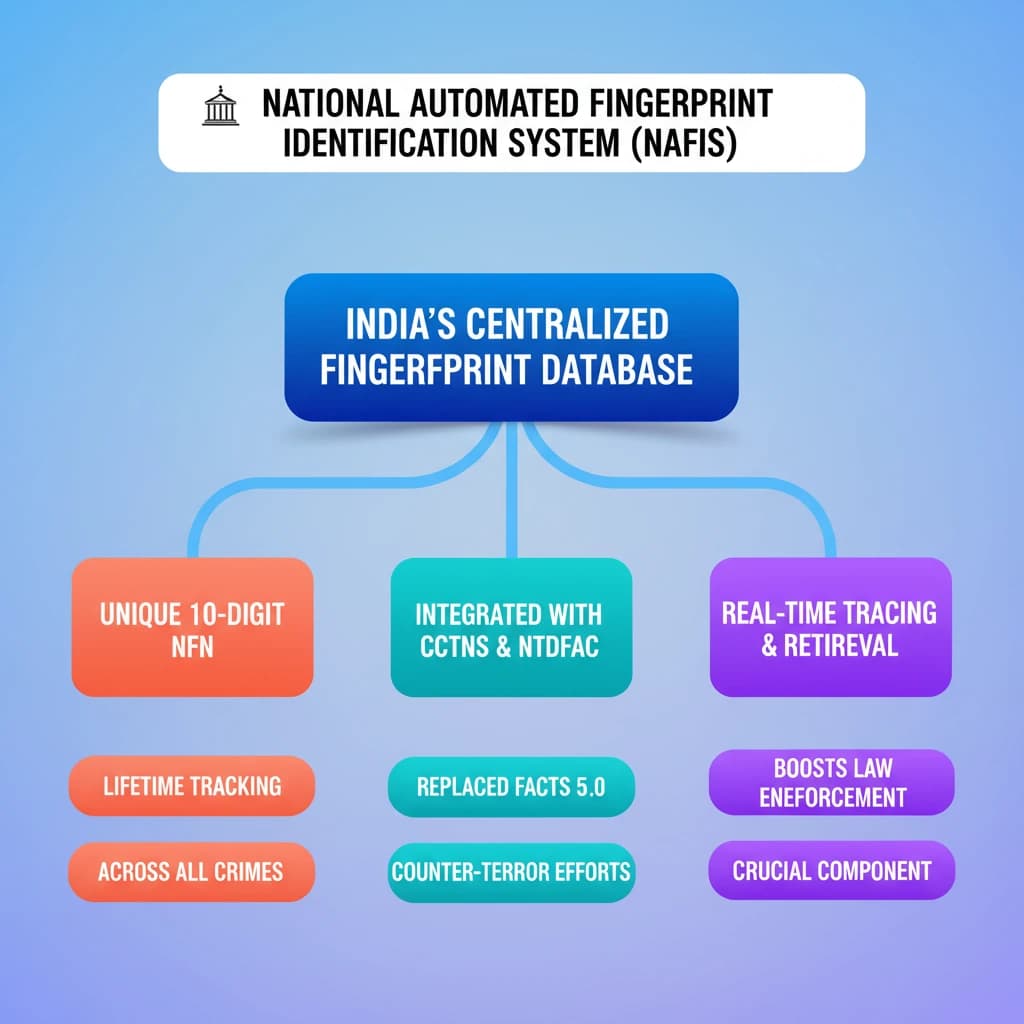
- •NAFIS (National Automated Fingerprint Identification System) is India's web-based, centralized fingerprint database.
- •It assigns a unique 10-digit National Fingerprint Number (NFN) for lifetime tracking of individuals across all crimes.
- •NAFIS is integrated with the CCTNS database and replaced the older FACTS 5.0 system.
- •It is a crucial component of the National Terrorist Database and Analysis Centre (NTDFAC), enhancing counter-terrorism efforts.
- •The system enables real-time upload, tracing, and retrieval of fingerprint data, significantly boosting law enforcement efficiency.
🧠 Memory Techniques
98% Verified Content