Loading page, please wait…
What is the United Nations Interim Force in Lebanon (UNIFIL)? - UPSC Defence And Security
What is What is the United Nations Interim Force in Lebanon (UNIFIL)? in UPSC Defence And Security?
What is the United Nations Interim Force in Lebanon (UNIFIL)? is a key topic under Defence And Security for UPSC Civil Services Examination. Key points include: UNIFIL was established in 1978 to restore peace and assist Lebanese authority.. Its mandate was significantly enhanced in 2006 by UN Security Council Resolution 1701.. Resolution 1701 aims to end hostilities between Hezbollah and Israel.. Understanding this topic is essential for both UPSC Prelims and Mains preparation.
Why is What is the United Nations Interim Force in Lebanon (UNIFIL)? important for UPSC exam?
What is the United Nations Interim Force in Lebanon (UNIFIL)? is a Medium-level topic in UPSC Defence And Security. It is tested in both Prelims (factual MCQs) and Mains (analytical answer writing). Previous year UPSC questions have frequently covered aspects of What is the United Nations Interim Force in Lebanon (UNIFIL)?, making it essential for comprehensive IAS preparation.
How to prepare What is the United Nations Interim Force in Lebanon (UNIFIL)? for UPSC?
To prepare What is the United Nations Interim Force in Lebanon (UNIFIL)? for UPSC: (1) Study the comprehensive notes covering all key concepts on Vaidra. (2) Practice previous year questions on this topic. (3) Connect it with current affairs using daily updates. (4) Revise using key takeaways and mind maps available for Defence And Security. (5) Write practice answers linking What is the United Nations Interim Force in Lebanon (UNIFIL)? to related GS Paper topics.
Key takeaways of What is the United Nations Interim Force in Lebanon (UNIFIL)? for UPSC
- UNIFIL was established in 1978 to restore peace and assist Lebanese authority.
- Its mandate was significantly enhanced in 2006 by UN Security Council Resolution 1701.
- Resolution 1701 aims to end hostilities between Hezbollah and Israel.
- UNIFIL's operational area is between the Blue Line and the Litani River.
- Only Lebanese state forces and UNIFIL are authorized to operate in this zone.
What is the United Nations Interim Force in Lebanon (UNIFIL)?
Medium⏱️ 7 min read
defence and security
📖 Introduction
What is the United Nations Interim Force in Lebanon (UNIFIL)?
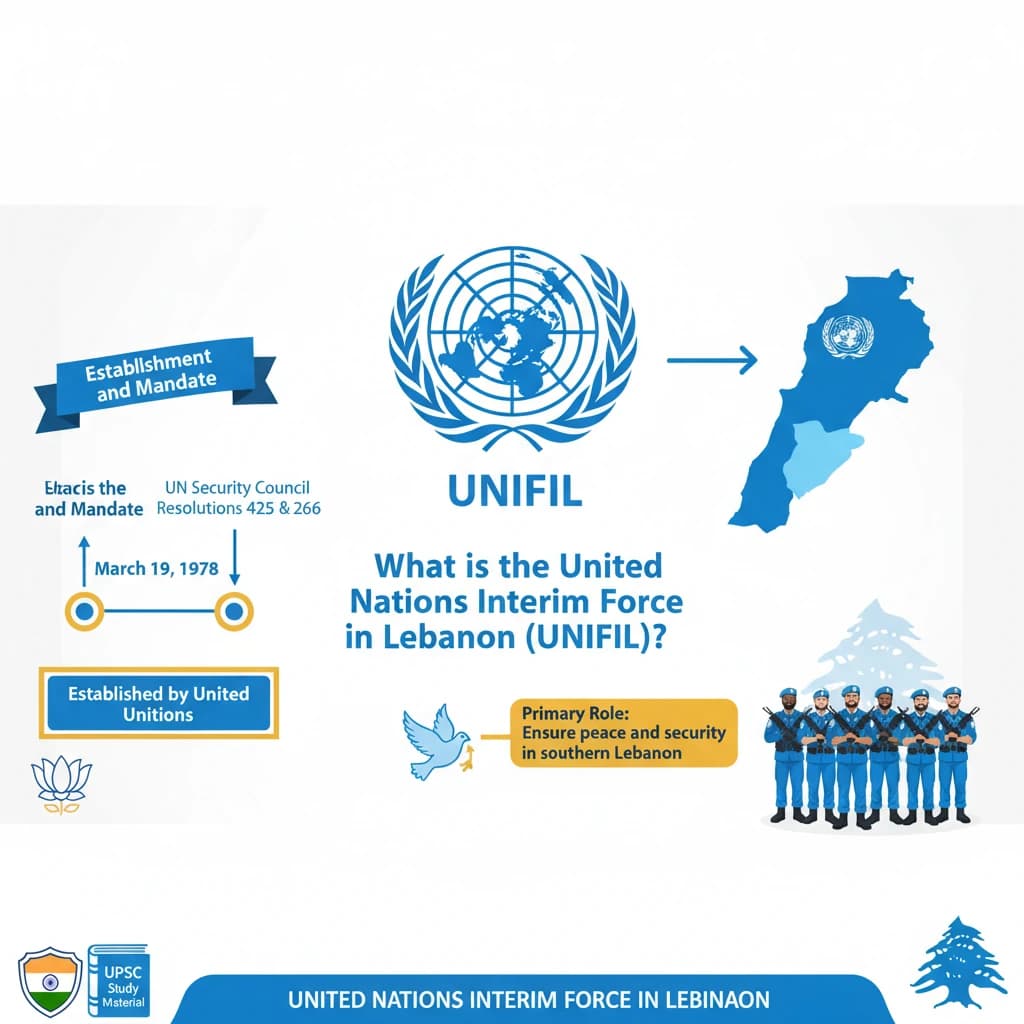
The United Nations Interim Force in Lebanon (UNIFIL) is a peacekeeping mission established by the United Nations. Its primary role is to ensure peace and security in southern Lebanon.
Establishment and Mandate
UNIFIL was originally established on March 19, 1978, by UN Security Council Resolutions 425 and 426. Its initial mandate was to confirm the withdrawal of Israeli forces from Lebanon, restore international peace and security, and assist the Lebanese government in restoring its effective authority in the area.
Key Dates:
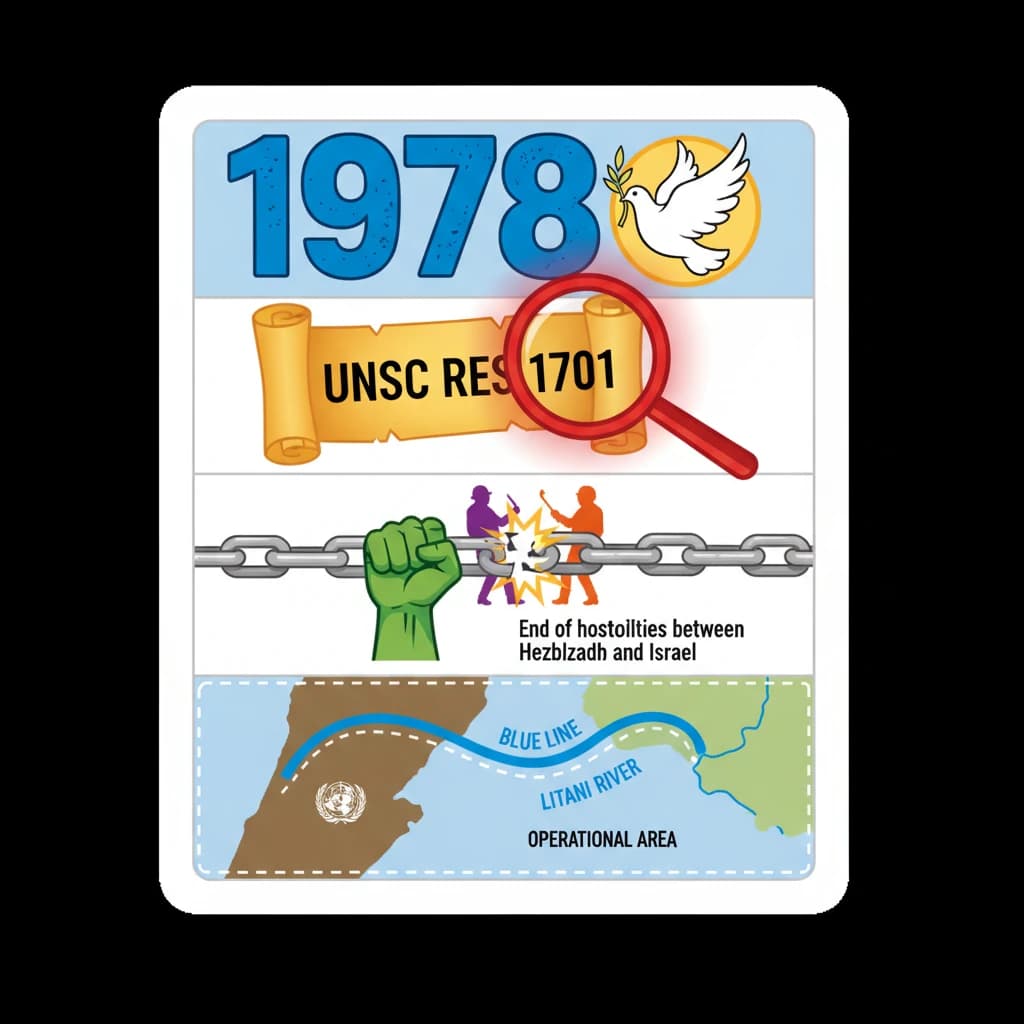
- 1978: Initial establishment of UNIFIL.
- 2006: Mandate significantly enhanced by Resolution 1701.
Enforcing Resolution 1701
Following the 2006 Lebanon War between Hezbollah and Israel, UN Security Council Resolution 1701 was adopted. This resolution significantly enhanced UNIFIL's mandate and operational scope.
Resolution 1701 specifically mandates that only Lebanese state forces and UNIFIL are authorized to operate between the Blue Line and the Litani River. This provision is crucial for maintaining a demilitarized zone.
Core Objective of Resolution 1701: To achieve a full cessation of hostilities and establish a permanent ceasefire between Hezbollah and Israel, ensuring a stable and secure environment in southern Lebanon.
Area of Operation: Blue Line to Litani River
The designated area of operation for UNIFIL, as defined by Resolution 1701, stretches from the Blue Line in the south to the Litani River in the north. The Blue Line is the demarcation line between Lebanon and Israel.
This geographical scope is vital for preventing unauthorized armed personnel, assets, or weapons from entering the area, thereby reducing the risk of conflict escalation.
For UPSC Mains (GS Paper II - International Relations), understanding the specific geographical mandate (Blue Line to Litani River) and the resolutions (1701) is crucial for analyzing UN peacekeeping effectiveness.
💡 Key Takeaways
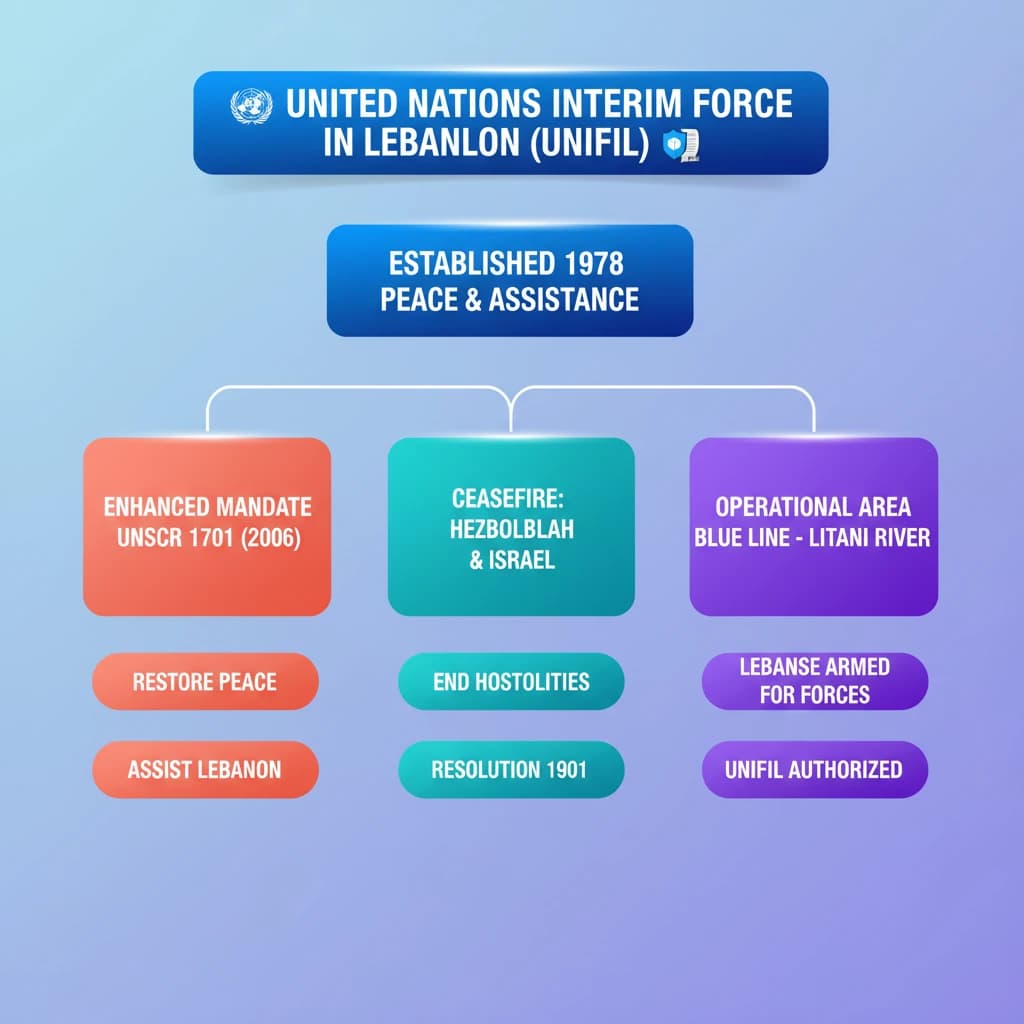
- •UNIFIL was established in 1978 to restore peace and assist Lebanese authority.
- •Its mandate was significantly enhanced in 2006 by UN Security Council Resolution 1701.
- •Resolution 1701 aims to end hostilities between Hezbollah and Israel.
- •UNIFIL's operational area is between the Blue Line and the Litani River.
- •Only Lebanese state forces and UNIFIL are authorized to operate in this zone.
🧠 Memory Techniques
95% Verified Content
📚 Reference Sources
•UN Security Council Resolution 1701 (2006)
•Drishti IAS Summary (provided source)