Loading page, please wait…
Vaidra Logo
Vaidra

Top 4 items + smart groups

UPSC GPT
New
Current Affairs
Daily Solutions
Daily Puzzle
Mains Evaluator

Version 2.0.0 • Built with ❤️ for UPSC aspirants

Loading...
Loading...
Loading...
Loading...
Loading...
Loading...
Loading...
Loading...
Loading...
Loading...
Loading...
Loading...
Loading...
Back
All Subjects

Topics

0 topics • 0 completed

Loading topics...
Loading...
Loading...
Loading...
Loading...
Loading...
Overall Progress0%
Cross-Border Payments: Wholesale vs. Retail - UPSC Economy

Cross-Border Payments: Wholesale vs. Retail - UPSC Economy

What is Cross-Border Payments: Wholesale vs. Retail in UPSC Economy?

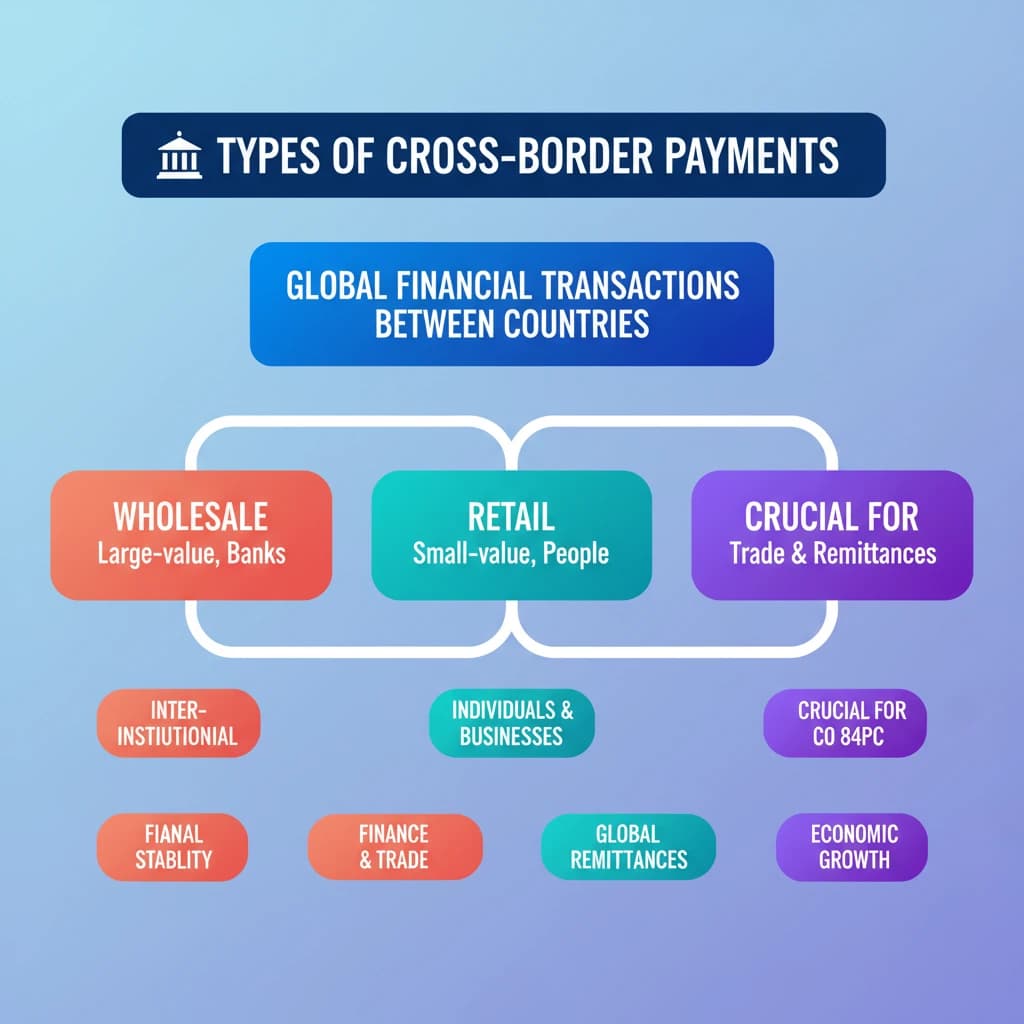
Cross-Border Payments: Wholesale vs. Retail is a key topic under Economy for UPSC Civil Services Examination. Key points include: Cross-border payments are financial transactions between different countries, vital for the global economy.. They are categorized into Wholesale and Retail based on scale and participants.. Wholesale payments are large-value, inter-institutional transactions for finance and trade.. Understanding this topic is essential for both UPSC Prelims and Mains preparation.

Why is Cross-Border Payments: Wholesale vs. Retail important for UPSC exam?

Cross-Border Payments: Wholesale vs. Retail is a Medium-level topic in UPSC Economy. It is tested in both Prelims (factual MCQs) and Mains (analytical answer writing). Previous year UPSC questions have frequently covered aspects of Cross-Border Payments: Wholesale vs. Retail, making it essential for comprehensive IAS preparation.

How to prepare Cross-Border Payments: Wholesale vs. Retail for UPSC?

To prepare Cross-Border Payments: Wholesale vs. Retail for UPSC: (1) Study the comprehensive notes covering all key concepts on Vaidra. (2) Practice previous year questions on this topic. (3) Connect it with current affairs using daily updates. (4) Revise using key takeaways and mind maps available for Economy. (5) Write practice answers linking Cross-Border Payments: Wholesale vs. Retail to related GS Paper topics.

Key takeaways of Cross-Border Payments: Wholesale vs. Retail for UPSC

  • Cross-border payments are financial transactions between different countries, vital for the global economy.
  • They are categorized into Wholesale and Retail based on scale and participants.
  • Wholesale payments are large-value, inter-institutional transactions for finance and trade.
  • Retail payments are smaller-value, involving individuals or businesses, like remittances.
  • Efficient cross-border payments are crucial for global trade, remittances, and financial stability.
  • Modernization efforts aim for faster, cheaper, more transparent, and accessible systems.
Cross-Border Payments: Wholesale vs. Retail

Cross-Border Payments: Wholesale vs. Retail

Medium⏱️ 7 min read✓ 95% Verified
economy

📖 Introduction

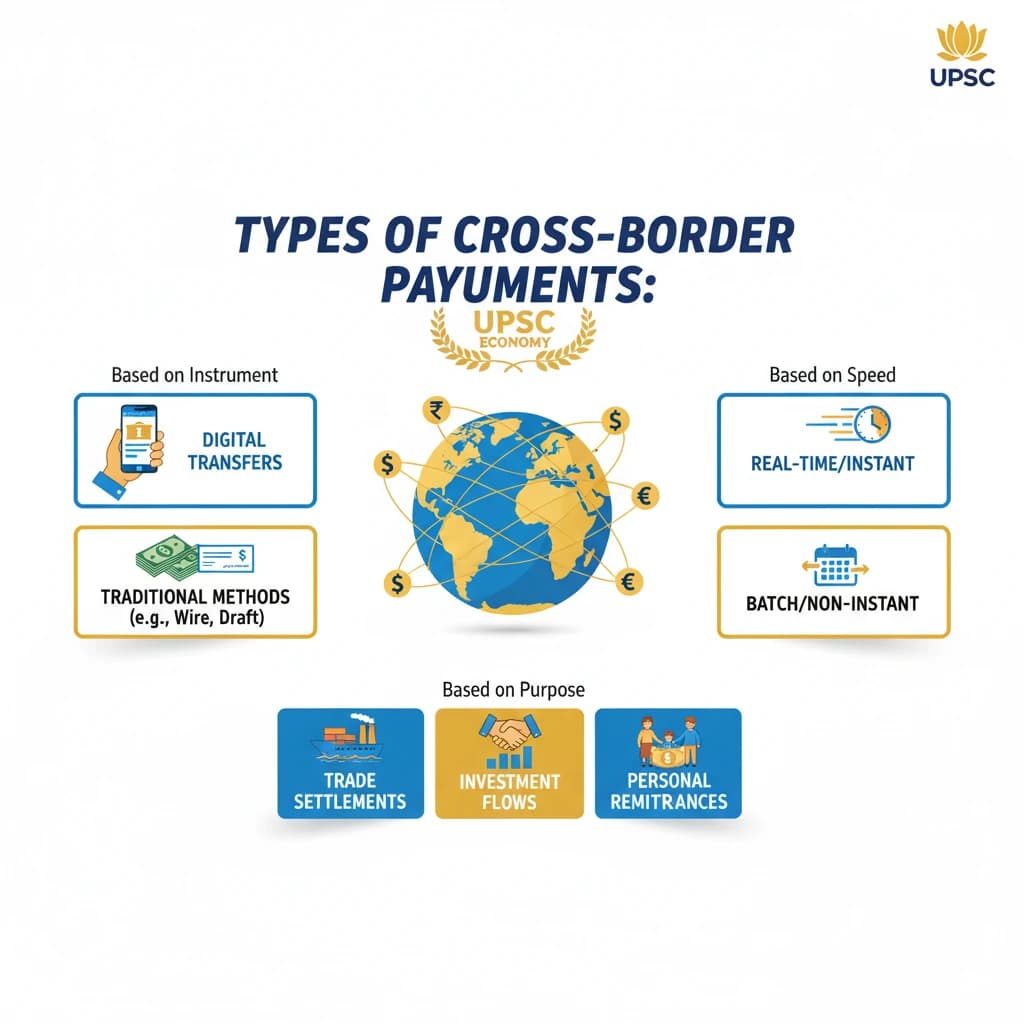
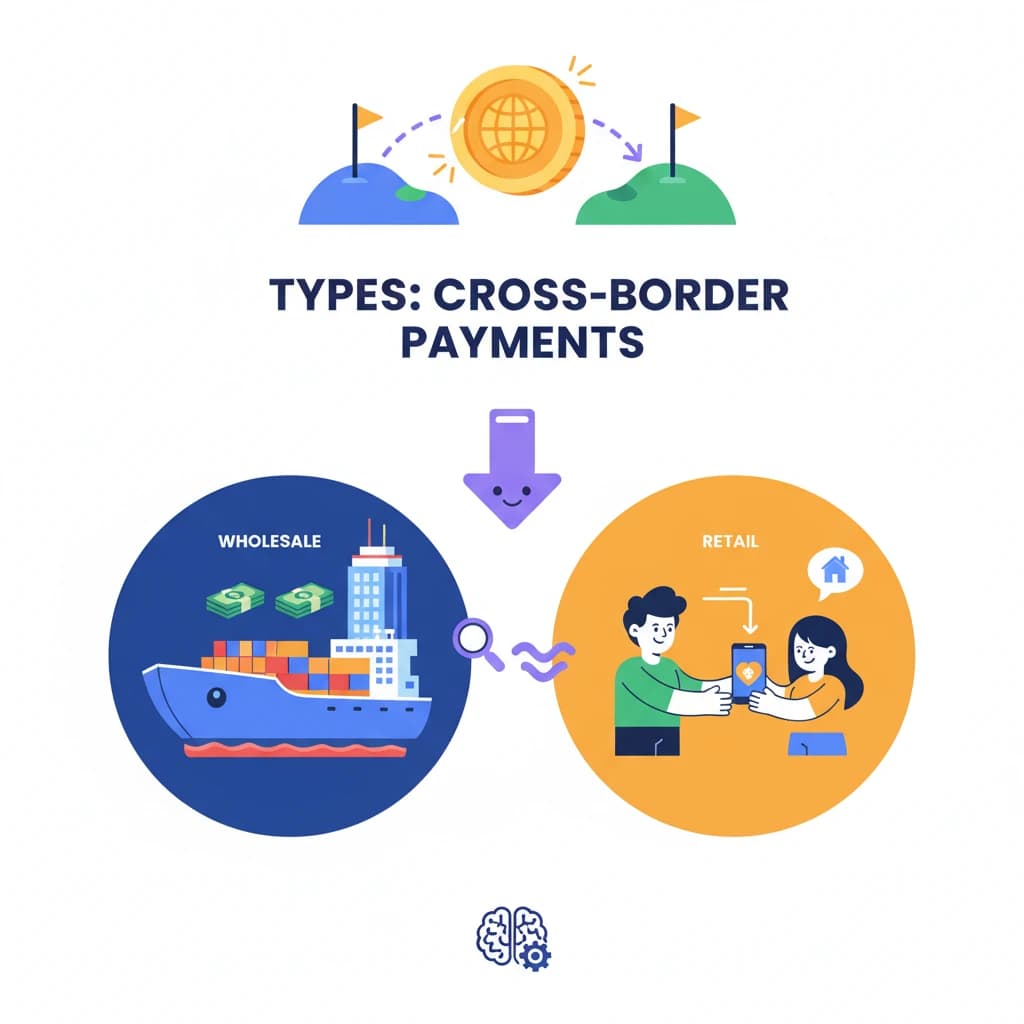
<h4>Introduction to Cross-border Payments</h4><p><strong>Cross-border payments</strong> refer to financial transactions where the payer and the payee are located in different countries. These payments are crucial for facilitating international trade, investment, and personal remittances, forming the backbone of the global economy.</p><p>The efficiency and security of these payment systems significantly impact economic growth and financial stability worldwide. Understanding their various types is fundamental for UPSC aspirants.</p><h4>Types of Cross-border Payments</h4><p>Cross-border payments can be broadly categorized into two main types based on the nature of the transaction and the parties involved: <strong>Wholesale Cross-border Payments</strong> and <strong>Retail Cross-border Payments</strong>.</p><div class='key-point-box'><p>The distinction primarily lies in the scale, participants, and purpose of the financial transaction across international borders.</p></div><h4>Wholesale Cross-border Payments</h4><p><strong>Wholesale Cross-border Payments</strong> typically involve large-value transactions between financial institutions. These payments are integral to the functioning of global financial markets and interbank operations.</p><div class='info-box'><ul><li><strong>Participants:</strong> Primarily <strong>financial institutions</strong> such as banks, central banks, and large corporations.</li><li><strong>Purpose:</strong> Used for activities like <strong>borrowing</strong>, <strong>lending</strong>, and <strong>trading</strong> in various financial instruments.</li></ul></div><p>These transactions facilitate operations in <strong>foreign exchange</strong>, <strong>equities</strong>, and <strong>commodities</strong> markets. They ensure liquidity and stability within the international financial system.</p><p>Furthermore, <strong>governments</strong> and <strong>large corporations</strong> utilize wholesale payment systems for significant transactions. This includes payments related to substantial <strong>imports</strong>, <strong>exports</strong>, and managing their financial market activities.</p><div class='exam-tip-box'><p>Understanding wholesale payments is crucial for topics like <strong>monetary policy</strong>, <strong>financial market regulation</strong>, and <strong>international finance</strong> in <strong>UPSC GS Paper 3</strong>.</p></div><h4>Retail Cross-border Payments</h4><p><strong>Retail Cross-border Payments</strong> generally involve smaller-value transactions carried out by individuals or businesses. These payments cater to everyday needs and commercial activities across borders.</p><div class='info-box'><ul><li><strong>Participants:</strong> Primarily <strong>individuals</strong> or <strong>businesses</strong>.</li><li><strong>Categories:</strong> Include <strong>person-to-person (P2P)</strong>, <strong>person-to-business (P2B)</strong>, and <strong>business-to-business (B2B)</strong> transactions.</li></ul></div><p>A prominent example of retail cross-border payments is <strong>remittances</strong>. These are funds sent by <strong>migrants</strong> back to their home countries, playing a vital role in the economies of many developing nations.</p><p>Other examples include online purchases from international vendors, subscription payments for global services, and small-scale business transactions between SMEs in different countries.</p>
Concept Diagram

💡 Key Takeaways

  • •Cross-border payments are financial transactions between different countries, vital for the global economy.
  • •They are categorized into Wholesale and Retail based on scale and participants.
  • •Wholesale payments are large-value, inter-institutional transactions for finance and trade.
  • •Retail payments are smaller-value, involving individuals or businesses, like remittances.
  • •Efficient cross-border payments are crucial for global trade, remittances, and financial stability.
  • •Modernization efforts aim for faster, cheaper, more transparent, and accessible systems.

🧠 Memory Techniques
Memory Aid
95% Verified Content

📚 Reference Sources

•Reserve Bank of India (RBI) publications on Payment Systems
•Bank for International Settlements (BIS) reports on Cross-border Payments
•World Bank reports on Remittances

Related Topics

Loading related topics...
Explore:Economy Topics·All Subjects·Daily Current Affairs·Editorial Analysis·Previous Year Questions·UPSC GPT