Economy: Recent Schemes, Cryptocurrency & Miscellaneous Topics - UPSC Economy
What is Economy: Recent Schemes, Cryptocurrency & Miscellaneous Topics in UPSC Economy?
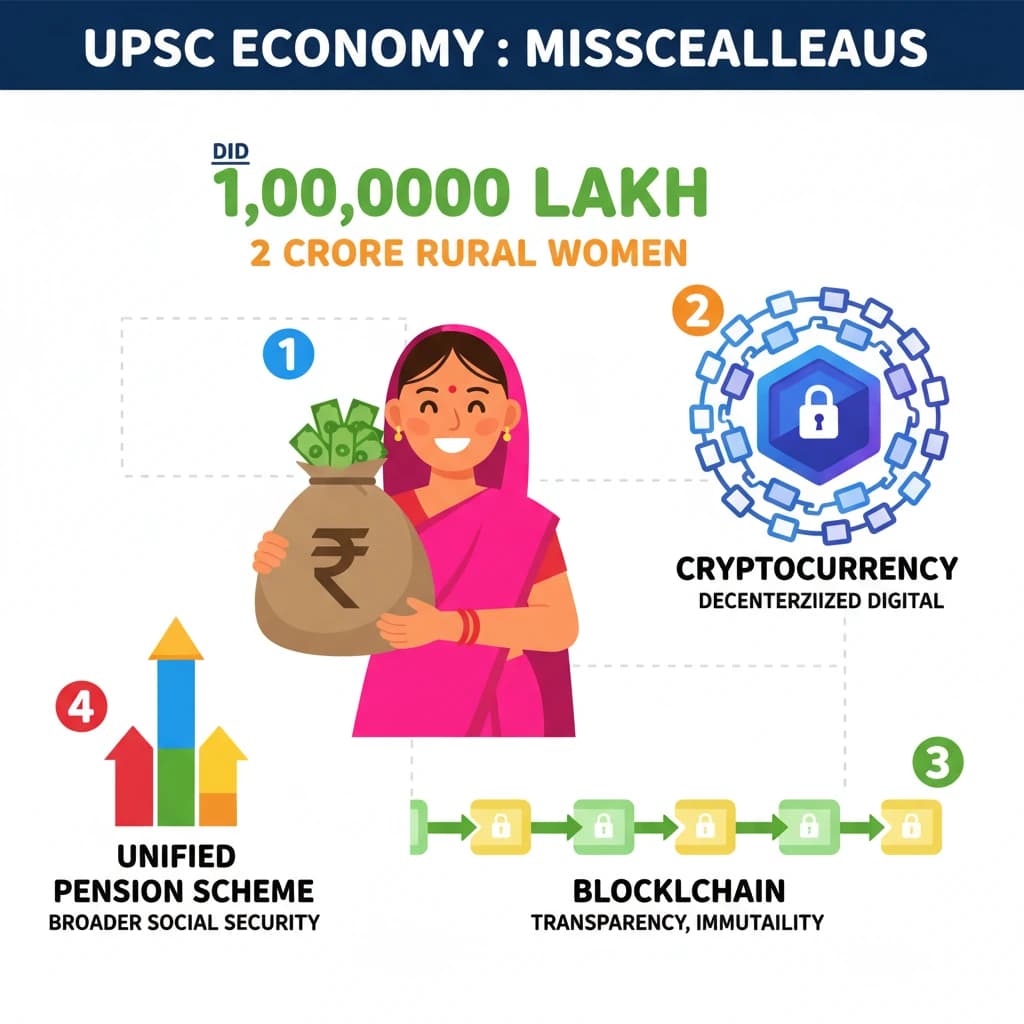
Economy: Recent Schemes, Cryptocurrency & Miscellaneous Topics is a key topic under Economy for UPSC Civil Services Examination. Key points include: Lakhpati Didi aims to empower 2 crore rural women by enabling them to earn ₹1 lakh annually through skill development via SHGs.. Cryptocurrency is a digital currency secured by cryptography, operating on a decentralized blockchain.. Blockchain is a distributed ledger technology offering transparency, immutability, and decentralization, with applications beyond just currency.. Understanding this topic is essential for both UPSC Prelims and Mains preparation.
Why is Economy: Recent Schemes, Cryptocurrency & Miscellaneous Topics important for UPSC exam?
Economy: Recent Schemes, Cryptocurrency & Miscellaneous Topics is a Medium-level topic in UPSC Economy. It is tested in both Prelims (factual MCQs) and Mains (analytical answer writing). Previous year UPSC questions have frequently covered aspects of Economy: Recent Schemes, Cryptocurrency & Miscellaneous Topics, making it essential for comprehensive IAS preparation.
How to prepare Economy: Recent Schemes, Cryptocurrency & Miscellaneous Topics for UPSC?
To prepare Economy: Recent Schemes, Cryptocurrency & Miscellaneous Topics for UPSC: (1) Study the comprehensive notes covering all key concepts on Vaidra. (2) Practice previous year questions on this topic. (3) Connect it with current affairs using daily updates. (4) Revise using key takeaways and mind maps available for Economy. (5) Write practice answers linking Economy: Recent Schemes, Cryptocurrency & Miscellaneous Topics to related GS Paper topics.
Key takeaways of Economy: Recent Schemes, Cryptocurrency & Miscellaneous Topics for UPSC
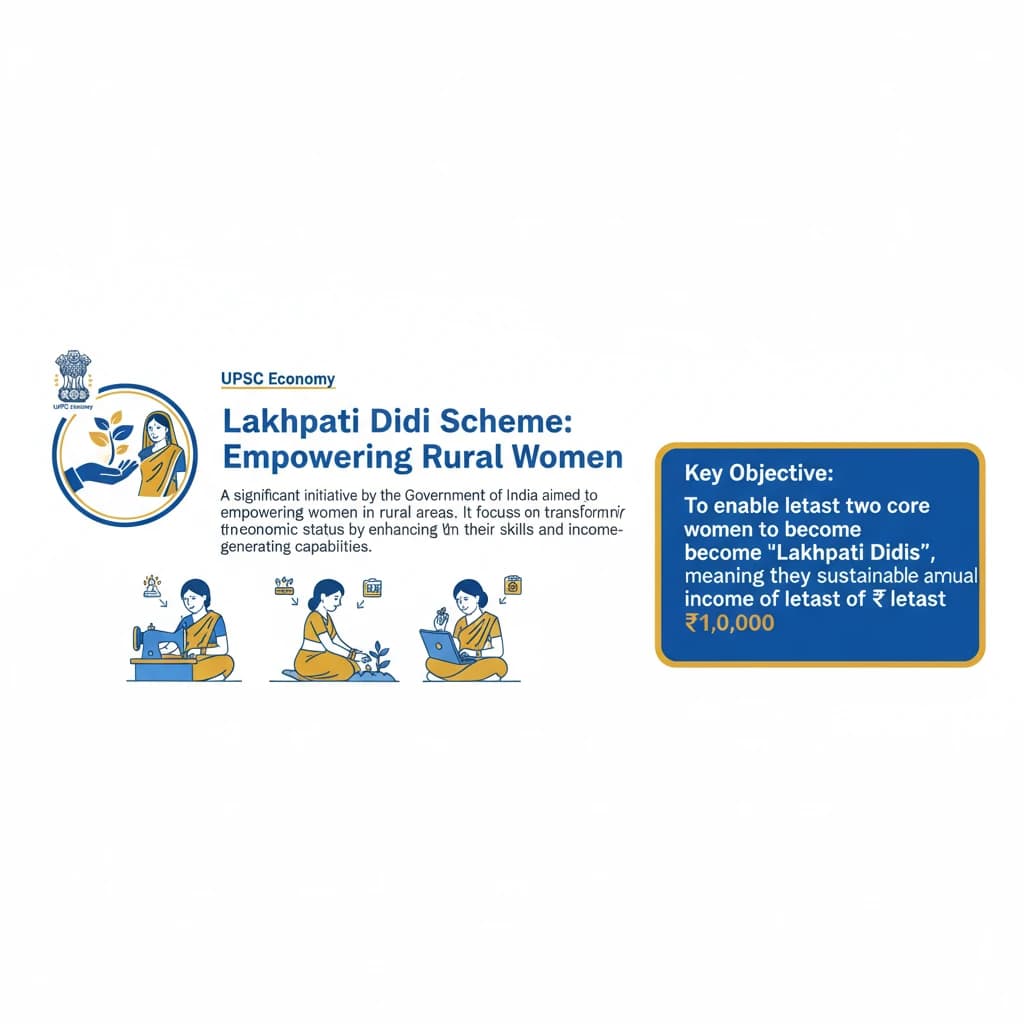
- Lakhpati Didi aims to empower 2 crore rural women by enabling them to earn ₹1 lakh annually through skill development via SHGs.
- Cryptocurrency is a digital currency secured by cryptography, operating on a decentralized blockchain.
- Blockchain is a distributed ledger technology offering transparency, immutability, and decentralization, with applications beyond just currency.
- A Unified Pension Scheme seeks to streamline India's fragmented pension systems to provide broader and more equitable social security.
- These topics reflect India's focus on inclusive growth, digital transformation, and robust social welfare mechanisms.
Economy: Recent Schemes, Cryptocurrency & Miscellaneous Topics
📖 Introduction
💡 Key Takeaways
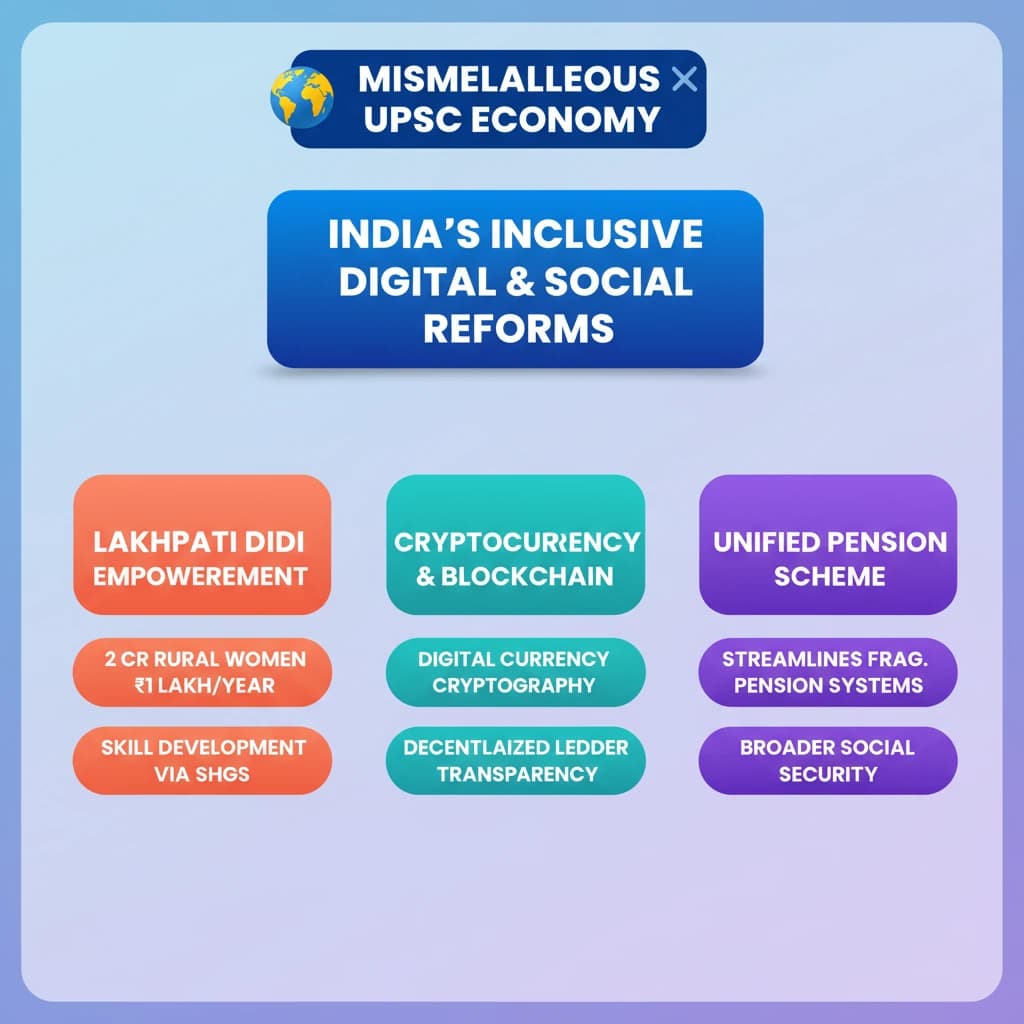
- •Lakhpati Didi aims to empower 2 crore rural women by enabling them to earn ₹1 lakh annually through skill development via SHGs.
- •Cryptocurrency is a digital currency secured by cryptography, operating on a decentralized blockchain.
- •Blockchain is a distributed ledger technology offering transparency, immutability, and decentralization, with applications beyond just currency.
- •A Unified Pension Scheme seeks to streamline India's fragmented pension systems to provide broader and more equitable social security.
- •These topics reflect India's focus on inclusive growth, digital transformation, and robust social welfare mechanisms.
🧠 Memory Techniques