Loading page, please wait…
Vaidra Logo
Vaidra

Top 4 items + smart groups

UPSC GPT
New
Current Affairs
Daily Solutions
Daily Puzzle
Mains Evaluator

Version 2.0.0 • Built with ❤️ for UPSC aspirants

Loading...
Loading...
Loading...
Loading...
Loading...
Loading...
Loading...
Loading...
Loading...
Loading...
Loading...
Loading...
Loading...
Ancient India: Maritime History and Navigation - UPSC Economy
Back
All Subjects

Topics

0 topics • 0 completed

Loading topics...
Loading...
Loading...
Loading...
Loading...
Loading...
Overall Progress0%

Ancient India: Maritime History and Navigation - UPSC Economy

What is Ancient India: Maritime History and Navigation in UPSC Economy?

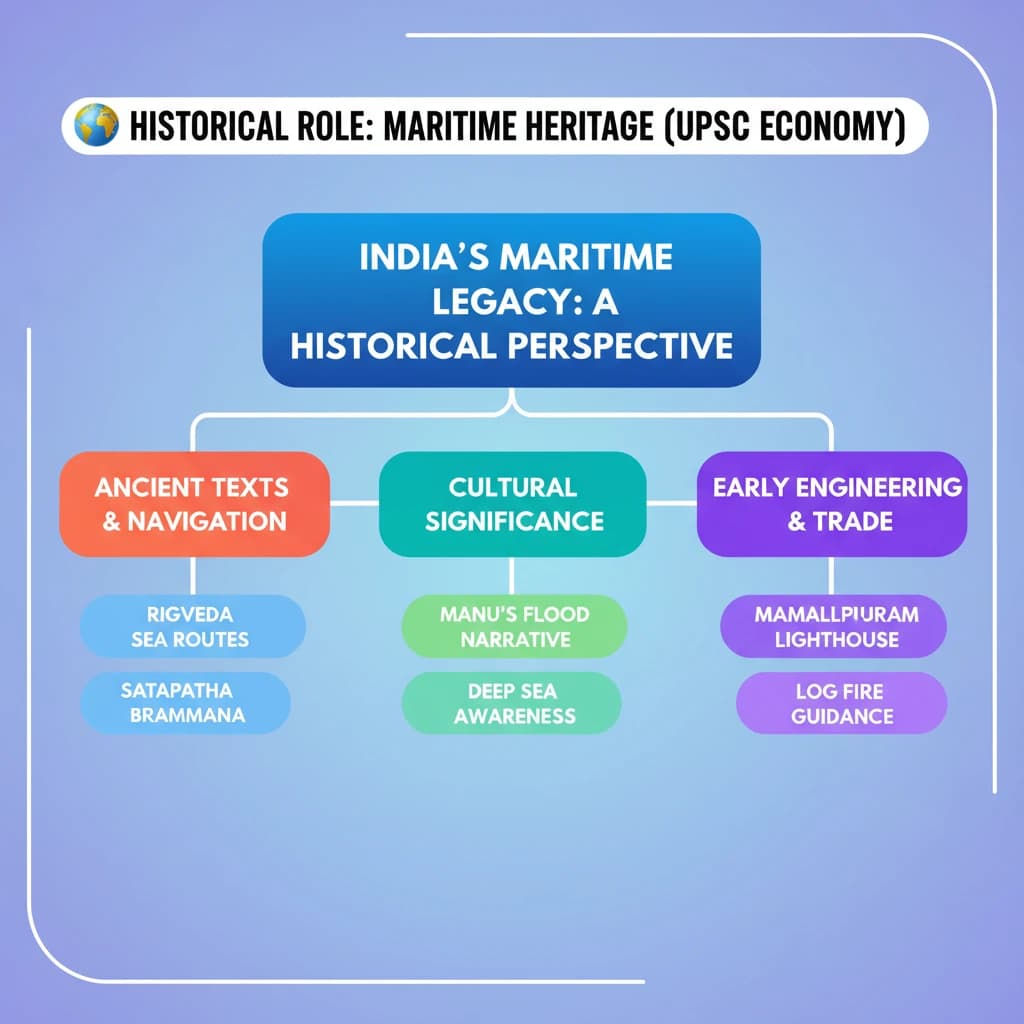
Ancient India: Maritime History and Navigation is a key topic under Economy for UPSC Civil Services Examination. Key points include: Ancient Indian texts (Rigveda, Satapatha Brahmana) confirm early knowledge of sea navigation.. Mythological stories like Manu's flood narrative reflect deep cultural awareness of the sea.. Pallava King Narasimhavarman-I built a lighthouse at Mamallapuram in the 7th century A.D.. Understanding this topic is essential for both UPSC Prelims and Mains preparation.

Why is Ancient India: Maritime History and Navigation important for UPSC exam?

Ancient India: Maritime History and Navigation is a Medium-level topic in UPSC Economy. It is tested in both Prelims (factual MCQs) and Mains (analytical answer writing). Previous year UPSC questions have frequently covered aspects of Ancient India: Maritime History and Navigation, making it essential for comprehensive IAS preparation.

How to prepare Ancient India: Maritime History and Navigation for UPSC?

To prepare Ancient India: Maritime History and Navigation for UPSC: (1) Study the comprehensive notes covering all key concepts on Vaidra. (2) Practice previous year questions on this topic. (3) Connect it with current affairs using daily updates. (4) Revise using key takeaways and mind maps available for Economy. (5) Write practice answers linking Ancient India: Maritime History and Navigation to related GS Paper topics.

Key takeaways of Ancient India: Maritime History and Navigation for UPSC

  • Ancient Indian texts (Rigveda, Satapatha Brahmana) confirm early knowledge of sea navigation.
  • Mythological stories like Manu's flood narrative reflect deep cultural awareness of the sea.
  • Pallava King Narasimhavarman-I built a lighthouse at Mamallapuram in the 7th century A.D.
  • Mamallapuram lighthouse used log fires to guide ships, showcasing early engineering.
  • India has a long and rich maritime heritage, crucial for understanding its history and current strategic outlook.
Ancient India: Maritime History and Navigation

Ancient India: Maritime History and Navigation

Medium⏱️ 5 min read✓ 95% Verified
economy

📖 Introduction

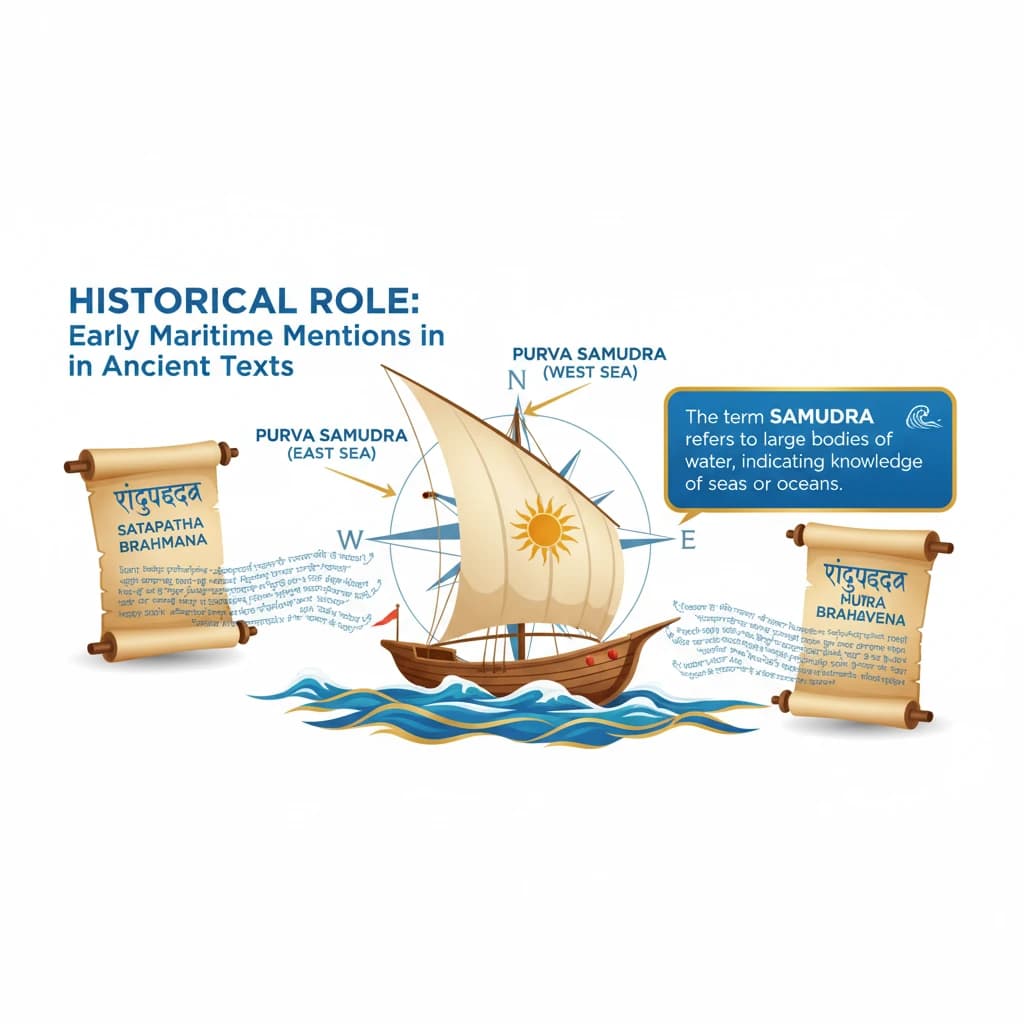
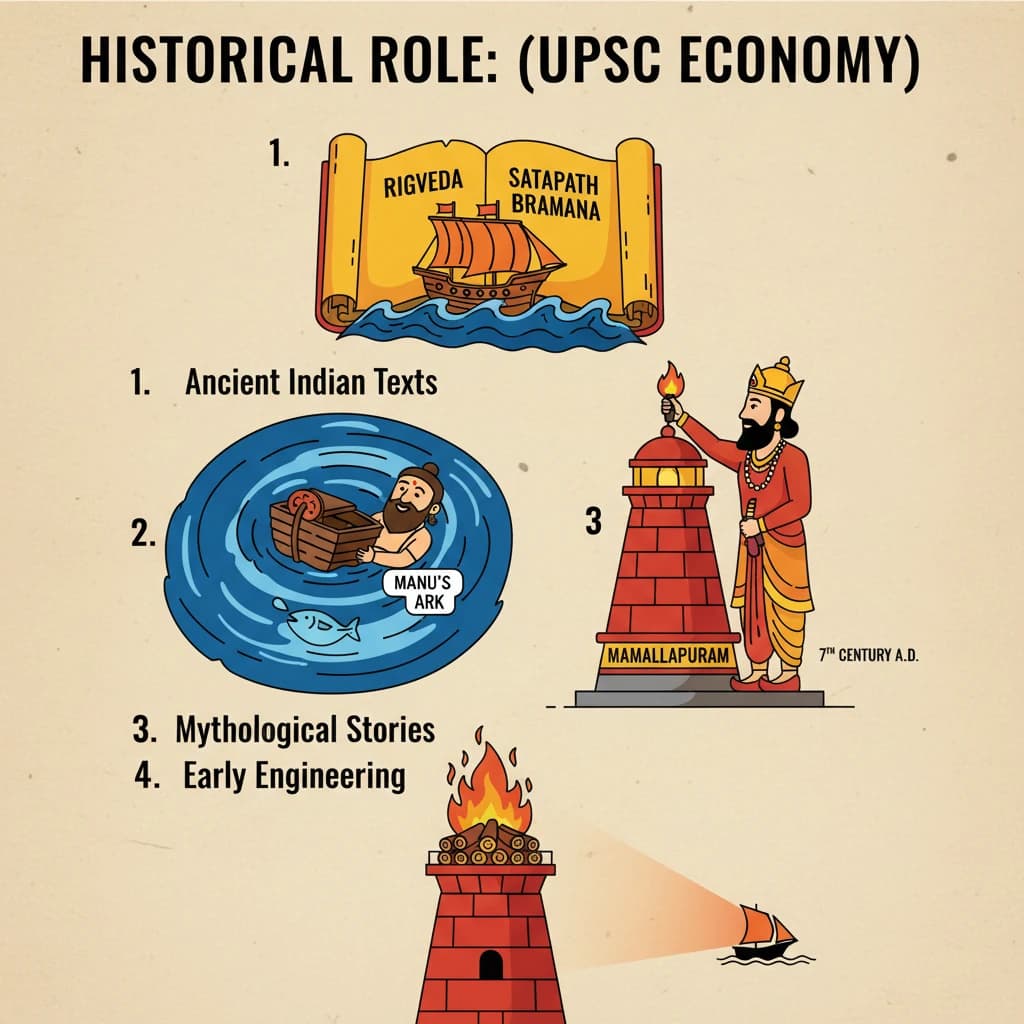
<h4>Early Maritime Mentions in Ancient Texts</h4><p>Ancient Indian texts provide significant evidence of early maritime activities. The <strong>Rigveda</strong> and <strong>Satapatha Brahmana</strong> extensively mention navigation across the <strong>Purva Samudra</strong> (East Sea) and <strong>Paschima Samudra</strong> (West Sea).</p><div class='info-box'><p>The term <strong>Samudra</strong> refers to large bodies of water, indicating knowledge of seas or oceans.</p></div><p>The <strong>Rigveda</strong> specifically describes notable sea voyages undertaken by deities and sages. It recounts the journeys of <strong>Varuna</strong> and <strong>Vashistha</strong>, highlighting the importance of sea travel in ancient Indian culture and mythology.</p><h4>Mythological Narratives and Sea Knowledge</h4><p>Early Indian mythology also connects deeply with maritime themes. The ancient story of <strong>Manu</strong>, who was miraculously rescued from a great flood, underscores the profound early Indian understanding of the sea and navigation.</p><div class='key-point-box'><p>This narrative suggests an inherent awareness of the vastness and power of the ocean, alongside knowledge of survival and navigation techniques during catastrophic events.</p></div><h4>Pallava Era: Architectural Maritime Innovations</h4><p>Centuries later, during the <strong>7th century A.D.</strong>, the <strong>Pallava king Narasimhavarman-I</strong> made a significant contribution to maritime infrastructure. He established a lighthouse at <strong>Mamallapuram</strong> (also known as <strong>Mahabalipuram</strong>).</p><div class='info-box'><p>This lighthouse utilized <strong>log fires</strong> as a primary method to guide ships, demonstrating early practical application of navigation aids.</p></div><p>The historical lighthouse at <strong>Mamallapuram</strong> is renowned for offering stunning views of the adjacent <strong>Shore Temple complex</strong>, which is recognized as a <strong>UNESCO World Heritage Site</strong>, further cementing the region's historical significance.</p><div class='exam-tip-box'><p>Understanding these historical instances is crucial for questions on <strong>ancient Indian trade routes</strong>, <strong>cultural exchange</strong>, and <strong>technological advancements</strong> in maritime history (<strong>GS Paper I</strong>).</p></div>
Concept Diagram

💡 Key Takeaways

  • •Ancient Indian texts (Rigveda, Satapatha Brahmana) confirm early knowledge of sea navigation.
  • •Mythological stories like Manu's flood narrative reflect deep cultural awareness of the sea.
  • •Pallava King Narasimhavarman-I built a lighthouse at Mamallapuram in the 7th century A.D.
  • •Mamallapuram lighthouse used log fires to guide ships, showcasing early engineering.
  • •India has a long and rich maritime heritage, crucial for understanding its history and current strategic outlook.

🧠 Memory Techniques
Memory Aid
95% Verified Content

📚 Reference Sources

•NCERT History textbooks (Ancient India)
•Standard academic historical texts on Indian maritime history

Related Topics

Loading related topics...
Explore:Economy Topics·All Subjects·Daily Current Affairs·Editorial Analysis·Previous Year Questions·UPSC GPT