India Grants Record Patents - UPSC Economy
What is India Grants Record Patents in UPSC Economy?
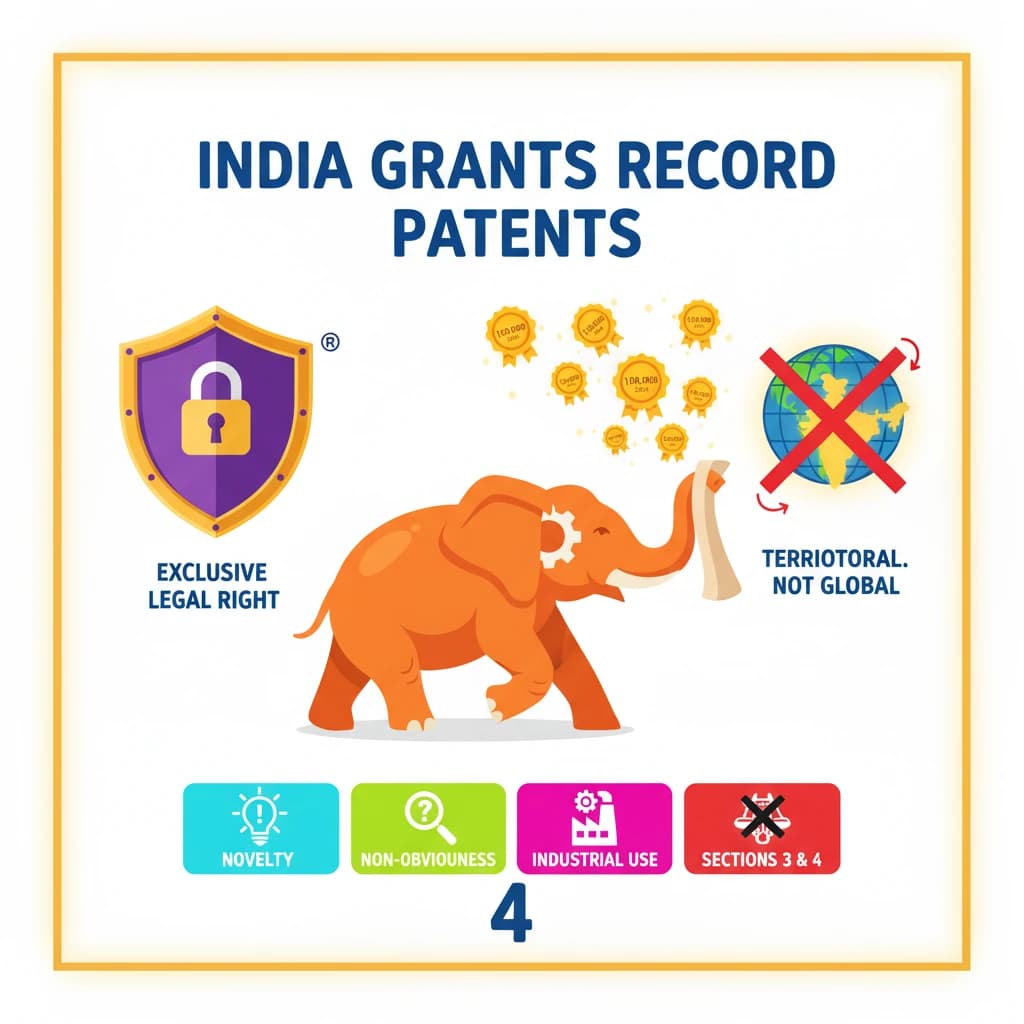
India Grants Record Patents is a key topic under Economy for UPSC Civil Services Examination. Key points include: India granted a record one lakh patents in 2024, indicating a significant boost in innovation.. A patent is a legal right protecting an invention, granting exclusive rights to the inventor.. Patent protection is territorial; there is no global patent.. Understanding this topic is essential for both UPSC Prelims and Mains preparation.
Why is India Grants Record Patents important for UPSC exam?
India Grants Record Patents is a Medium-level topic in UPSC Economy. It is tested in both Prelims (factual MCQs) and Mains (analytical answer writing). Previous year UPSC questions have frequently covered aspects of India Grants Record Patents, making it essential for comprehensive IAS preparation.
How to prepare India Grants Record Patents for UPSC?
To prepare India Grants Record Patents for UPSC: (1) Study the comprehensive notes covering all key concepts on Vaidra. (2) Practice previous year questions on this topic. (3) Connect it with current affairs using daily updates. (4) Revise using key takeaways and mind maps available for Economy. (5) Write practice answers linking India Grants Record Patents to related GS Paper topics.
Key takeaways of India Grants Record Patents for UPSC
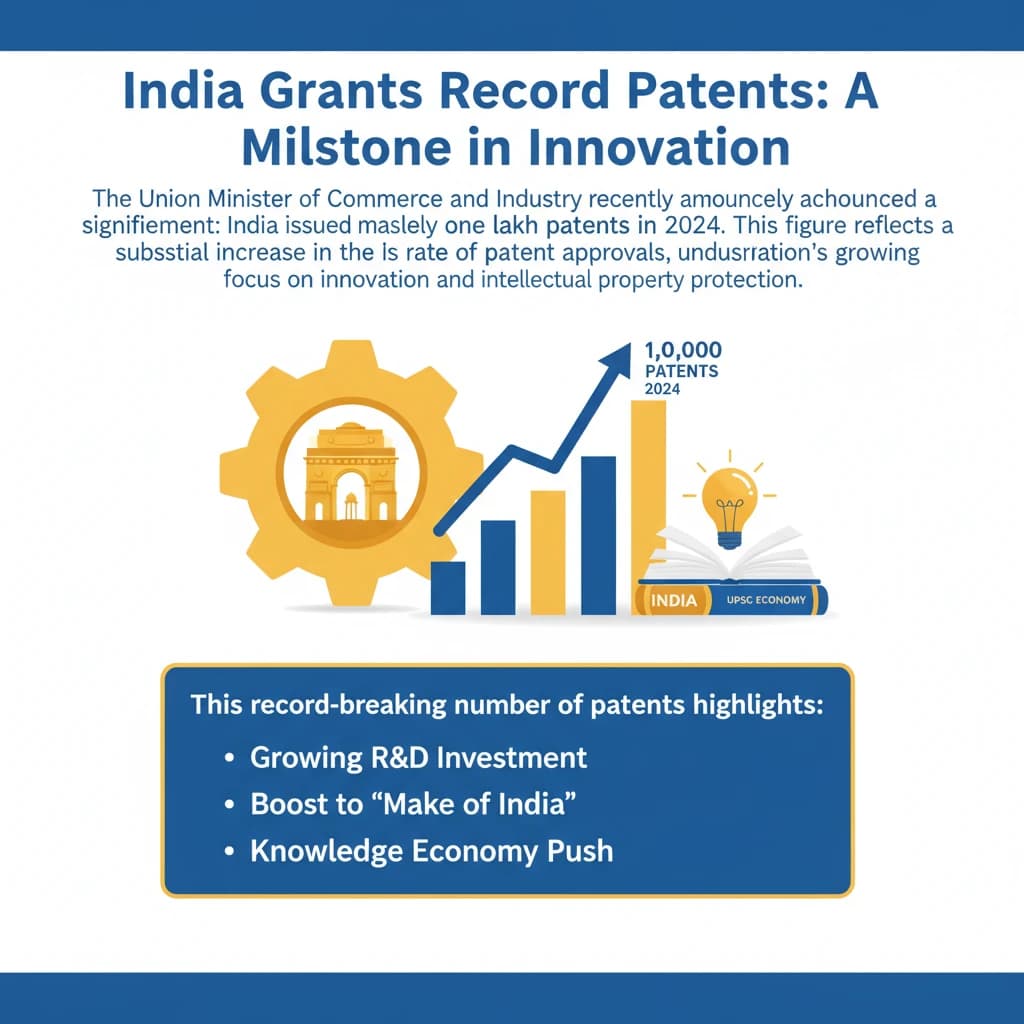
- India granted a record one lakh patents in 2024, indicating a significant boost in innovation.
- A patent is a legal right protecting an invention, granting exclusive rights to the inventor.
- Patent protection is territorial; there is no global patent.
- Key patentability criteria include novelty, non-obviousness, and industrial application, along with not falling under Sections 3 & 4 of the Act.
- The Patents Act, 1970, governs India's patent system, with the 2005 amendment extending product patents to all fields.
- Recent updates like the Patents (Amendment) Rules, 2024, aim to streamline the system.
India Grants Record Patents
📖 Introduction
💡 Key Takeaways
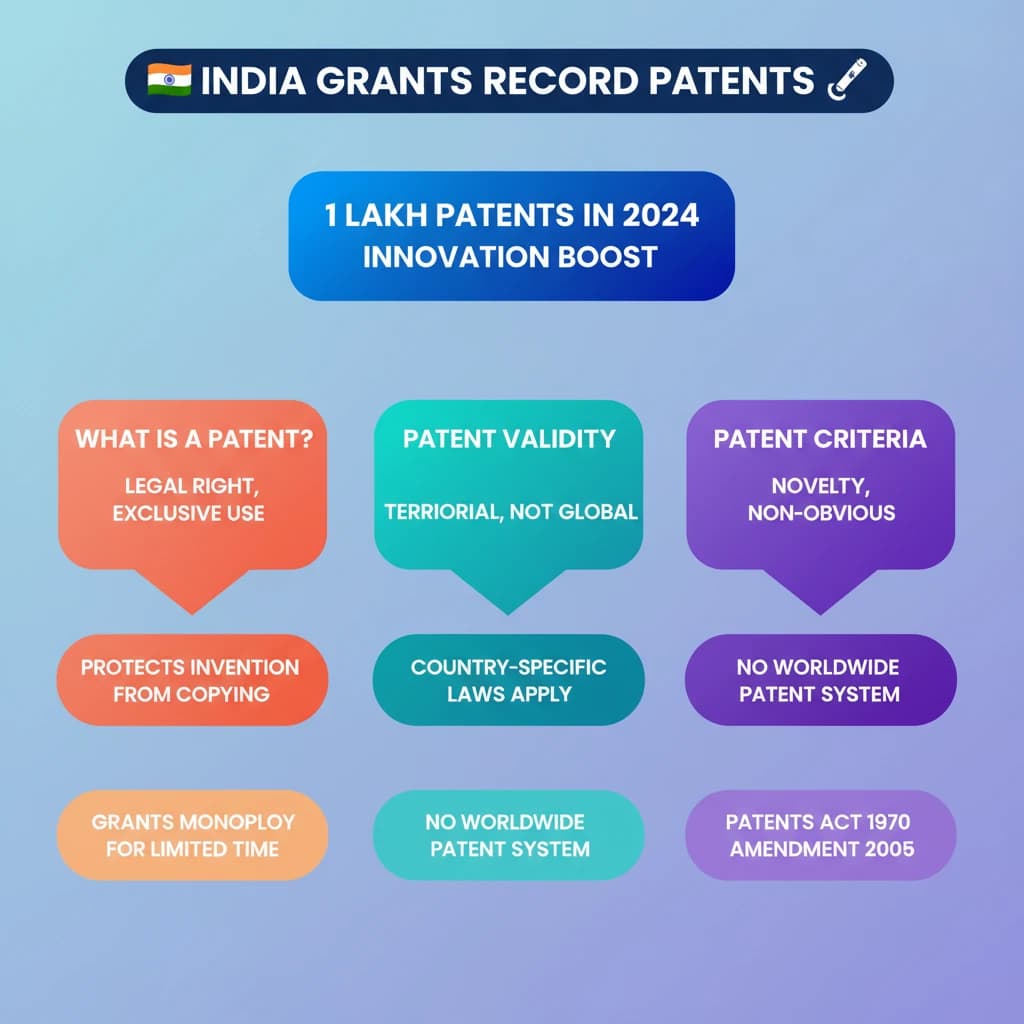
- •India granted a record one lakh patents in 2024, indicating a significant boost in innovation.
- •A patent is a legal right protecting an invention, granting exclusive rights to the inventor.
- •Patent protection is territorial; there is no global patent.
- •Key patentability criteria include novelty, non-obviousness, and industrial application, along with not falling under Sections 3 & 4 of the Act.
- •The Patents Act, 1970, governs India's patent system, with the 2005 amendment extending product patents to all fields.
- •Recent updates like the Patents (Amendment) Rules, 2024, aim to streamline the system.
🧠 Memory Techniques