Loading page, please wait…
Vaidra Logo
Vaidra

Top 4 items + smart groups

UPSC GPT
New
Current Affairs
Daily Solutions
Daily Puzzle
Mains Evaluator

Version 2.0.0 • Built with ❤️ for UPSC aspirants

Loading...
Loading...
Loading...
Loading...
Loading...
Loading...
Loading...
Loading...
Loading...
Loading...
Loading...
Loading...
Loading...
Back
All Subjects

Topics

0 topics • 0 completed

Loading topics...
Loading...
Loading...
Loading...
Loading...
Loading...
Overall Progress0%

Threat to Indian Online Gaming Sector - UPSC Economy

What is Threat to Indian Online Gaming Sector in UPSC Economy?

Threat to Indian Online Gaming Sector is a key topic under Economy for UPSC Civil Services Examination. Key points include: Money laundering is a significant threat to the integrity and long-term success of the Indian online gaming sector.. The Digital India Foundation (DIF) report highlighted this critical issue.. The rapid growth of online gaming necessitates robust regulatory frameworks to prevent financial crimes.. Understanding this topic is essential for both UPSC Prelims and Mains preparation.

Why is Threat to Indian Online Gaming Sector important for UPSC exam?

Threat to Indian Online Gaming Sector is a Medium-level topic in UPSC Economy. It is tested in both Prelims (factual MCQs) and Mains (analytical answer writing). Previous year UPSC questions have frequently covered aspects of Threat to Indian Online Gaming Sector, making it essential for comprehensive IAS preparation.

How to prepare Threat to Indian Online Gaming Sector for UPSC?

To prepare Threat to Indian Online Gaming Sector for UPSC: (1) Study the comprehensive notes covering all key concepts on Vaidra. (2) Practice previous year questions on this topic. (3) Connect it with current affairs using daily updates. (4) Revise using key takeaways and mind maps available for Economy. (5) Write practice answers linking Threat to Indian Online Gaming Sector to related GS Paper topics.

Key takeaways of Threat to Indian Online Gaming Sector for UPSC

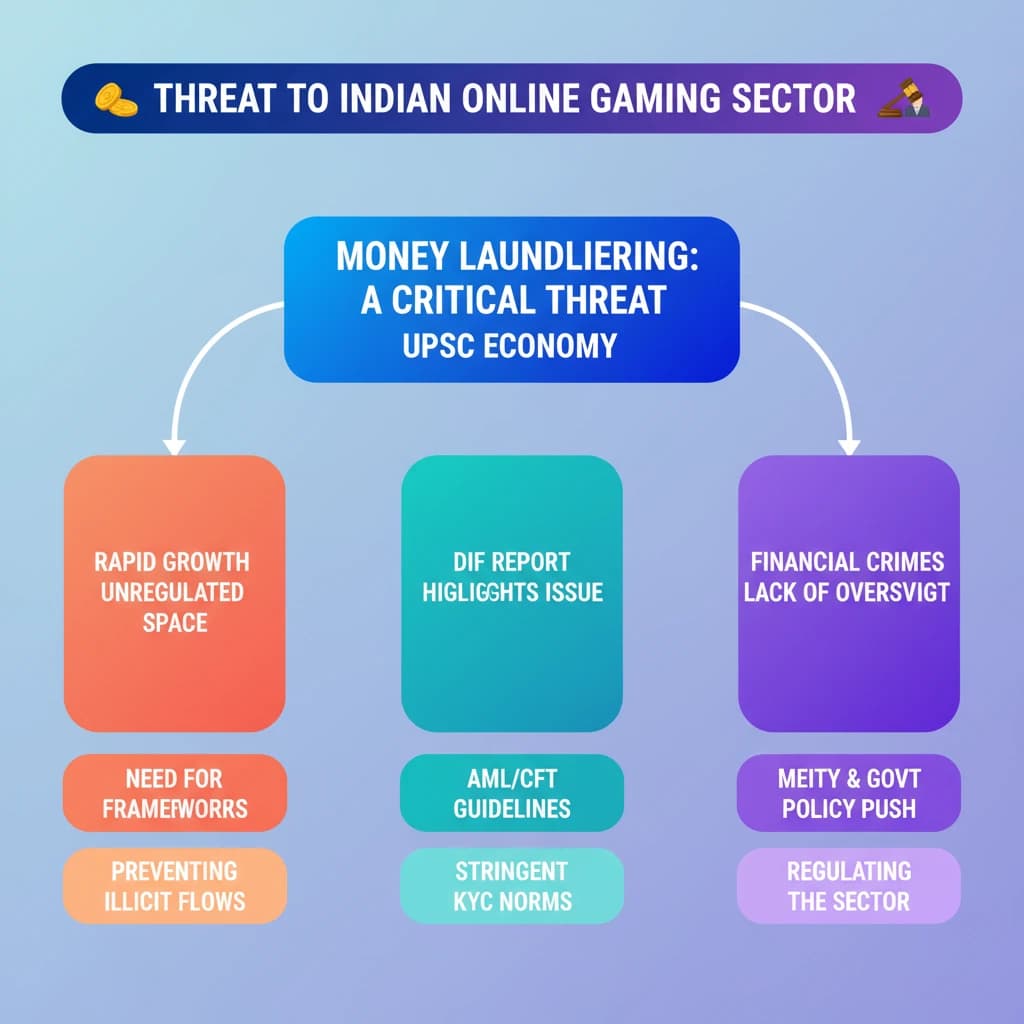
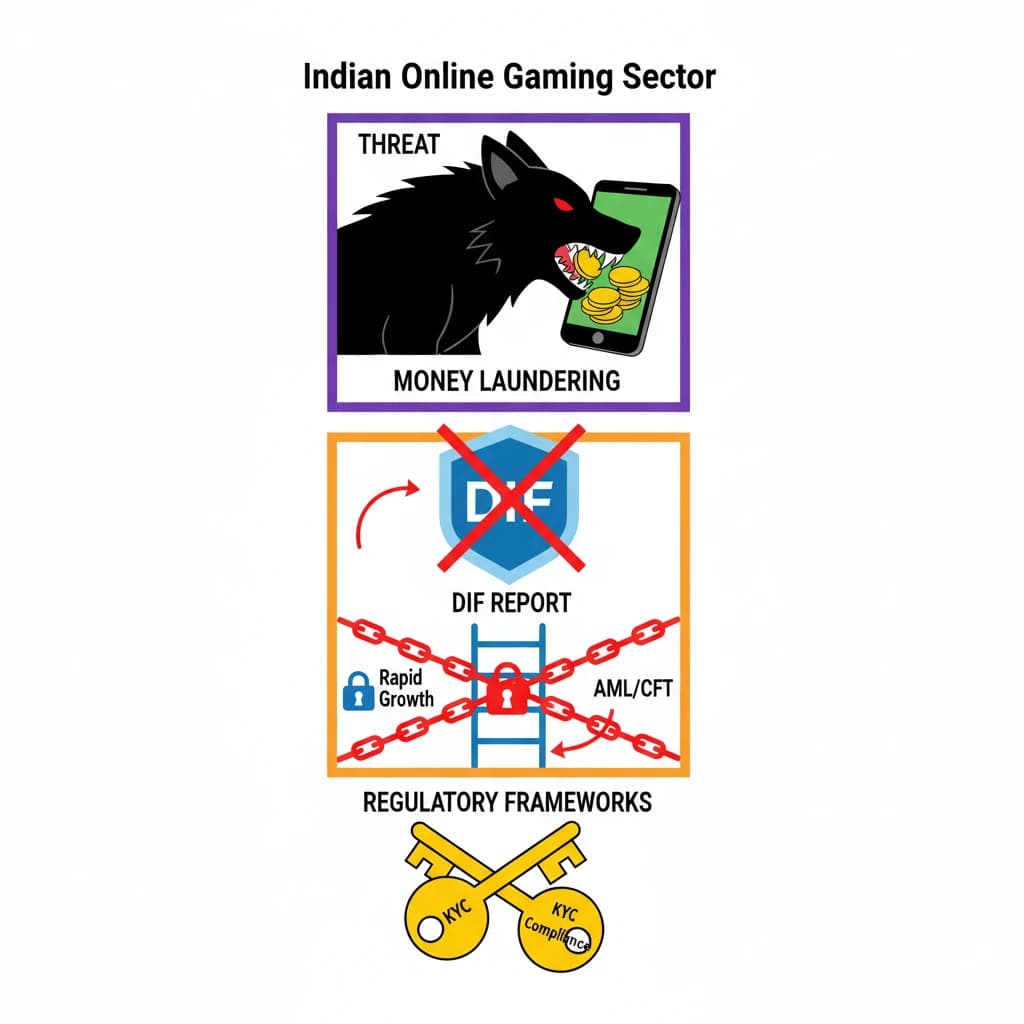
  • Money laundering is a significant threat to the integrity and long-term success of the Indian online gaming sector.
  • The Digital India Foundation (DIF) report highlighted this critical issue.
  • The rapid growth of online gaming necessitates robust regulatory frameworks to prevent financial crimes.
  • Compliance with AML/CFT guidelines and stringent KYC norms are crucial for the industry.
  • Government bodies, particularly MeitY, are actively working on policies to regulate the sector and mitigate risks.
Threat to Indian Online Gaming Sector

Threat to Indian Online Gaming Sector

Medium⏱️ 7 min read✓ 95% Verified
economy

📖 Introduction

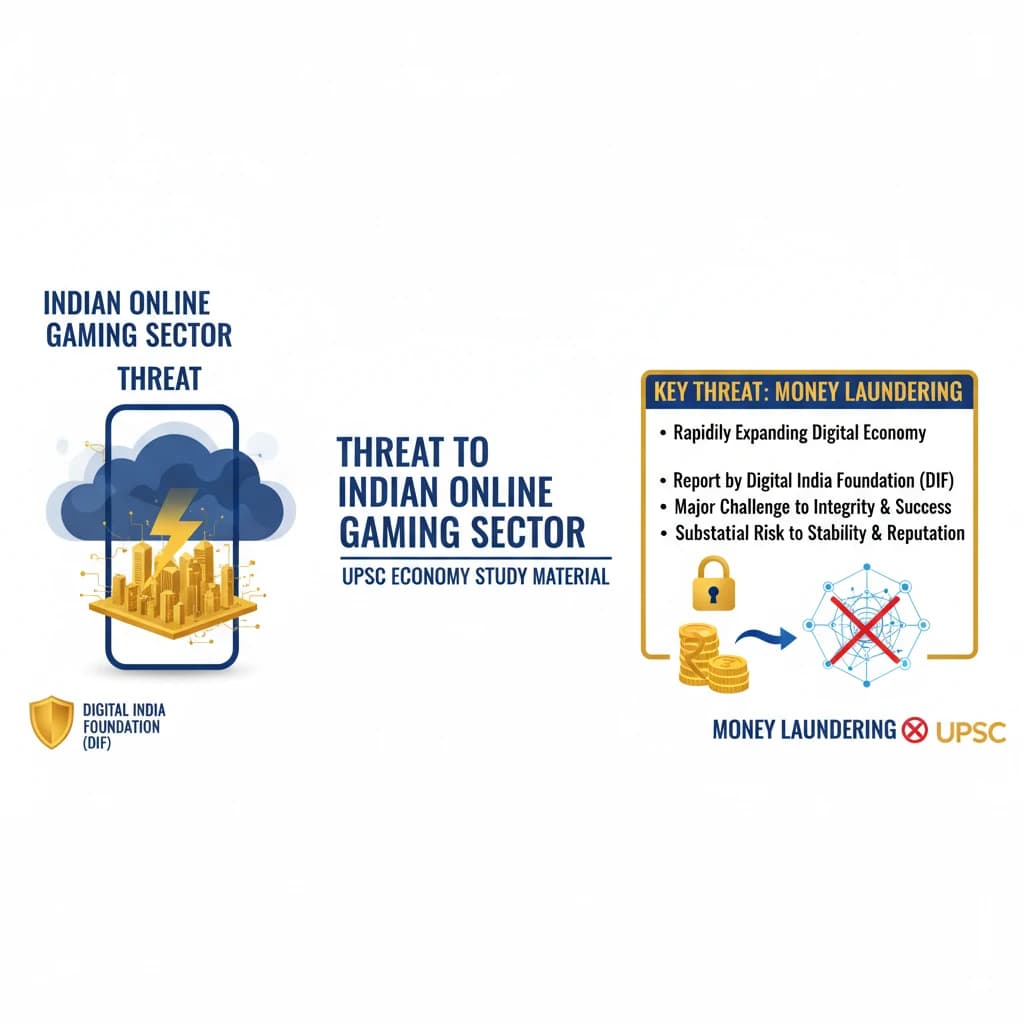
<h4>Introduction to the Threat</h4><p>The <strong>Indian online gaming sector</strong>, a rapidly expanding segment of the digital economy, faces a significant challenge. A report by the <strong>Digital India Foundation (DIF)</strong> has identified <strong>money laundering</strong> as a major threat to its integrity and long-term success.</p><div class='key-point-box'><p><strong>Key Threat:</strong> <strong>Money laundering</strong> poses a substantial risk to the stability and reputation of the <strong>Indian online gaming industry</strong>.</p></div><h4>Understanding Money Laundering in Online Gaming</h4><p><strong>Money laundering</strong> involves disguising the origins of illegally obtained money through a series of transactions. In the context of online gaming, this can occur through various methods, making illicit funds appear legitimate.</p><p>The digital nature and often global reach of online gaming platforms can create avenues for sophisticated laundering schemes, impacting the sector's credibility and financial health.</p><h4>The Digital India Foundation (DIF)</h4><div class='info-box'><p>The <strong>Digital India Foundation (DIF)</strong> is a prominent <strong>not-for-profit think-tank</strong>. Its core mission is to promote <strong>digital inclusion</strong> and the widespread adoption of internet-related technologies.</p><p>DIF aims to leverage digital advancements for the overall developmental process in India, making its insights on the digital economy highly relevant.</p></div><h4>Impact on Sector Integrity and Success</h4><p>The threat of <strong>money laundering</strong> directly undermines the <strong>integrity</strong> of the online gaming sector. It can lead to a lack of trust among legitimate players and investors, deterring growth.</p><p>Furthermore, it jeopardizes the <strong>long-term success</strong> of the industry by exposing it to legal and reputational risks. Regulatory scrutiny and potential punitive actions could severely hamper its development.</p><div class='exam-tip-box'><p><strong>UPSC Insight:</strong> This topic connects to <strong>GS-III (Economy and Internal Security)</strong>. Be prepared to discuss the challenges of the digital economy, financial crimes, and regulatory responses.</p></div>
Concept Diagram

💡 Key Takeaways

  • •Money laundering is a significant threat to the integrity and long-term success of the Indian online gaming sector.
  • •The Digital India Foundation (DIF) report highlighted this critical issue.
  • •The rapid growth of online gaming necessitates robust regulatory frameworks to prevent financial crimes.
  • •Compliance with AML/CFT guidelines and stringent KYC norms are crucial for the industry.
  • •Government bodies, particularly MeitY, are actively working on policies to regulate the sector and mitigate risks.

🧠 Memory Techniques
Memory Aid
95% Verified Content

📚 Reference Sources

•Digital India Foundation (DIF) reports (General reference for context and mission)
•Ministry of Electronics and Information Technology (MeitY) official announcements (For regulatory context)

Related Topics

Loading related topics...
Explore:Economy Topics·All Subjects·Daily Current Affairs·Editorial Analysis·Previous Year Questions·UPSC GPT
Threat to Indian Online Gaming Sector - UPSC Economy