Loading page, please wait…
Vaidra Logo
Vaidra

Top 4 items + smart groups

UPSC GPT
New
Current Affairs
Daily Solutions
Daily Puzzle
Mains Evaluator

Version 2.0.0 • Built with ❤️ for UPSC aspirants

Loading...
Loading...
Loading...
Loading...
Loading...
Loading...
Loading...
Loading...
Loading...
Loading...
Loading...
Loading...
Loading...
Back
All Subjects

Topics

0 topics • 0 completed

Loading topics...
Loading...
Loading...
Loading...
Loading...
Loading...
Overall Progress0%

What is the Global Minimum Tax (GMT)? - UPSC Economy

What is What is the Global Minimum Tax (GMT)? in UPSC Economy?

What is the Global Minimum Tax (GMT)? is a key topic under Economy for UPSC Civil Services Examination. Key points include: Global Minimum Tax (GMT) aims to set a 15% minimum corporate tax rate globally.. GMT combats profit shifting by multinationals to low-tax jurisdictions, especially for intangibles.. It is a key outcome of the OECD/G20 BEPS project (Pillar Two).. Understanding this topic is essential for both UPSC Prelims and Mains preparation.

Why is What is the Global Minimum Tax (GMT)? important for UPSC exam?

What is the Global Minimum Tax (GMT)? is a Medium-level topic in UPSC Economy. It is tested in both Prelims (factual MCQs) and Mains (analytical answer writing). Previous year UPSC questions have frequently covered aspects of What is the Global Minimum Tax (GMT)?, making it essential for comprehensive IAS preparation.

How to prepare What is the Global Minimum Tax (GMT)? for UPSC?

To prepare What is the Global Minimum Tax (GMT)? for UPSC: (1) Study the comprehensive notes covering all key concepts on Vaidra. (2) Practice previous year questions on this topic. (3) Connect it with current affairs using daily updates. (4) Revise using key takeaways and mind maps available for Economy. (5) Write practice answers linking What is the Global Minimum Tax (GMT)? to related GS Paper topics.

Key takeaways of What is the Global Minimum Tax (GMT)? for UPSC

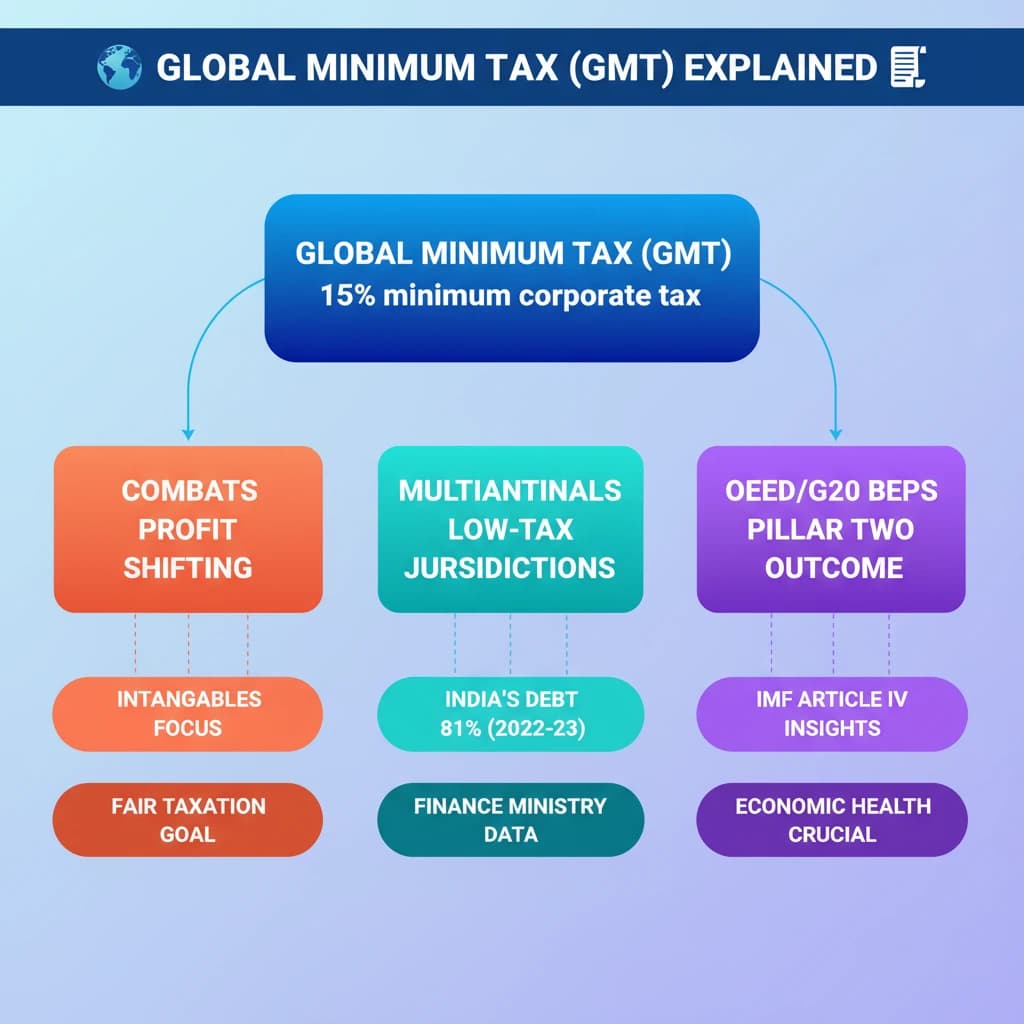
  • Global Minimum Tax (GMT) aims to set a 15% minimum corporate tax rate globally.
  • GMT combats profit shifting by multinationals to low-tax jurisdictions, especially for intangibles.
  • It is a key outcome of the OECD/G20 BEPS project (Pillar Two).
  • India's public debt-to-GDP ratio was 81% in 2022-23, as per the Finance Ministry.
  • IMF's Article IV report provides crucial insights into India's debt and economic health.
  • GMT seeks to ensure fairer taxation and global economic stability.
What is the Global Minimum Tax (GMT)?

What is the Global Minimum Tax (GMT)?

Medium⏱️ 6 min read✓ 95% Verified
economy

📖 Introduction

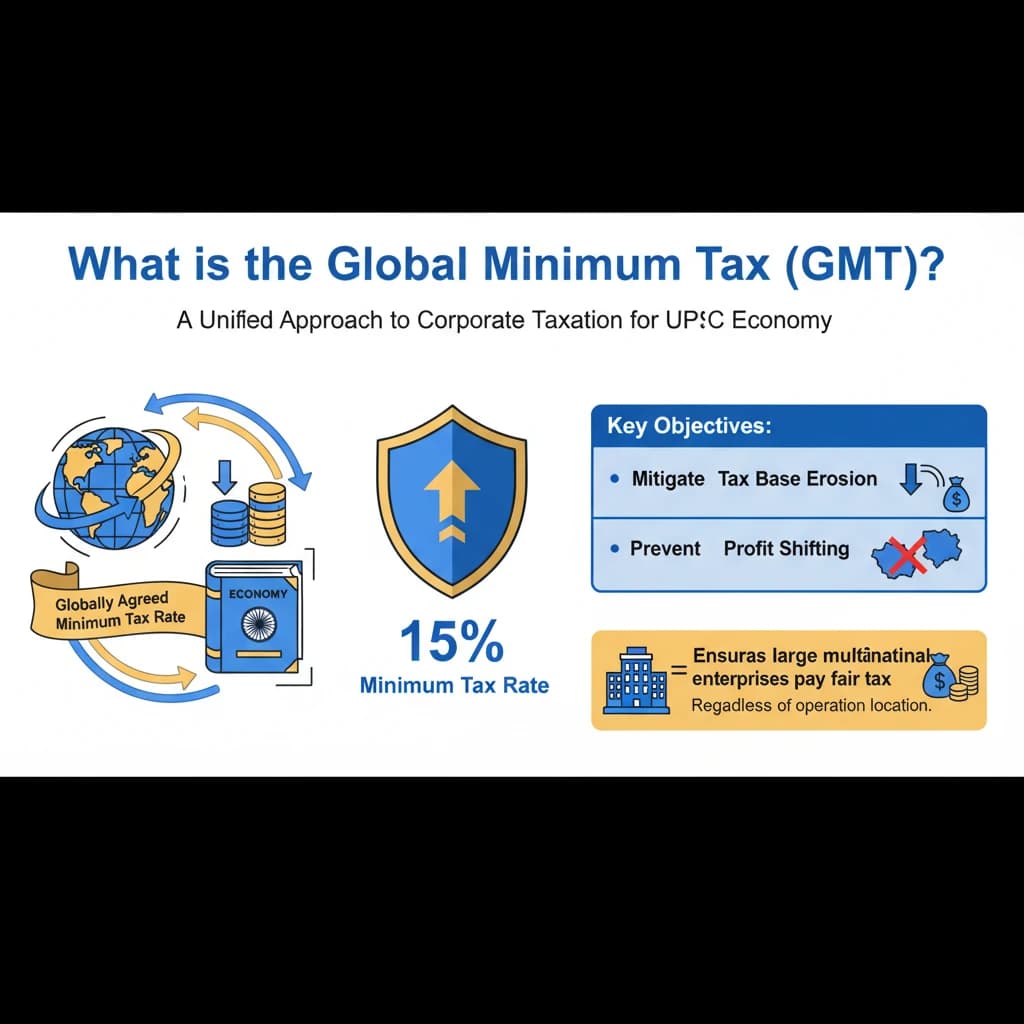
<h4>What is the Global Minimum Tax (GMT)?</h4><p>The <strong>Global Minimum Tax (GMT)</strong> is a globally agreed minimum tax rate designed to address tax challenges arising from the digitalization of the economy. Its primary aim is to mitigate <strong>tax base erosion</strong> and prevent <strong>profit shifting</strong> by multinational corporations.</p><p>This initiative seeks to ensure that large multinational enterprises pay a fair share of tax, regardless of where they operate or where they declare their profits.</p><div class='info-box'><p>The currently suggested <strong>minimum tax rate</strong> under the GMT framework is <strong>15%</strong>. This rate is intended to reduce the incentive for companies to move their profits to low-tax jurisdictions.</p></div><div class='key-point-box'><p>The core objective of <strong>GMT</strong> is to curb the practice of <strong>multinationals</strong> moving profits to <strong>low-tax jurisdictions</strong>, irrespective of where their actual sales or economic activities occur. This prevents companies from gaining a financial advantage by exploiting tax differentials between countries.</p></div><h4>Challenges of Profit Shifting</h4><p>There is a significant trend of companies shifting income derived from <strong>intangibles</strong>, such as <strong>patents</strong>, <strong>software</strong>, and <strong>Intellectual Property (IP) royalties</strong>, to designated <strong>tax havens</strong>. This strategy allows them to sidestep higher tax obligations in their home countries, leading to revenue loss for governments.</p><h4>India's Current Debt Scenario (as per IMF Article IV Consultation Report)</h4><p>The <strong>International Monetary Fund (IMF)</strong> released its annual <strong>Article IV consultation report</strong> on <strong>India</strong>, providing an assessment of the country's economic health, including its debt sustainability and exchange rate management.</p><div class='info-box'><p><strong>Government Current Debt Levels:</strong></p><ul><li>The <strong>central government’s debt</strong> stood at <strong>₹155.6 trillion</strong>, approximately <strong>57.1% of GDP</strong> by <strong>March 2023</strong>.</li><li><strong>State governments</strong> carried a debt of about <strong>28% of GDP</strong>.</li></ul></div><p>As stated by the <strong>Finance Ministry</strong>, <strong>India’s public debt-to-GDP ratio</strong> was <strong>81%</strong> in <strong>2022-23</strong>. These figures are crucial for assessing the nation's fiscal health and its capacity for future economic growth and stability.</p>
Concept Diagram

💡 Key Takeaways

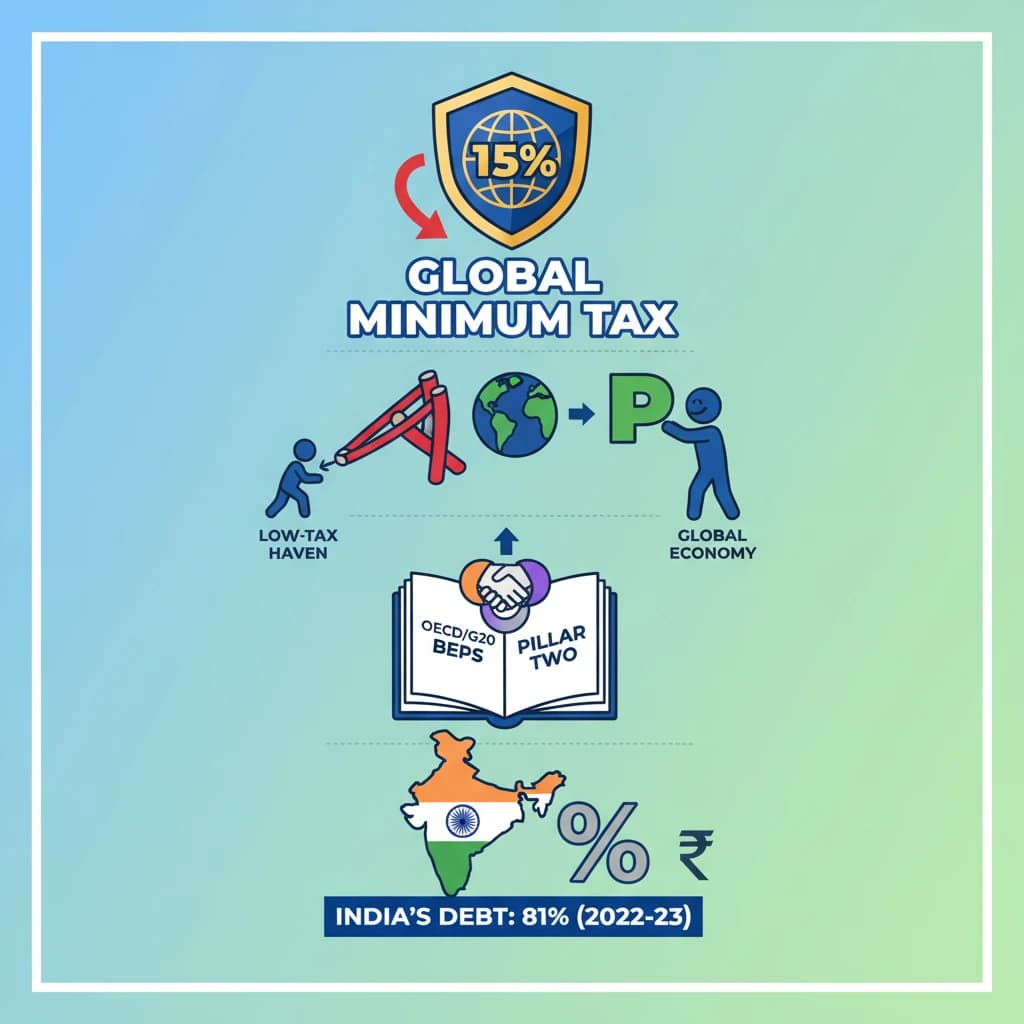
  • •Global Minimum Tax (GMT) aims to set a 15% minimum corporate tax rate globally.
  • •GMT combats profit shifting by multinationals to low-tax jurisdictions, especially for intangibles.
  • •It is a key outcome of the OECD/G20 BEPS project (Pillar Two).
  • •India's public debt-to-GDP ratio was 81% in 2022-23, as per the Finance Ministry.
  • •IMF's Article IV report provides crucial insights into India's debt and economic health.
  • •GMT seeks to ensure fairer taxation and global economic stability.

🧠 Memory Techniques
Memory Aid
95% Verified Content

📚 Reference Sources

•International Monetary Fund (IMF) - Article IV Consultation Reports
•Organisation for Economic Co-operation and Development (OECD) - Inclusive Framework on BEPS

Related Topics

Loading related topics...
Explore:Economy Topics·All Subjects·Daily Current Affairs·Editorial Analysis·Previous Year Questions·UPSC GPT
What is the Global Minimum Tax (GMT)? - UPSC Economy