What Differentiates Floating Exchange Rate Dynamics from Stabilized Arrangement? - UPSC Economy
What is What Differentiates Floating Exchange Rate Dynamics from Stabilized Arrangement? in UPSC Economy?
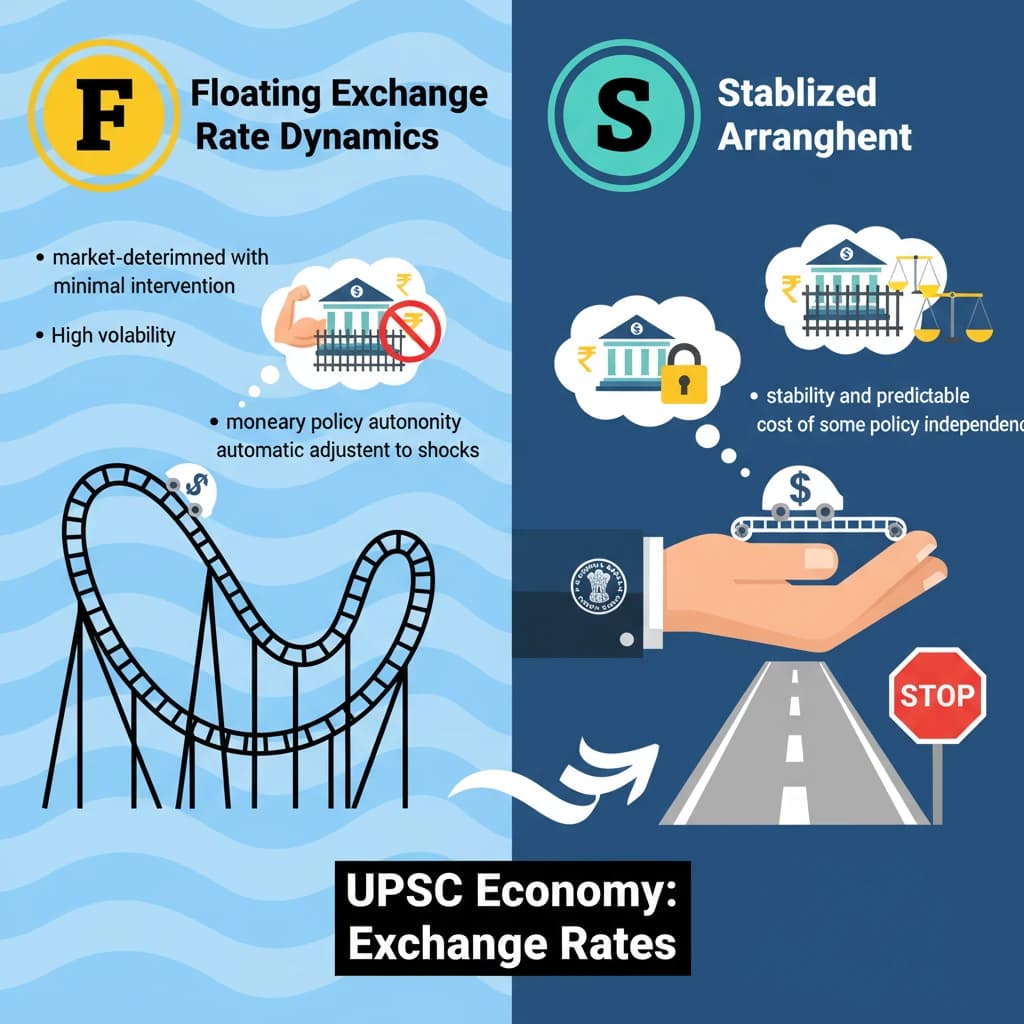
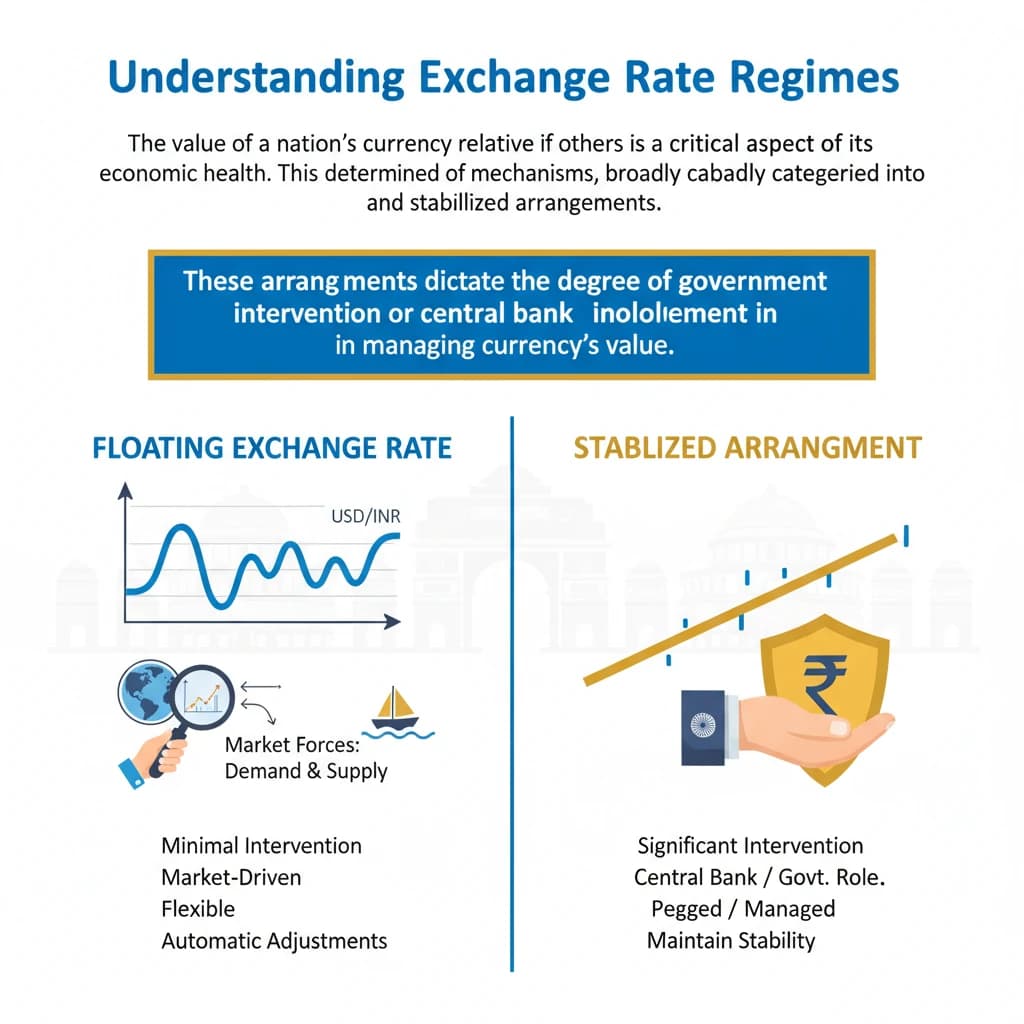
What Differentiates Floating Exchange Rate Dynamics from Stabilized Arrangement? is a key topic under Economy for UPSC Civil Services Examination. Key points include: Floating rates are market-determined with minimal intervention, leading to high volatility.. Stabilized arrangements involve central bank intervention to smooth volatility or maintain a target range.. Floating rates offer monetary policy autonomy and automatic adjustment to shocks.. Understanding this topic is essential for both UPSC Prelims and Mains preparation.
Why is What Differentiates Floating Exchange Rate Dynamics from Stabilized Arrangement? important for UPSC exam?
What Differentiates Floating Exchange Rate Dynamics from Stabilized Arrangement? is a Medium-level topic in UPSC Economy. It is tested in both Prelims (factual MCQs) and Mains (analytical answer writing). Previous year UPSC questions have frequently covered aspects of What Differentiates Floating Exchange Rate Dynamics from Stabilized Arrangement?, making it essential for comprehensive IAS preparation.
How to prepare What Differentiates Floating Exchange Rate Dynamics from Stabilized Arrangement? for UPSC?
To prepare What Differentiates Floating Exchange Rate Dynamics from Stabilized Arrangement? for UPSC: (1) Study the comprehensive notes covering all key concepts on Vaidra. (2) Practice previous year questions on this topic. (3) Connect it with current affairs using daily updates. (4) Revise using key takeaways and mind maps available for Economy. (5) Write practice answers linking What Differentiates Floating Exchange Rate Dynamics from Stabilized Arrangement? to related GS Paper topics.
Key takeaways of What Differentiates Floating Exchange Rate Dynamics from Stabilized Arrangement? for UPSC
- Floating rates are market-determined with minimal intervention, leading to high volatility.
- Stabilized arrangements involve central bank intervention to smooth volatility or maintain a target range.
- Floating rates offer monetary policy autonomy and automatic adjustment to shocks.
- Stabilized arrangements prioritize stability and predictability, often at the cost of some policy independence.
- India operates a managed float, a form of stabilized arrangement, with active RBI intervention.
What Differentiates Floating Exchange Rate Dynamics from Stabilized Arrangement?
📖 Introduction
💡 Key Takeaways
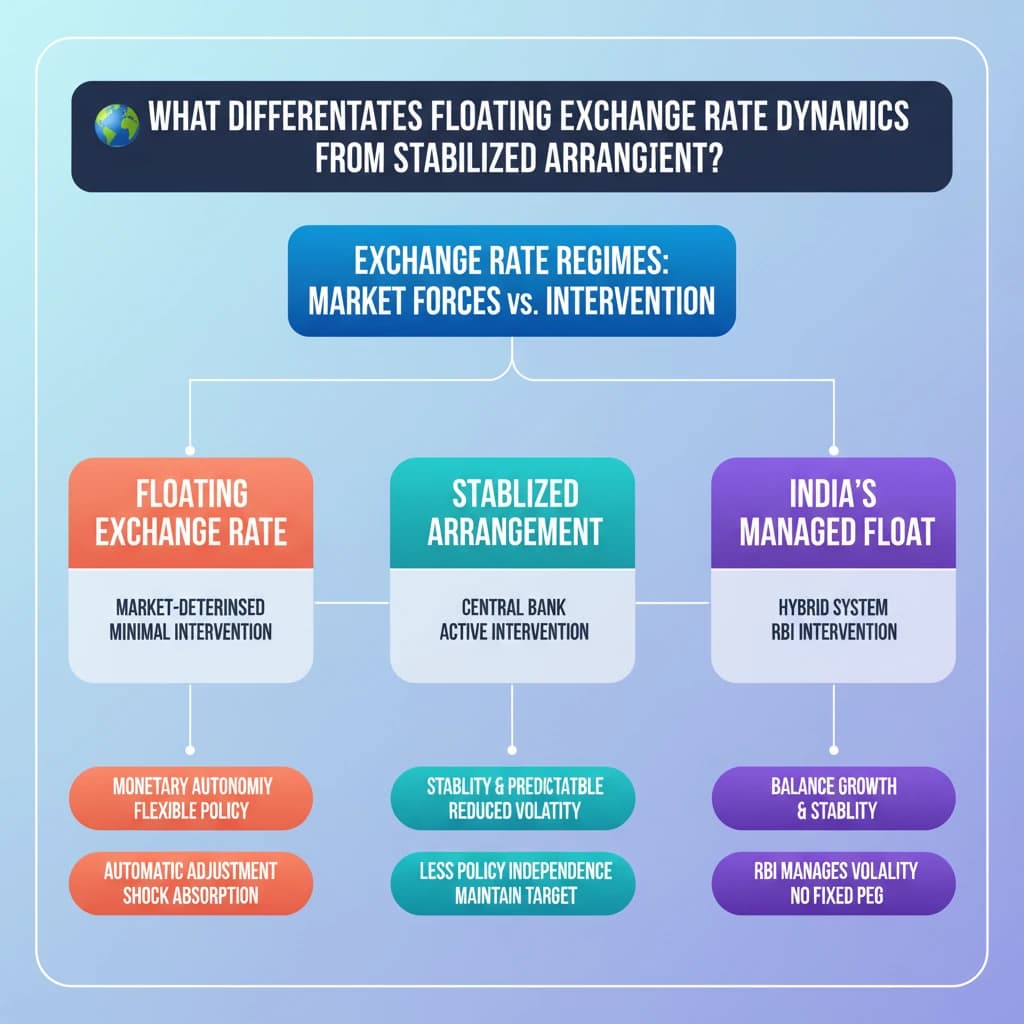
- •Floating rates are market-determined with minimal intervention, leading to high volatility.
- •Stabilized arrangements involve central bank intervention to smooth volatility or maintain a target range.
- •Floating rates offer monetary policy autonomy and automatic adjustment to shocks.
- •Stabilized arrangements prioritize stability and predictability, often at the cost of some policy independence.
- •India operates a managed float, a form of stabilized arrangement, with active RBI intervention.
🧠 Memory Techniques