Increasing Real Effective Exchange Rate in India - UPSC Economy
What is Increasing Real Effective Exchange Rate in India in UPSC Economy?
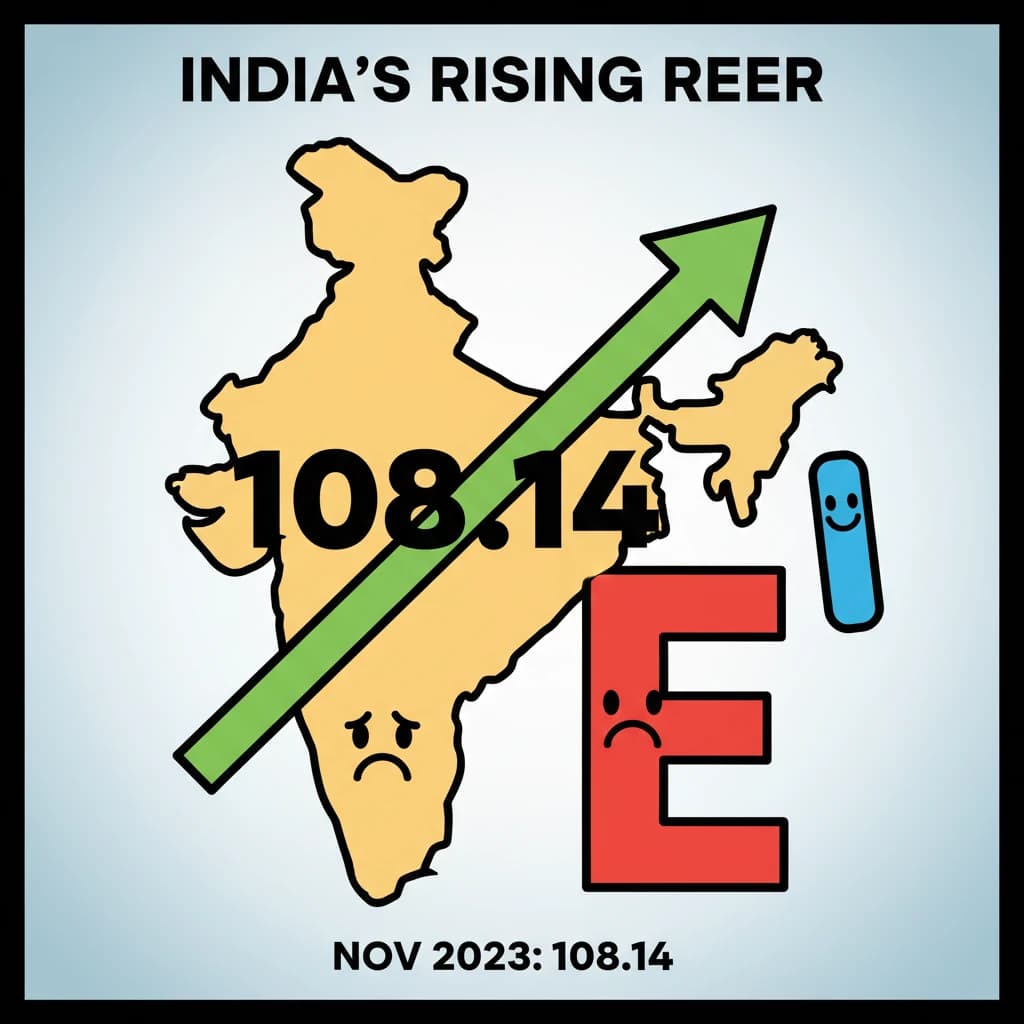
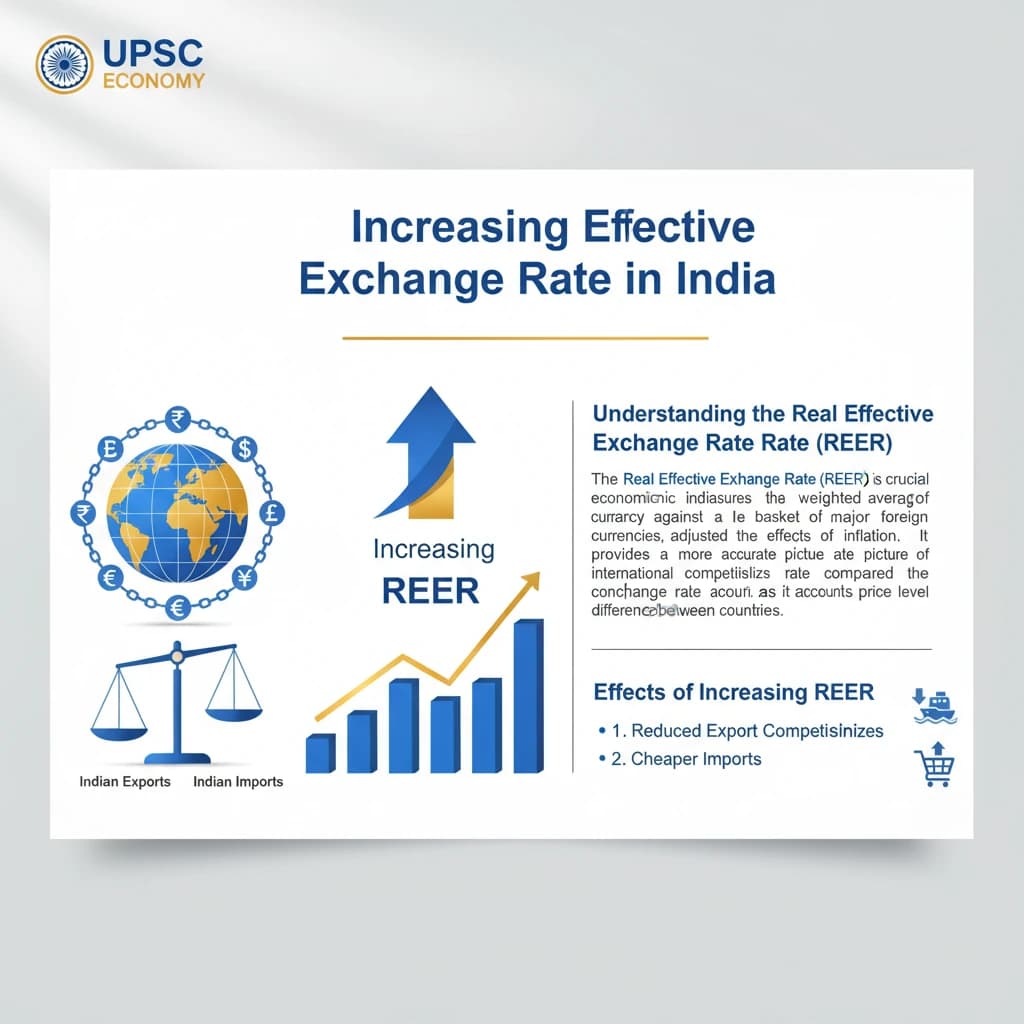
Increasing Real Effective Exchange Rate in India is a key topic under Economy for UPSC Civil Services Examination. Key points include: <strong>REER (Real Effective Exchange Rate)</strong> measures a currency's weighted average against a basket of currencies, adjusted for inflation.. A <strong>rising REER</strong> indicates the domestic currency is appreciating in real terms, making exports more expensive and imports cheaper.. In <strong>November 2023</strong>, India's REER reached <strong>108.14</strong>, its highest level for the year, up from <strong>107.20</strong> in <strong>October 2023</strong>.. Understanding this topic is essential for both UPSC Prelims and Mains preparation.
Why is Increasing Real Effective Exchange Rate in India important for UPSC exam?
Increasing Real Effective Exchange Rate in India is a Medium-level topic in UPSC Economy. It is tested in both Prelims (factual MCQs) and Mains (analytical answer writing). Previous year UPSC questions have frequently covered aspects of Increasing Real Effective Exchange Rate in India, making it essential for comprehensive IAS preparation.
How to prepare Increasing Real Effective Exchange Rate in India for UPSC?
To prepare Increasing Real Effective Exchange Rate in India for UPSC: (1) Study the comprehensive notes covering all key concepts on Vaidra. (2) Practice previous year questions on this topic. (3) Connect it with current affairs using daily updates. (4) Revise using key takeaways and mind maps available for Economy. (5) Write practice answers linking Increasing Real Effective Exchange Rate in India to related GS Paper topics.
Key takeaways of Increasing Real Effective Exchange Rate in India for UPSC
- <strong>REER (Real Effective Exchange Rate)</strong> measures a currency's weighted average against a basket of currencies, adjusted for inflation.
- A <strong>rising REER</strong> indicates the domestic currency is appreciating in real terms, making exports more expensive and imports cheaper.
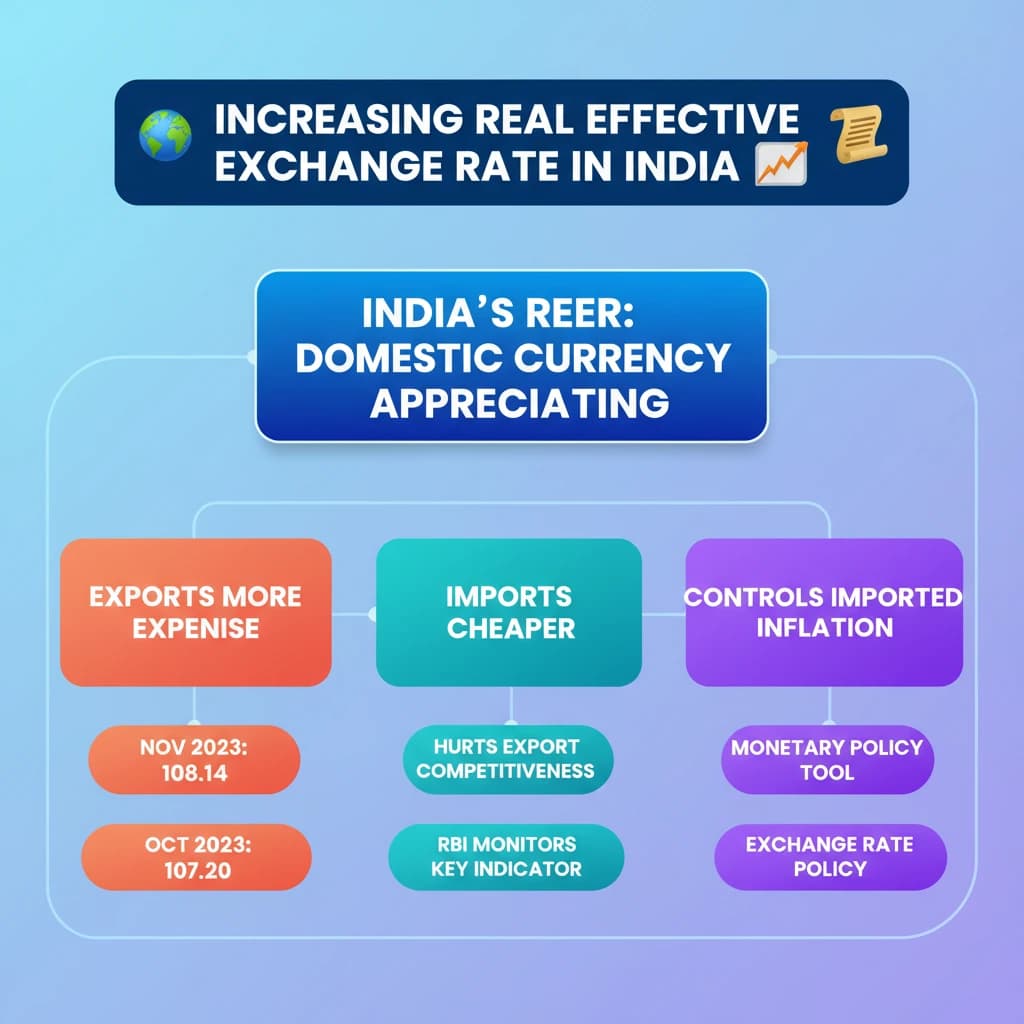
- In <strong>November 2023</strong>, India's REER reached <strong>108.14</strong>, its highest level for the year, up from <strong>107.20</strong> in <strong>October 2023</strong>.
- An increasing REER can hurt <strong>export competitiveness</strong> but may help <strong>control imported inflation</strong>.
- The <strong>RBI</strong> monitors REER as a crucial indicator for <strong>monetary and exchange rate policy</strong> decisions.
Increasing Real Effective Exchange Rate in India
📖 Introduction
💡 Key Takeaways
- •<strong>REER (Real Effective Exchange Rate)</strong> measures a currency's weighted average against a basket of currencies, adjusted for inflation.
- •A <strong>rising REER</strong> indicates the domestic currency is appreciating in real terms, making exports more expensive and imports cheaper.
- •In <strong>November 2023</strong>, India's REER reached <strong>108.14</strong>, its highest level for the year, up from <strong>107.20</strong> in <strong>October 2023</strong>.
- •An increasing REER can hurt <strong>export competitiveness</strong> but may help <strong>control imported inflation</strong>.
- •The <strong>RBI</strong> monitors REER as a crucial indicator for <strong>monetary and exchange rate policy</strong> decisions.
🧠 Memory Techniques