Balance of Payments: Components & Current/Capital Accounts - UPSC Economy
What is Balance of Payments: Components & Current/Capital Accounts in UPSC Economy?
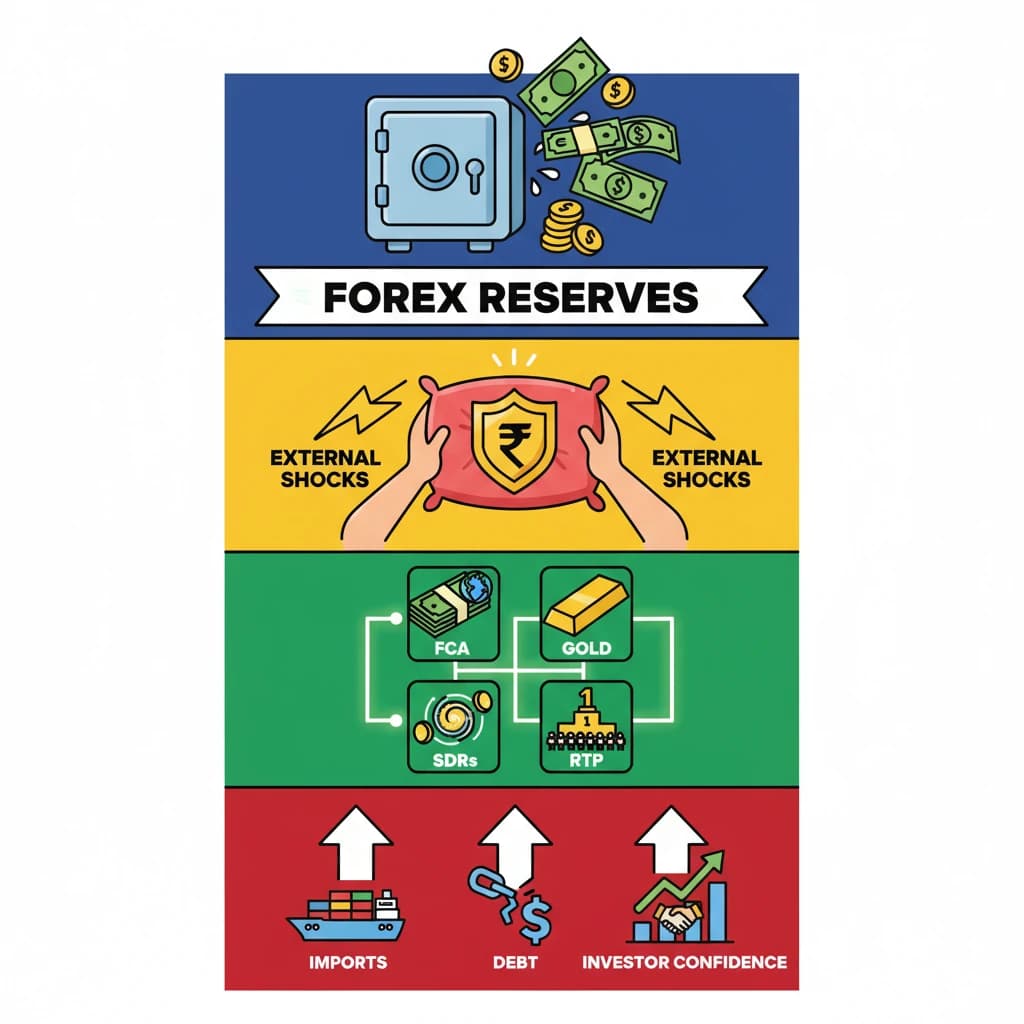
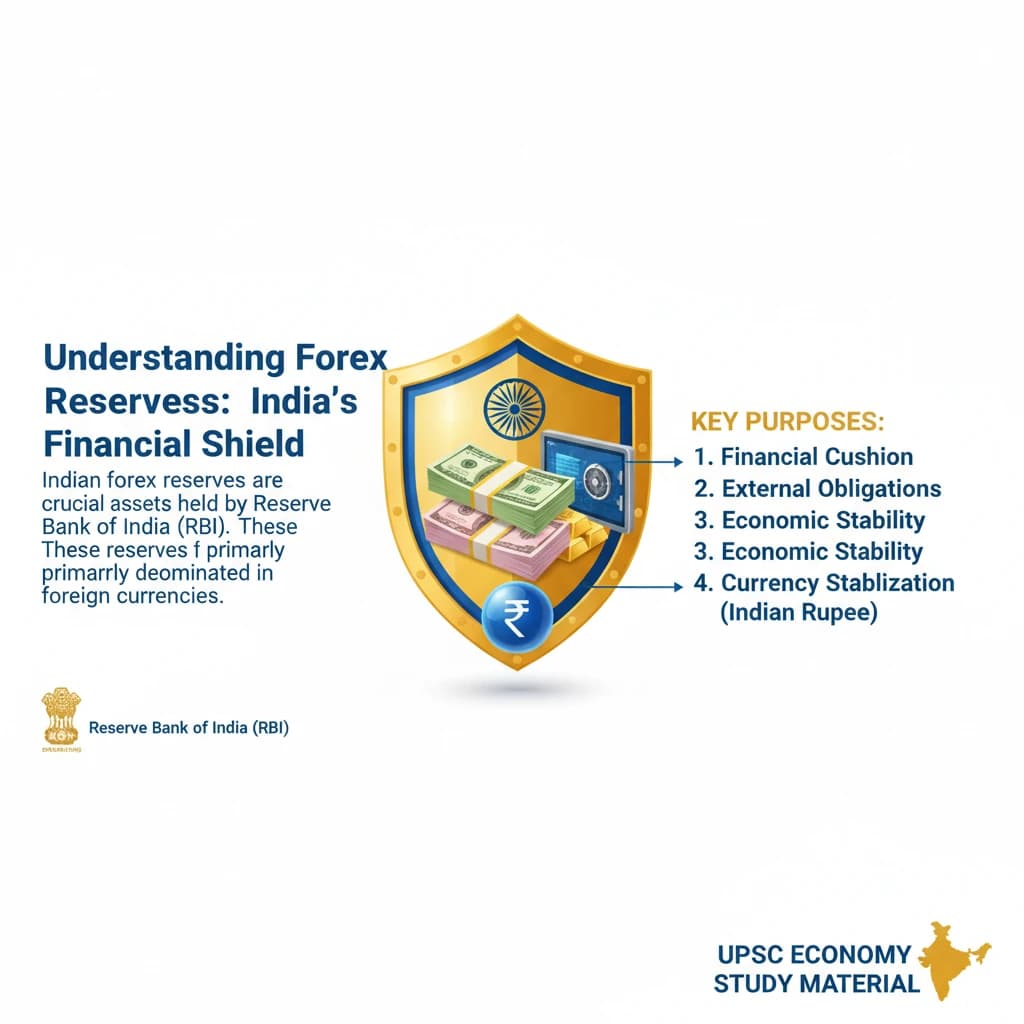
Balance of Payments: Components & Current/Capital Accounts is a key topic under Economy for UPSC Civil Services Examination. Key points include: Forex reserves are foreign currency assets held by the RBI, primarily USD, EUR, GBP.. They act as a financial cushion for external obligations and currency stabilization.. Key components include Foreign Currency Assets, Gold, SDRs, and Reserve Tranche Position.. Understanding this topic is essential for both UPSC Prelims and Mains preparation.
Why is Balance of Payments: Components & Current/Capital Accounts important for UPSC exam?
Balance of Payments: Components & Current/Capital Accounts is a Medium-level topic in UPSC Economy. It is tested in both Prelims (factual MCQs) and Mains (analytical answer writing). Previous year UPSC questions have frequently covered aspects of Balance of Payments: Components & Current/Capital Accounts, making it essential for comprehensive IAS preparation.
How to prepare Balance of Payments: Components & Current/Capital Accounts for UPSC?
To prepare Balance of Payments: Components & Current/Capital Accounts for UPSC: (1) Study the comprehensive notes covering all key concepts on Vaidra. (2) Practice previous year questions on this topic. (3) Connect it with current affairs using daily updates. (4) Revise using key takeaways and mind maps available for Economy. (5) Write practice answers linking Balance of Payments: Components & Current/Capital Accounts to related GS Paper topics.
Key takeaways of Balance of Payments: Components & Current/Capital Accounts for UPSC
- Forex reserves are foreign currency assets held by the RBI, primarily USD, EUR, GBP.
- They act as a financial cushion for external obligations and currency stabilization.
- Key components include Foreign Currency Assets, Gold, SDRs, and Reserve Tranche Position.
- Reserves are crucial for financing imports, managing external debt, and boosting investor confidence.
- The 1991 BoP crisis highlighted the critical importance of maintaining sufficient forex reserves.
- RBI actively manages reserves for exchange rate stability and macroeconomic resilience.
Balance of Payments: Components & Current/Capital Accounts
📖 Introduction
💡 Key Takeaways
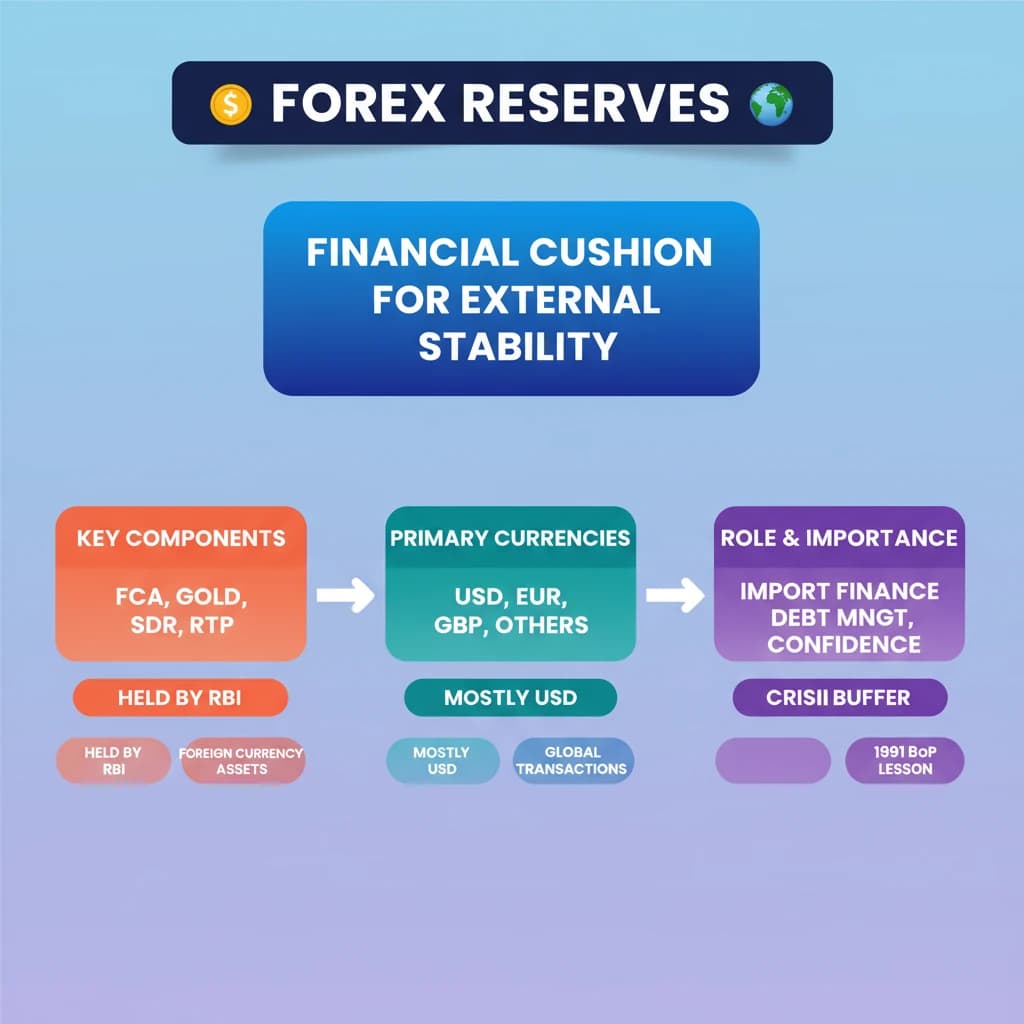
- •Forex reserves are foreign currency assets held by the RBI, primarily USD, EUR, GBP.
- •They act as a financial cushion for external obligations and currency stabilization.
- •Key components include Foreign Currency Assets, Gold, SDRs, and Reserve Tranche Position.
- •Reserves are crucial for financing imports, managing external debt, and boosting investor confidence.
- •The 1991 BoP crisis highlighted the critical importance of maintaining sufficient forex reserves.
- •RBI actively manages reserves for exchange rate stability and macroeconomic resilience.
🧠 Memory Techniques