What is a Double Tax Avoidance Agreement (DTAA)? - UPSC Economy
What is What is a Double Tax Avoidance Agreement (DTAA)? in UPSC Economy?
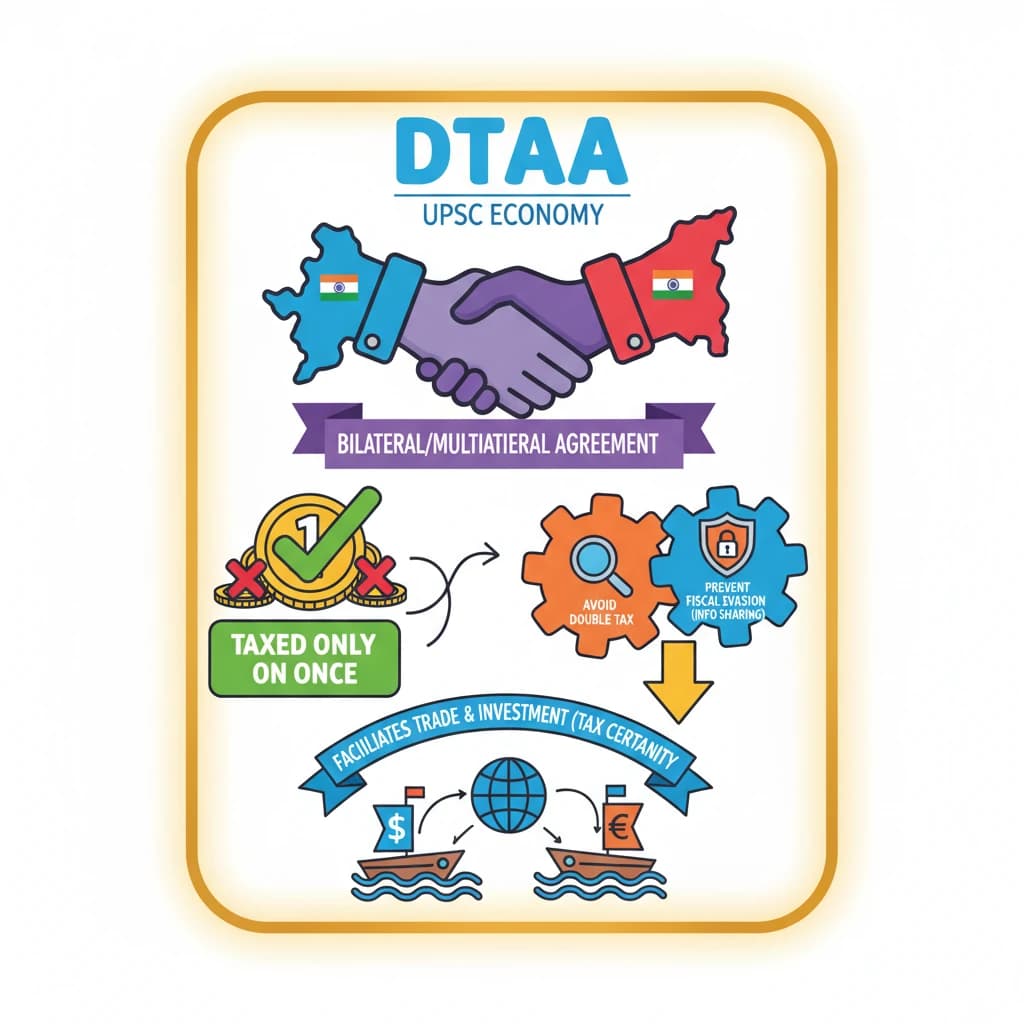
What is a Double Tax Avoidance Agreement (DTAA)? is a key topic under Economy for UPSC Civil Services Examination. Key points include: DTAA is a bilateral/multilateral agreement to prevent double taxation.. Ensures income is taxed only once by either country of residence or source.. Key objectives: avoid double taxation and prevent fiscal evasion through information sharing.. Understanding this topic is essential for both UPSC Prelims and Mains preparation.
Why is What is a Double Tax Avoidance Agreement (DTAA)? important for UPSC exam?
What is a Double Tax Avoidance Agreement (DTAA)? is a Medium-level topic in UPSC Economy. It is tested in both Prelims (factual MCQs) and Mains (analytical answer writing). Previous year UPSC questions have frequently covered aspects of What is a Double Tax Avoidance Agreement (DTAA)?, making it essential for comprehensive IAS preparation.
How to prepare What is a Double Tax Avoidance Agreement (DTAA)? for UPSC?
To prepare What is a Double Tax Avoidance Agreement (DTAA)? for UPSC: (1) Study the comprehensive notes covering all key concepts on Vaidra. (2) Practice previous year questions on this topic. (3) Connect it with current affairs using daily updates. (4) Revise using key takeaways and mind maps available for Economy. (5) Write practice answers linking What is a Double Tax Avoidance Agreement (DTAA)? to related GS Paper topics.
Key takeaways of What is a Double Tax Avoidance Agreement (DTAA)? for UPSC
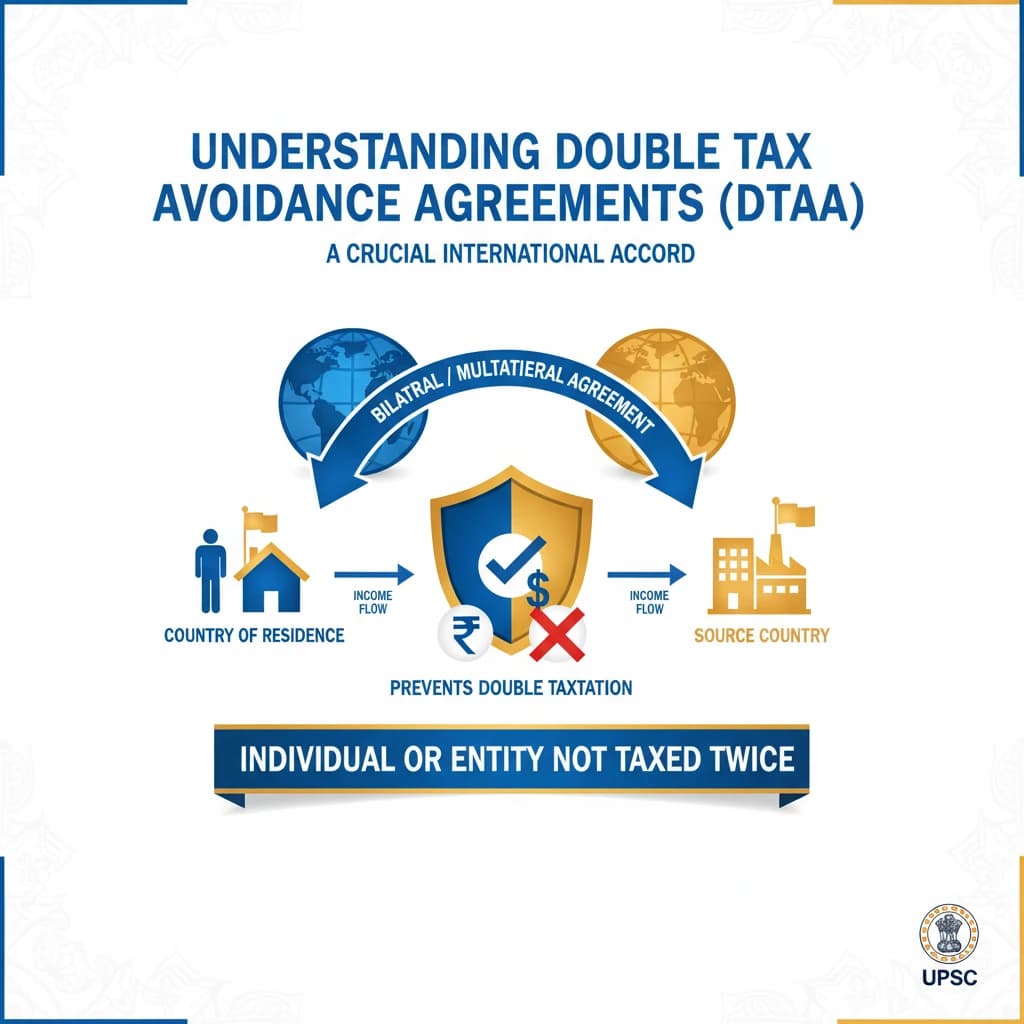
- DTAA is a bilateral/multilateral agreement to prevent double taxation.
- Ensures income is taxed only once by either country of residence or source.
- Key objectives: avoid double taxation and prevent fiscal evasion through information sharing.
- Facilitates international trade and investment by providing tax certainty.
- India has signed DTAAs with over 90 countries, crucial for its global economic engagement.
What is a Double Tax Avoidance Agreement (DTAA)?
📖 Introduction
💡 Key Takeaways
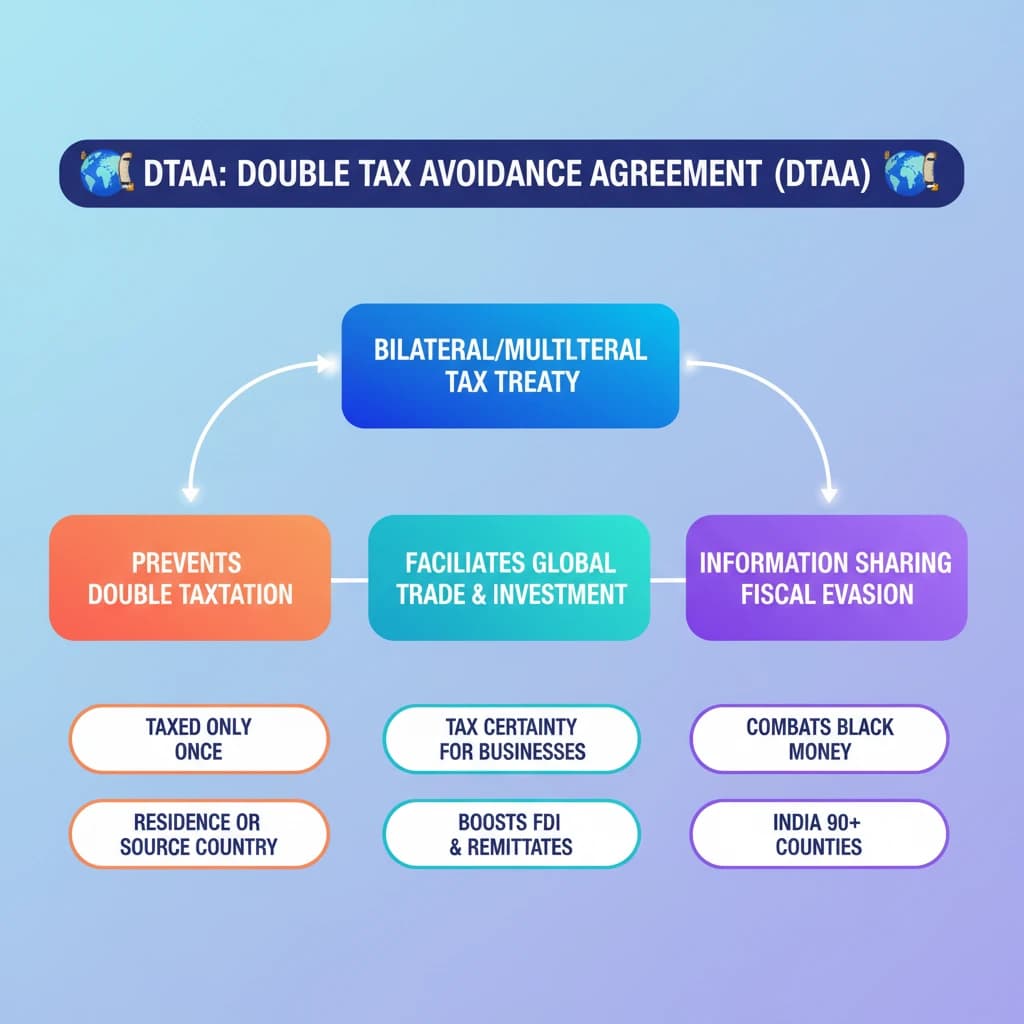
- •DTAA is a bilateral/multilateral agreement to prevent double taxation.
- •Ensures income is taxed only once by either country of residence or source.
- •Key objectives: avoid double taxation and prevent fiscal evasion through information sharing.
- •Facilitates international trade and investment by providing tax certainty.
- •India has signed DTAAs with over 90 countries, crucial for its global economic engagement.
🧠 Memory Techniques