Loading page, please wait…
Vaidra Logo
Vaidra

Top 4 items + smart groups

UPSC GPT
New
Current Affairs
Daily Solutions
Daily Puzzle
Mains Evaluator

Version 2.0.0 • Built with ❤️ for UPSC aspirants

Loading...
Loading...
Loading...
Loading...
Loading...
Loading...
Loading...
Loading...
Loading...
Loading...
Loading...
Loading...
Loading...
Back
All Subjects

Topics

0 topics • 0 completed

Loading topics...
Loading...
Loading...
Loading...
Loading...
Loading...
Overall Progress0%

Transliteration of Land Records - UPSC Economy

What is Transliteration of Land Records in UPSC Economy?

Transliteration of Land Records is a key topic under Economy for UPSC Civil Services Examination. Key points include: Transliteration of Land Records converts documents into any of the 22 Schedule VIII languages to overcome language barriers.. It aims to make land records accessible and understandable to all citizens, promoting transparency.. Platinum Grading is awarded to districts completing over 99% of core components like computerization and map digitization.. Understanding this topic is essential for both UPSC Prelims and Mains preparation.

Why is Transliteration of Land Records important for UPSC exam?

Transliteration of Land Records is a Medium-level topic in UPSC Economy. It is tested in both Prelims (factual MCQs) and Mains (analytical answer writing). Previous year UPSC questions have frequently covered aspects of Transliteration of Land Records, making it essential for comprehensive IAS preparation.

How to prepare Transliteration of Land Records for UPSC?

To prepare Transliteration of Land Records for UPSC: (1) Study the comprehensive notes covering all key concepts on Vaidra. (2) Practice previous year questions on this topic. (3) Connect it with current affairs using daily updates. (4) Revise using key takeaways and mind maps available for Economy. (5) Write practice answers linking Transliteration of Land Records to related GS Paper topics.

Key takeaways of Transliteration of Land Records for UPSC

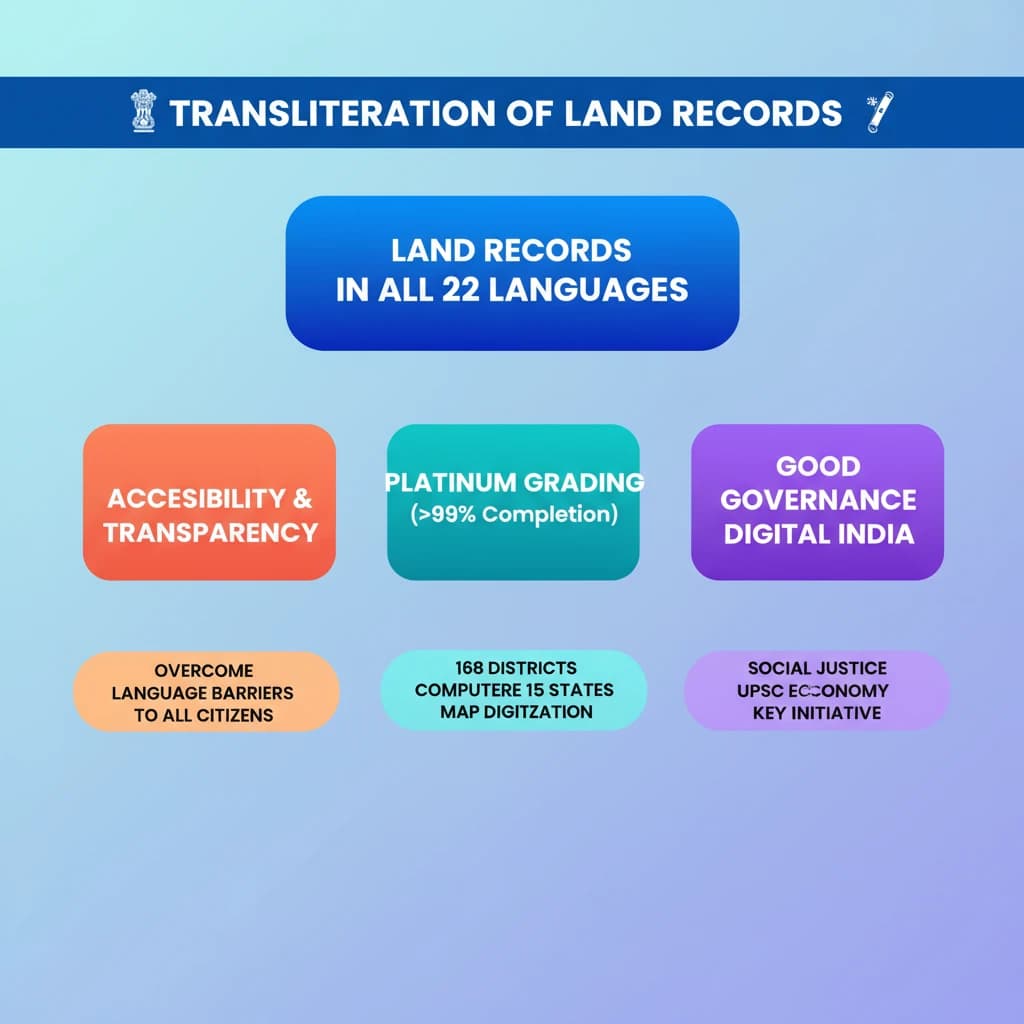
  • Transliteration of Land Records converts documents into any of the 22 Schedule VIII languages to overcome language barriers.
  • It aims to make land records accessible and understandable to all citizens, promoting transparency.
  • Platinum Grading is awarded to districts completing over 99% of core components like computerization and map digitization.
  • 168 districts across 15 states have achieved Platinum Grading, signifying significant progress.
  • The initiative is vital for good governance, social justice, and aligning with the Digital India vision.
Transliteration of Land Records

Transliteration of Land Records

Medium⏱️ 4 min read✓ 95% Verified
economy

📖 Introduction

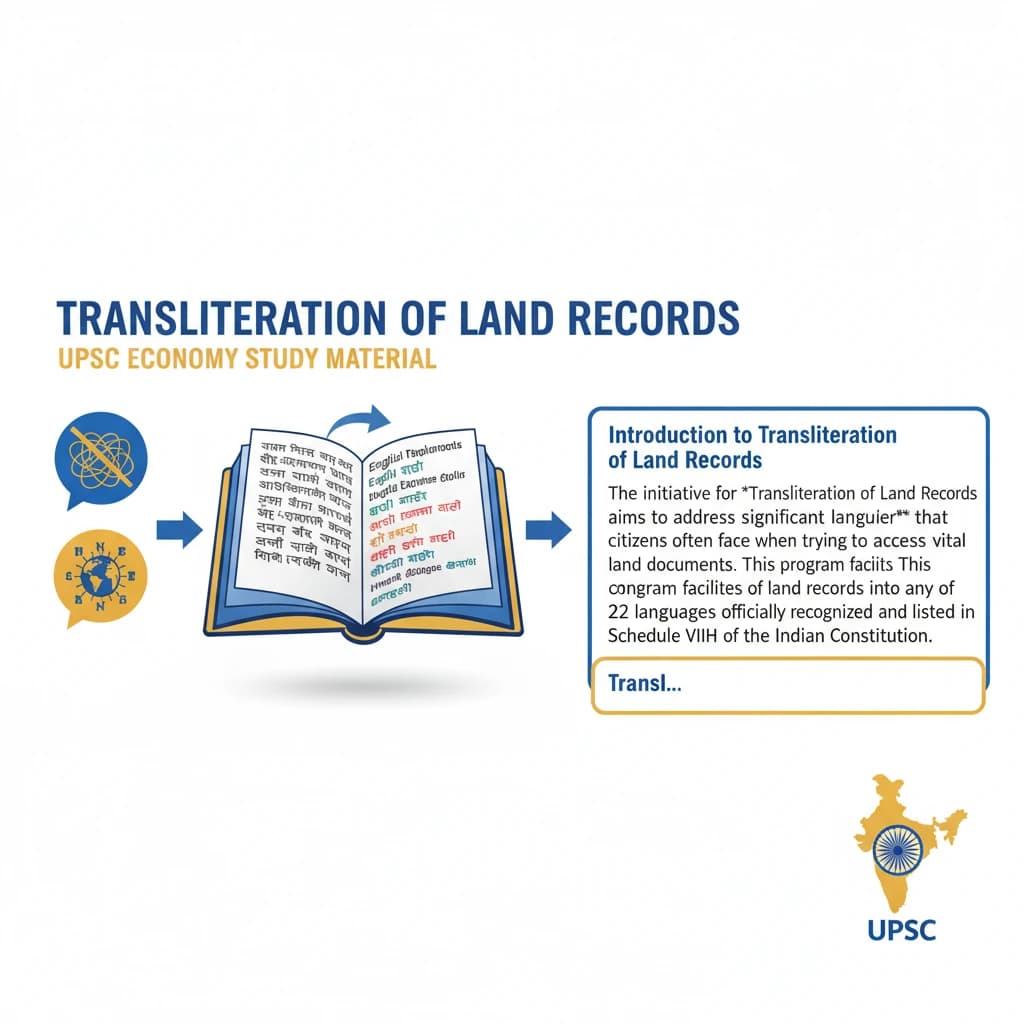
<h4>Introduction to Transliteration of Land Records</h4><p>The initiative for the <strong>Transliteration of Land Records</strong> aims to address significant <strong>language barriers</strong> that citizens often face when trying to access vital land documents. This program facilitates the conversion of land records into any of the <strong>22 languages</strong> officially recognized and listed in <strong>Schedule VIII</strong> of the Indian Constitution.</p><div class='info-box'><p><strong>Transliteration:</strong> The process of converting text from one script into another, while aiming to preserve the phonetic pronunciation, rather than translating the meaning of the words.</p></div><h4>Purpose of Transliteration</h4><p>The primary goal is to ensure that land ownership and other related records are easily comprehensible and accessible to all citizens, irrespective of their native language. This promotes transparency and reduces potential disputes arising from linguistic misunderstandings.</p><h4>Platinum Grading Initiative</h4><p>Under this program, a significant milestone has been achieved through the <strong>Platinum Grading</strong> initiative. This grading recognizes districts that have completed over <strong>99%</strong> of the program's core components, demonstrating high efficiency and progress.</p><div class='info-box'><p><strong>Platinum Grading Criteria:</strong> Districts achieve this grade by successfully completing key components such as <strong>land record computerization</strong> and <strong>map digitization</strong>, alongside the transliteration efforts.</p></div><p>As of the latest reports, <strong>168 districts</strong> across <strong>15 States</strong> have successfully attained “Platinum Grading.” This indicates substantial progress in modernizing and making land records more accessible nationwide.</p><div class='exam-tip-box'><p><strong>UPSC Insight:</strong> This topic is relevant for <strong>GS-II (Governance)</strong> and <strong>GS-III (Economy, e-governance)</strong>. Focus on the benefits of <strong>digitalization</strong> and <strong>linguistic inclusivity</strong> in public services. Mentioning <strong>Schedule VIII</strong> adds value to your answers.</p></div>
Concept Diagram

💡 Key Takeaways

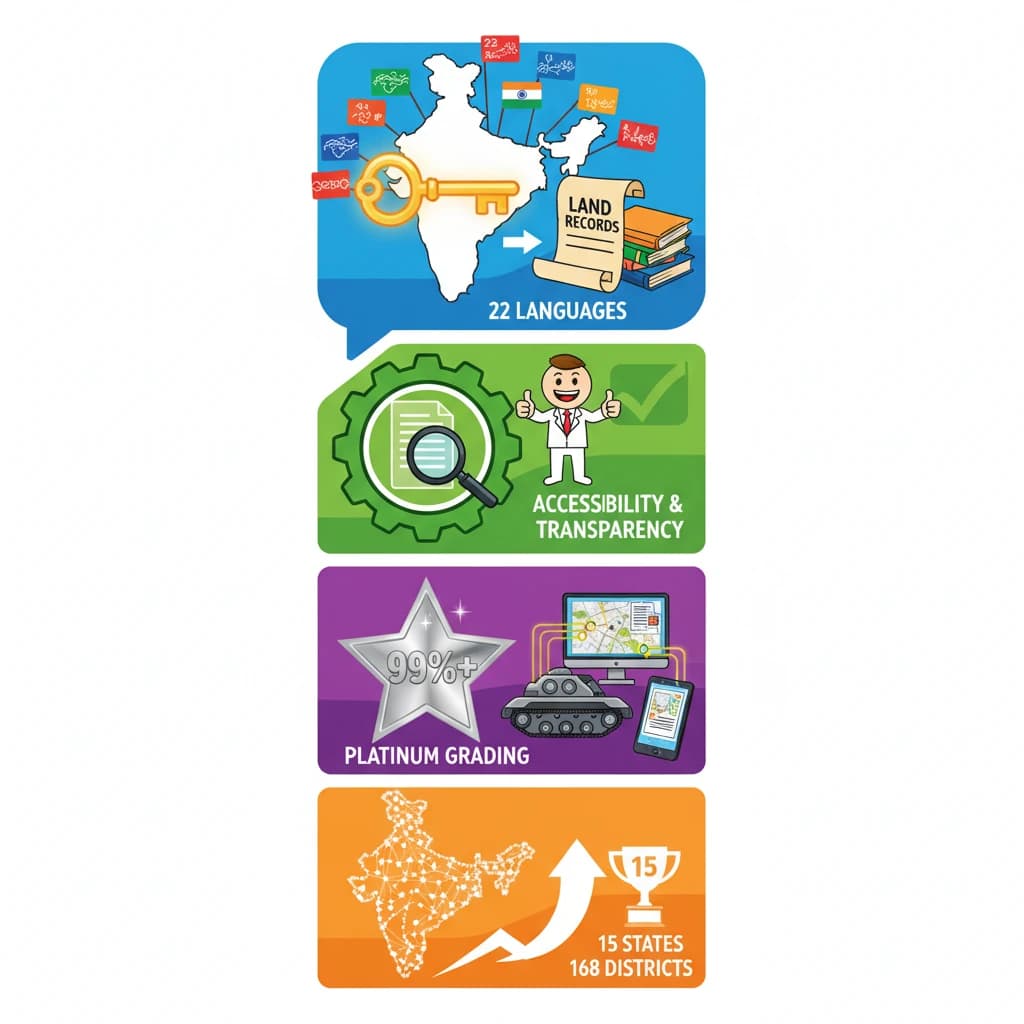
  • •Transliteration of Land Records converts documents into any of the 22 Schedule VIII languages to overcome language barriers.
  • •It aims to make land records accessible and understandable to all citizens, promoting transparency.
  • •Platinum Grading is awarded to districts completing over 99% of core components like computerization and map digitization.
  • •168 districts across 15 states have achieved Platinum Grading, signifying significant progress.
  • •The initiative is vital for good governance, social justice, and aligning with the Digital India vision.

🧠 Memory Techniques
Memory Aid
95% Verified Content

📚 Reference Sources

•Ministry of Rural Development, Government of India (DILRMP documentation)
•The Constitution of India, Schedule VIII

Related Topics

Loading related topics...
Explore:Economy Topics·All Subjects·Daily Current Affairs·Editorial Analysis·Previous Year Questions·UPSC GPT
Transliteration of Land Records - UPSC Economy