Loading page, please wait…
Vaidra Logo
Vaidra

Top 4 items + smart groups

UPSC GPT
New
Current Affairs
Daily Solutions
Daily Puzzle
Mains Evaluator

Version 2.0.0 • Built with ❤️ for UPSC aspirants

Loading...
Loading...
Loading...
Loading...
Loading...
Loading...
Loading...
Loading...
Loading...
Loading...
Loading...
Loading...
Loading...
National Bank for Agriculture and Rural Development - UPSC Economy
Back
All Subjects

Topics

0 topics • 0 completed

Loading topics...
Loading...
Loading...
Loading...
Loading...
Loading...
Overall Progress0%

National Bank for Agriculture and Rural Development - UPSC Economy

What is National Bank for Agriculture and Rural Development in UPSC Economy?

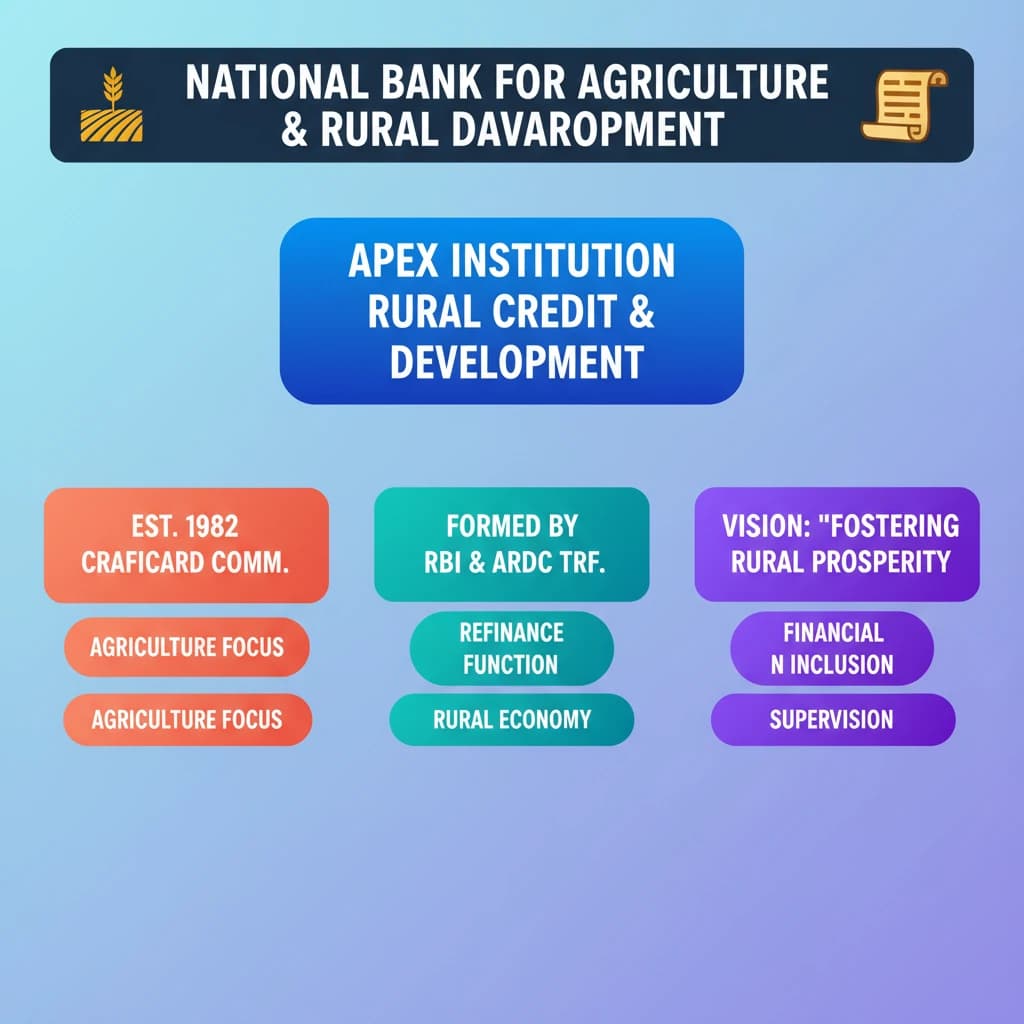
National Bank for Agriculture and Rural Development is a key topic under Economy for UPSC Civil Services Examination. Key points include: NABARD was established in 1982 based on CRAFICARD committee recommendations.. It was formed by transferring agricultural credit functions from RBI and refinance functions from ARDC.. Its vision is 'Development Bank of the Nation for Fostering Rural Prosperity'.. Understanding this topic is essential for both UPSC Prelims and Mains preparation.

Why is National Bank for Agriculture and Rural Development important for UPSC exam?

National Bank for Agriculture and Rural Development is a Medium-level topic in UPSC Economy. It is tested in both Prelims (factual MCQs) and Mains (analytical answer writing). Previous year UPSC questions have frequently covered aspects of National Bank for Agriculture and Rural Development, making it essential for comprehensive IAS preparation.

How to prepare National Bank for Agriculture and Rural Development for UPSC?

To prepare National Bank for Agriculture and Rural Development for UPSC: (1) Study the comprehensive notes covering all key concepts on Vaidra. (2) Practice previous year questions on this topic. (3) Connect it with current affairs using daily updates. (4) Revise using key takeaways and mind maps available for Economy. (5) Write practice answers linking National Bank for Agriculture and Rural Development to related GS Paper topics.

Key takeaways of National Bank for Agriculture and Rural Development for UPSC

  • NABARD was established in 1982 based on CRAFICARD committee recommendations.
  • It was formed by transferring agricultural credit functions from RBI and refinance functions from ARDC.
  • Its vision is 'Development Bank of the Nation for Fostering Rural Prosperity'.
  • NABARD is the apex institution for rural credit and development.
  • It plays a crucial role in refinance, rural infrastructure, and financial inclusion.
National Bank for Agriculture and Rural Development

National Bank for Agriculture and Rural Development

Medium⏱️ 5 min read✓ 98% Verified
economy

📖 Introduction

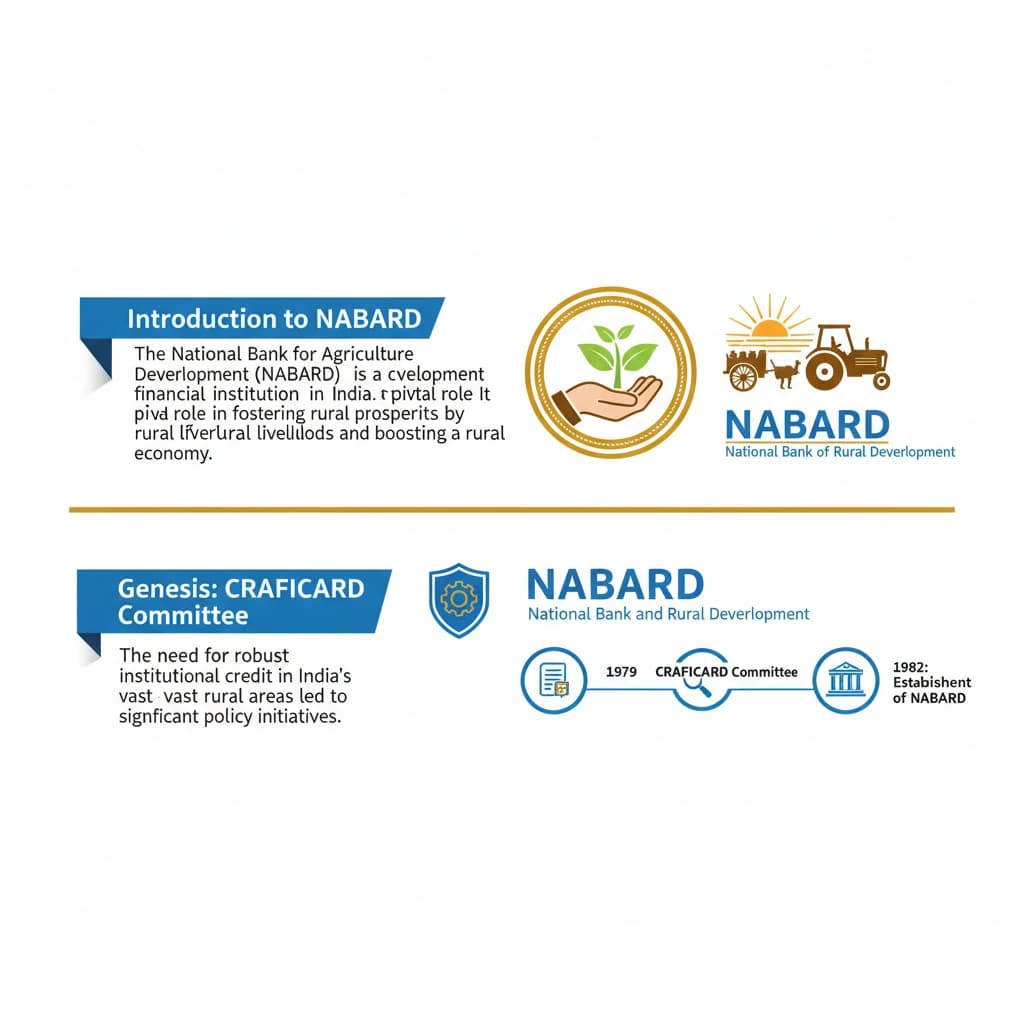
<h4>Introduction to NABARD</h4><p>The <strong>National Bank for Agriculture and Rural Development (NABARD)</strong> is a crucial development financial institution in India.</p><p>It plays a pivotal role in fostering <strong>rural prosperity</strong> by enhancing rural livelihoods and boosting the <strong>rural economy</strong>.</p><h4>Genesis: CRAFICARD Committee</h4><p>The need for robust <strong>institutional credit</strong> in India's vast rural areas led to significant policy initiatives.</p><p>In <strong>1979</strong>, the <strong>Reserve Bank of India (RBI)</strong> established a specialized committee to address this challenge.</p><div class='info-box'><p>This committee was named the <strong>Committee to Review the Arrangements For Institutional Credit for Agriculture and Rural Development (CRAFICARD)</strong>.</p></div><h4>Establishment of NABARD</h4><p>The recommendations put forth by the <strong>CRAFICARD</strong> committee were instrumental in the formation of <strong>NABARD</strong>.</p><p><strong>NABARD</strong> was formally established in <strong>1982</strong>, under the provisions of the <strong>National Bank for Agriculture and Rural Development Act, 1981</strong>.</p><div class='info-box'><p>Its creation involved the transfer of key functions from two existing entities:</p><ul><li><strong>Agricultural credit functions</strong> were transferred from the <strong>Reserve Bank of India (RBI)</strong>.</li><li><strong>Refinance functions</strong> were transferred from the <strong>Agricultural Refinance and Development Corporation (ARDC)</strong>.</li></ul></div><h4>Vision and Mandate</h4><p><strong>NABARD</strong> envisions itself as the <strong>“Development Bank of the Nation for Fostering Rural Prosperity.”</strong></p><div class='key-point-box'><p>Its core mandate includes providing and regulating credit, and other facilities for the promotion and development of <strong>agriculture, small-scale industries, cottage and village industries, handicrafts, and other rural crafts</strong>, with a view to promoting integrated rural development and securing prosperity of rural areas.</p></div><div class='exam-tip-box'><p>Understanding <strong>NABARD's genesis</strong> and its foundational <strong>mandate</strong> is crucial for questions on rural finance and institutional development in <strong>UPSC Mains GS-III</strong>.</p></div>
Concept Diagram

💡 Key Takeaways

  • •NABARD was established in 1982 based on CRAFICARD committee recommendations.
  • •It was formed by transferring agricultural credit functions from RBI and refinance functions from ARDC.
  • •Its vision is 'Development Bank of the Nation for Fostering Rural Prosperity'.
  • •NABARD is the apex institution for rural credit and development.
  • •It plays a crucial role in refinance, rural infrastructure, and financial inclusion.

🧠 Memory Techniques

Memory Aid
98% Verified Content

📚 Reference Sources

•NABARD Official Website

Related Topics

Loading related topics...
Explore:Economy Topics·All Subjects·Daily Current Affairs·Editorial Analysis·Previous Year Questions·UPSC GPT