Loading page, please wait…
Vaidra Logo
Vaidra

Top 4 items + smart groups

UPSC GPT
New
Current Affairs
Daily Solutions
Daily Puzzle
Mains Evaluator

Version 2.0.0 • Built with ❤️ for UPSC aspirants

Loading...
Loading...
Loading...
Loading...
Loading...
Loading...
Loading...
Loading...
Loading...
Loading...
Loading...
Loading...
Loading...

What are the Key Highlights of the FATF Mutual Evaluation Report on India? - UPSC Economy

What is What are the Key Highlights of the FATF Mutual Evaluation Report on India? in UPSC Economy?

What are the Key Highlights of the FATF Mutual Evaluation Report on India? is a key topic under Economy for UPSC Civil Services Examination. Key points include: FATF Mutual Evaluations assess a country's Anti-Money Laundering (AML) and Counter-Terrorist Financing (CTF) compliance.. India's Precious Metals and Stones (PMS) sector is identified as highly vulnerable to money laundering and terrorist financing.. The large size of India's PMS market contributes significantly to this vulnerability, as PMS can move funds without an ownership trail.. Understanding this topic is essential for both UPSC Prelims and Mains preparation.

Why is What are the Key Highlights of the FATF Mutual Evaluation Report on India? important for UPSC exam?

What are the Key Highlights of the FATF Mutual Evaluation Report on India? is a Medium-level topic in UPSC Economy. It is tested in both Prelims (factual MCQs) and Mains (analytical answer writing). Previous year UPSC questions have frequently covered aspects of What are the Key Highlights of the FATF Mutual Evaluation Report on India?, making it essential for comprehensive IAS preparation.

How to prepare What are the Key Highlights of the FATF Mutual Evaluation Report on India? for UPSC?

To prepare What are the Key Highlights of the FATF Mutual Evaluation Report on India? for UPSC: (1) Study the comprehensive notes covering all key concepts on Vaidra. (2) Practice previous year questions on this topic. (3) Connect it with current affairs using daily updates. (4) Revise using key takeaways and mind maps available for Economy. (5) Write practice answers linking What are the Key Highlights of the FATF Mutual Evaluation Report on India? to related GS Paper topics.

Key takeaways of What are the Key Highlights of the FATF Mutual Evaluation Report on India? for UPSC

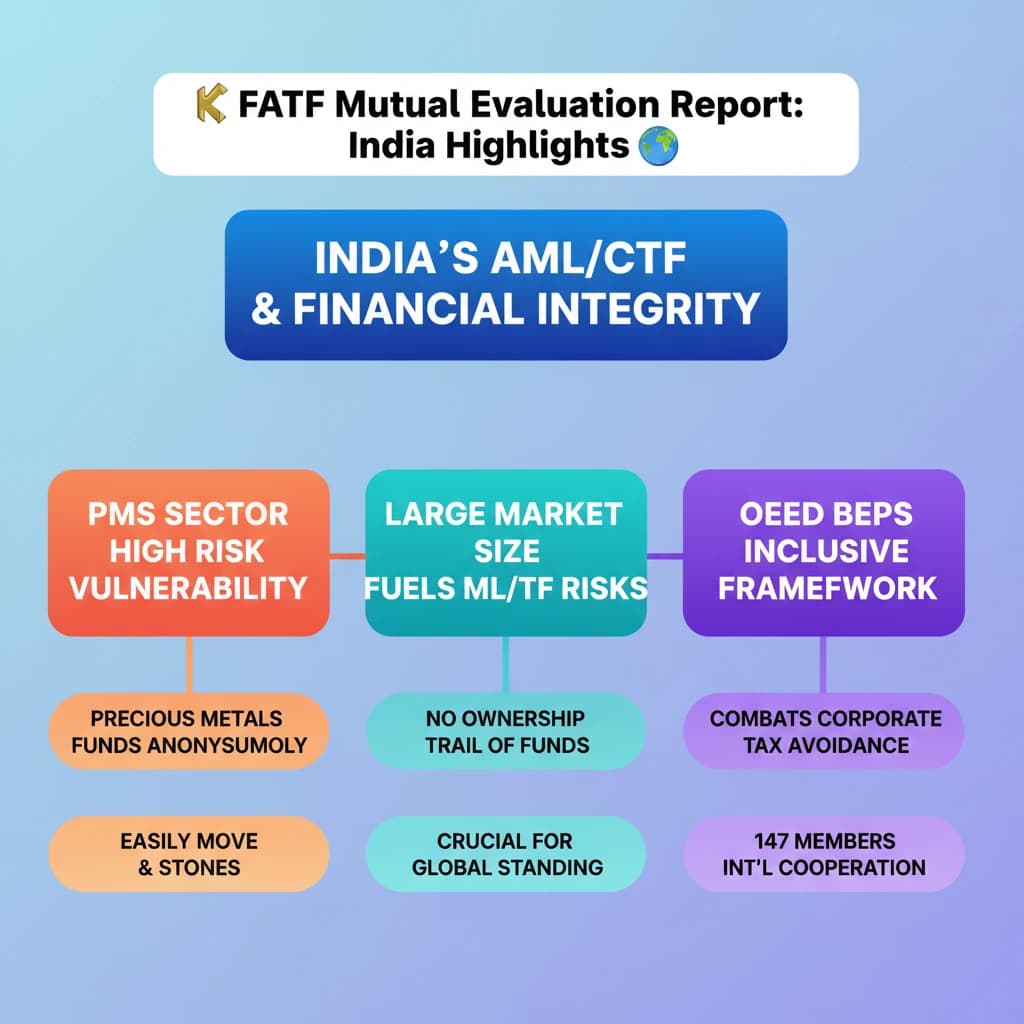
  • FATF Mutual Evaluations assess a country's Anti-Money Laundering (AML) and Counter-Terrorist Financing (CTF) compliance.
  • India's Precious Metals and Stones (PMS) sector is identified as highly vulnerable to money laundering and terrorist financing.
  • The large size of India's PMS market contributes significantly to this vulnerability, as PMS can move funds without an ownership trail.
  • The OECD's Base Erosion and Profit Shifting (BEPS) Inclusive Framework, with 147 members, combats multinational corporate tax avoidance.
  • Strong AML/CTF measures and adherence to international tax cooperation frameworks are crucial for India's financial integrity and international standing.
What are the Key Highlights of the FATF Mutual Evaluation Report on India?

What are the Key Highlights of the FATF Mutual Evaluation Report on India?

Medium⏱️ 7 min read✓ 95% Verified
economy

📖 Introduction

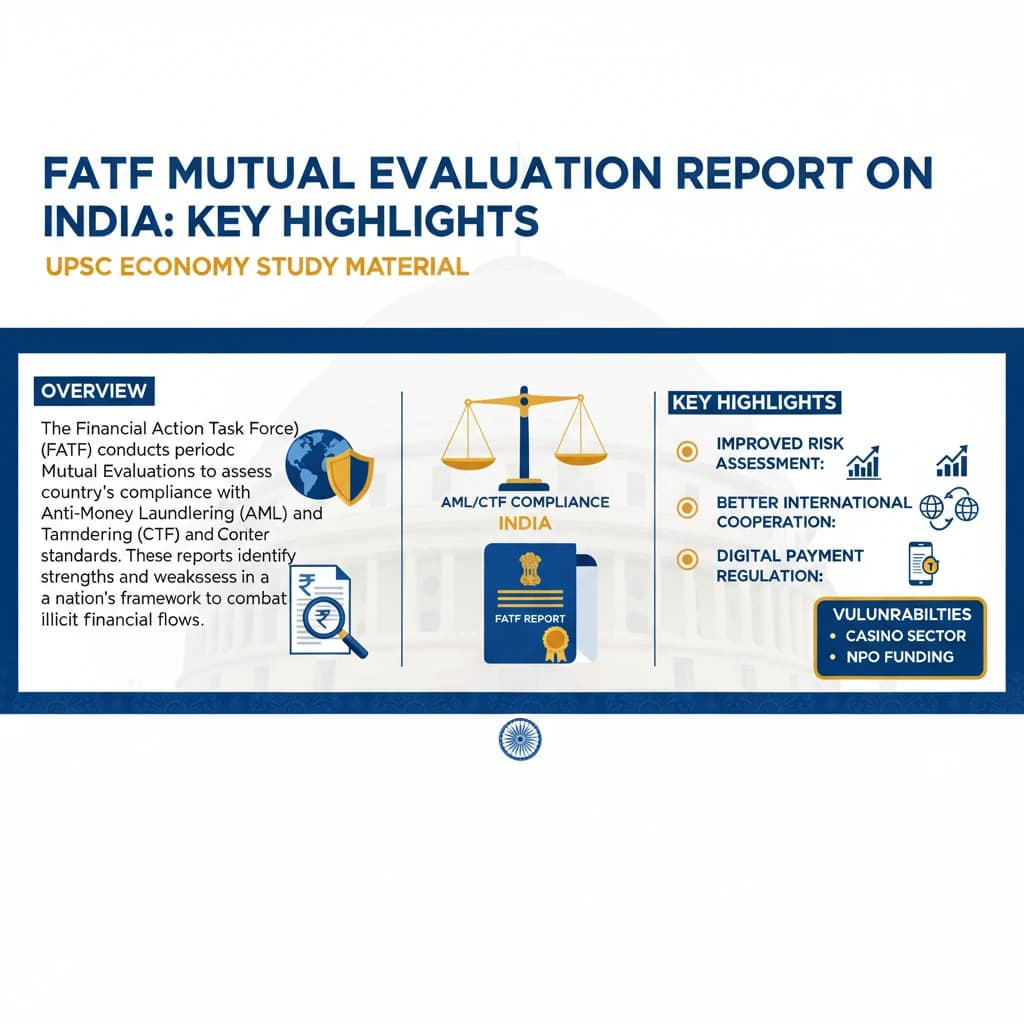
<h4>Overview of FATF Mutual Evaluation on India</h4><p>The <strong>Financial Action Task Force (FATF)</strong> conducts periodic <strong>Mutual Evaluations</strong> to assess a country's compliance with <strong>Anti-Money Laundering (AML)</strong> and <strong>Counter-Terrorist Financing (CTF)</strong> standards.</p><p>These reports identify strengths and weaknesses in a nation's framework to combat illicit financial flows and protect the integrity of the global financial system.</p><h4>Vulnerability of Precious Metals and Stones (PMS) Sector</h4><p>One of the key highlights from the <strong>FATF Mutual Evaluation Report on India</strong> points to the significant vulnerability of the <strong>Precious Metals and Stones (PMS)</strong> sector.</p><div class='info-box'><p><strong>Precious Metals and Stones (PMS)</strong> include items like gold, silver, diamonds, and other valuable gemstones. These assets are highly liquid and can be easily transferred across borders.</p></div><p>The report notes that <strong>PMS</strong> can be exploited to move large amounts of funds without leaving a clear <strong>ownership trail</strong>, making them attractive for illicit activities.</p><div class='key-point-box'><p>India's substantial <strong>PMS market size</strong> significantly contributes to its overall vulnerability to <strong>money laundering</strong> and <strong>terrorist financing</strong> risks, necessitating robust regulatory oversight.</p></div><div class='exam-tip-box'><p>Understanding the specific vulnerabilities identified by <strong>FATF</strong> is crucial for <strong>UPSC Mains GS-III (Internal Security)</strong>, especially regarding financial crimes and their impact on national security and economic stability.</p></div><h4>Base Erosion and Profit Shifting (BEPS) Initiative</h4><p>Separately, the <strong>Organisation for Economic Co-operation and Development (OECD)</strong> has welcomed the commitment of <strong>147 Members</strong> of the <strong>Inclusive Framework on Base Erosion and Profit Shifting</strong>.</p><p>This initiative aims to combat tax avoidance strategies used by multinational enterprises (MNEs) that exploit gaps and mismatches in tax rules to shift profits to low-tax or no-tax locations.</p><div class='info-box'><p>The <strong>Inclusive Framework on BEPS</strong> is a global collaboration involving numerous countries and jurisdictions working together to implement the <strong>BEPS Package</strong> and address tax challenges arising from the digitalization of the economy.</p></div>
Concept Diagram

💡 Key Takeaways

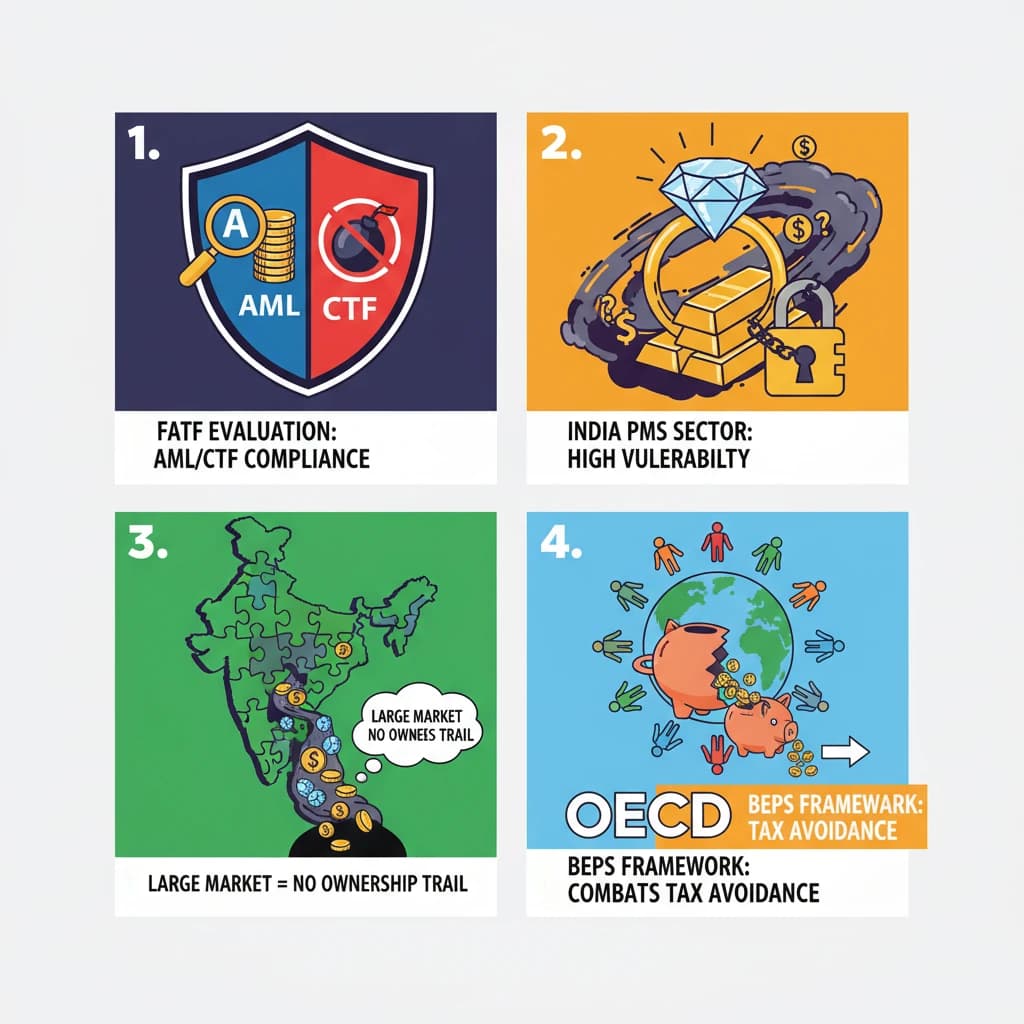
  • •FATF Mutual Evaluations assess a country's Anti-Money Laundering (AML) and Counter-Terrorist Financing (CTF) compliance.
  • •India's Precious Metals and Stones (PMS) sector is identified as highly vulnerable to money laundering and terrorist financing.
  • •The large size of India's PMS market contributes significantly to this vulnerability, as PMS can move funds without an ownership trail.
  • •The OECD's Base Erosion and Profit Shifting (BEPS) Inclusive Framework, with 147 members, combats multinational corporate tax avoidance.
  • •Strong AML/CTF measures and adherence to international tax cooperation frameworks are crucial for India's financial integrity and international standing.

🧠 Memory Techniques
Memory Aid
95% Verified Content

📚 Reference Sources

•FATF Official Website (general information on FATF and Mutual Evaluations)
•OECD Official Website (general information on BEPS)

Related Topics

Loading related topics...
Explore:Economy Topics·All Subjects·Daily Current Affairs·Editorial Analysis·Previous Year Questions·UPSC GPT
Back
All Subjects

Topics

0 topics • 0 completed

Loading topics...
Loading...
Loading...
Loading...
Loading...
Loading...
Overall Progress0%
What are the Key Highlights of the FATF Mutual Evaluation Report on India? - UPSC Economy