Loading page, please wait…
Vaidra Logo
Vaidra

Top 4 items + smart groups

UPSC GPT
New
Current Affairs
Daily Solutions
Daily Puzzle
Mains Evaluator

Version 2.0.0 • Built with ❤️ for UPSC aspirants

Loading...
Loading...
Loading...
Loading...
Loading...
Loading...
Loading...
Loading...
Loading...
Loading...
Loading...
Loading...
Loading...
Back
All Subjects

Topics

0 topics • 0 completed

Loading topics...
Loading...
Loading...
Loading...
Loading...
Loading...
Overall Progress0%

RBI to Review NBFCs - UPSC Economy

What is RBI to Review NBFCs in UPSC Economy?

RBI to Review NBFCs is a key topic under Economy for UPSC Civil Services Examination. Key points include: RBI to review NBFC categorisation in 2024 for enhanced regulation and oversight.. NBFCs are non-bank financial institutions registered under Companies Act, offering diverse services but cannot accept demand deposits.. SROs are industry bodies regulating members under government oversight, promoting compliance and ethical standards.. Understanding this topic is essential for both UPSC Prelims and Mains preparation.

Why is RBI to Review NBFCs important for UPSC exam?

RBI to Review NBFCs is a Medium-level topic in UPSC Economy. It is tested in both Prelims (factual MCQs) and Mains (analytical answer writing). Previous year UPSC questions have frequently covered aspects of RBI to Review NBFCs, making it essential for comprehensive IAS preparation.

How to prepare RBI to Review NBFCs for UPSC?

To prepare RBI to Review NBFCs for UPSC: (1) Study the comprehensive notes covering all key concepts on Vaidra. (2) Practice previous year questions on this topic. (3) Connect it with current affairs using daily updates. (4) Revise using key takeaways and mind maps available for Economy. (5) Write practice answers linking RBI to Review NBFCs to related GS Paper topics.

Key takeaways of RBI to Review NBFCs for UPSC

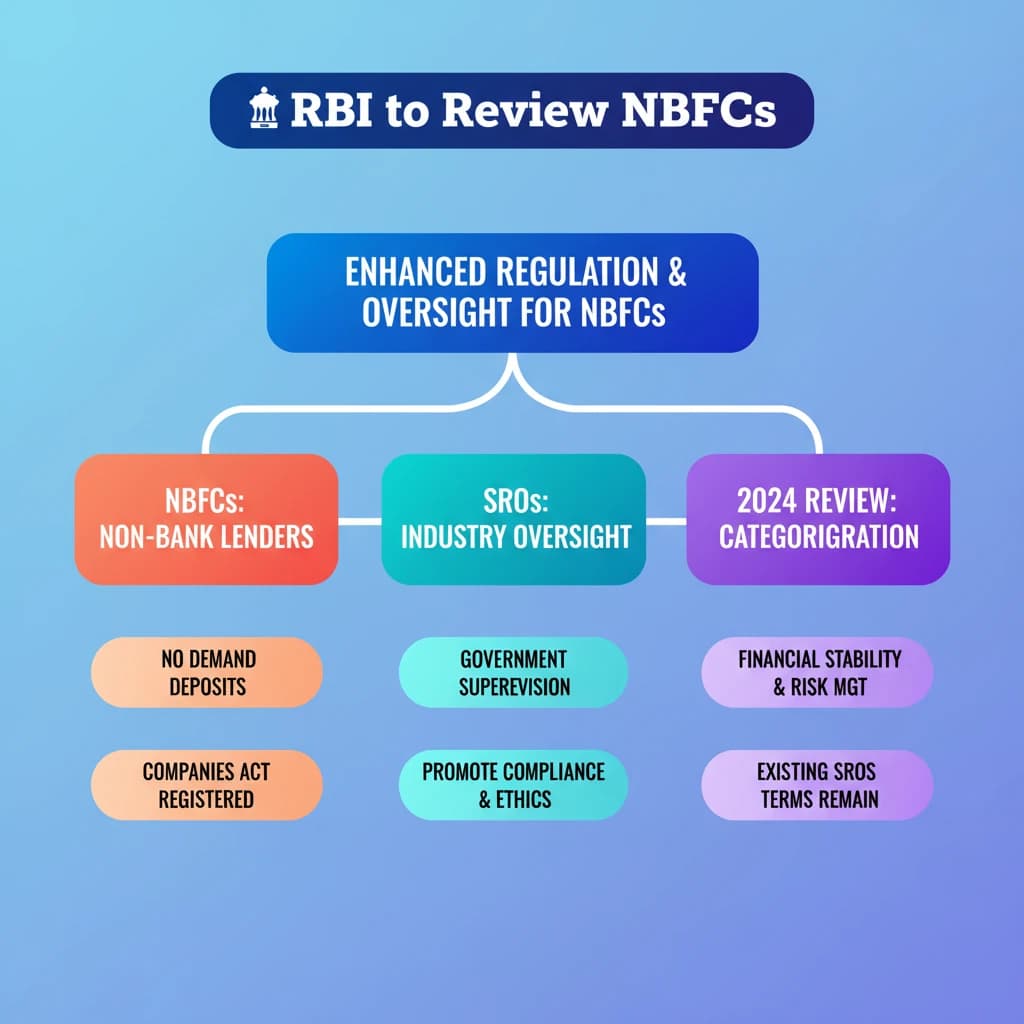
  • RBI to review NBFC categorisation in 2024 for enhanced regulation and oversight.
  • NBFCs are non-bank financial institutions registered under Companies Act, offering diverse services but cannot accept demand deposits.
  • SROs are industry bodies regulating members under government oversight, promoting compliance and ethical standards.
  • The review aims for better financial stability, risk management, and regulatory clarity for NBFCs.
  • Existing SROs' terms remain unless specifically extended by the new framework, highlighting their ongoing importance.
RBI to Review NBFCs

RBI to Review NBFCs

Medium⏱️ 9 min read✓ 95% Verified
economy

📖 Introduction

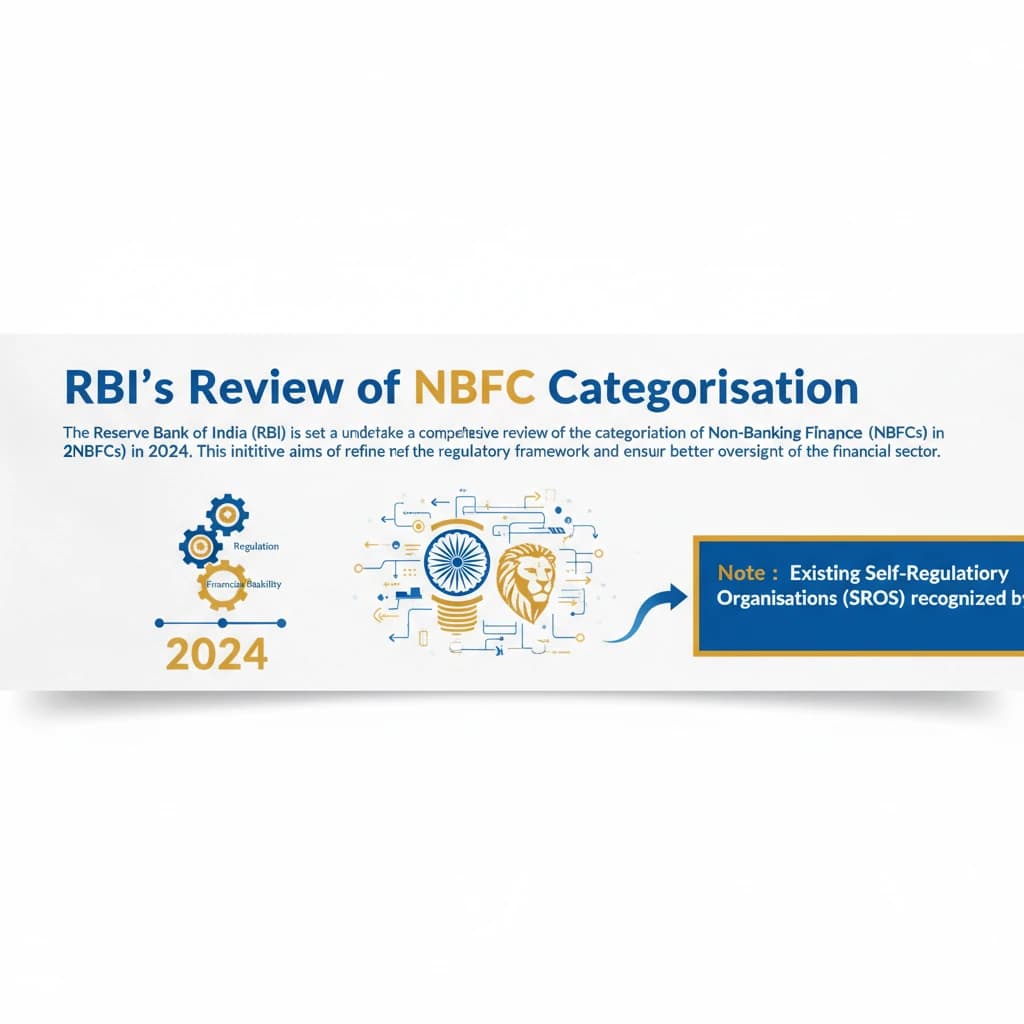
<h4>RBI's Review of NBFC Categorisation</h4><p>The <strong>Reserve Bank of India (RBI)</strong> is set to undertake a comprehensive review of the categorisation of <strong>Non-Banking Finance Companies (NBFCs)</strong> in <strong>2024</strong>. This initiative aims to refine the regulatory framework and ensure better oversight of the financial sector.</p><div class='key-point-box'><p><strong>Note:</strong> Existing <strong>Self-Regulatory Organisations (SROs)</strong> recognised by the <strong>RBI</strong> will continue to be governed by their current terms and conditions. This framework will only be extended to them if specifically stated.</p></div><h4>Understanding Self-Regulatory Organisations (SROs)</h4><p><strong>Self-Regulatory Organisations (SROs)</strong> are entities established within specific industries or sectors. Their primary function is to regulate their members, often working in close collaboration with government regulators.</p><p>These organisations operate under the direct supervision of government regulators. Regulators delegate certain functions, relying on <strong>SROs</strong> to monitor and enforce compliance within their respective industries.</p><div class='info-box'><p>While government regulators maintain ultimate authority, they leverage <strong>SROs</strong> to manage the day-to-day compliance and ethical standards of their members.</p></div><h4>What are Non-Banking Finance Companies (NBFCs)?</h4><p>An <strong>NBFC</strong> is a company that is registered under either the <strong>Companies Act, 1956</strong>, or the <strong>Companies Act, 2013</strong>. They are actively involved in a variety of financial activities.</p><p>These activities include <strong>lending</strong>, making <strong>investments in securities</strong>, providing <strong>leasing services</strong>, and offering <strong>insurance products</strong>. Despite offering banking-like services, <strong>NBFCs</strong> do not possess a full banking license.</p><h4>Key Features of NBFCs</h4><p><strong>NBFCs</strong> offer a diverse range of financial services to individuals and businesses. These services cater to various needs across different segments of the economy.</p><ul><li>They provide <strong>personal loans</strong>, <strong>home loans</strong>, and <strong>vehicle loans</strong>.</li><li><strong>Gold loans</strong> and <strong>microfinance</strong> facilities are also prominent offerings.</li><li>Many <strong>NBFCs</strong> are involved in <strong>insurance</strong> and <strong>investment management</strong>.</li><li>They are permitted to accept <strong>public deposits</strong> for specific durations, ranging from a minimum of <strong>12 months</strong> to a maximum of <strong>60 months</strong>.</li></ul><div class='info-box'><p><strong>Crucial Distinction:</strong> Unlike commercial banks, <strong>NBFCs cannot accept demand deposits</strong>. This means they cannot offer facilities like current or savings accounts from which money can be withdrawn on demand.</p></div>
Concept Diagram

💡 Key Takeaways

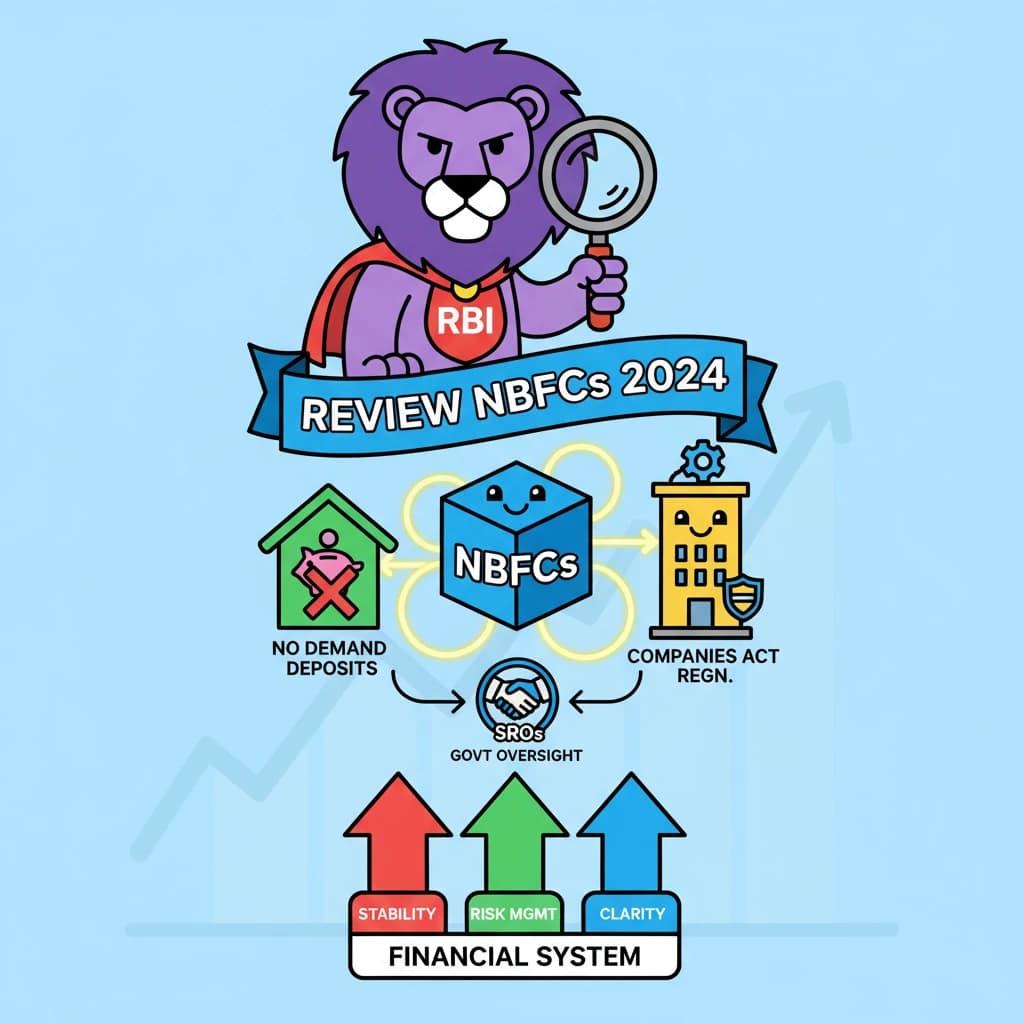
  • •RBI to review NBFC categorisation in 2024 for enhanced regulation and oversight.
  • •NBFCs are non-bank financial institutions registered under Companies Act, offering diverse services but cannot accept demand deposits.
  • •SROs are industry bodies regulating members under government oversight, promoting compliance and ethical standards.
  • •The review aims for better financial stability, risk management, and regulatory clarity for NBFCs.
  • •Existing SROs' terms remain unless specifically extended by the new framework, highlighting their ongoing importance.

🧠 Memory Techniques
Memory Aid
95% Verified Content

📚 Reference Sources

•Reserve Bank of India (RBI) official communications (general knowledge)
•Companies Act, 1956/2013 (general knowledge)

Related Topics

Loading related topics...
Explore:Economy Topics·All Subjects·Daily Current Affairs·Editorial Analysis·Previous Year Questions·UPSC GPT
RBI to Review NBFCs - UPSC Economy