How did Cooperatives Evolve in India? - UPSC Economy
What is How did Cooperatives Evolve in India? in UPSC Economy?
How did Cooperatives Evolve in India? is a key topic under Economy for UPSC Civil Services Examination. Key points include: Cooperatives are people-centred, member-owned enterprises addressing common needs.. India has one of the world's largest cooperative networks, contributing significantly to agriculture, credit, and other sectors.. The movement began with the Cooperative Credit Societies Act of 1904, influenced by the Indian Famine Commission.. Understanding this topic is essential for both UPSC Prelims and Mains preparation.
Why is How did Cooperatives Evolve in India? important for UPSC exam?
How did Cooperatives Evolve in India? is a Medium-level topic in UPSC Economy. It is tested in both Prelims (factual MCQs) and Mains (analytical answer writing). Previous year UPSC questions have frequently covered aspects of How did Cooperatives Evolve in India?, making it essential for comprehensive IAS preparation.
How to prepare How did Cooperatives Evolve in India? for UPSC?
To prepare How did Cooperatives Evolve in India? for UPSC: (1) Study the comprehensive notes covering all key concepts on Vaidra. (2) Practice previous year questions on this topic. (3) Connect it with current affairs using daily updates. (4) Revise using key takeaways and mind maps available for Economy. (5) Write practice answers linking How did Cooperatives Evolve in India? to related GS Paper topics.
Key takeaways of How did Cooperatives Evolve in India? for UPSC
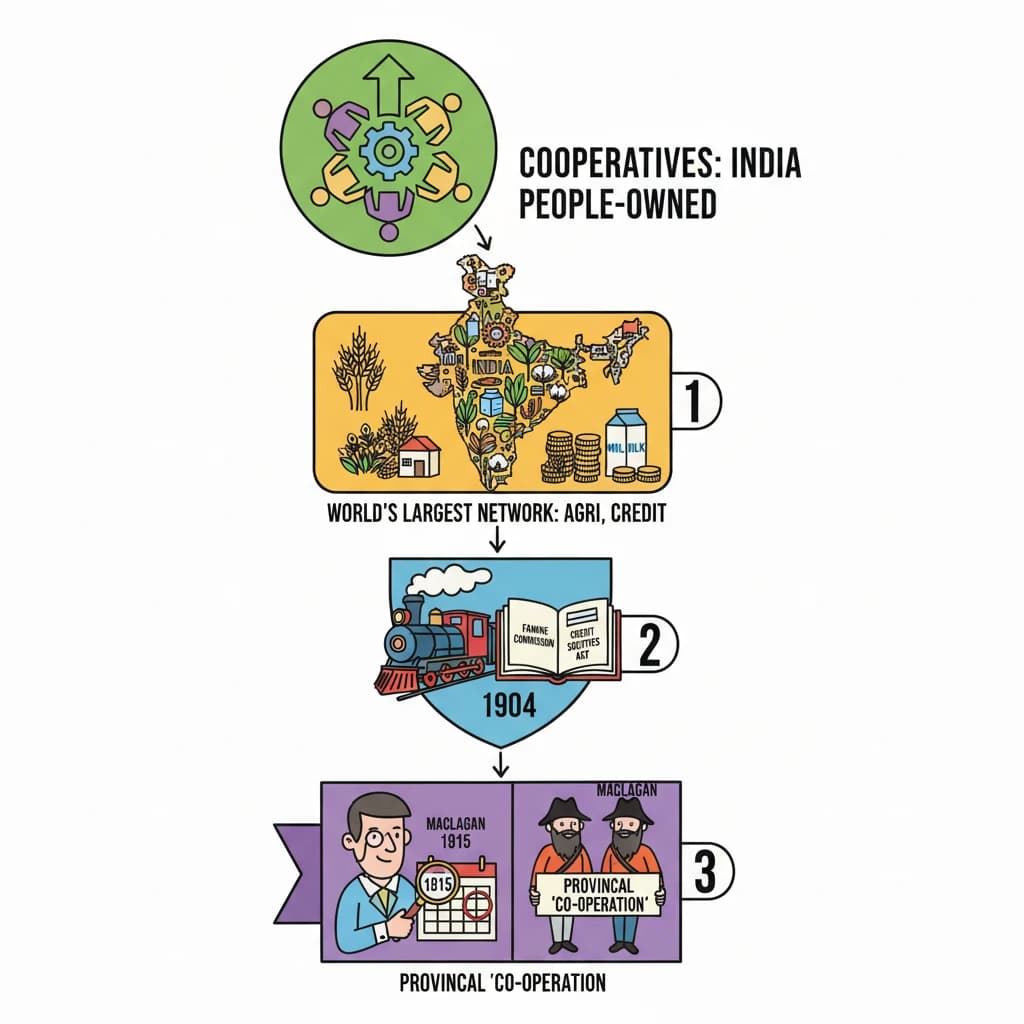
- Cooperatives are people-centred, member-owned enterprises addressing common needs.
- India has one of the world's largest cooperative networks, contributing significantly to agriculture, credit, and other sectors.
- The movement began with the Cooperative Credit Societies Act of 1904, influenced by the Indian Famine Commission.
- Key milestones include the Maclagan Committee (1915) and the provincialization of 'co-operation' by the Montague-Chelmsford Reforms (1919).
- Gandhian philosophy championed cooperatives for decentralization and empowerment, exemplified by the Phoenix Settlement.

How did Cooperatives Evolve in India?
📖 Introduction
💡 Key Takeaways
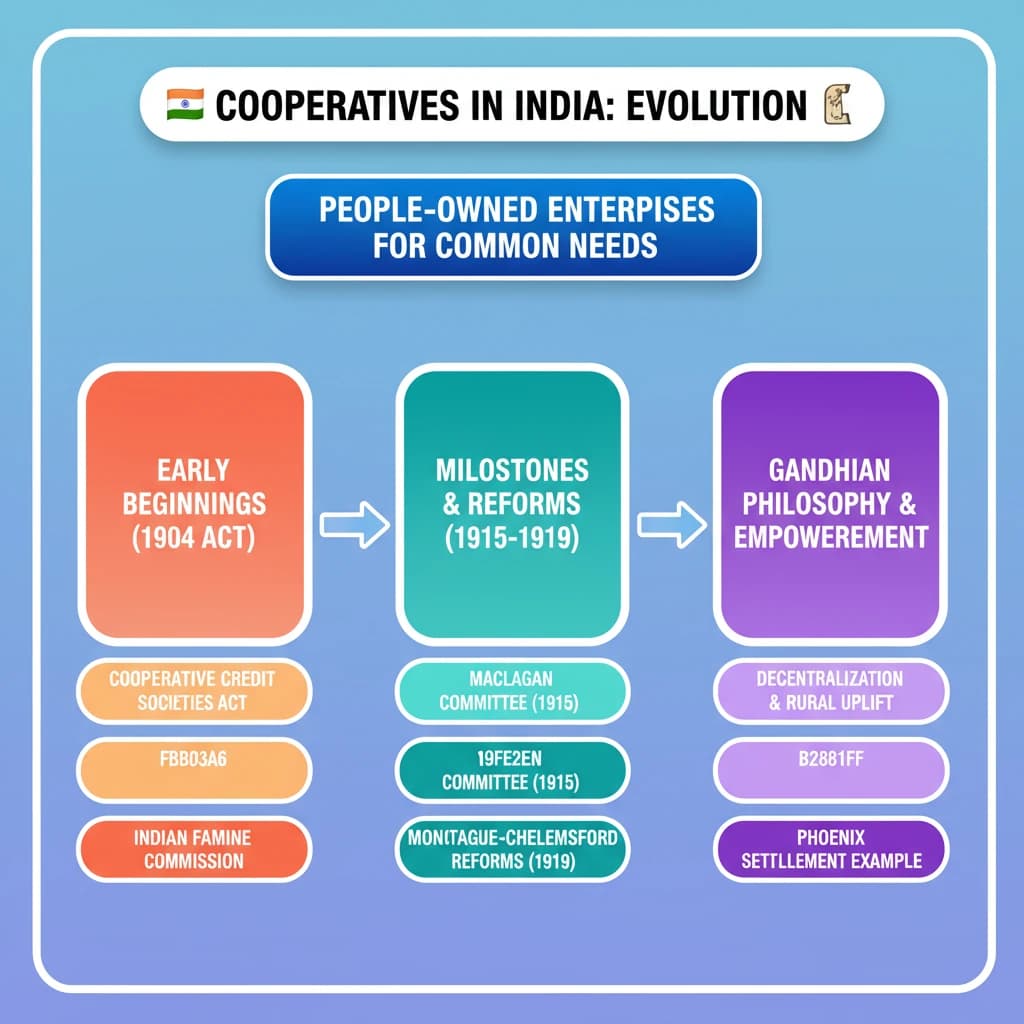
- •Cooperatives are people-centred, member-owned enterprises addressing common needs.
- •India has one of the world's largest cooperative networks, contributing significantly to agriculture, credit, and other sectors.
- •The movement began with the Cooperative Credit Societies Act of 1904, influenced by the Indian Famine Commission.
- •Key milestones include the Maclagan Committee (1915) and the provincialization of 'co-operation' by the Montague-Chelmsford Reforms (1919).
- •Gandhian philosophy championed cooperatives for decentralization and empowerment, exemplified by the Phoenix Settlement.
🧠 Memory Techniques