What are Government of India’s Initiatives to Promote EV Adoption? - UPSC Economy
What is What are Government of India’s Initiatives to Promote EV Adoption? in UPSC Economy?
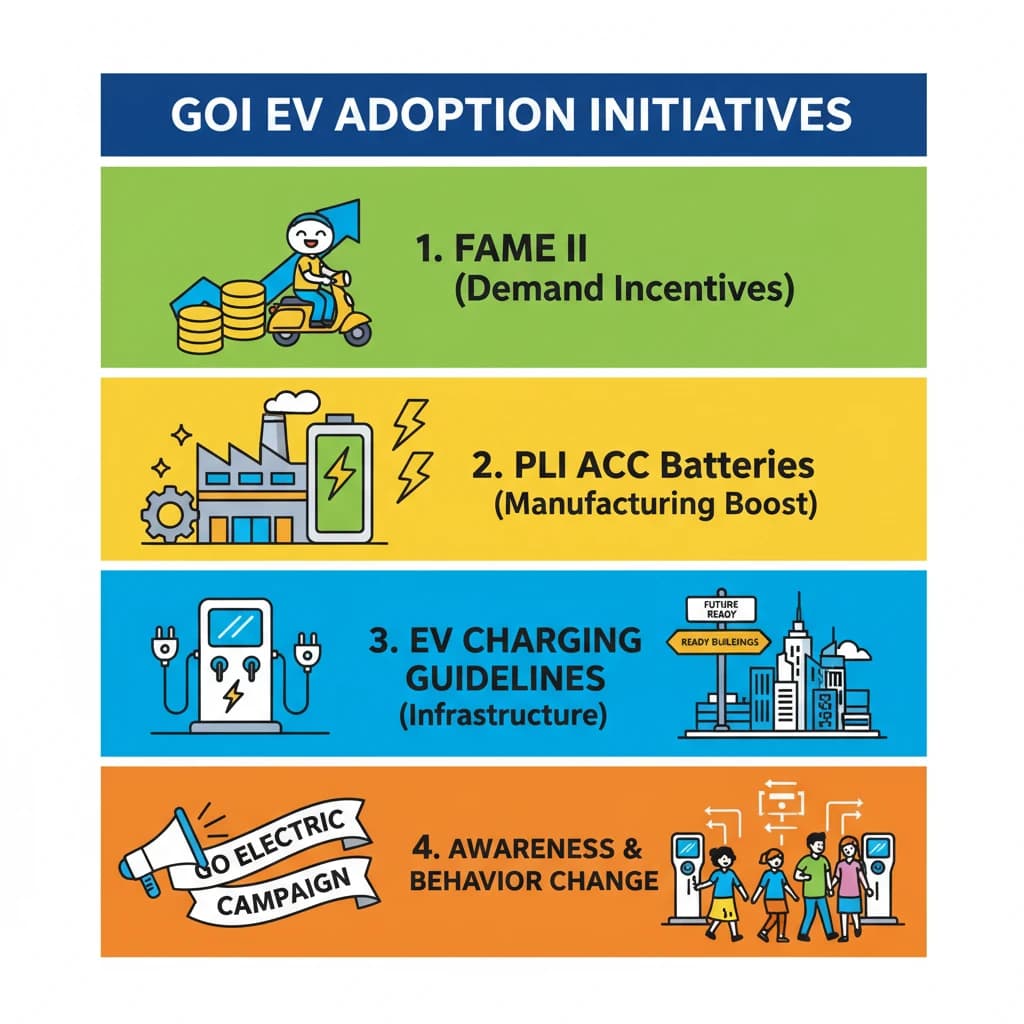
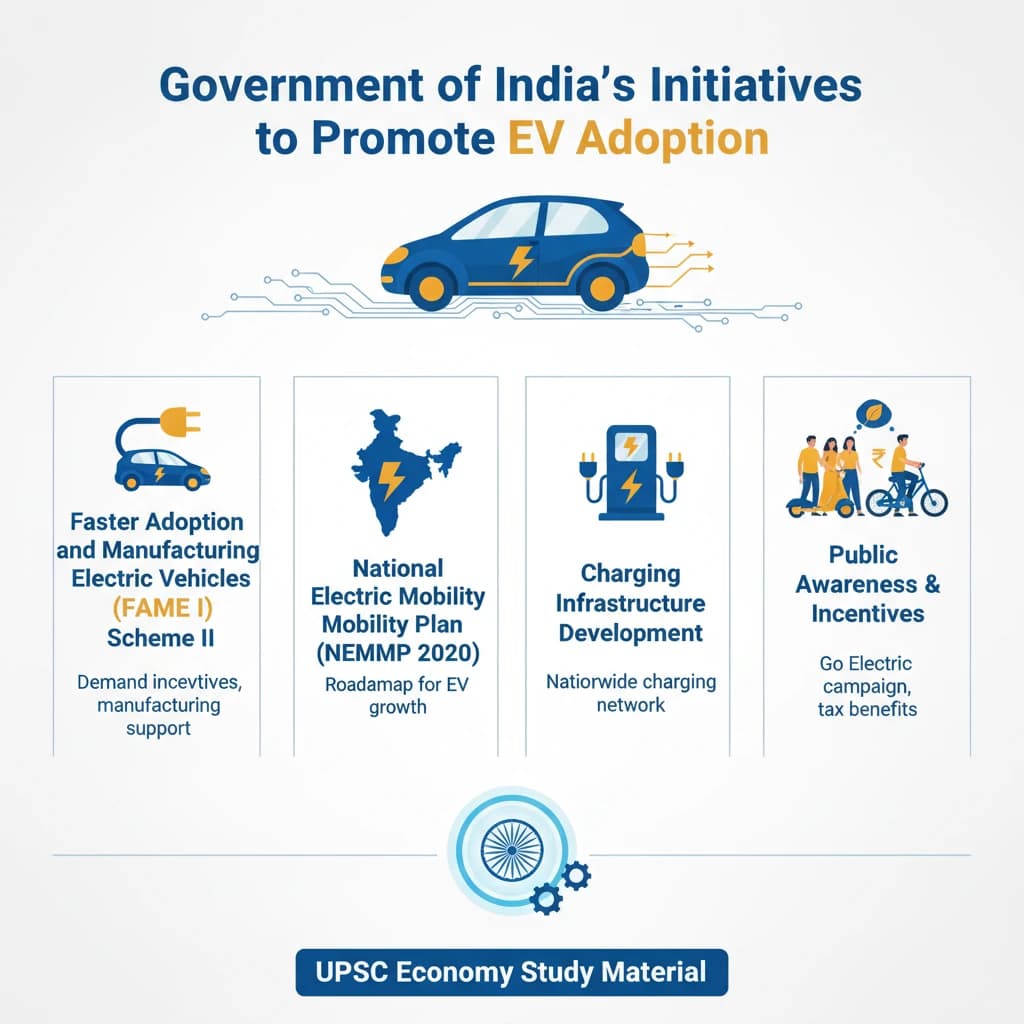
What are Government of India’s Initiatives to Promote EV Adoption? is a key topic under Economy for UPSC Civil Services Examination. Key points include: India's EV promotion involves demand incentives (FAME), manufacturing boosts (PLI), and infrastructure development.. Key initiatives include FAME II, NEMMP, PLI for ACC batteries, and revised charging guidelines.. Regulatory changes like MBBL amendments ensure future-ready buildings for EV charging.. Understanding this topic is essential for both UPSC Prelims and Mains preparation.
Why is What are Government of India’s Initiatives to Promote EV Adoption? important for UPSC exam?
What are Government of India’s Initiatives to Promote EV Adoption? is a Medium-level topic in UPSC Economy. It is tested in both Prelims (factual MCQs) and Mains (analytical answer writing). Previous year UPSC questions have frequently covered aspects of What are Government of India’s Initiatives to Promote EV Adoption?, making it essential for comprehensive IAS preparation.
How to prepare What are Government of India’s Initiatives to Promote EV Adoption? for UPSC?
To prepare What are Government of India’s Initiatives to Promote EV Adoption? for UPSC: (1) Study the comprehensive notes covering all key concepts on Vaidra. (2) Practice previous year questions on this topic. (3) Connect it with current affairs using daily updates. (4) Revise using key takeaways and mind maps available for Economy. (5) Write practice answers linking What are Government of India’s Initiatives to Promote EV Adoption? to related GS Paper topics.
Key takeaways of What are Government of India’s Initiatives to Promote EV Adoption? for UPSC
- India's EV promotion involves demand incentives (FAME), manufacturing boosts (PLI), and infrastructure development.
- Key initiatives include FAME II, NEMMP, PLI for ACC batteries, and revised charging guidelines.
- Regulatory changes like MBBL amendments ensure future-ready buildings for EV charging.
- The 'Go Electric' campaign focuses on public awareness and behavioral change.
- India supports global goals like EV30@30, aligning with climate commitments and energy security.
What are Government of India’s Initiatives to Promote EV Adoption?
📖 Introduction
💡 Key Takeaways
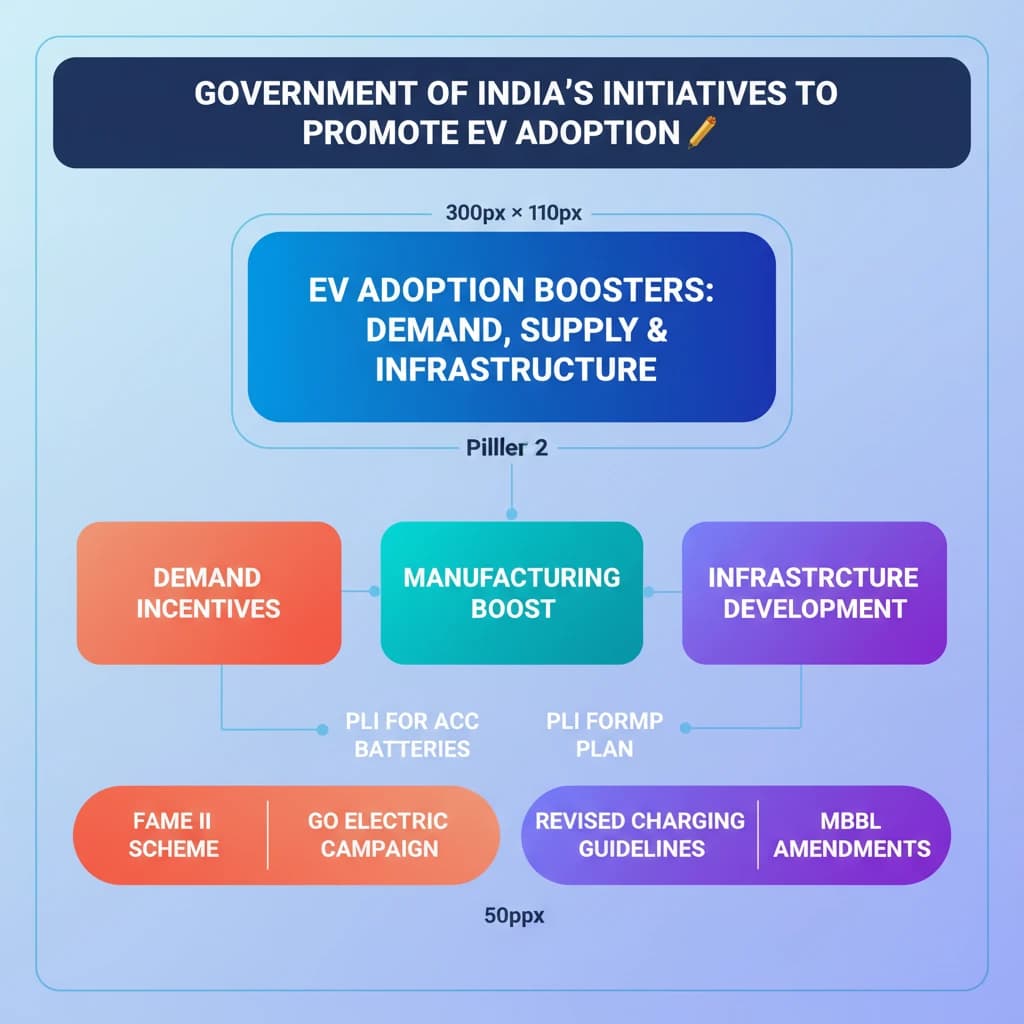
- •India's EV promotion involves demand incentives (FAME), manufacturing boosts (PLI), and infrastructure development.
- •Key initiatives include FAME II, NEMMP, PLI for ACC batteries, and revised charging guidelines.
- •Regulatory changes like MBBL amendments ensure future-ready buildings for EV charging.
- •The 'Go Electric' campaign focuses on public awareness and behavioral change.
- •India supports global goals like EV30@30, aligning with climate commitments and energy security.
🧠 Memory Techniques