Loading page, please wait…
Araku Coffee: GI Tag, Unique Flavor, and Tribal Livelihoods - UPSC Economy
What is Araku Coffee: GI Tag, Unique Flavor, and Tribal Livelihoods in UPSC Economy?
Araku Coffee: GI Tag, Unique Flavor, and Tribal Livelihoods is a key topic under Economy for UPSC Civil Services Examination. Key points include: Araku Coffee is from Araku Valley, Andhra Pradesh (Eastern Ghats).. Known for distinct chocolate, caramel, fruity acidity flavour.. Cultivated organically by tribal farmers using agroforestry.. Understanding this topic is essential for both UPSC Prelims and Mains preparation.
Why is Araku Coffee: GI Tag, Unique Flavor, and Tribal Livelihoods important for UPSC exam?
Araku Coffee: GI Tag, Unique Flavor, and Tribal Livelihoods is a Easy-level topic in UPSC Economy. It is tested in both Prelims (factual MCQs) and Mains (analytical answer writing). Previous year UPSC questions have frequently covered aspects of Araku Coffee: GI Tag, Unique Flavor, and Tribal Livelihoods, making it essential for comprehensive IAS preparation.
How to prepare Araku Coffee: GI Tag, Unique Flavor, and Tribal Livelihoods for UPSC?
To prepare Araku Coffee: GI Tag, Unique Flavor, and Tribal Livelihoods for UPSC: (1) Study the comprehensive notes covering all key concepts on Vaidra. (2) Practice previous year questions on this topic. (3) Connect it with current affairs using daily updates. (4) Revise using key takeaways and mind maps available for Economy. (5) Write practice answers linking Araku Coffee: GI Tag, Unique Flavor, and Tribal Livelihoods to related GS Paper topics.
Key takeaways of Araku Coffee: GI Tag, Unique Flavor, and Tribal Livelihoods for UPSC
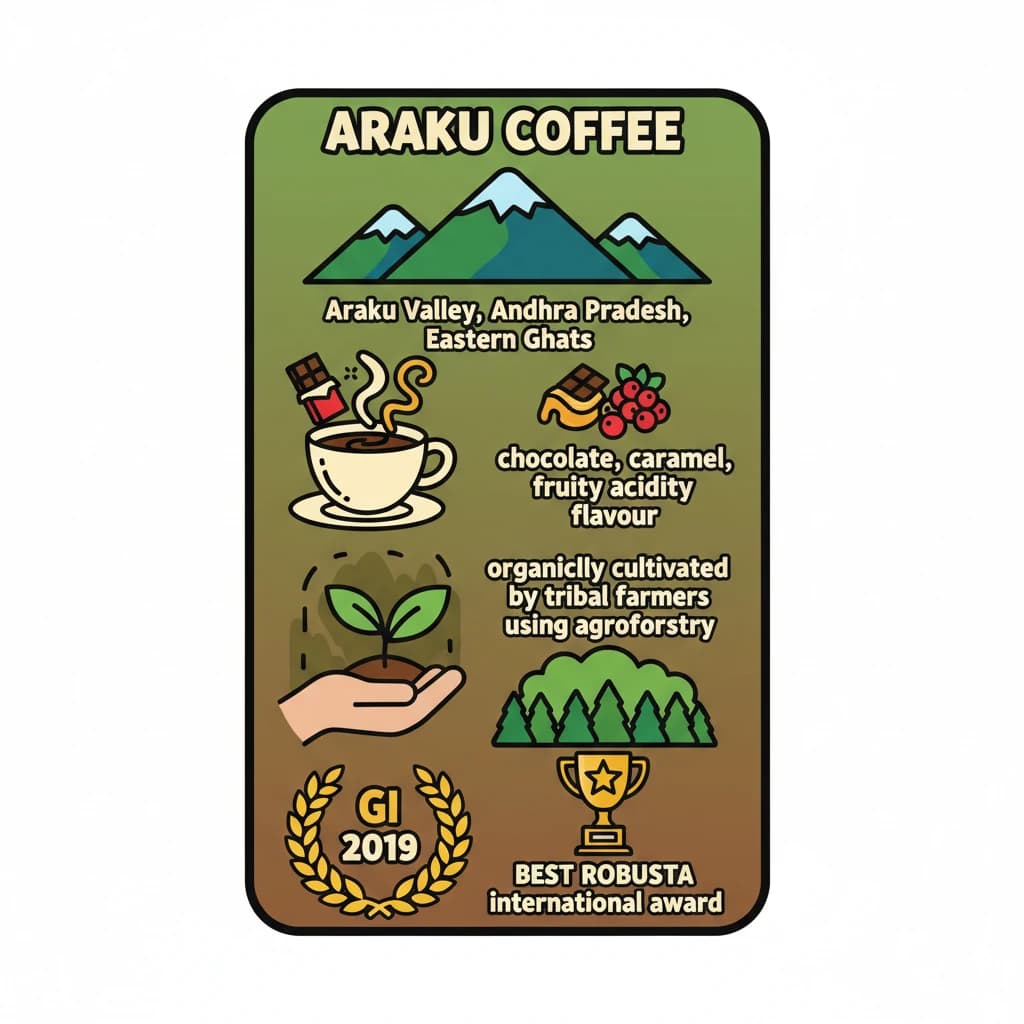
- Araku Coffee is from Araku Valley, Andhra Pradesh (Eastern Ghats).
- Known for distinct chocolate, caramel, fruity acidity flavour.
- Cultivated organically by tribal farmers using agroforestry.
- Received GI tag in 2019 and 'Best Robusta' international award.
- Highlights sustainable agriculture and tribal empowerment.
- India is 6th largest coffee producer; Karnataka, Kerala, Tamil Nadu lead domestically.
Araku Coffee: GI Tag, Unique Flavor, and Tribal Livelihoods
Easy⏱️ 6 min read
economy
📖 Introduction
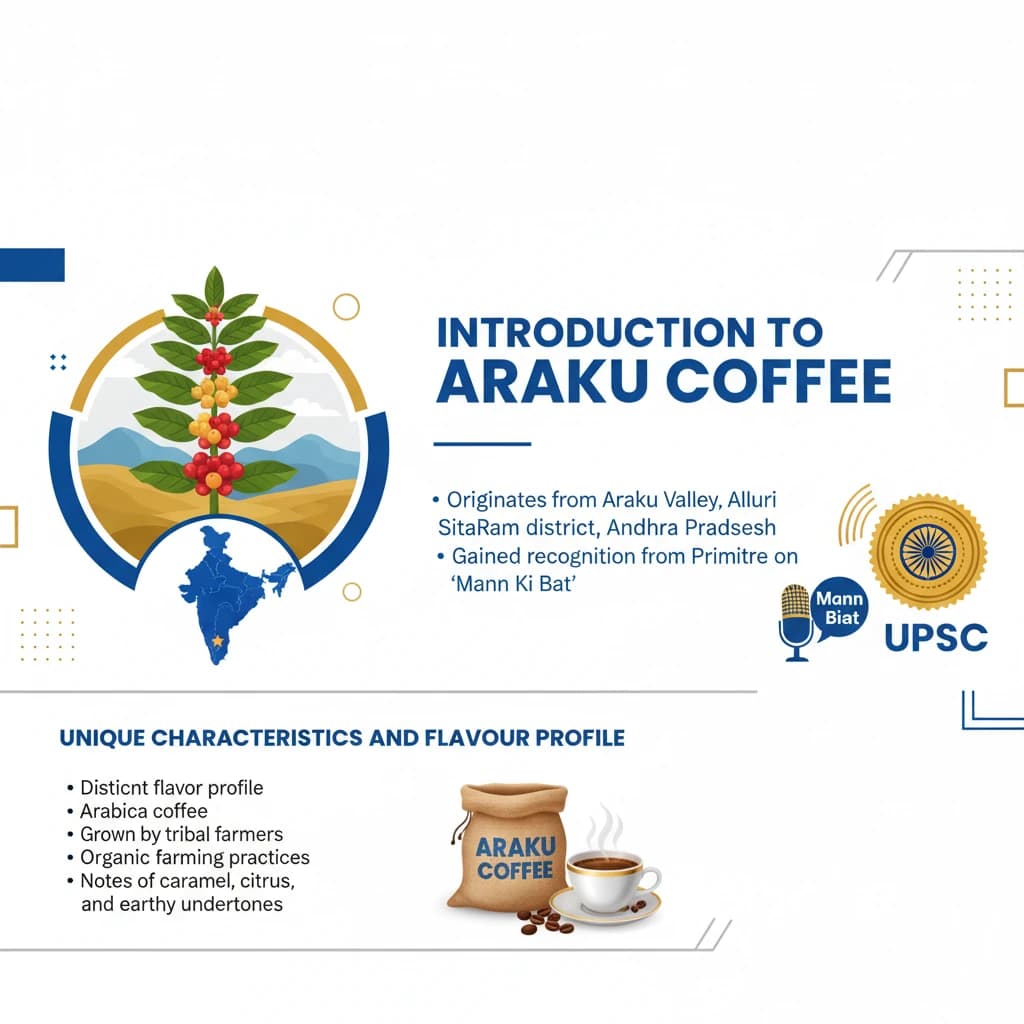
Introduction to Araku Coffee
Araku Coffee, originating from the Araku Valley in Alluri SitaRam Raju district of Andhra Pradesh, has garnered significant attention. Its unique qualities were highlighted by the Prime Minister during a recent episode of the ‘Mann Ki Baat’ radio programme, underscoring its national importance.
Unique Characteristics and Flavour Profile
This distinct coffee is cultivated in the scenic Eastern Ghats region. It is renowned for its exceptional flavour profile, which includes delightful notes of chocolate, caramel, and a subtle yet refreshing fruity acidity.
Flavour Notes: Chocolate, Caramel, Subtle Fruity Acidity
Location: Araku Valley, Alluri SitaRam Raju district, Andhra Pradesh (Eastern Ghats)
Cultivation Methods and Community Impact
Araku Coffee is primarily grown using organic farming methods within a diverse agroforestry system. This sustainable approach benefits both the environment and the local communities.
The cultivation is largely undertaken by tribal farmers and cooperatives. This model plays a crucial role in promoting sustainable livelihoods and fostering community empowerment in the region.
GI Tag and International Recognition
The unique qualities of Araku Coffee have been officially recognized with a Geographical Indication (GI) tag, which it received in 2019. This tag signifies its origin and distinctive characteristics.
Furthermore, Araku Coffee has achieved international acclaim, including the prestigious “Best Robusta” award at the Café de Colombia Competition. This highlights its global standing and quality.
Understanding the significance of GI tags is crucial for UPSC Prelims (Economy, Geography) and Mains GS-III (Agriculture, Intellectual Property Rights). It protects unique products and supports local economies.
Global and Indian Coffee Production Landscape
Globally, India holds the position of the 6th largest producer of coffee. The top three global producers are Brazil, Vietnam, and Colombia.
Within India, the leading coffee-producing states are Karnataka, followed by Kerala and Tamil Nadu. These states contribute significantly to India's overall coffee output.
💡 Key Takeaways
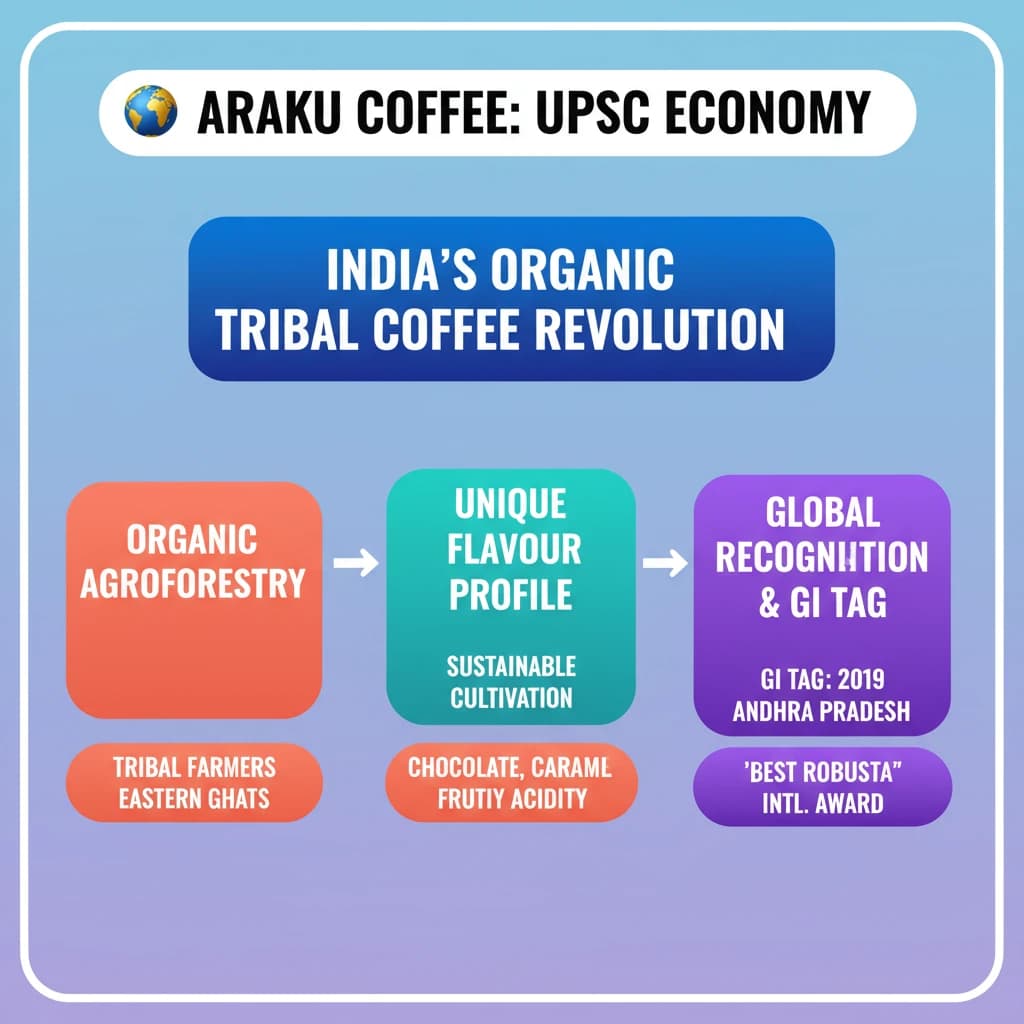
- •Araku Coffee is from Araku Valley, Andhra Pradesh (Eastern Ghats).
- •Known for distinct chocolate, caramel, fruity acidity flavour.
- •Cultivated organically by tribal farmers using agroforestry.
- •Received GI tag in 2019 and 'Best Robusta' international award.
- •Highlights sustainable agriculture and tribal empowerment.
- •India is 6th largest coffee producer; Karnataka, Kerala, Tamil Nadu lead domestically.
🧠 Memory Techniques
95% Verified Content