Loading page, please wait…
Vaidra Logo
Vaidra

Top 4 items + smart groups

UPSC GPT
New
Current Affairs
Daily Solutions
Daily Puzzle
Mains Evaluator

Version 2.0.0 • Built with ❤️ for UPSC aspirants

Loading...
Loading...
Loading...
Loading...
Loading...
Loading...
Loading...
Loading...
Loading...
Loading...
Loading...
Loading...
Loading...
Back
All Subjects

Topics

0 topics • 0 completed

Loading topics...
Loading...
Loading...
Loading...
Loading...
Loading...
Overall Progress0%
What is MFN Status? - UPSC Economy

What is MFN Status? - UPSC Economy

What is What is MFN Status? in UPSC Economy?

What is MFN Status? is a key topic under Economy for UPSC Civil Services Examination. Key points include: <strong>MFN Status</strong> ensures non-discriminatory trade among partners, treating all equally.. It is a core principle of the <strong>World Trade Organization (WTO)</strong>, mandating extension of trade benefits to all members.. MFN does <strong>not</strong> mean preferential treatment, but rather equal, usually lowest, trade conditions.. Understanding this topic is essential for both UPSC Prelims and Mains preparation.

Why is What is MFN Status? important for UPSC exam?

What is MFN Status? is a Medium-level topic in UPSC Economy. It is tested in both Prelims (factual MCQs) and Mains (analytical answer writing). Previous year UPSC questions have frequently covered aspects of What is MFN Status?, making it essential for comprehensive IAS preparation.

How to prepare What is MFN Status? for UPSC?

To prepare What is MFN Status? for UPSC: (1) Study the comprehensive notes covering all key concepts on Vaidra. (2) Practice previous year questions on this topic. (3) Connect it with current affairs using daily updates. (4) Revise using key takeaways and mind maps available for Economy. (5) Write practice answers linking What is MFN Status? to related GS Paper topics.

Key takeaways of What is MFN Status? for UPSC

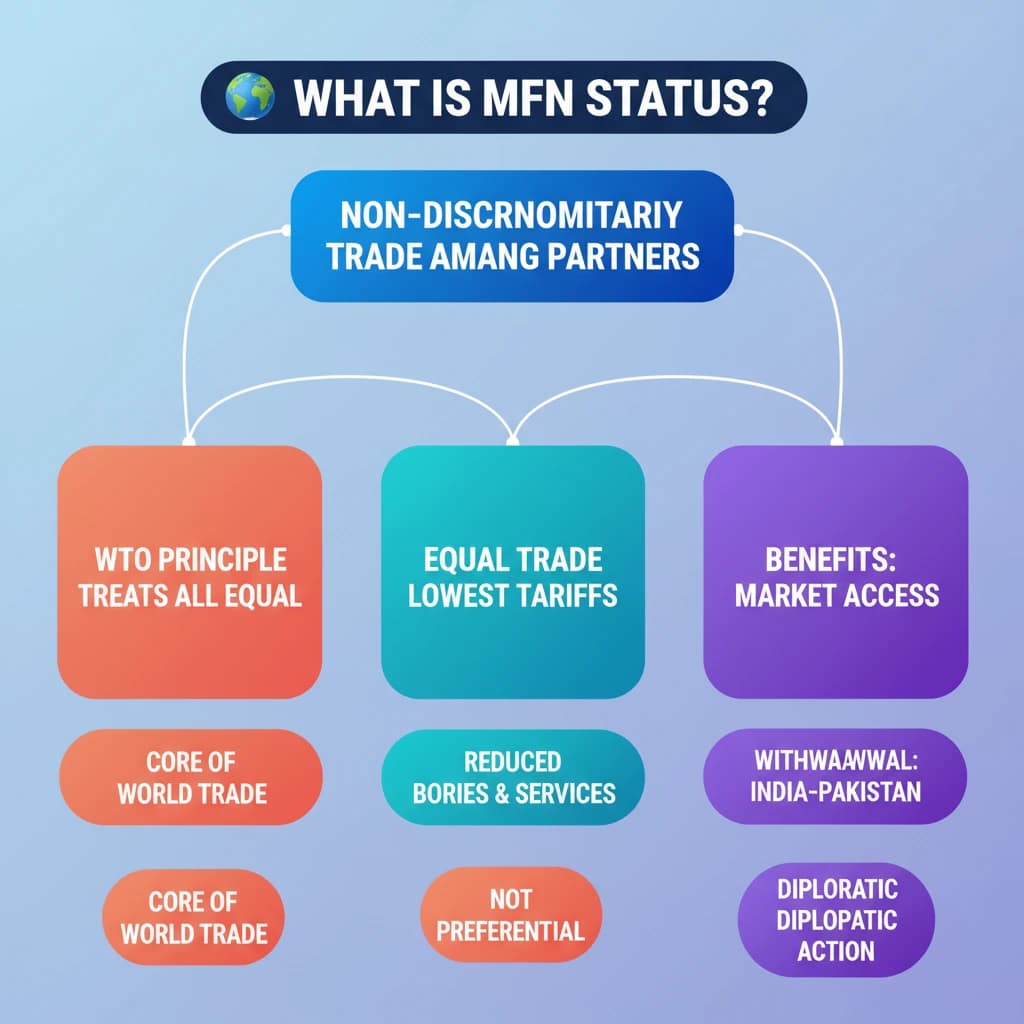
  • <strong>MFN Status</strong> ensures non-discriminatory trade among partners, treating all equally.
  • It is a core principle of the <strong>World Trade Organization (WTO)</strong>, mandating extension of trade benefits to all members.
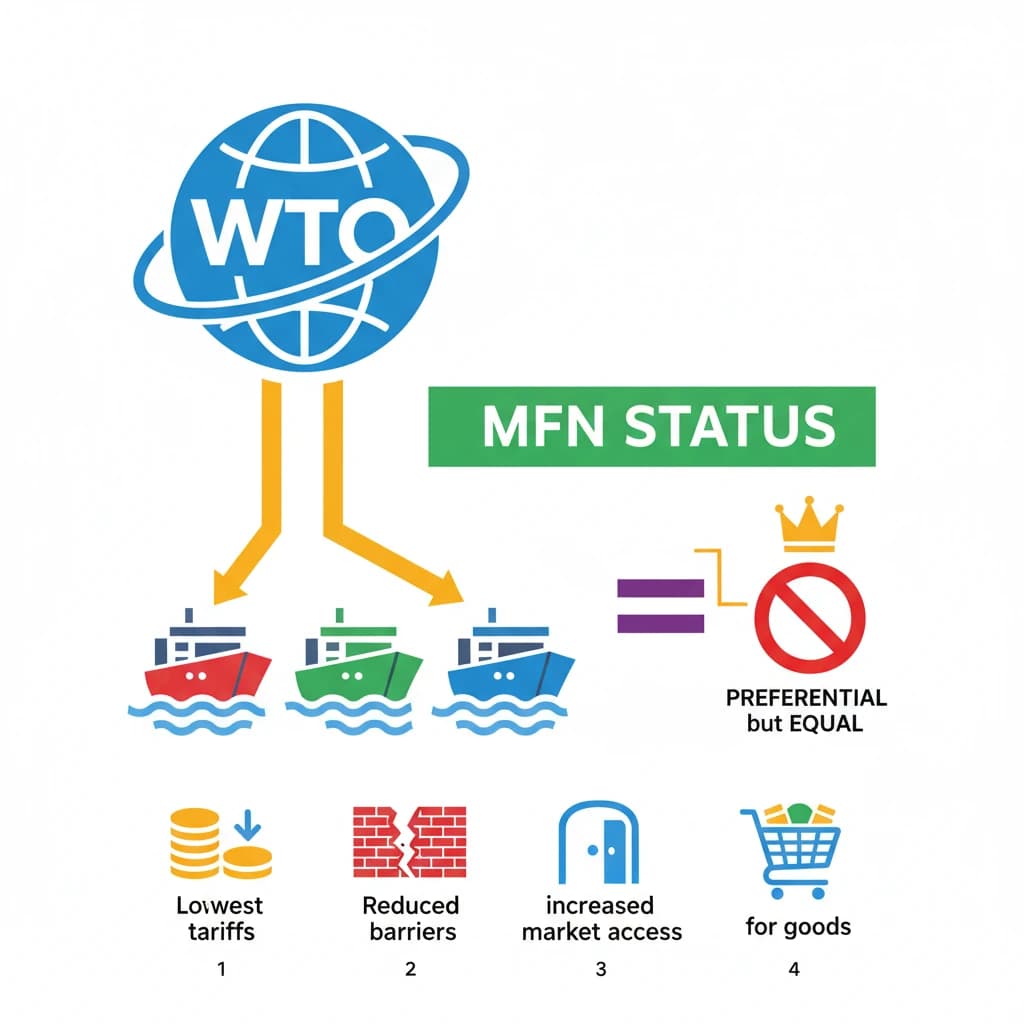
  • MFN does <strong>not</strong> mean preferential treatment, but rather equal, usually lowest, trade conditions.
  • Benefits include <strong>lowest tariffs, reduced barriers, and increased market access</strong> for goods.
  • Withdrawal of MFN status can be a significant economic and diplomatic action, as seen with <strong>India-Pakistan</strong>.
What is MFN Status?

What is MFN Status?

Medium⏱️ 8 min read✓ 98% Verified
economy

📖 Introduction

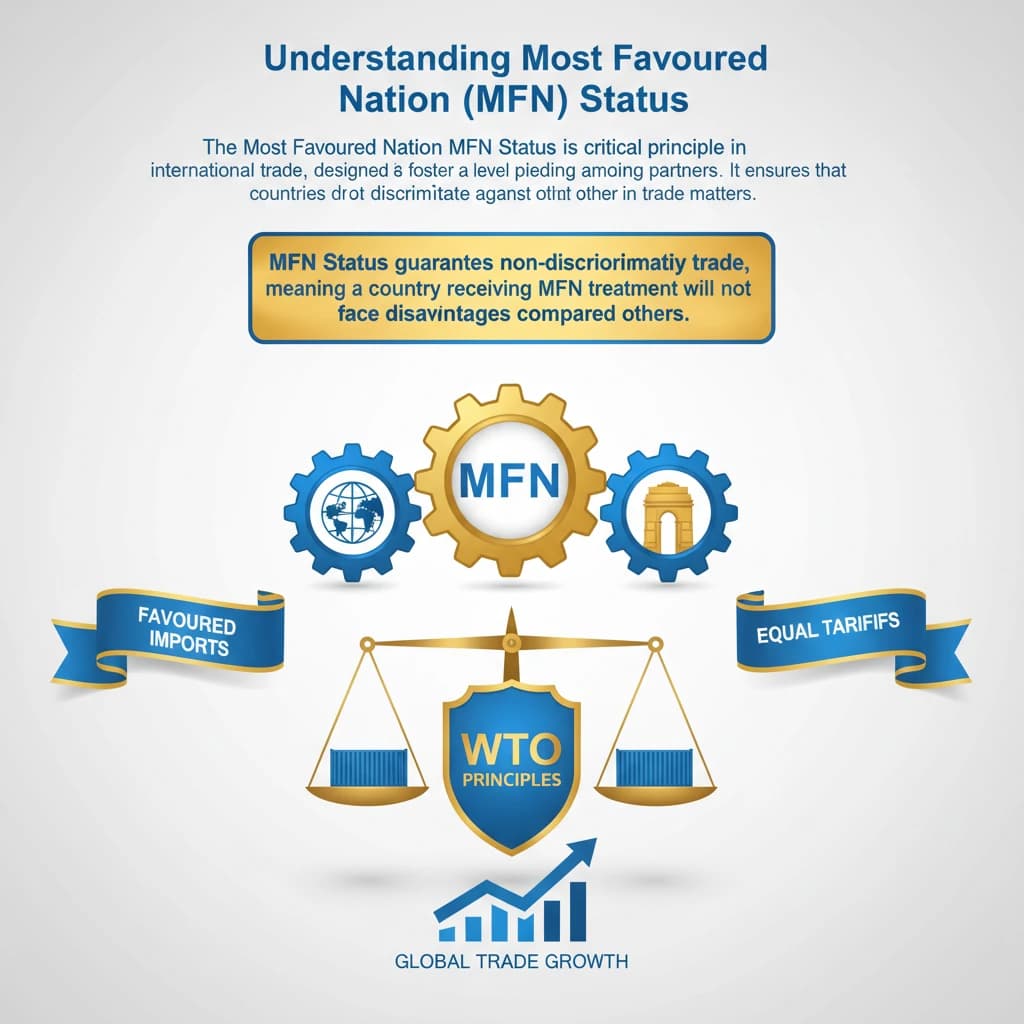
<h4>Understanding Most Favoured Nation (MFN) Status</h4><p>The <strong>Most Favoured Nation (MFN) Status</strong> is a critical principle in international trade, designed to foster a level playing field among trading partners. It ensures that countries do not discriminate against each other in trade matters.</p><div class='key-point-box'><p><strong>MFN Status</strong> guarantees <strong>non-discriminatory trade</strong>, meaning a country receiving MFN treatment will not face disadvantages compared to other trade partners of the granting country.</p></div><h4>MFN and the World Trade Organization (WTO)</h4><p><strong>MFN</strong> is a cornerstone principle of the <strong>World Trade Organization (WTO)</strong> rules. This means that if a <strong>WTO member country</strong> grants a special trade advantage or status to one trade partner, it must extend that same advantage to all other <strong>WTO members</strong>.</p><div class='info-box'><p>The <strong>WTO's MFN principle</strong> aims to prevent individual trade agreements from creating exclusive blocs and to promote a global, open trading system.</p></div><h4>Key Trade Conditions Ensured by MFN</h4><p>When a country grants <strong>MFN status</strong>, it commits to offering the same trade conditions to all its MFN partners. This commitment typically includes several benefits:</p><ul><li><strong>Lowest Possible Trade Tariffs:</strong> Ensuring that import duties are not higher for one MFN partner than for another.</li><li><strong>Reduced Trade Barriers:</strong> Minimizing non-tariff barriers, such as complex customs procedures or quotas, equally for all MFN countries.</li><li><strong>Highest Import Quotas:</strong> Offering the most generous import quotas to all MFN partners.</li><li><strong>Increased Market Access:</strong> Facilitating easier entry for goods and services from MFN countries into the domestic market.</li><li><strong>Improved Flow of Goods:</strong> Creating better overall conditions for international commerce.</li></ul><h4>International Trade Encouragement and India's Context</h4><p>The core purpose of <strong>MFN status</strong> is to encourage <strong>cross-border business</strong> by providing clear and predictable trade rules. It helps in reducing trade liabilities and fostering stable economic relationships.</p><div class='info-box'><p>While MFN is about non-discrimination, <strong>India</strong> also has an extensive network of <strong>Double Taxation Avoidance Agreements (DTAAs)</strong>. India has over <strong>94 comprehensive DTAAs</strong> and <strong>eight limited DTAAs</strong>, which are separate from MFN but also aim to facilitate international business by avoiding dual taxation.</p></div><div class='exam-tip-box'><p>Distinguish between <strong>MFN status</strong> (non-discriminatory trade) and <strong>DTAAs</strong> (taxation agreements). Both encourage trade but through different mechanisms. This can be a point of confusion in UPSC prelims.</p></div>
Concept Diagram

💡 Key Takeaways

  • •<strong>MFN Status</strong> ensures non-discriminatory trade among partners, treating all equally.
  • •It is a core principle of the <strong>World Trade Organization (WTO)</strong>, mandating extension of trade benefits to all members.
  • •MFN does <strong>not</strong> mean preferential treatment, but rather equal, usually lowest, trade conditions.
  • •Benefits include <strong>lowest tariffs, reduced barriers, and increased market access</strong> for goods.
  • •Withdrawal of MFN status can be a significant economic and diplomatic action, as seen with <strong>India-Pakistan</strong>.

🧠 Memory Techniques
Memory Aid
98% Verified Content

📚 Reference Sources

•World Trade Organization (WTO) Official Website (www.wto.org) - MFN Principle
•Ministry of Commerce & Industry, Government of India - Trade Policy Documents
•NCERT Economics Textbooks (Class 11 & 12) - International Trade Concepts

Related Topics

Loading related topics...
Explore:Economy Topics·All Subjects·Daily Current Affairs·Editorial Analysis·Previous Year Questions·UPSC GPT