Loading page, please wait…
Central Organisations of Employers - UPSC Economy
What is Central Organisations of Employers in UPSC Economy?
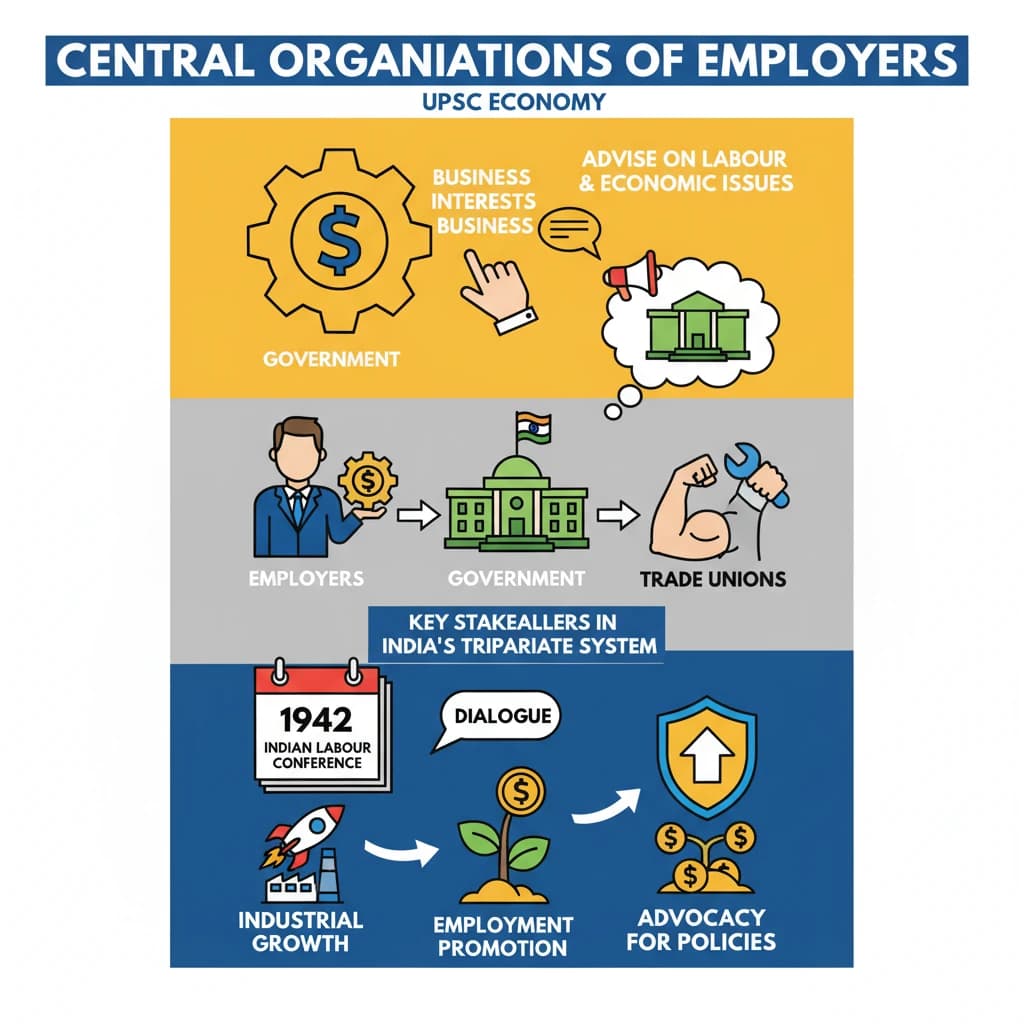
Central Organisations of Employers is a key topic under Economy for UPSC Civil Services Examination. Key points include: Central Organisations of Employers represent business interests and advise the government on labour and economic issues.. They are key stakeholders in India's tripartite system, engaging with government and trade unions.. The Indian Labour Conference (ILC), established in 1942, is a historical example of this tripartite dialogue.. Understanding this topic is essential for both UPSC Prelims and Mains preparation.
Why is Central Organisations of Employers important for UPSC exam?
Central Organisations of Employers is a Medium-level topic in UPSC Economy. It is tested in both Prelims (factual MCQs) and Mains (analytical answer writing). Previous year UPSC questions have frequently covered aspects of Central Organisations of Employers, making it essential for comprehensive IAS preparation.
How to prepare Central Organisations of Employers for UPSC?
To prepare Central Organisations of Employers for UPSC: (1) Study the comprehensive notes covering all key concepts on Vaidra. (2) Practice previous year questions on this topic. (3) Connect it with current affairs using daily updates. (4) Revise using key takeaways and mind maps available for Economy. (5) Write practice answers linking Central Organisations of Employers to related GS Paper topics.
Key takeaways of Central Organisations of Employers for UPSC
- Central Organisations of Employers represent business interests and advise the government on labour and economic issues.
- They are key stakeholders in India's tripartite system, engaging with government and trade unions.
- The Indian Labour Conference (ILC), established in 1942, is a historical example of this tripartite dialogue.
- These bodies advocate for policies that promote ease of doing business, industrial growth, and employment.
- Their role is crucial in the ongoing labour code reforms and shaping contemporary economic policies.
Central Organisations of Employers
Medium⏱️ 7 min read
economy
📖 Introduction
Introduction to Central Organisations of Employers
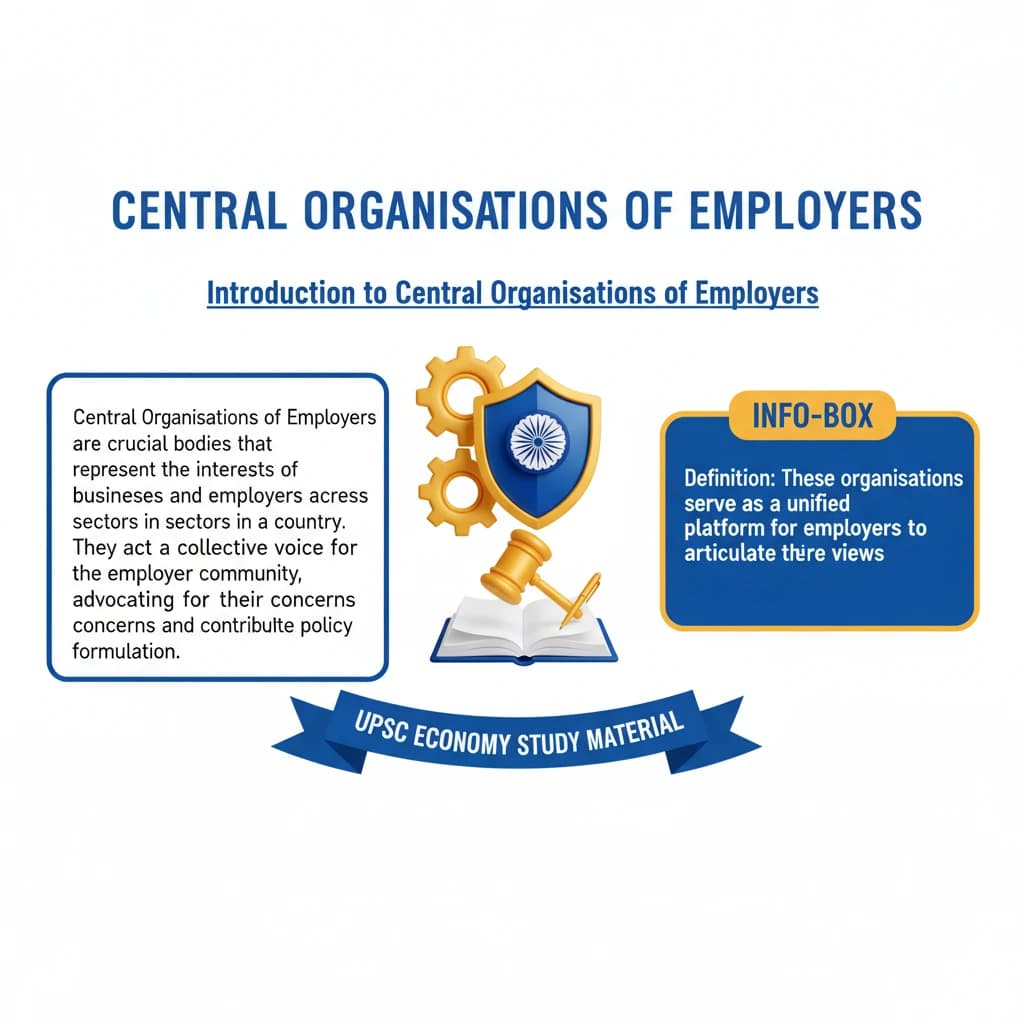
Central Organisations of Employers are crucial bodies that represent the interests of businesses and employers across various sectors in a country. They act as a collective voice for the employer community, advocating for their concerns and contributing to policy formulation.
Definition: These organisations serve as a unified platform for employers to articulate their views on economic, labour, and social policies to the government and other stakeholders.
Role and Advisory Function
The primary role of these organisations is to advise the Government on a wide array of issues that directly impact the working class and the overall economic environment of the country. Their input is vital for balanced policy-making.
Key Function: They bridge the gap between employer needs and government regulations, ensuring that policies are practical and sustainable for businesses while also considering employee welfare.
Government Representation and Tripartism
These employer bodies engage with various government representatives. This includes officials from the Ministry of Labour & Employment, representatives from State Governments and Union Territories, and other relevant Central Ministries/Departments.
This engagement often takes place within a tripartite framework, where employers, employees (through trade unions), and the government collaborate on labour and industrial matters.
Historical Context: Indian Labour Conference
The concept of organised dialogue between these stakeholders has a significant history in India. The first meeting of what is now known as the Indian Labour Conference (ILC) marked a pivotal moment.
Historical Milestone: The first meeting of the Indian Labour Conference, initially called the Tripartite National Labour Conference, was held in 1942. This established a formal mechanism for tripartite consultation in India.
UPSC Insight: Understanding the historical origin of bodies like the ILC and the role of employer organisations is essential for questions on labour reforms, industrial relations, and governance (GS-II).
💡 Key Takeaways
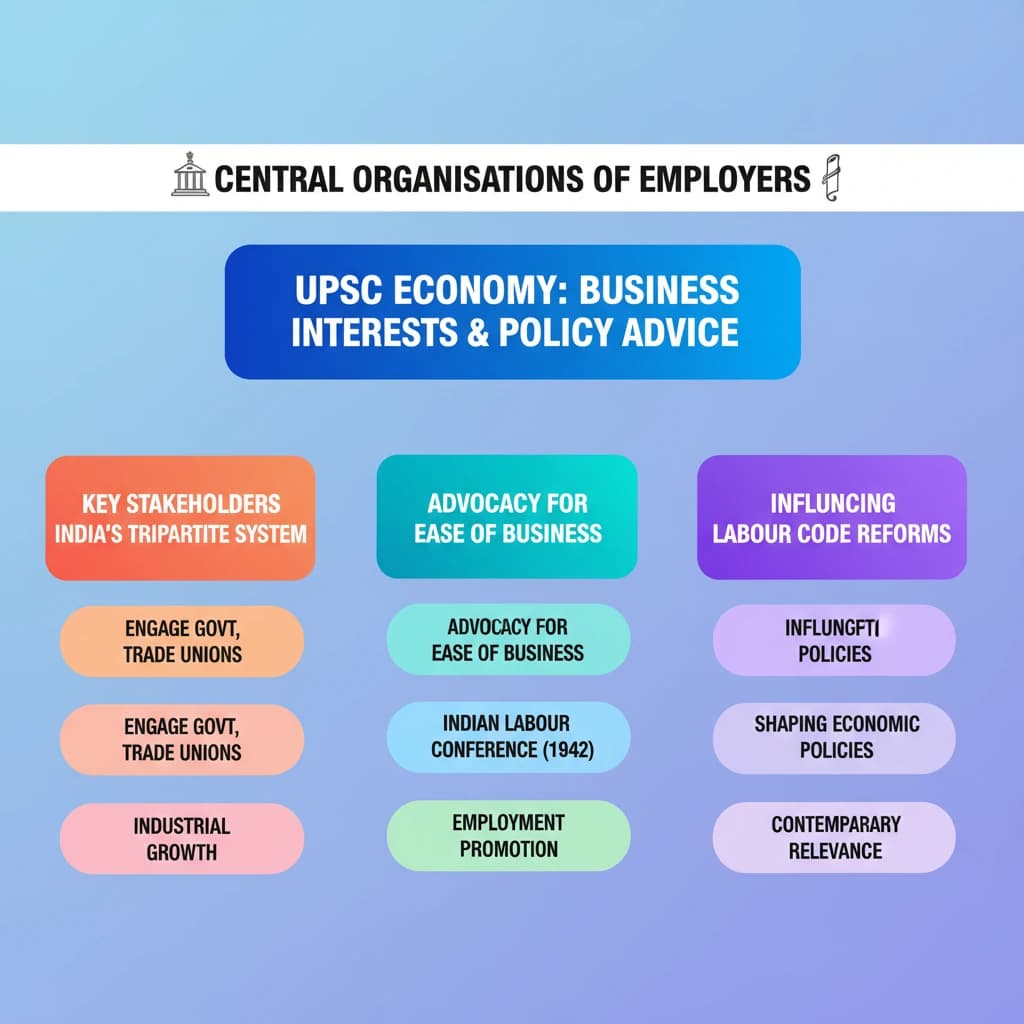
- •Central Organisations of Employers represent business interests and advise the government on labour and economic issues.
- •They are key stakeholders in India's tripartite system, engaging with government and trade unions.
- •The Indian Labour Conference (ILC), established in 1942, is a historical example of this tripartite dialogue.
- •These bodies advocate for policies that promote ease of doing business, industrial growth, and employment.
- •Their role is crucial in the ongoing labour code reforms and shaping contemporary economic policies.
🧠 Memory Techniques
98% Verified Content
📚 Reference Sources
•Ministry of Labour & Employment, Government of India official website
•International Labour Organization (ILO) publications on tripartism
•Official websites of CII, FICCI, ASSOCHAM