Loading page, please wait…
Cross-Border Payments - UPSC Economy
What is Cross-Border Payments in UPSC Economy?
Cross-Border Payments is a key topic under Economy for UPSC Civil Services Examination. Key points include: The Financial Stability Board (FSB) stresses the urgent need to improve cross-border payments (CBPs).. The global CBP market is projected to nearly double by 2032, making efficiency crucial.. Inefficiencies include high costs, slow speeds, lack of transparency, and fragmented regulations.. Understanding this topic is essential for both UPSC Prelims and Mains preparation.
Why is Cross-Border Payments important for UPSC exam?
Cross-Border Payments is a Medium-level topic in UPSC Economy. It is tested in both Prelims (factual MCQs) and Mains (analytical answer writing). Previous year UPSC questions have frequently covered aspects of Cross-Border Payments, making it essential for comprehensive IAS preparation.
How to prepare Cross-Border Payments for UPSC?
To prepare Cross-Border Payments for UPSC: (1) Study the comprehensive notes covering all key concepts on Vaidra. (2) Practice previous year questions on this topic. (3) Connect it with current affairs using daily updates. (4) Revise using key takeaways and mind maps available for Economy. (5) Write practice answers linking Cross-Border Payments to related GS Paper topics.
Key takeaways of Cross-Border Payments for UPSC
- The Financial Stability Board (FSB) stresses the urgent need to improve cross-border payments (CBPs).
- The global CBP market is projected to nearly double by 2032, making efficiency crucial.
- Inefficiencies include high costs, slow speeds, lack of transparency, and fragmented regulations.
- CBPs are vital for remittances, international trade, and global economic integration.
- International cooperation (e.g., G20 roadmap) and fintech innovations are key to addressing challenges.
- India's UPI linkages and focus on digital payments reflect a commitment to CBP efficiency.
Cross-Border Payments
Medium⏱️ 7 min read
economy
📖 Introduction
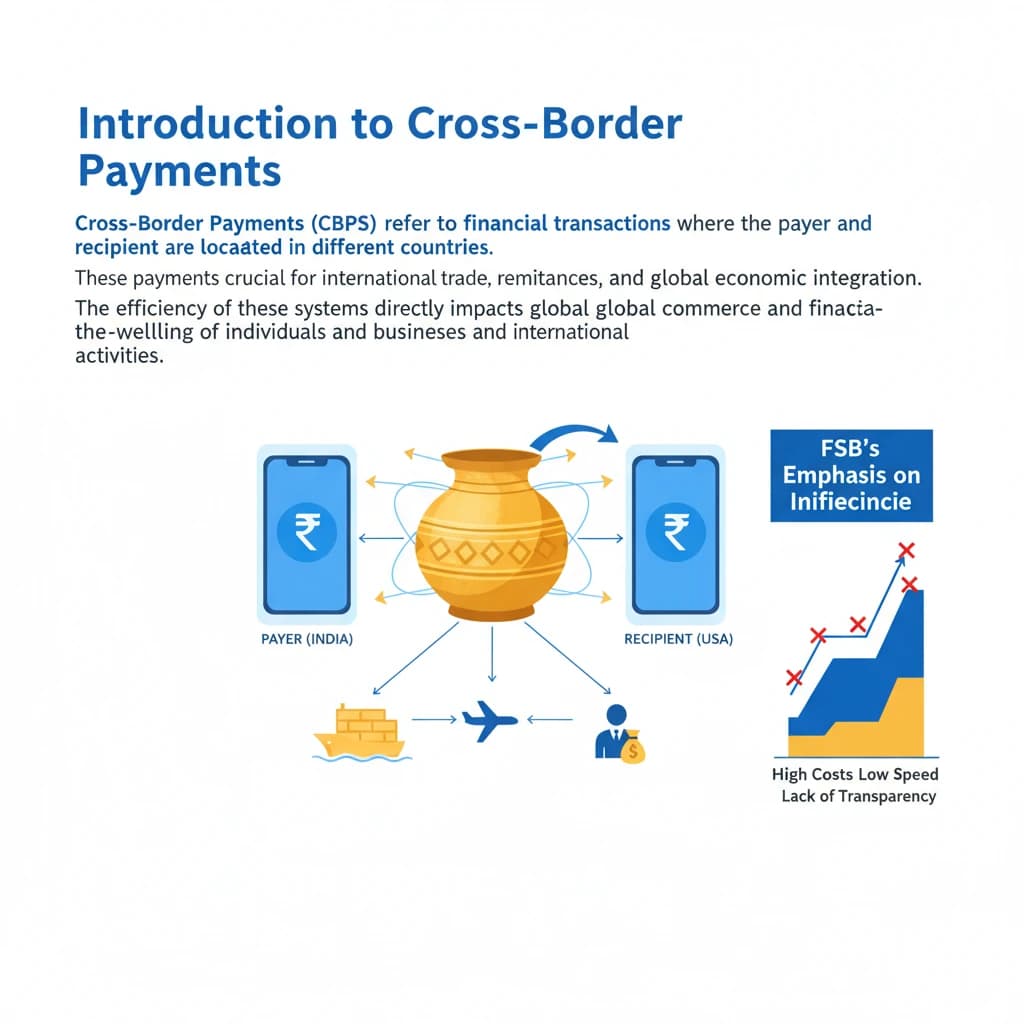
Introduction to Cross-Border Payments
Cross-Border Payments (CBPs) refer to financial transactions where the payer and the recipient are located in different countries. These payments are crucial for international trade, remittances, and global economic integration.
The efficiency of these systems directly impacts global commerce and the financial well-being of individuals and businesses engaged in international activities.
FSB's Emphasis on Inefficiencies
The Financial Stability Board (FSB), an international body that monitors and makes recommendations about the global financial system, has highlighted a pressing concern. The FSB has strongly emphasised the urgent need to address existing inefficiencies within current cross-border payment systems.
The FSB's mandate is to promote global financial stability by coordinating national financial authorities and international standard-setting bodies.
Growing Market and Critical Focus
The global cross-border payments market is experiencing rapid growth. Projections indicate that this market is set to nearly double by 2032, signifying a massive increase in transaction volume and value.
This significant growth trajectory makes the improvement of existing cross-border payment systems a critical focus for international financial bodies and national governments alike.
UPSC Insight: Reports and recommendations from bodies like the FSB are important for understanding global economic trends and potential policy interventions. They often feature in GS-III Economy questions related to financial sector reforms or international economic institutions.
💡 Key Takeaways
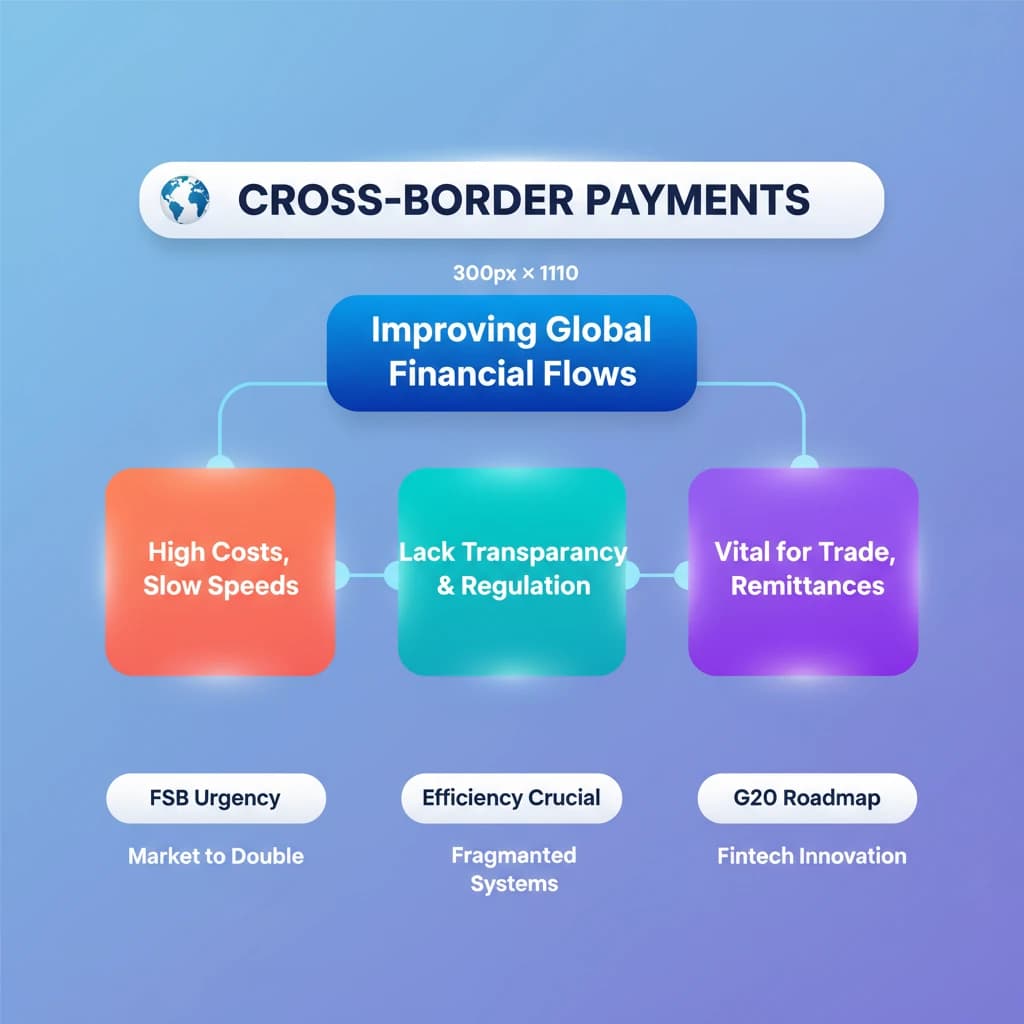
- •The Financial Stability Board (FSB) stresses the urgent need to improve cross-border payments (CBPs).
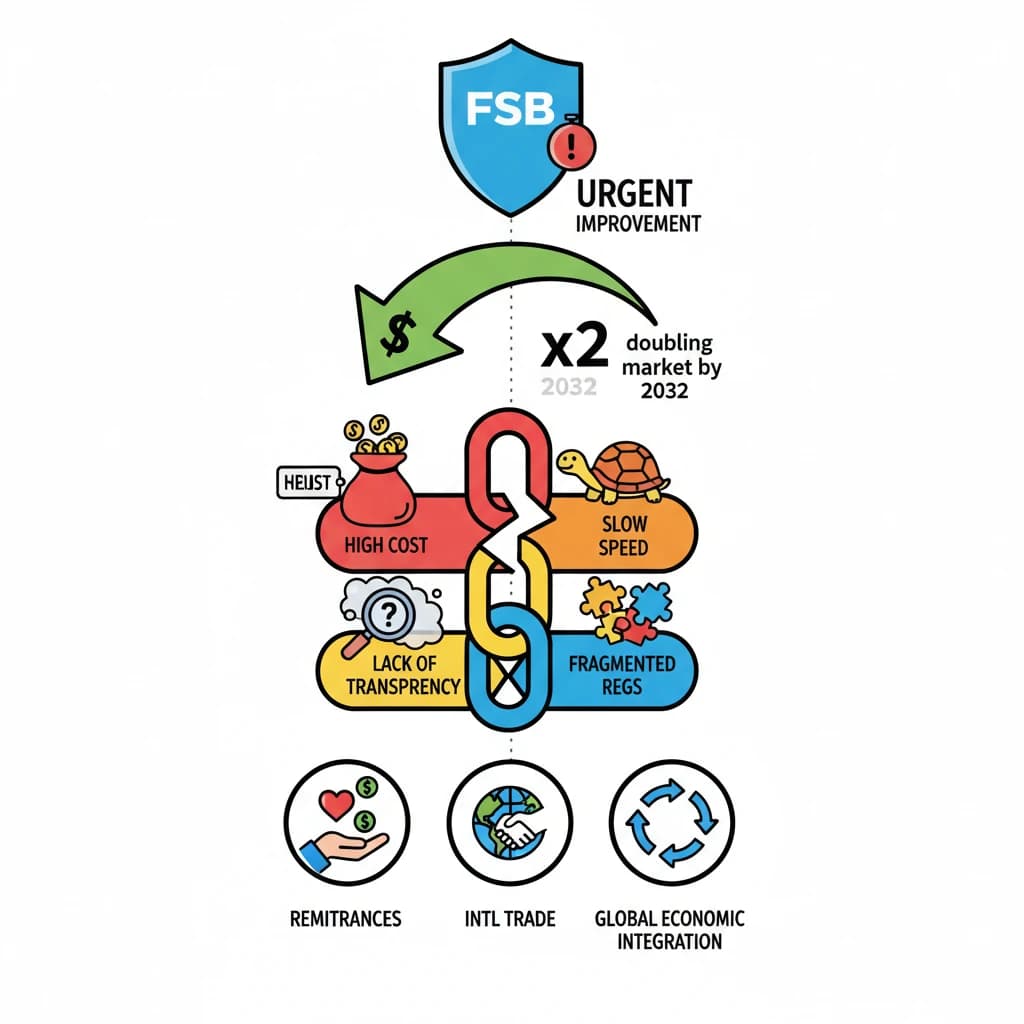
- •The global CBP market is projected to nearly double by 2032, making efficiency crucial.
- •Inefficiencies include high costs, slow speeds, lack of transparency, and fragmented regulations.
- •CBPs are vital for remittances, international trade, and global economic integration.
- •International cooperation (e.g., G20 roadmap) and fintech innovations are key to addressing challenges.
- •India's UPI linkages and focus on digital payments reflect a commitment to CBP efficiency.
🧠 Memory Techniques
95% Verified Content
📚 Reference Sources
•Financial Stability Board (FSB) official reports and statements
•Reserve Bank of India (RBI) publications on digital payments and international finance
•World Bank reports on remittances and global payment systems
•G20 Communiqués on enhancing cross-border payments