Loading page, please wait…
Cross-Border Payments in India - UPSC Economy
What is Cross-Border Payments in India in UPSC Economy?
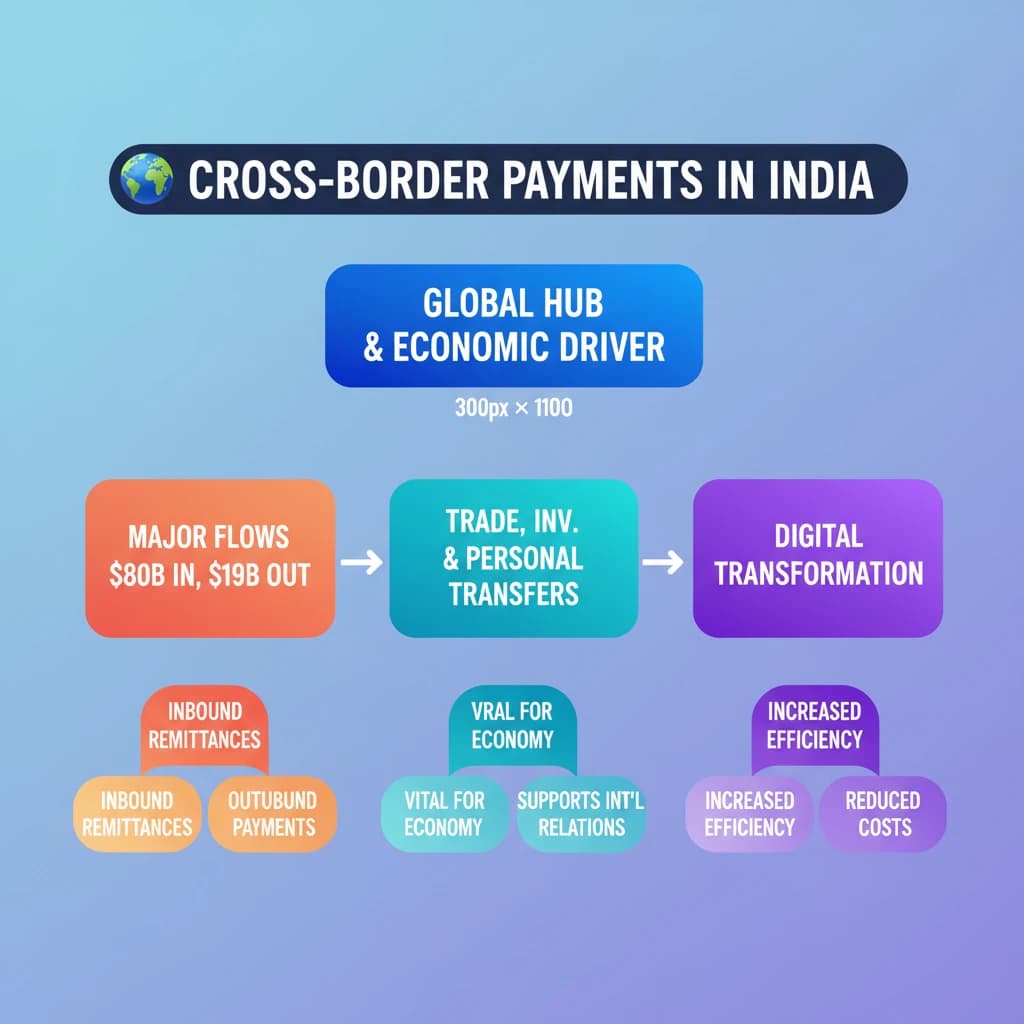
Cross-Border Payments in India is a key topic under Economy for UPSC Civil Services Examination. Key points include: India is a major global hub for cross-border payments, handling substantial flows.. Inbound remittances are approximately USD 80 billion, while outbound payments are around USD 19 billion.. These payments are vital for international trade, investment, and personal transfers, significantly impacting India's economy.. Understanding this topic is essential for both UPSC Prelims and Mains preparation.
Why is Cross-Border Payments in India important for UPSC exam?
Cross-Border Payments in India is a Medium-level topic in UPSC Economy. It is tested in both Prelims (factual MCQs) and Mains (analytical answer writing). Previous year UPSC questions have frequently covered aspects of Cross-Border Payments in India, making it essential for comprehensive IAS preparation.
How to prepare Cross-Border Payments in India for UPSC?
To prepare Cross-Border Payments in India for UPSC: (1) Study the comprehensive notes covering all key concepts on Vaidra. (2) Practice previous year questions on this topic. (3) Connect it with current affairs using daily updates. (4) Revise using key takeaways and mind maps available for Economy. (5) Write practice answers linking Cross-Border Payments in India to related GS Paper topics.
Key takeaways of Cross-Border Payments in India for UPSC
- India is a major global hub for cross-border payments, handling substantial flows.
- Inbound remittances are approximately USD 80 billion, while outbound payments are around USD 19 billion.
- These payments are vital for international trade, investment, and personal transfers, significantly impacting India's economy.
- The digitalization of payment systems is transforming cross-border payment efficiency and cost.
- Cross-border payment flows directly influence India's Balance of Payments and foreign exchange reserves.
Cross-Border Payments in India
Medium⏱️ 5 min read
economy
📖 Introduction
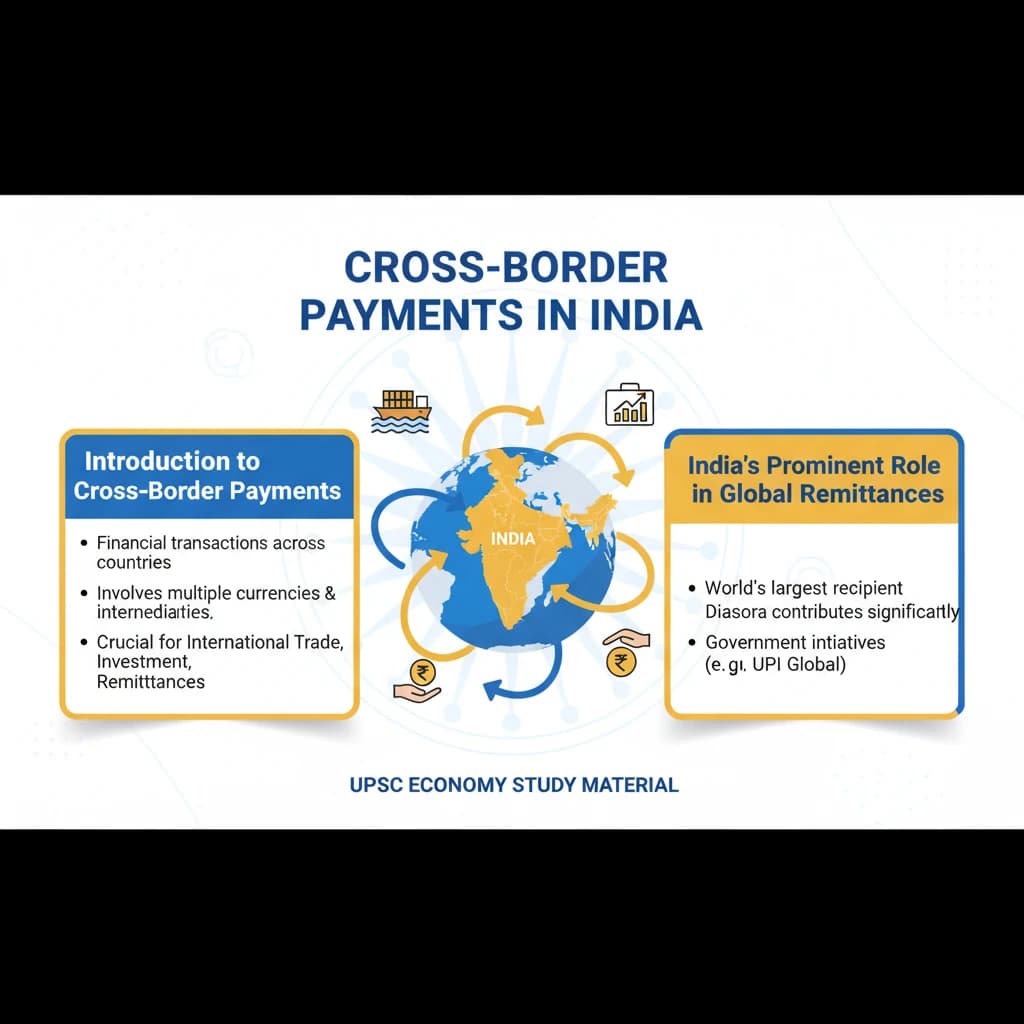
Introduction to Cross-Border Payments
Cross-border payments refer to financial transactions where the payer and the payee are located in different countries. These payments involve various currencies and often multiple intermediaries.
They are crucial for facilitating international trade, investment, and personal remittances, playing a vital role in the global economy.
India's Prominent Role in Global Remittances
India stands as a significant hub in the global landscape of cross-border payment flows. The nation experiences substantial movement of funds both into and out of its borders.
Key Figures:
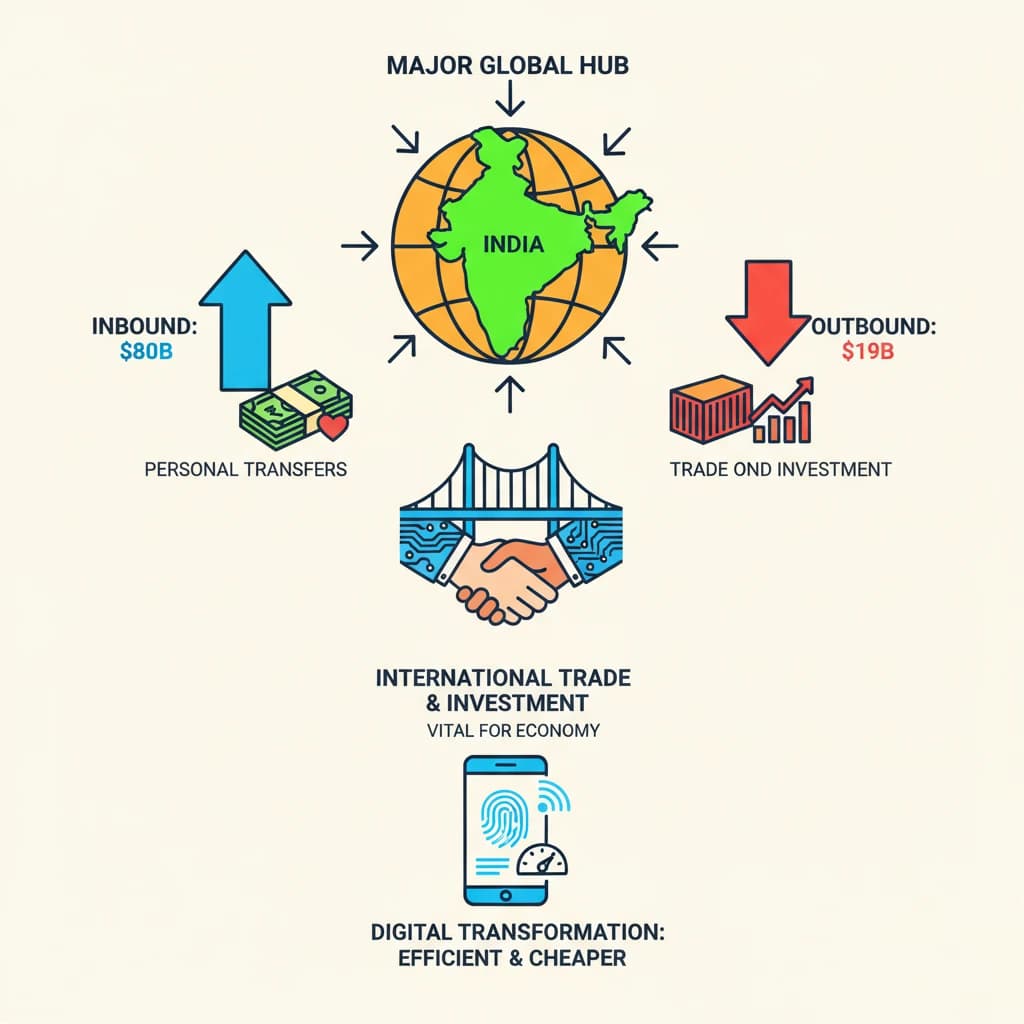
- Inbound Remittances: Approximately USD 80 billion annually.
- Outbound Payments: Approximately USD 19 billion annually.
This significant volume highlights India's deep integration into the global financial system and its reliance on international fund transfers.
Understanding these figures is crucial for topics like Balance of Payments (BoP) and Foreign Exchange Management in UPSC GS Paper 3 (Economy).
💡 Key Takeaways
- •India is a major global hub for cross-border payments, handling substantial flows.
- •Inbound remittances are approximately USD 80 billion, while outbound payments are around USD 19 billion.
- •These payments are vital for international trade, investment, and personal transfers, significantly impacting India's economy.
- •The digitalization of payment systems is transforming cross-border payment efficiency and cost.
- •Cross-border payment flows directly influence India's Balance of Payments and foreign exchange reserves.
🧠 Memory Techniques
90% Verified Content