Loading page, please wait…
Cybersecurity in India's Financial Ecosystem: Regulations & Trust - UPSC Economy
What is Cybersecurity in India's Financial Ecosystem: Regulations & Trust in UPSC Economy?
Cybersecurity in India's Financial Ecosystem: Regulations & Trust is a key topic under Economy for UPSC Civil Services Examination. Key points include: Cybersecurity is a critical pillar for safeguarding India's financial ecosystem.. The Digital Personal Data Protection Act, 2023, enhances individual data control and digital trust.. Banks and fintechs (including NBFCs) must adopt customer-centric, transparent, and fair practices.. Understanding this topic is essential for both UPSC Prelims and Mains preparation.
Why is Cybersecurity in India's Financial Ecosystem: Regulations & Trust important for UPSC exam?
Cybersecurity in India's Financial Ecosystem: Regulations & Trust is a Medium-level topic in UPSC Economy. It is tested in both Prelims (factual MCQs) and Mains (analytical answer writing). Previous year UPSC questions have frequently covered aspects of Cybersecurity in India's Financial Ecosystem: Regulations & Trust, making it essential for comprehensive IAS preparation.
How to prepare Cybersecurity in India's Financial Ecosystem: Regulations & Trust for UPSC?
To prepare Cybersecurity in India's Financial Ecosystem: Regulations & Trust for UPSC: (1) Study the comprehensive notes covering all key concepts on Vaidra. (2) Practice previous year questions on this topic. (3) Connect it with current affairs using daily updates. (4) Revise using key takeaways and mind maps available for Economy. (5) Write practice answers linking Cybersecurity in India's Financial Ecosystem: Regulations & Trust to related GS Paper topics.
Key takeaways of Cybersecurity in India's Financial Ecosystem: Regulations & Trust for UPSC
- Cybersecurity is a critical pillar for safeguarding India's financial ecosystem.
- The Digital Personal Data Protection Act, 2023, enhances individual data control and digital trust.
- Banks and fintechs (including NBFCs) must adopt customer-centric, transparent, and fair practices.
- Continuous vigilance against cyber threats and promoting cybersecurity awareness are essential for a secure digital economy.
- Regulatory compliance and real-time monitoring are key to a resilient financial sector.

Cybersecurity in India's Financial Ecosystem: Regulations & Trust
Medium⏱️ 8 min read
economy
📖 Introduction
Introduction to Cybersecurity in India's Financial Sector
In our rapidly evolving digital world, cybersecurity stands as an indispensable foundation. It is a critical pillar essential for safeguarding India's entire financial ecosystem from various threats.
A robust cybersecurity framework ensures the stability, integrity, and trustworthiness of financial transactions and services across the nation.
Regulatory Framework and Data Protection
Real-time monitoring of digital financial activities and strict adherence to regulatory compliance are paramount. These measures are crucial for maintaining a secure and reliable digital environment.
A significant development in this regard is the recently enacted Digital Personal Data Protection Act, 2023. This landmark legislation plays a vital role in strengthening the overall cybersecurity posture.
The Digital Personal Data Protection Act, 2023, empowers individuals with significantly greater control over their personal data. This empowerment is key to enhancing public trust in digital financial services.
Expectations from Financial Institutions
Banks and various fintech firms, including Non-Banking Financial Companies (NBFCs), bear a significant responsibility. They are expected to adopt a truly customer-centric approach in their operations.
This approach mandates ensuring complete transparency in all financial products offered. Furthermore, it requires the implementation of unequivocally fair lending practices to protect consumer interests.
Continuous Vigilance and Awareness
There is an ongoing and urgent need for continuous vigilance against evolving cyber threats. The landscape of digital risks is constantly changing, demanding proactive defense mechanisms.
Promoting widespread cybersecurity awareness is not just a technical requirement but a societal imperative. It is fundamental to building a truly secure and resilient digital economy for India.
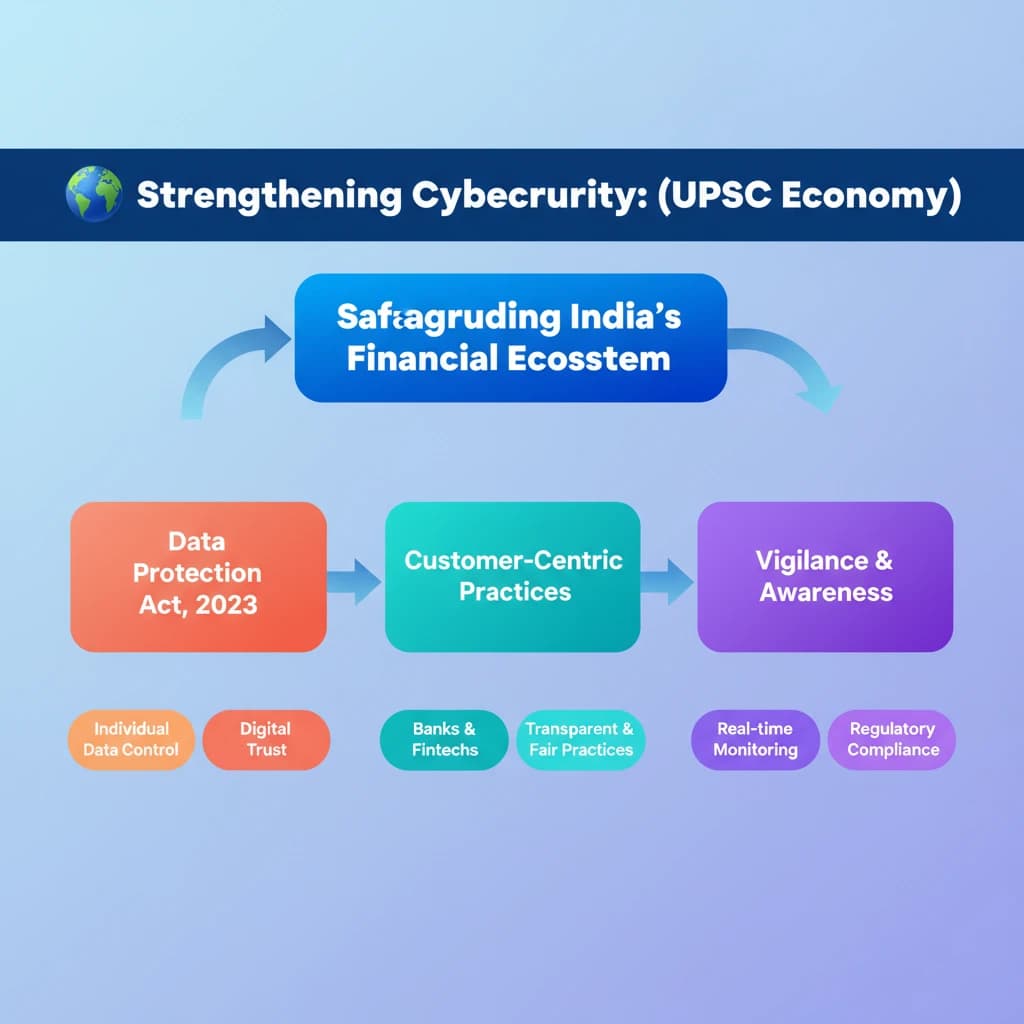
💡 Key Takeaways
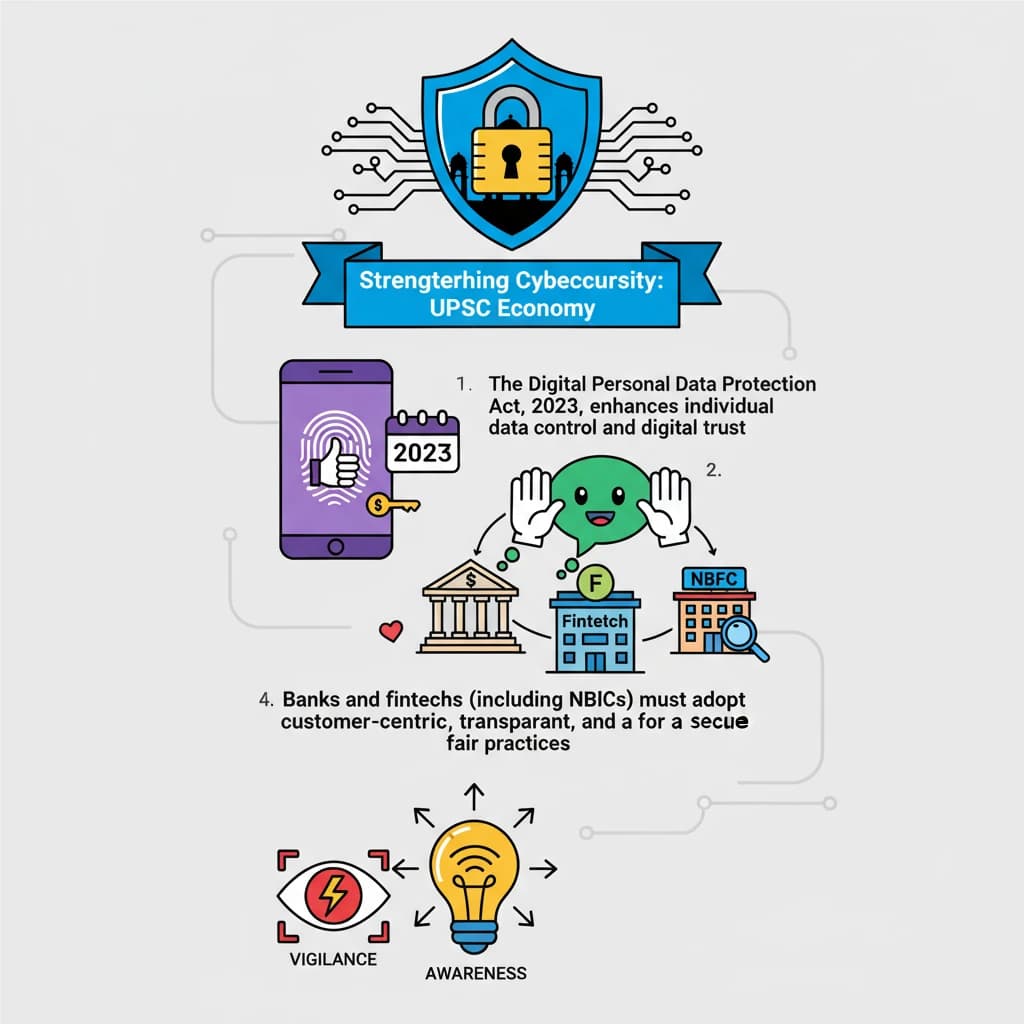
- •Cybersecurity is a critical pillar for safeguarding India's financial ecosystem.
- •The Digital Personal Data Protection Act, 2023, enhances individual data control and digital trust.
- •Banks and fintechs (including NBFCs) must adopt customer-centric, transparent, and fair practices.
- •Continuous vigilance against cyber threats and promoting cybersecurity awareness are essential for a secure digital economy.
- •Regulatory compliance and real-time monitoring are key to a resilient financial sector.
🧠 Memory Techniques
95% Verified Content
📚 Reference Sources
•The Digital Personal Data Protection Act, 2023
•Reserve Bank of India (RBI) guidelines on Cybersecurity Framework for Banks