India-Middle-East-Europe Economic Corridor (IMEC) - UPSC Economy
What is India-Middle-East-Europe Economic Corridor (IMEC) in UPSC Economy?
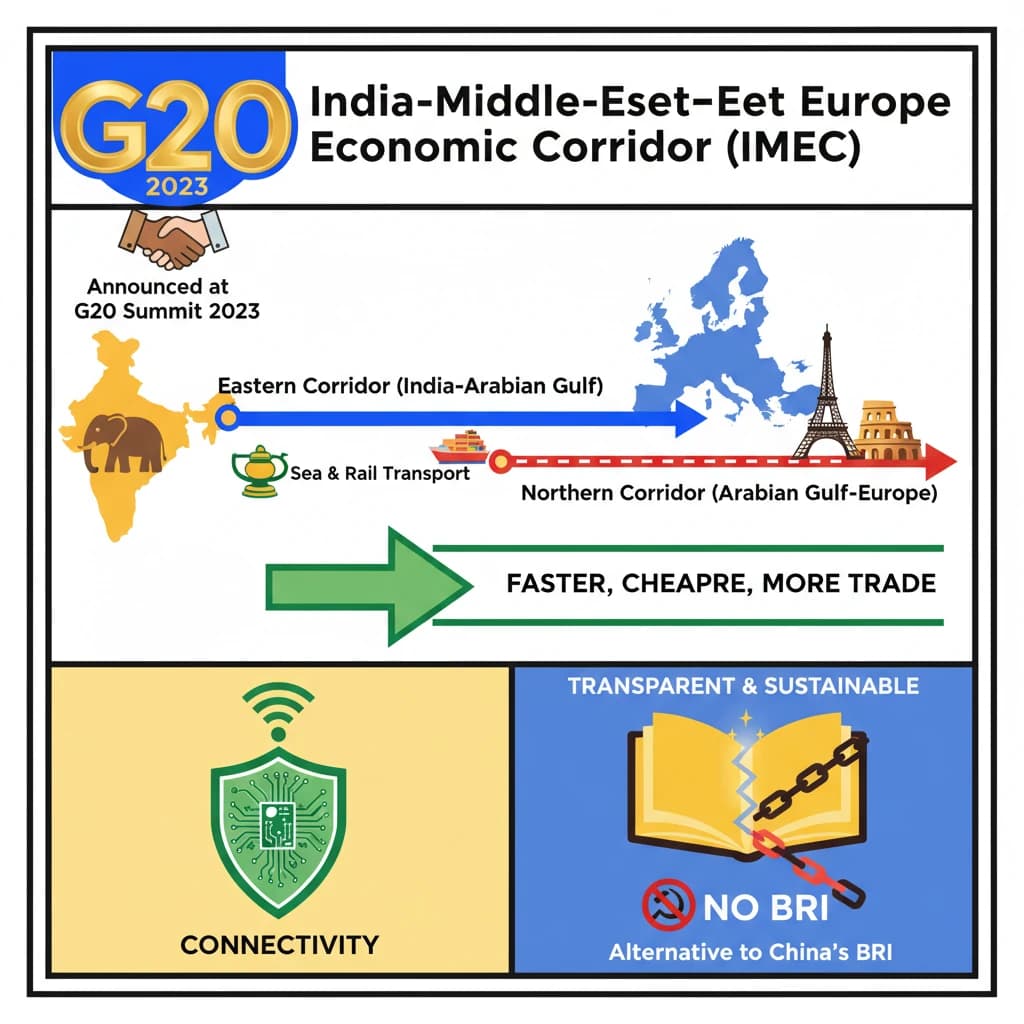
India-Middle-East-Europe Economic Corridor (IMEC) is a key topic under Economy for UPSC Civil Services Examination. Key points include: IMEC is a multinational economic corridor connecting India, the Middle East, and Europe, announced at the G20 Summit in 2023.. It comprises Eastern (India-Arabian Gulf) and Northern (Arabian Gulf-Europe) corridors, integrating sea and rail transport.. Objectives include reducing transit times, lowering logistics costs, boosting trade, and enhancing energy/digital connectivity.. Understanding this topic is essential for both UPSC Prelims and Mains preparation.
Why is India-Middle-East-Europe Economic Corridor (IMEC) important for UPSC exam?
India-Middle-East-Europe Economic Corridor (IMEC) is a Medium-level topic in UPSC Economy. It is tested in both Prelims (factual MCQs) and Mains (analytical answer writing). Previous year UPSC questions have frequently covered aspects of India-Middle-East-Europe Economic Corridor (IMEC), making it essential for comprehensive IAS preparation.
How to prepare India-Middle-East-Europe Economic Corridor (IMEC) for UPSC?
To prepare India-Middle-East-Europe Economic Corridor (IMEC) for UPSC: (1) Study the comprehensive notes covering all key concepts on Vaidra. (2) Practice previous year questions on this topic. (3) Connect it with current affairs using daily updates. (4) Revise using key takeaways and mind maps available for Economy. (5) Write practice answers linking India-Middle-East-Europe Economic Corridor (IMEC) to related GS Paper topics.
Key takeaways of India-Middle-East-Europe Economic Corridor (IMEC) for UPSC
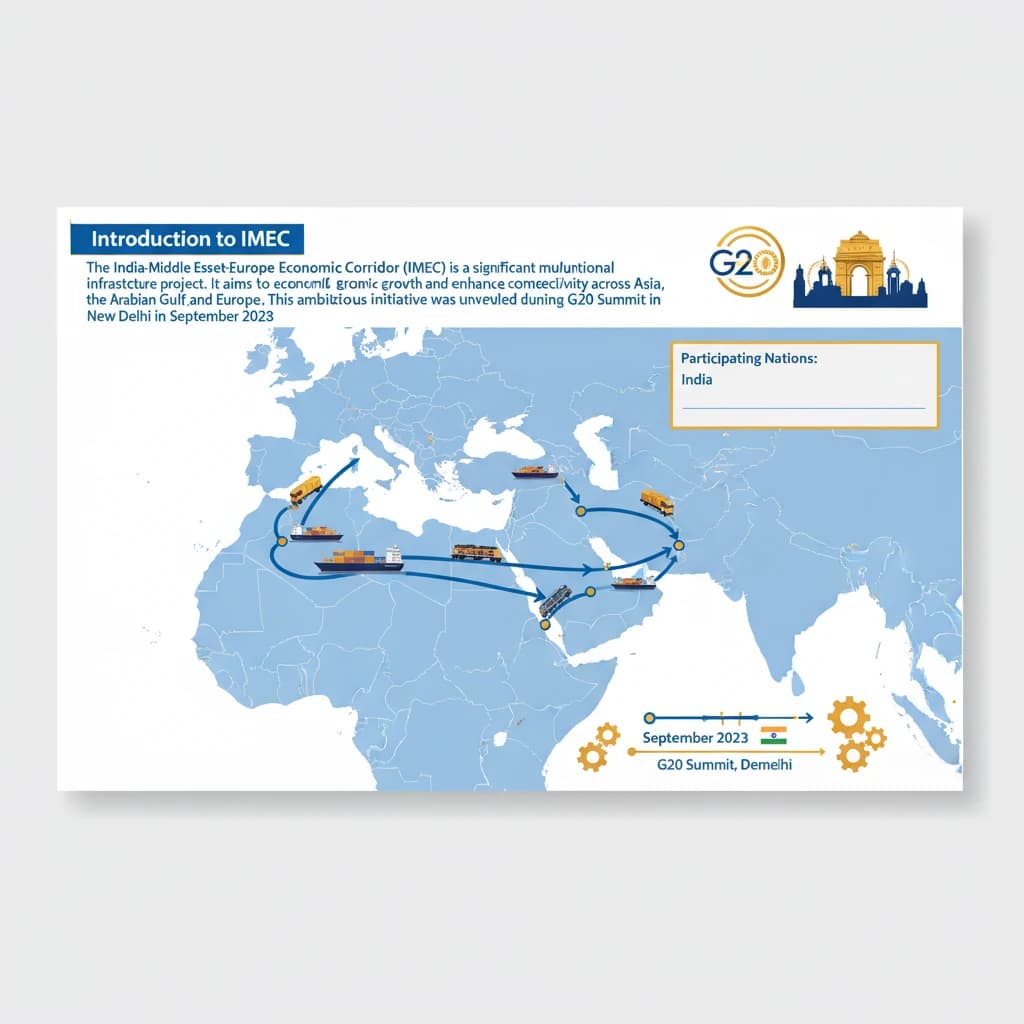
- IMEC is a multinational economic corridor connecting India, the Middle East, and Europe, announced at the G20 Summit in 2023.
- It comprises Eastern (India-Arabian Gulf) and Northern (Arabian Gulf-Europe) corridors, integrating sea and rail transport.
- Objectives include reducing transit times, lowering logistics costs, boosting trade, and enhancing energy/digital connectivity.
- It is seen as a strategic alternative to China's Belt and Road Initiative, promoting transparent and sustainable infrastructure.
- For India, IMEC signifies enhanced trade routes, stronger geopolitical influence, and alignment with its 'Look West' policy.
- The corridor aims to foster economic growth, regional integration, and resilience in global supply chains.
India-Middle-East-Europe Economic Corridor (IMEC)
📖 Introduction
💡 Key Takeaways
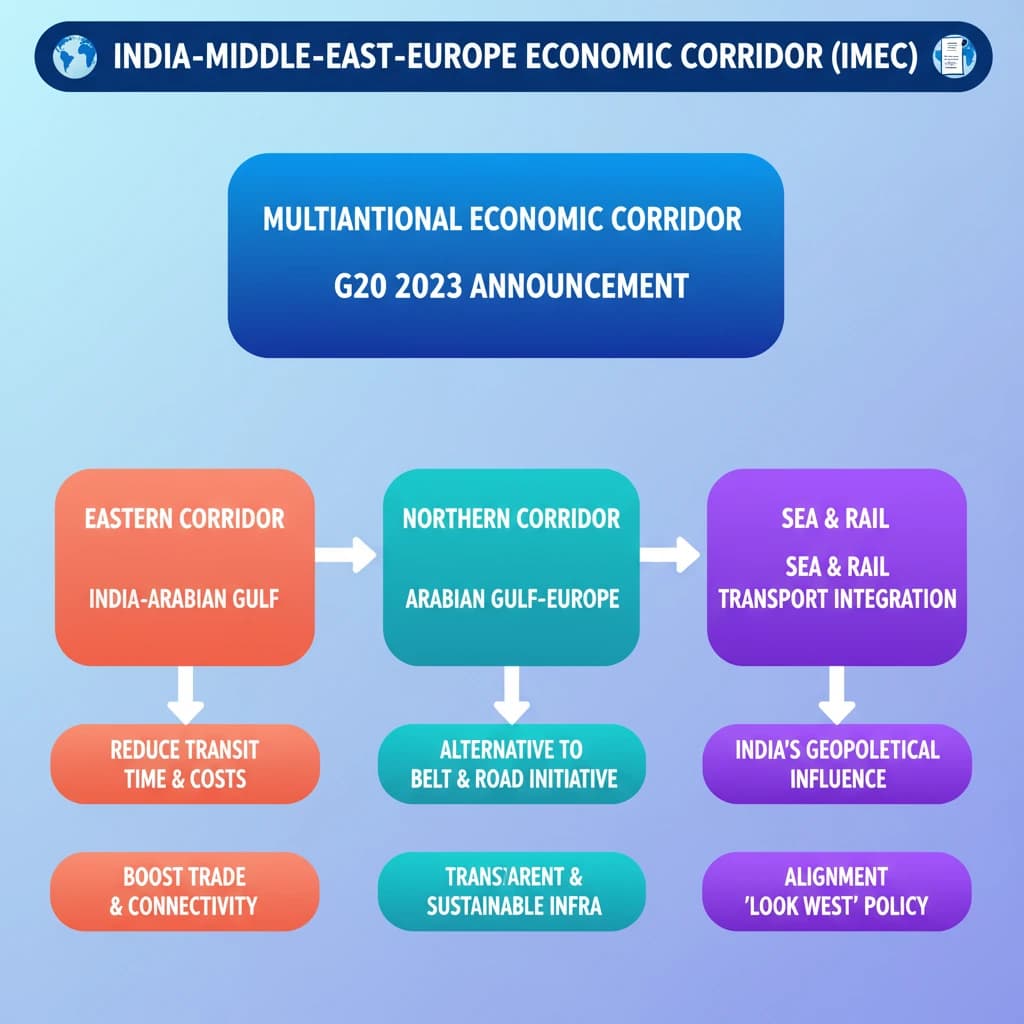
- •IMEC is a multinational economic corridor connecting India, the Middle East, and Europe, announced at the G20 Summit in 2023.
- •It comprises Eastern (India-Arabian Gulf) and Northern (Arabian Gulf-Europe) corridors, integrating sea and rail transport.
- •Objectives include reducing transit times, lowering logistics costs, boosting trade, and enhancing energy/digital connectivity.
- •It is seen as a strategic alternative to China's Belt and Road Initiative, promoting transparent and sustainable infrastructure.
- •For India, IMEC signifies enhanced trade routes, stronger geopolitical influence, and alignment with its 'Look West' policy.
- •The corridor aims to foster economic growth, regional integration, and resilience in global supply chains.
🧠 Memory Techniques