📖 Introduction
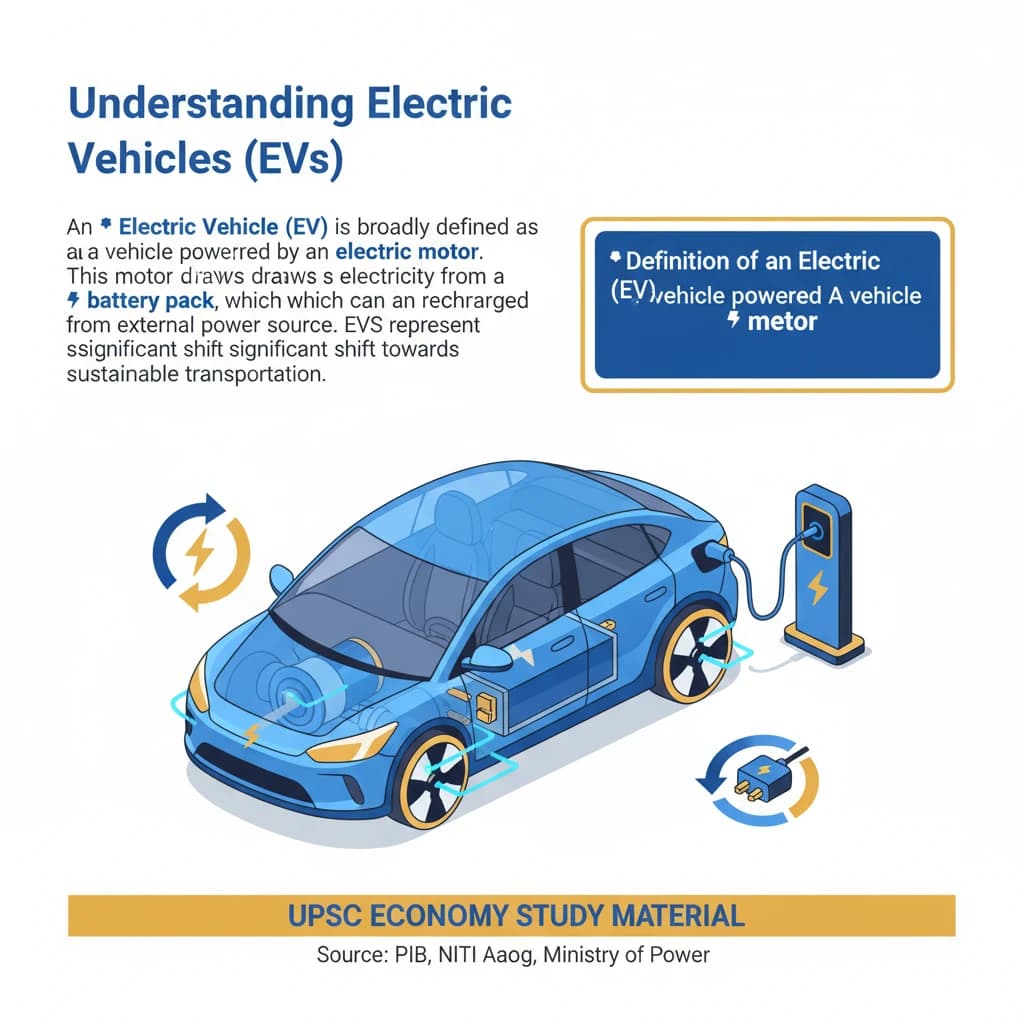
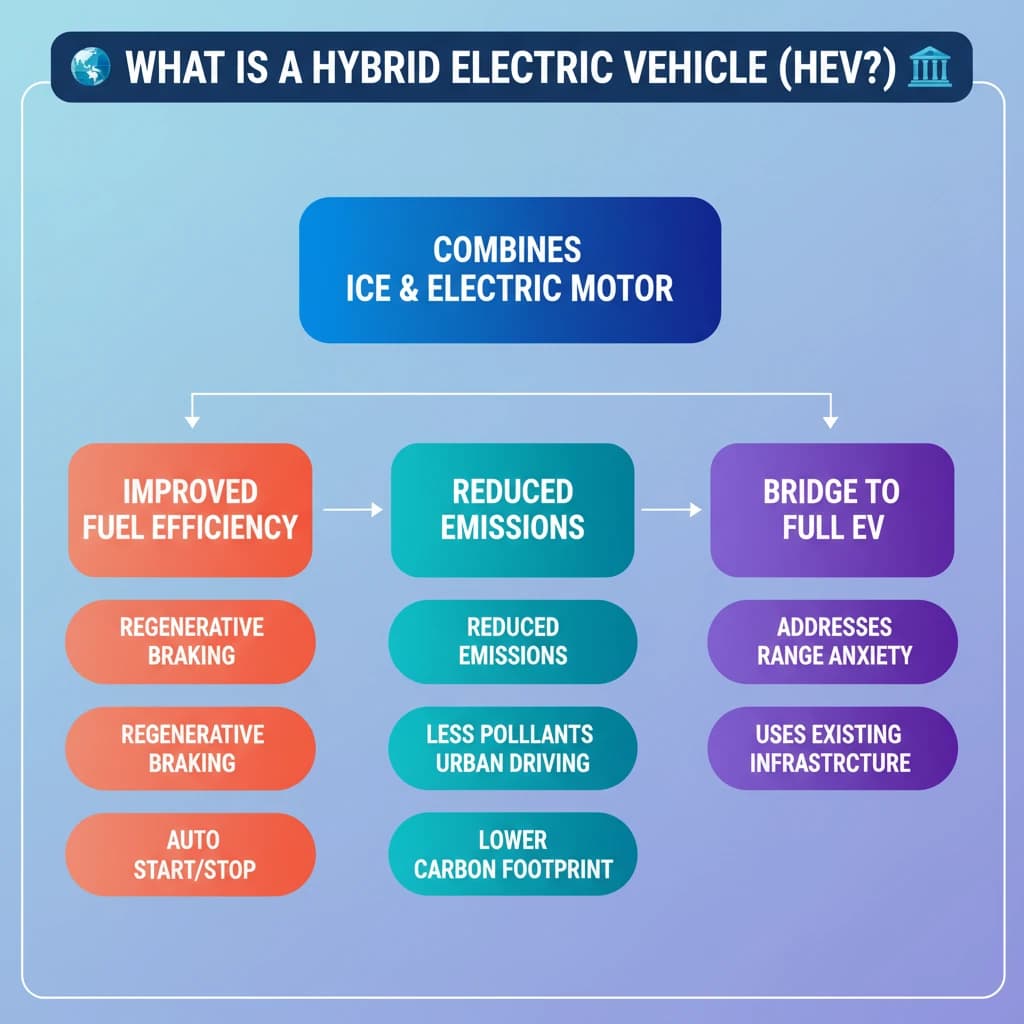
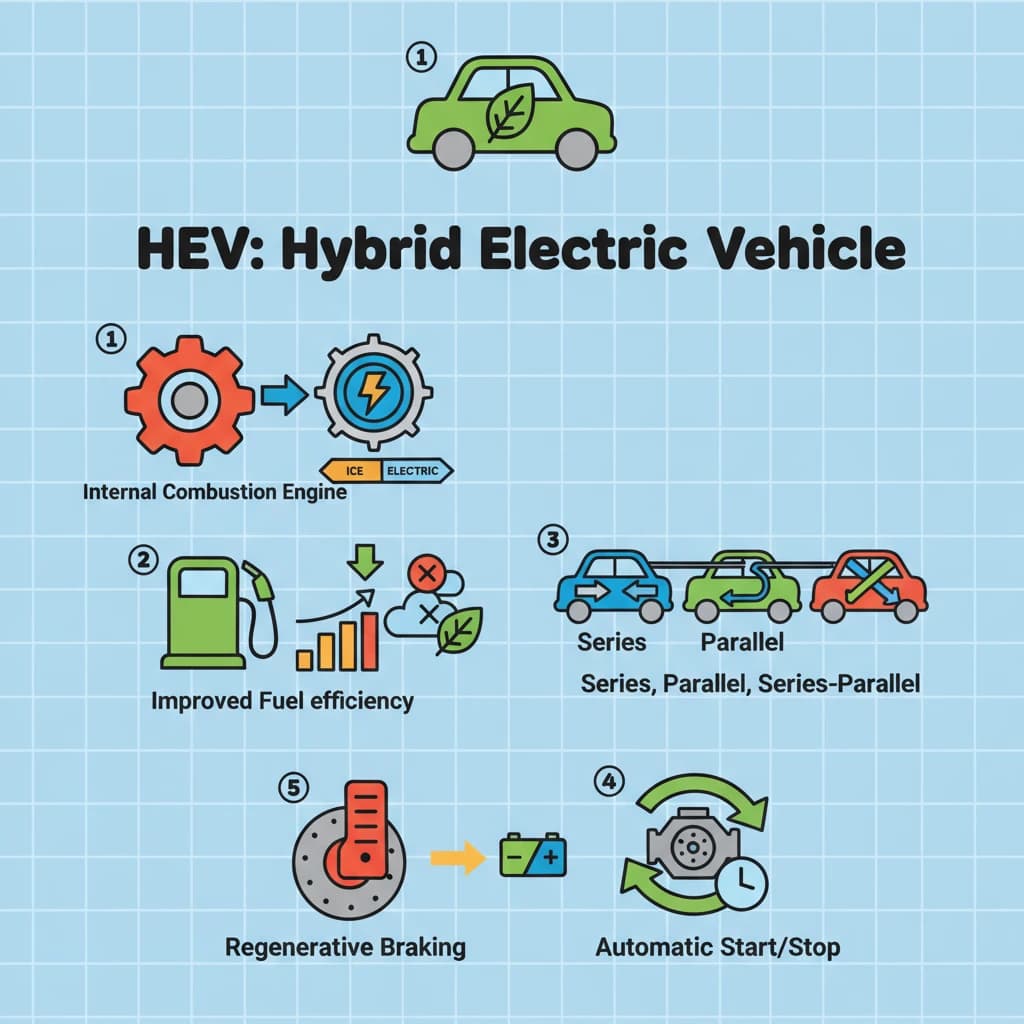
<h4>Understanding Electric Vehicles (EVs)</h4><p>An <strong>Electric Vehicle (EV)</strong> is broadly defined as a vehicle powered by an <strong>electric motor</strong>. This motor draws electricity from a <strong>battery pack</strong>, which can be recharged from an external power source. EVs represent a significant shift towards sustainable transportation.</p><div class='info-box'><p><strong>Definition of an Electric Vehicle (EV):</strong> A vehicle powered by an <strong>electric motor</strong>, drawing electricity from a <strong>battery</strong>, and capable of being charged from an <strong>external source</strong>.</p></div><h4>Introduction to Hybrid Electric Vehicles (HEVs)</h4><p>A <strong>Hybrid Electric Vehicle (HEV)</strong> combines the best of both worlds: an <strong>internal combustion engine (ICE)</strong> and an <strong>electric motor</strong>. This integration allows the vehicle to operate on electric power, gasoline power, or a combination of both, optimizing efficiency and performance.</p><p>Unlike pure EVs, HEVs do not rely solely on an external charging source for their electric components. The battery in an HEV is often charged by the ICE, through <strong>regenerative braking</strong>, or both, making them self-sufficient in terms of energy generation for the electric system.</p><div class='key-point-box'><p><strong>Key Feature of HEVs:</strong> They combine an <strong>internal combustion engine (ICE)</strong> with an <strong>electric motor</strong> and a <strong>battery</strong>, allowing for flexible power delivery and improved fuel economy.</p></div><h4>Components of an HEV</h4><ul><li><strong>Internal Combustion Engine (ICE):</strong> Typically a gasoline engine, it provides primary power and can also charge the battery.</li><li><strong>Electric Motor:</strong> Provides additional power, especially at lower speeds, and can propel the vehicle independently.</li><li><strong>Battery Pack:</strong> Stores electrical energy for the motor. It is usually smaller than in pure EVs.</li><li><strong>Generator:</strong> Often integrated with the electric motor, it converts mechanical energy from the ICE or braking into electrical energy to charge the battery.</li><li><strong>Power Control Unit:</strong> Manages the flow of electrical and mechanical power between the engine, motor, and battery.</li></ul><h4>Types of Hybrid Electric Vehicles</h4><p>HEVs are categorized based on how their engine and motor work together:</p><h5>Parallel Hybrid</h5><p>In a <strong>parallel hybrid</strong>, both the <strong>electric motor</strong> and the <strong>internal combustion engine</strong> can directly drive the wheels. They can work together for maximum power or individually for efficiency. This setup offers flexibility in power delivery.</p><div class='info-box'><p><strong>Mechanism:</strong> Both ICE and electric motor are connected to the transmission, allowing them to power the wheels simultaneously or independently. Example: <strong>Honda Civic Hybrid</strong>.</p></div><h5>Series Hybrid</h5><p>A <strong>series hybrid</strong> uses the <strong>internal combustion engine</strong> primarily as a generator to charge the battery. The <strong>electric motor</strong> is the sole source of power to the wheels. The ICE never directly drives the wheels.</p><div class='info-box'><p><strong>Mechanism:</strong> The ICE generates electricity for the battery, which then powers the electric motor that drives the wheels. Example: <strong>Nissan e-POWER</strong>.</p></div><h5>Series-Parallel (Complex/Power-Split) Hybrid</h5><p>This type combines features of both series and parallel hybrids, offering the most complex and efficient power management. It uses a <strong>power-split device</strong> to blend power from the ICE and electric motor.</p><div class='info-box'><p><strong>Mechanism:</strong> Both the ICE and electric motor can drive the wheels directly, and the ICE can also charge the battery. A sophisticated transmission system (e.g., planetary gear set) manages power flow. Example: <strong>Toyota Prius</strong>.</p></div><h4>Advantages of HEVs</h4><ul><li><strong>Improved Fuel Efficiency:</strong> HEVs use less fuel than conventional vehicles, especially in city driving, due to electric assist and regenerative braking.</li><li><strong>Reduced Emissions:</strong> Lower consumption of fossil fuels leads to fewer greenhouse gas emissions and pollutants.</li><li><strong>No Range Anxiety:</strong> The presence of a gasoline engine eliminates concerns about battery range, as fuel stations are readily available.</li><li><strong>Regenerative Braking:</strong> This system captures energy normally lost during braking and converts it into electricity to recharge the battery.</li></ul><h4>Disadvantages of HEVs</h4><ul><li><strong>Higher Initial Cost:</strong> Generally more expensive than comparable conventional gasoline vehicles due to the dual powertrain system.</li><li><strong>Complexity:</strong> The integration of two power systems makes HEVs more complex, potentially leading to higher maintenance costs.</li><li><strong>Battery Life:</strong> Batteries have a finite lifespan and replacement can be costly.</li><li><strong>Weight:</strong> The dual system adds weight to the vehicle, which can slightly impact performance or efficiency.</li></ul><div class='exam-tip-box'><p>For <strong>UPSC Mains (GS Paper 3 - Economy, Environment)</strong>, understanding the distinctions between different EV types (BEV, HEV, PHEV) and their respective advantages/disadvantages is crucial. Focus on their role in <strong>energy security</strong> and <strong>climate change mitigation</strong>.</p></div>