Loading page, please wait…
DICGC Overcharging Commercial Banks - UPSC Economy
What is DICGC Overcharging Commercial Banks in UPSC Economy?
DICGC Overcharging Commercial Banks is a key topic under Economy for UPSC Civil Services Examination. Key points include: DICGC is an RBI subsidiary providing deposit insurance and credit guarantee.. It was formed in 1978 by merging DIC and CGCI, under the 1961 Act.. DICGC manages Deposit Insurance Fund (from bank premiums) and Credit Guarantee Fund.. Understanding this topic is essential for both UPSC Prelims and Mains preparation.
Why is DICGC Overcharging Commercial Banks important for UPSC exam?
DICGC Overcharging Commercial Banks is a Medium-level topic in UPSC Economy. It is tested in both Prelims (factual MCQs) and Mains (analytical answer writing). Previous year UPSC questions have frequently covered aspects of DICGC Overcharging Commercial Banks, making it essential for comprehensive IAS preparation.
How to prepare DICGC Overcharging Commercial Banks for UPSC?
To prepare DICGC Overcharging Commercial Banks for UPSC: (1) Study the comprehensive notes covering all key concepts on Vaidra. (2) Practice previous year questions on this topic. (3) Connect it with current affairs using daily updates. (4) Revise using key takeaways and mind maps available for Economy. (5) Write practice answers linking DICGC Overcharging Commercial Banks to related GS Paper topics.
Key takeaways of DICGC Overcharging Commercial Banks for UPSC
- DICGC is an RBI subsidiary providing deposit insurance and credit guarantee.
- It was formed in 1978 by merging DIC and CGCI, under the 1961 Act.
- DICGC manages Deposit Insurance Fund (from bank premiums) and Credit Guarantee Fund.
- Current issue: DICGC's premium structure is accused of overcharging commercial banks, benefiting cooperative banks.
- This raises concerns about fairness, financial stability, and banking sector equity.
DICGC Overcharging Commercial Banks
Medium⏱️ 5 min read
economy
📖 Introduction
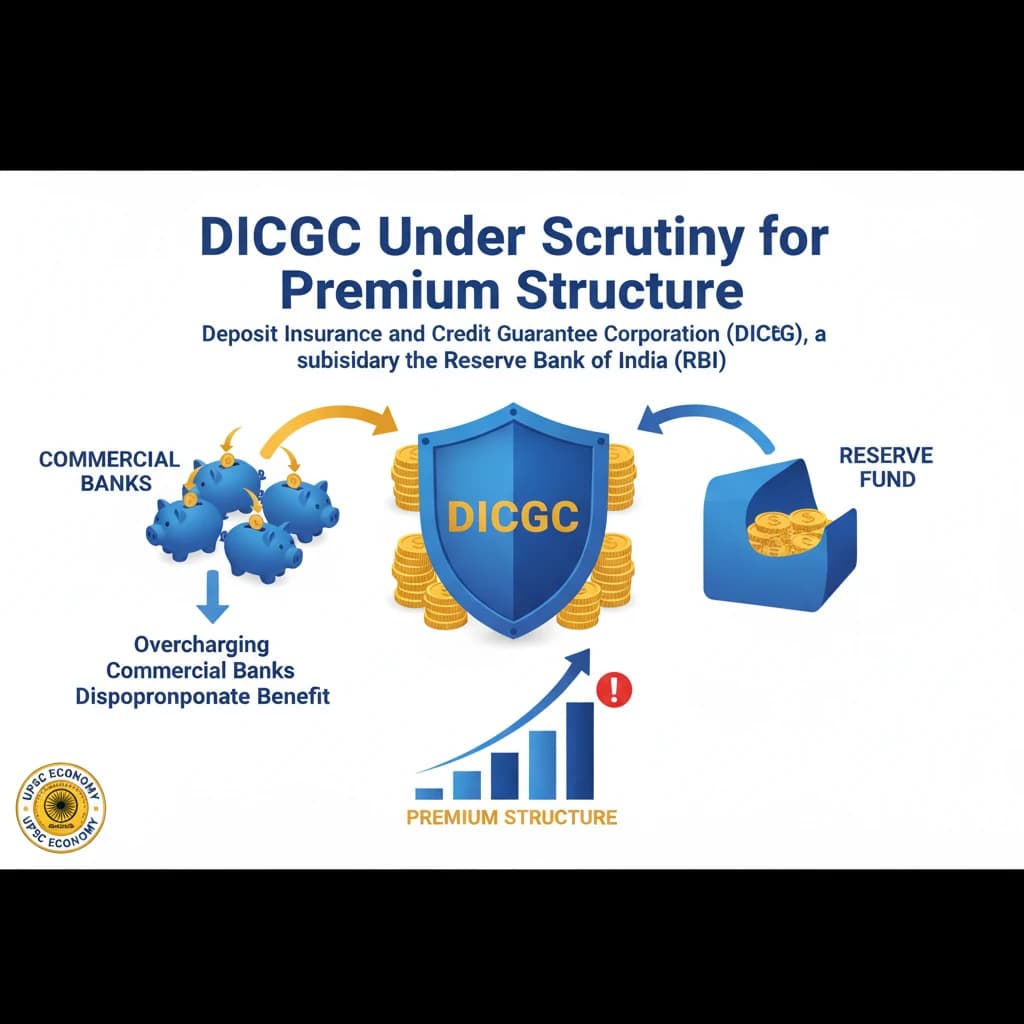
DICGC Under Scrutiny for Premium Structure
The Deposit Insurance and Credit Guarantee Corporation (DICGC), a key subsidiary of the Reserve Bank of India (RBI), is currently facing scrutiny. This attention stems from concerns regarding its existing premium structure.
It has been observed that the current premium mechanism might be overcharging commercial banks. This overcharging, in turn, appears to create a disproportionate benefit for cooperative banks.
Key Issue: The premium structure of DICGC is perceived to be inequitable, potentially burdening commercial banks while favoring cooperative banks.
Key Functions of DICGC
The DICGC plays a vital dual role in India's financial system. It provides both deposit insurance and credit guarantee for eligible banks across the country.
Dual Mandate:
- Deposit Insurance: Protects depositors' funds in case of bank failure.
- Credit Guarantee: Offers a guarantee to creditors against debtor defaults.
💡 Key Takeaways
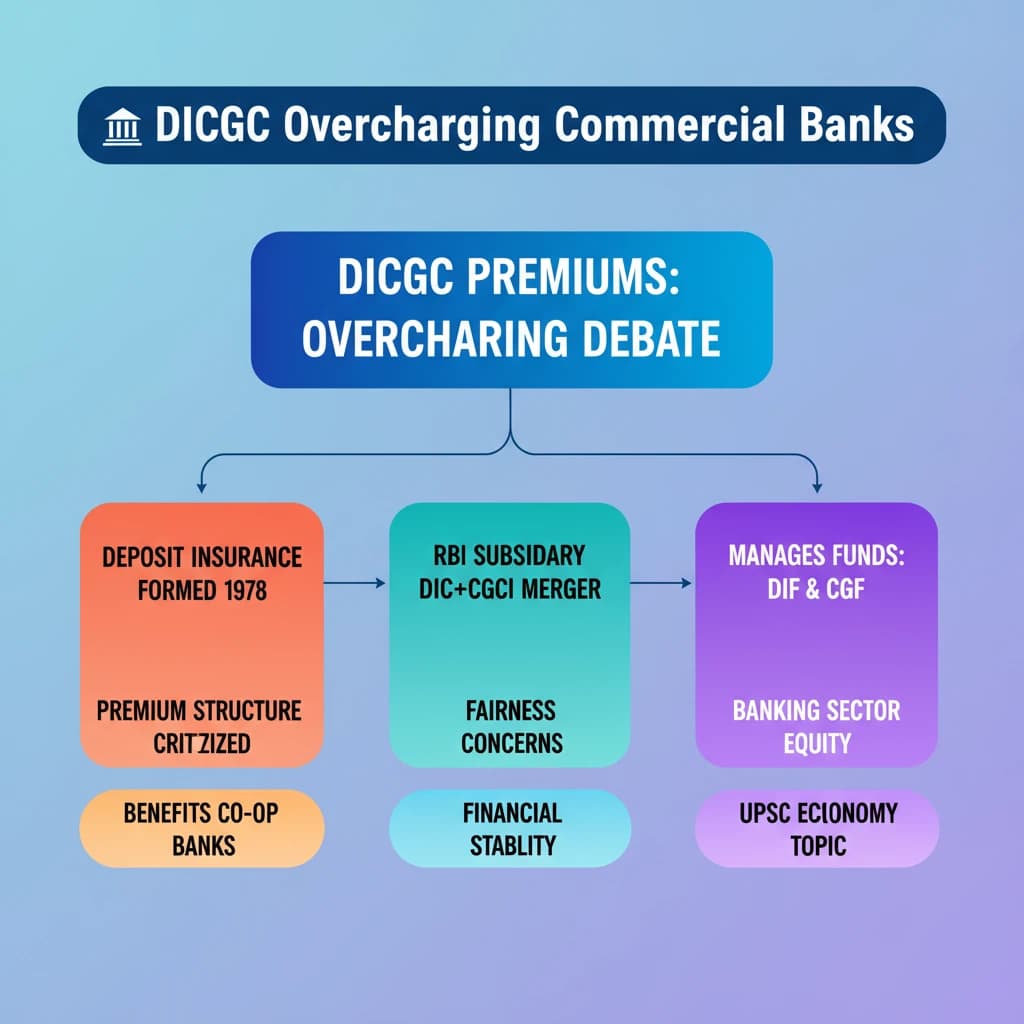
- •DICGC is an RBI subsidiary providing deposit insurance and credit guarantee.
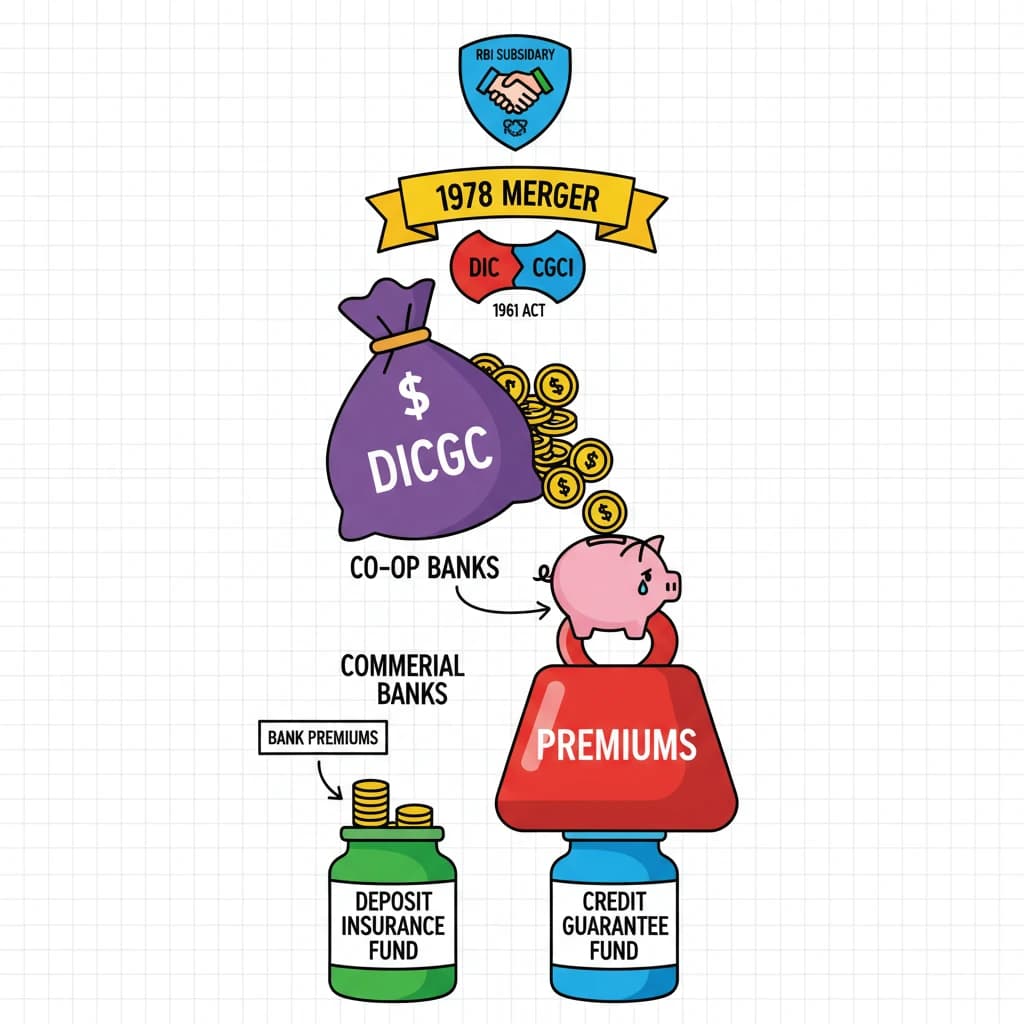
- •It was formed in 1978 by merging DIC and CGCI, under the 1961 Act.
- •DICGC manages Deposit Insurance Fund (from bank premiums) and Credit Guarantee Fund.
- •Current issue: DICGC's premium structure is accused of overcharging commercial banks, benefiting cooperative banks.
- •This raises concerns about fairness, financial stability, and banking sector equity.
🧠 Memory Techniques
95% Verified Content