Bilateral Currency Swap Agreements: India with Japan & Sri Lanka - UPSC Economy
What is Bilateral Currency Swap Agreements: India with Japan & Sri Lanka in UPSC Economy?
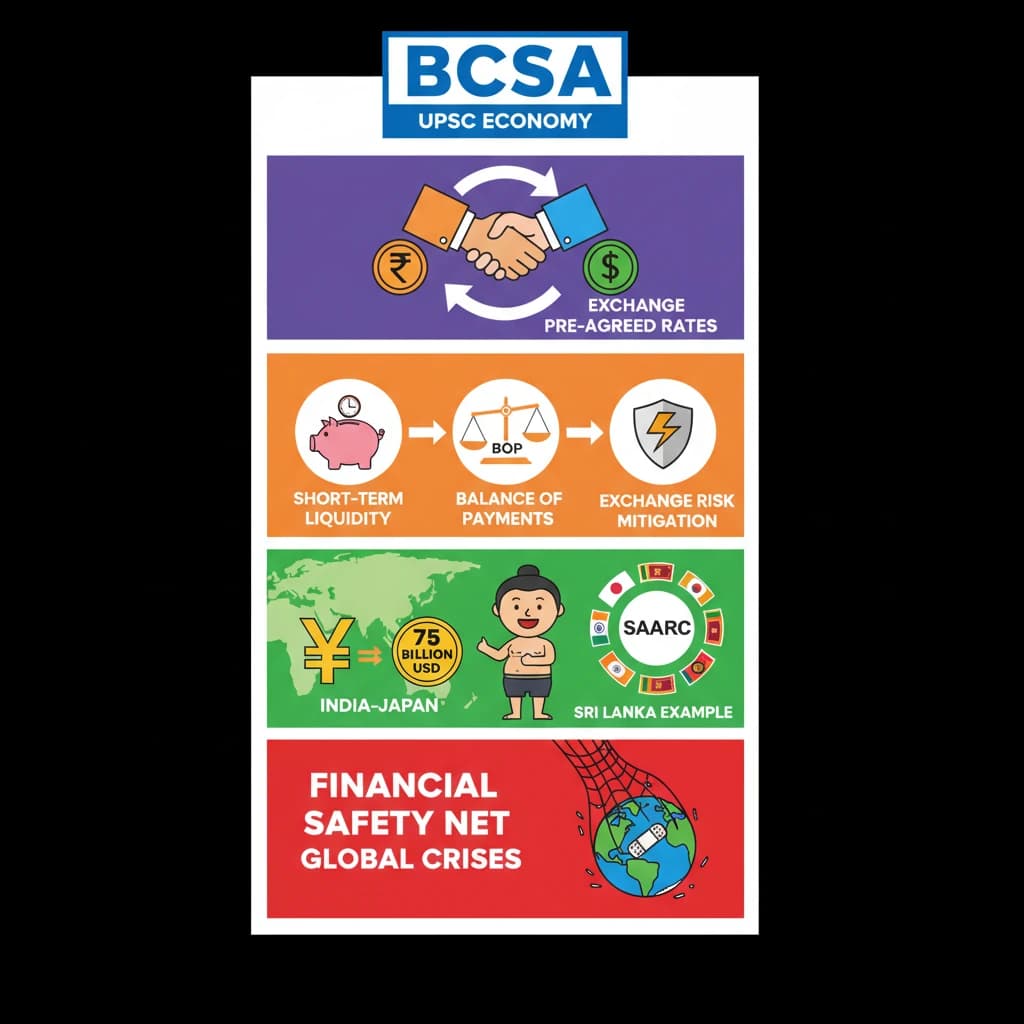
Bilateral Currency Swap Agreements: India with Japan & Sri Lanka is a key topic under Economy for UPSC Civil Services Examination. Key points include: Bilateral Currency Swap Agreements (BCSAs) are pacts between two countries' central banks to exchange currencies at pre-agreed rates.. Their primary purpose is to provide short-term foreign currency liquidity, manage Balance of Payments, and mitigate exchange rate risk.. India has significant BCSAs, notably with Japan (USD 75 billion) and through the SAARC Currency Swap Framework (e.g., with Sri Lanka).. Understanding this topic is essential for both UPSC Prelims and Mains preparation.
Why is Bilateral Currency Swap Agreements: India with Japan & Sri Lanka important for UPSC exam?
Bilateral Currency Swap Agreements: India with Japan & Sri Lanka is a Medium-level topic in UPSC Economy. It is tested in both Prelims (factual MCQs) and Mains (analytical answer writing). Previous year UPSC questions have frequently covered aspects of Bilateral Currency Swap Agreements: India with Japan & Sri Lanka, making it essential for comprehensive IAS preparation.
How to prepare Bilateral Currency Swap Agreements: India with Japan & Sri Lanka for UPSC?
To prepare Bilateral Currency Swap Agreements: India with Japan & Sri Lanka for UPSC: (1) Study the comprehensive notes covering all key concepts on Vaidra. (2) Practice previous year questions on this topic. (3) Connect it with current affairs using daily updates. (4) Revise using key takeaways and mind maps available for Economy. (5) Write practice answers linking Bilateral Currency Swap Agreements: India with Japan & Sri Lanka to related GS Paper topics.
Key takeaways of Bilateral Currency Swap Agreements: India with Japan & Sri Lanka for UPSC
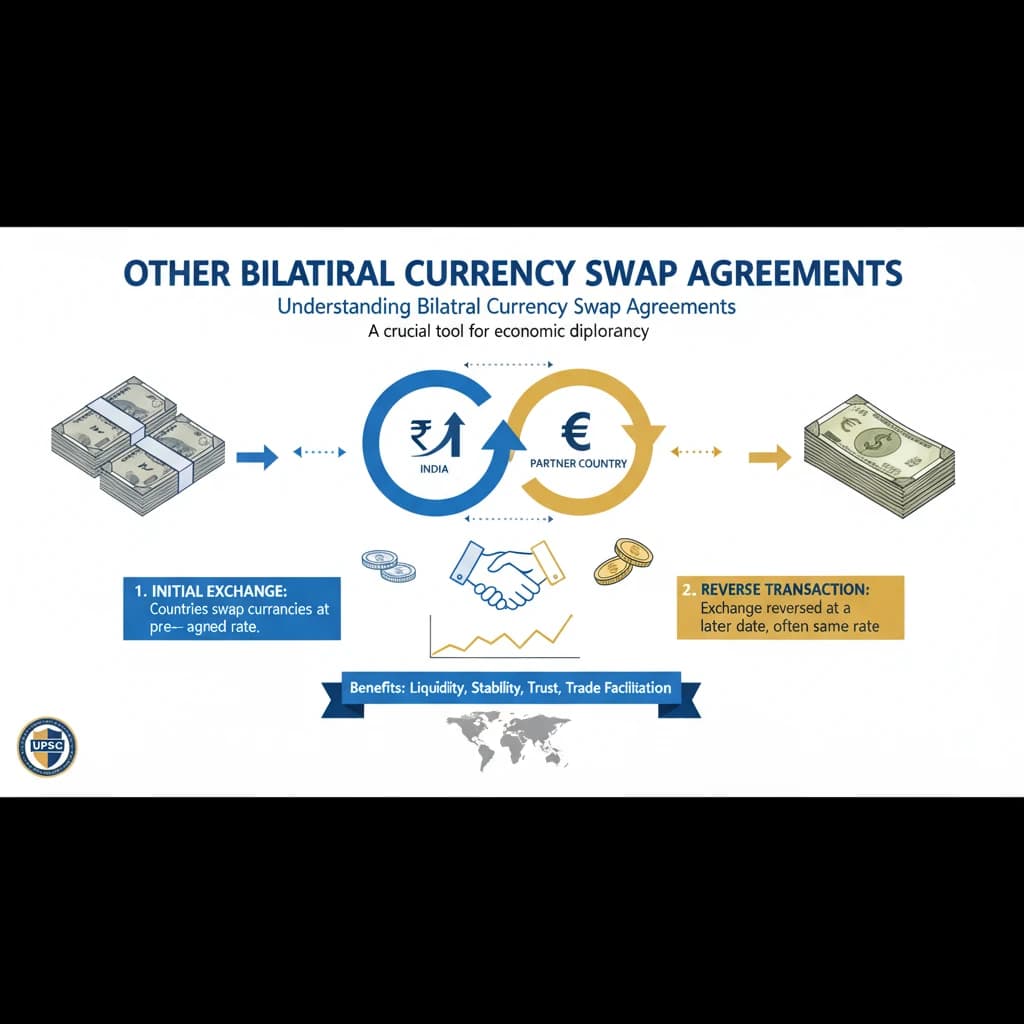
- Bilateral Currency Swap Agreements (BCSAs) are pacts between two countries' central banks to exchange currencies at pre-agreed rates.
- Their primary purpose is to provide short-term foreign currency liquidity, manage Balance of Payments, and mitigate exchange rate risk.
- India has significant BCSAs, notably with Japan (USD 75 billion) and through the SAARC Currency Swap Framework (e.g., with Sri Lanka).
- These agreements serve as crucial financial safety nets, especially during global economic uncertainties or crises.
- BCSAs are key tools for India's economic diplomacy, strengthening bilateral ties and promoting regional financial stability.
Bilateral Currency Swap Agreements: India with Japan & Sri Lanka
📖 Introduction
💡 Key Takeaways
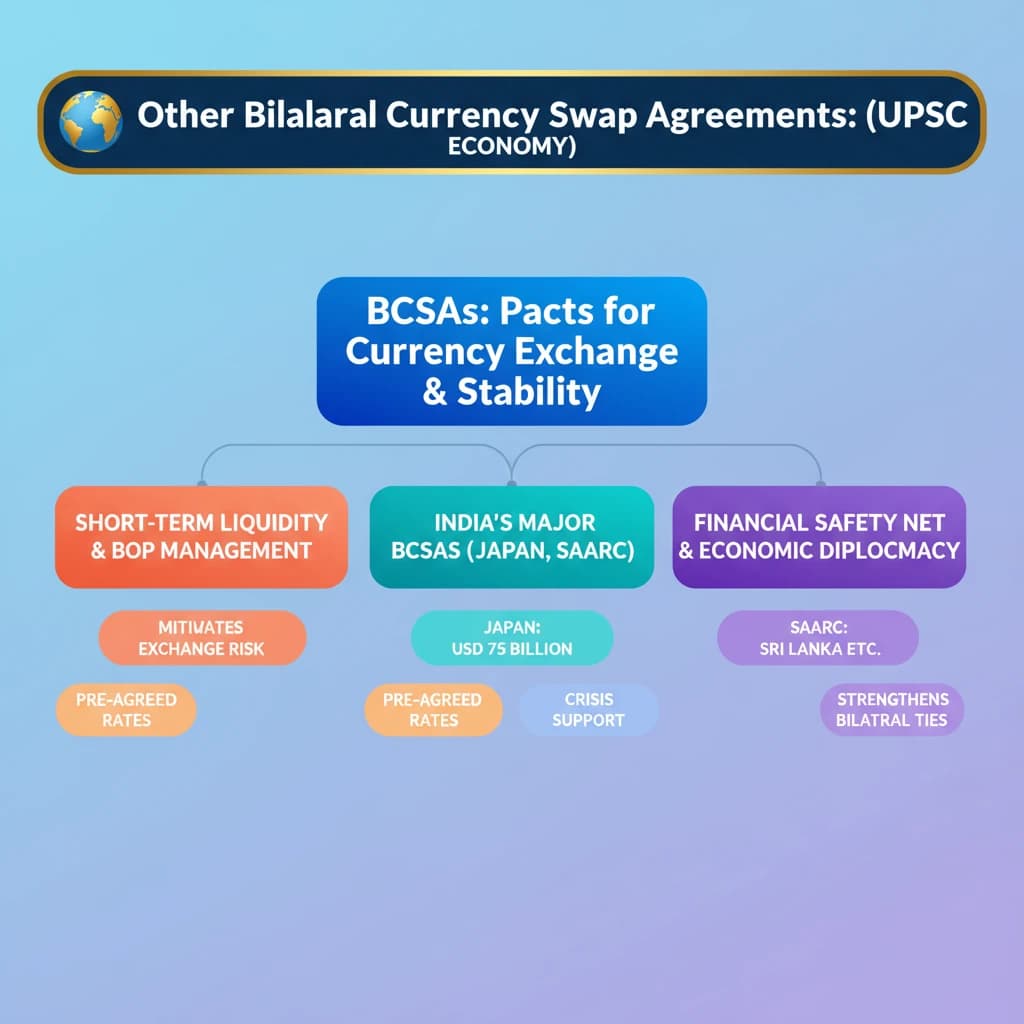
- •Bilateral Currency Swap Agreements (BCSAs) are pacts between two countries' central banks to exchange currencies at pre-agreed rates.
- •Their primary purpose is to provide short-term foreign currency liquidity, manage Balance of Payments, and mitigate exchange rate risk.
- •India has significant BCSAs, notably with Japan (USD 75 billion) and through the SAARC Currency Swap Framework (e.g., with Sri Lanka).
- •These agreements serve as crucial financial safety nets, especially during global economic uncertainties or crises.
- •BCSAs are key tools for India's economic diplomacy, strengthening bilateral ties and promoting regional financial stability.
🧠 Memory Techniques