Loading page, please wait…
Environmental Ship Index (ESI): Main Characteristics - UPSC Economy
What is Environmental Ship Index (ESI): Main Characteristics in UPSC Economy?
Environmental Ship Index (ESI): Main Characteristics is a key topic under Economy for UPSC Civil Services Examination. Key points include: ESI is a voluntary, port-centric system for evaluating ship environmental performance.. It covers NOx, SOx, CO2 emissions, and on-shore power capabilities.. Ports offer incentives (e.g., reduced fees) for higher ESI scores.. Understanding this topic is essential for both UPSC Prelims and Mains preparation.
Why is Environmental Ship Index (ESI): Main Characteristics important for UPSC exam?
Environmental Ship Index (ESI): Main Characteristics is a Medium-level topic in UPSC Economy. It is tested in both Prelims (factual MCQs) and Mains (analytical answer writing). Previous year UPSC questions have frequently covered aspects of Environmental Ship Index (ESI): Main Characteristics, making it essential for comprehensive IAS preparation.
How to prepare Environmental Ship Index (ESI): Main Characteristics for UPSC?
To prepare Environmental Ship Index (ESI): Main Characteristics for UPSC: (1) Study the comprehensive notes covering all key concepts on Vaidra. (2) Practice previous year questions on this topic. (3) Connect it with current affairs using daily updates. (4) Revise using key takeaways and mind maps available for Economy. (5) Write practice answers linking Environmental Ship Index (ESI): Main Characteristics to related GS Paper topics.
Key takeaways of Environmental Ship Index (ESI): Main Characteristics for UPSC
- ESI is a voluntary, port-centric system for evaluating ship environmental performance.
- It covers NOx, SOx, CO2 emissions, and on-shore power capabilities.
- Ports offer incentives (e.g., reduced fees) for higher ESI scores.
- Applicable to all seagoing ships, calculated automatically.
- Promotes cleaner shipping beyond mandatory regulations, driving innovation.
Environmental Ship Index (ESI): Main Characteristics
Medium⏱️ 5 min read
economy
📖 Introduction
Understanding the Environmental Ship Index (ESI)
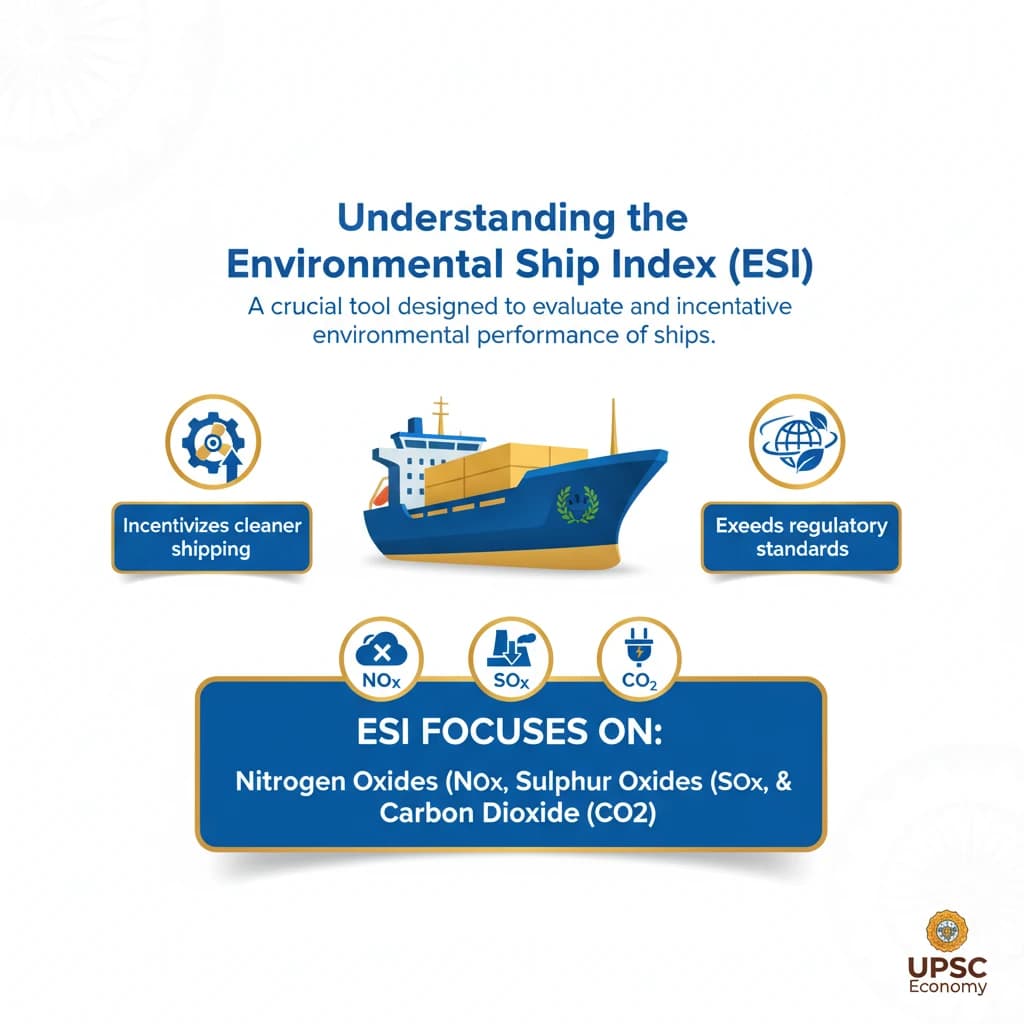
The Environmental Ship Index (ESI) is a crucial tool designed to evaluate and incentivize the environmental performance of ships. It provides a transparent mechanism for ports and other stakeholders to reward vessels that exceed regulatory environmental standards.
The ESI primarily focuses on emissions of Nitrogen Oxides (NOx), Sulphur Oxides (SOx), and Carbon Dioxide (CO2), as well as the ship's on-shore power capabilities.
Port-Centric System
One of the primary characteristics of the ESI is its design as a port-centric system. This means it is specifically engineered to operate as a framework for environmental performance evaluation from ports to ports, facilitating localized and regional incentives.
The system allows individual ports or port authorities to tailor their incentive programs based on their specific environmental goals and local air quality requirements.
Voluntary Participation
Participation in the Environmental Ship Index program is entirely voluntary. Shipowners choose to demonstrate the environmental performance of their vessels, encouraging proactive engagement beyond mandatory regulations.
This voluntary nature fosters a competitive environment where shipowners can gain advantages by investing in cleaner technologies and operational practices.
Broad Applicability
The ESI is designed to be highly versatile and can be applied to all types of seagoing ships. This broad applicability extends irrespective of the vessel's size, function, or flag state, ensuring a wide reach for environmental improvement.
From large container ships to smaller cargo vessels, any ship can be assessed under the ESI framework, promoting a unified approach to cleaner shipping.
Automated Calculation and Maintenance
A significant feature of the ESI is its automated calculation and maintenance. This ensures consistency, accuracy, and efficiency in assessing a vessel's environmental performance without extensive manual intervention.
The index is typically calculated based on reported data concerning engine emissions, fuel consumption, and other environmental parameters, which are then verified.
Incentive Mechanism
The ESI serves as a robust incentive mechanism. Ports and port authorities are empowered to offer various benefits to ships achieving higher ESI scores, thereby rewarding superior environmental performance.
Common incentives include reduced port fees, priority berthing, or other financial advantages. These incentives motivate shipowners to invest in greener technologies and sustainable operations.
Understanding the voluntary nature and incentive structure of ESI is crucial for UPSC Mains answers, especially when discussing policy instruments for environmental governance in shipping (GS-III: Environment).
💡 Key Takeaways
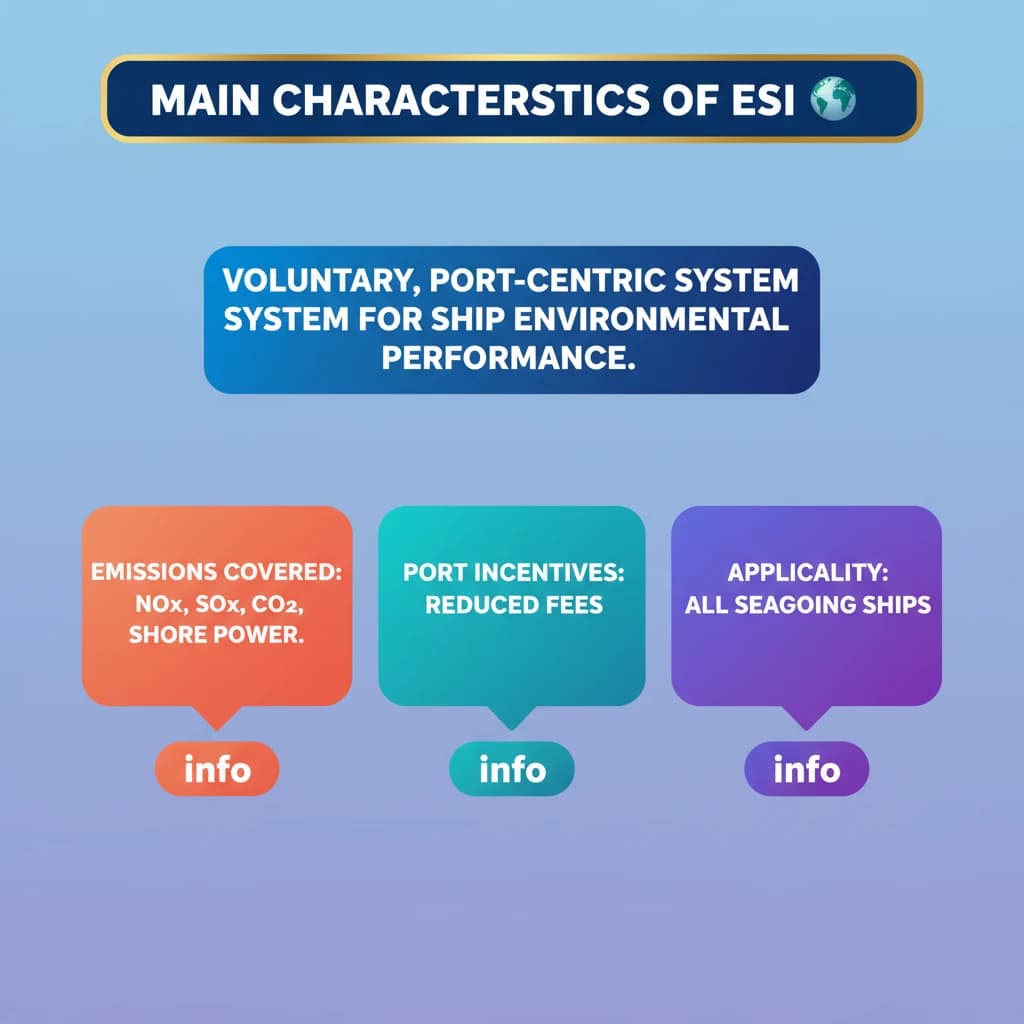
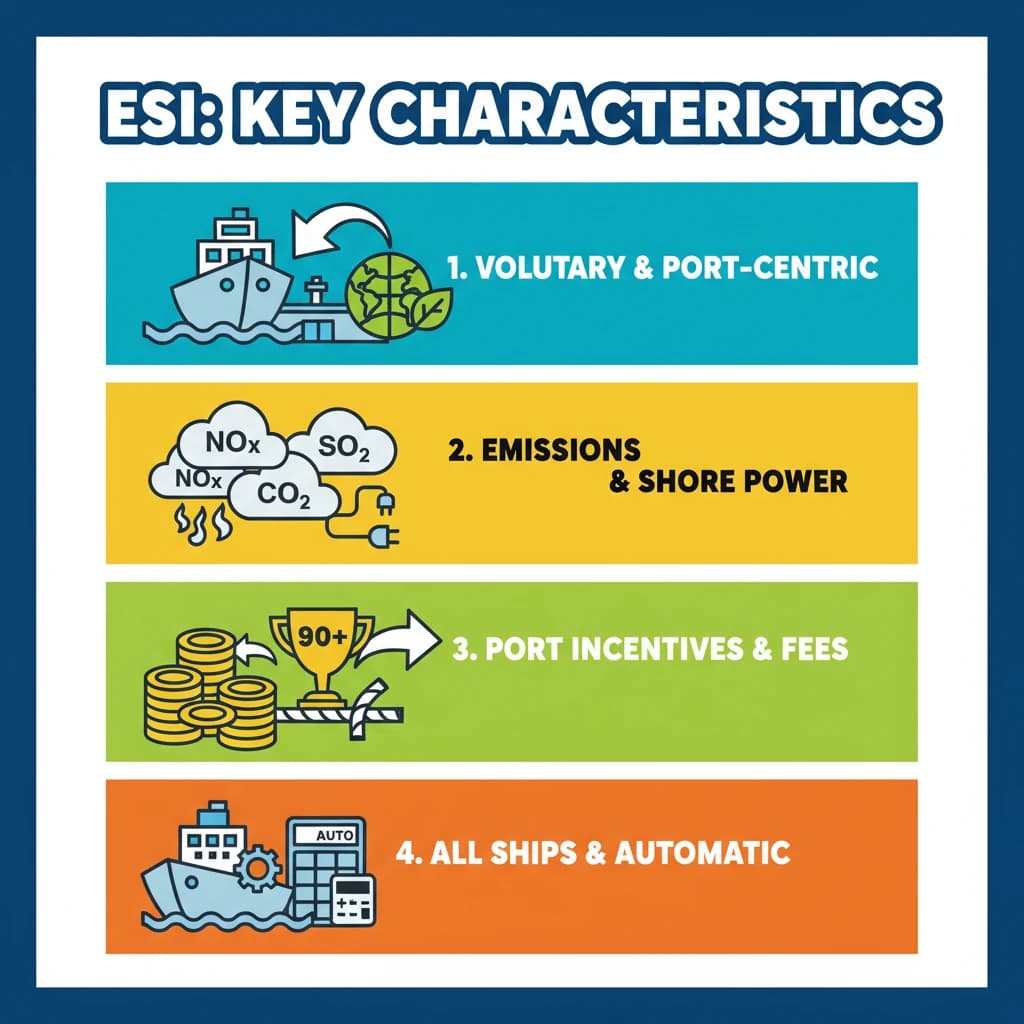
- •ESI is a voluntary, port-centric system for evaluating ship environmental performance.
- •It covers NOx, SOx, CO2 emissions, and on-shore power capabilities.
- •Ports offer incentives (e.g., reduced fees) for higher ESI scores.
- •Applicable to all seagoing ships, calculated automatically.
- •Promotes cleaner shipping beyond mandatory regulations, driving innovation.
🧠 Memory Techniques
95% Verified Content
📚 Reference Sources
•Port of Rotterdam Official Website - Environmental Incentives
•International Maritime Organization (IMO) - MARPOL Convention details
•Various academic articles and reports on green shipping and port sustainability