Loading page, please wait…
Vaidra Logo
Vaidra

Top 4 items + smart groups

UPSC GPT
New
Current Affairs
Daily Solutions
Daily Puzzle
Mains Evaluator

Version 2.0.0 • Built with ❤️ for UPSC aspirants

Loading...
Loading...
Loading...
Loading...
Loading...
Loading...
Loading...
Loading...
Loading...
Loading...
Loading...
Loading...
Loading...
Customs Duty Elimination - UPSC Economy
Back
All Subjects

Topics

0 topics • 0 completed

Loading topics...
Loading...
Loading...
Loading...
Loading...
Loading...
Overall Progress0%

Customs Duty Elimination - UPSC Economy

What is Customs Duty Elimination in UPSC Economy?

Customs Duty Elimination is a key topic under Economy for UPSC Civil Services Examination. Key points include: FY25 Union Budget eliminated customs duties on critical minerals.. Primary goal: Boost domestic production and processing facilities for these minerals.. Aims to reduce input costs for strategic industries.. Understanding this topic is essential for both UPSC Prelims and Mains preparation.

Why is Customs Duty Elimination important for UPSC exam?

Customs Duty Elimination is a Medium-level topic in UPSC Economy. It is tested in both Prelims (factual MCQs) and Mains (analytical answer writing). Previous year UPSC questions have frequently covered aspects of Customs Duty Elimination, making it essential for comprehensive IAS preparation.

How to prepare Customs Duty Elimination for UPSC?

To prepare Customs Duty Elimination for UPSC: (1) Study the comprehensive notes covering all key concepts on Vaidra. (2) Practice previous year questions on this topic. (3) Connect it with current affairs using daily updates. (4) Revise using key takeaways and mind maps available for Economy. (5) Write practice answers linking Customs Duty Elimination to related GS Paper topics.

Key takeaways of Customs Duty Elimination for UPSC

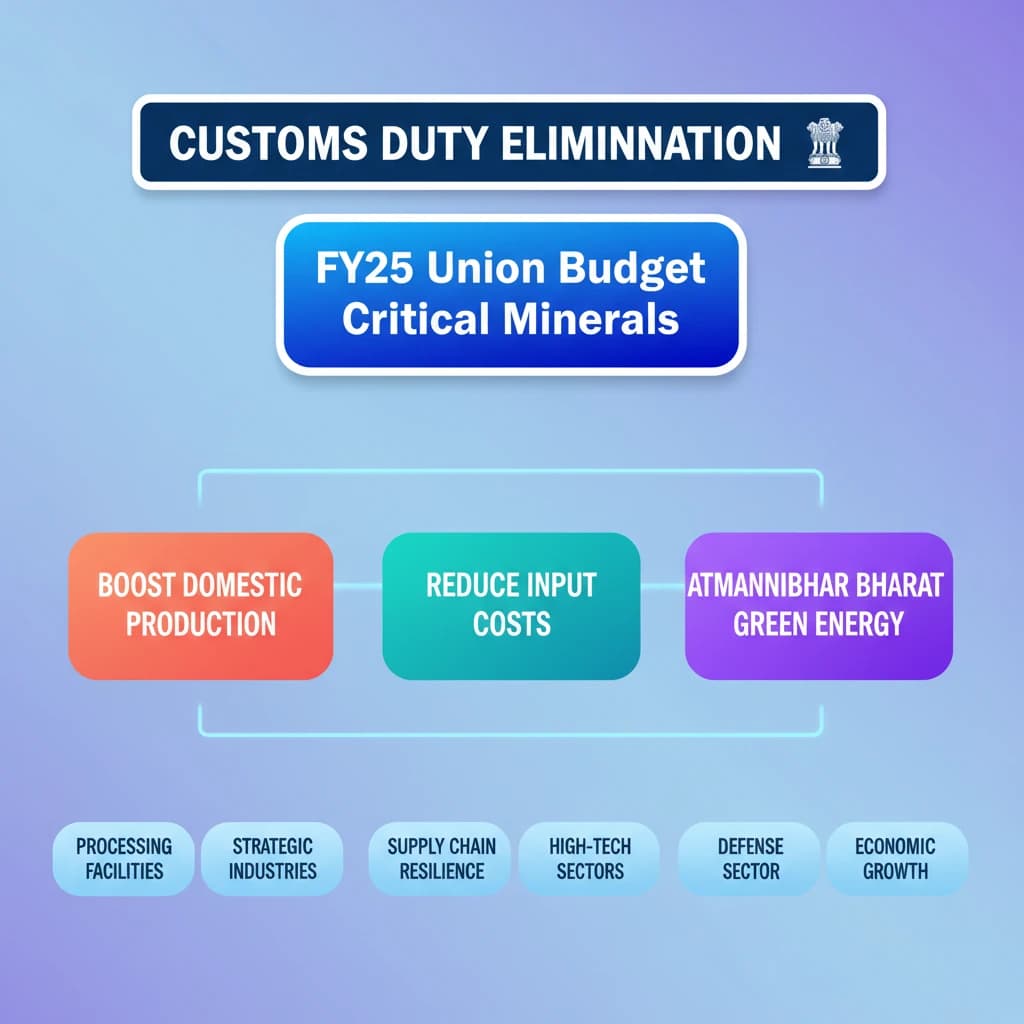
  • FY25 Union Budget eliminated customs duties on critical minerals.
  • Primary goal: Boost domestic production and processing facilities for these minerals.
  • Aims to reduce input costs for strategic industries.
  • Supports India's 'Aatmanirbhar Bharat' vision and green energy transition.
  • Enhances supply chain resilience for high-tech and defense sectors.
Customs Duty Elimination

Customs Duty Elimination

Medium⏱️ 8 min read✓ 95% Verified
economy

📖 Introduction

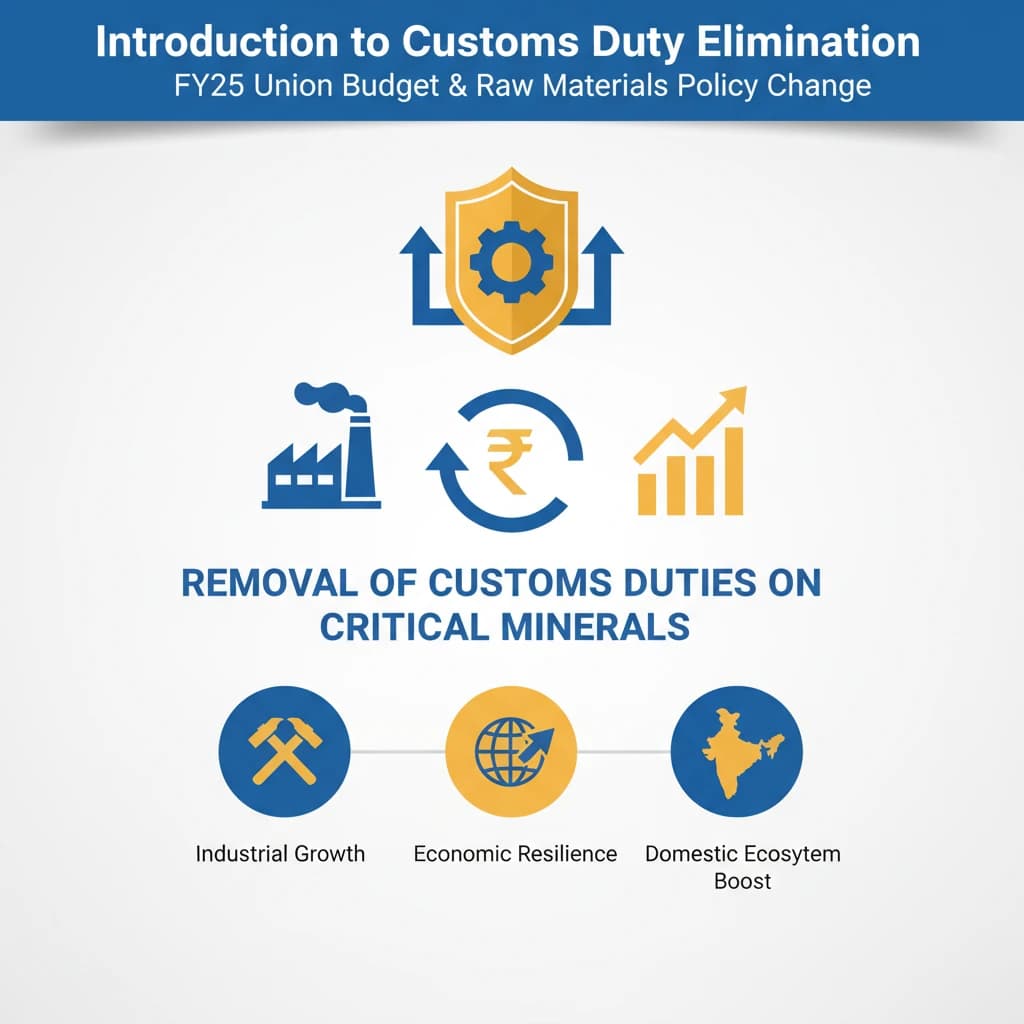
<h4>Introduction to Customs Duty Elimination</h4><p>The <strong>FY25 Union Budget</strong> introduced a significant policy change regarding <strong>customs duties</strong> on specific raw materials. This move aims to bolster India's economic resilience and industrial growth.</p><p>Specifically, the budget announced the <strong>removal of customs duties</strong> on various <strong>critical minerals</strong>. This strategic decision is designed to achieve multiple objectives within the domestic economy.</p><div class='info-box'><p><strong>Customs Duty:</strong> A tax levied on goods imported into or, less commonly, exported from a country. It serves as a revenue source and a tool for trade policy, influencing domestic industries.</p></div><div class='key-point-box'><p>The primary goals behind this customs duty elimination are to <strong>promote domestic production</strong> of these essential minerals and to <strong>encourage the establishment and expansion of processing facilities</strong> within India.</p></div><p>By making raw critical minerals cheaper to import, the government intends to reduce input costs for domestic industries, thereby fostering a more competitive manufacturing environment.</p><h4>Objectives of Customs Duty Elimination</h4><p>The government's decision is rooted in a clear vision for India's industrial future. Lowering import costs for raw critical minerals directly benefits downstream industries.</p><ul><li><strong>Boosting Domestic Production:</strong> It makes it more economically viable for Indian companies to manufacture products that rely on these minerals.</li><li><strong>Encouraging Processing Facilities:</strong> The policy incentivizes the setup of advanced processing units within India, reducing reliance on imported processed minerals.</li><li><strong>Enhancing Value Addition:</strong> By processing minerals domestically, India can move up the value chain, creating more jobs and economic output.</li></ul><div class='exam-tip-box'><p>Understanding the 'why' behind policy changes like customs duty elimination is crucial for UPSC. Focus on the <strong>economic rationale</strong> and <strong>intended outcomes</strong> for both Prelims and Mains.</p></div>
Concept Diagram

💡 Key Takeaways

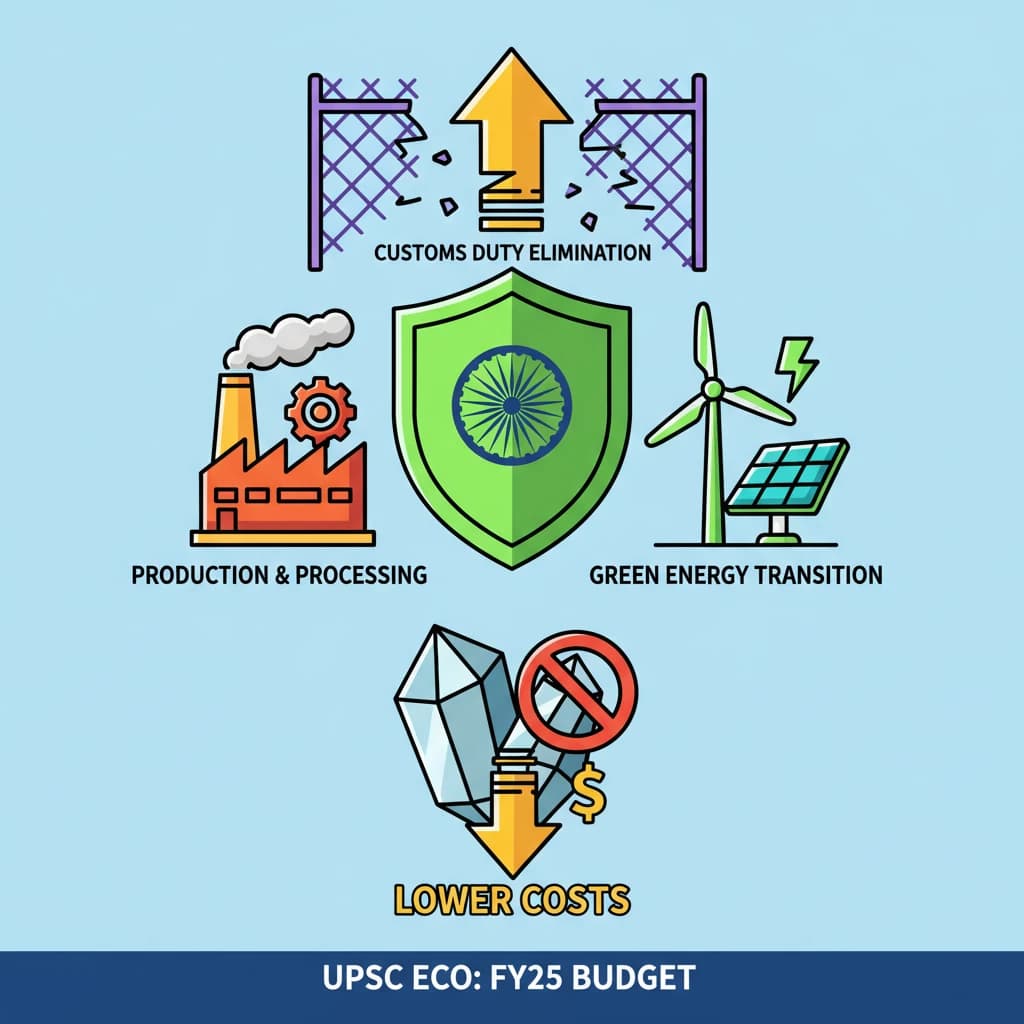
  • •FY25 Union Budget eliminated customs duties on critical minerals.
  • •Primary goal: Boost domestic production and processing facilities for these minerals.
  • •Aims to reduce input costs for strategic industries.
  • •Supports India's 'Aatmanirbhar Bharat' vision and green energy transition.
  • •Enhances supply chain resilience for high-tech and defense sectors.

🧠 Memory Techniques
Memory Aid
95% Verified Content

📚 Reference Sources

•Press Information Bureau (PIB) releases related to the Union Budget
•Economic Survey documents (relevant sections on trade and industry)

Related Topics

Loading related topics...
Explore:Economy Topics·All Subjects·Daily Current Affairs·Editorial Analysis·Previous Year Questions·UPSC GPT