Loading page, please wait…
Vaidra Logo
Vaidra

Top 4 items + smart groups

UPSC GPT
New
Current Affairs
Daily Solutions
Daily Puzzle
Mains Evaluator

Version 2.0.0 • Built with ❤️ for UPSC aspirants

Loading...
Loading...
Loading...
Loading...
Loading...
Loading...
Loading...
Loading...
Loading...
Loading...
Loading...
Loading...
Loading...
Back
All Subjects

Topics

0 topics • 0 completed

Loading topics...
Loading...
Loading...
Loading...
Loading...
Loading...
Overall Progress0%

What is Blockchain Technology? - UPSC Economy

What is What is Blockchain Technology? in UPSC Economy?

What is Blockchain Technology? is a key topic under Economy for UPSC Civil Services Examination. Key points include: Blockchain is a decentralised, digital ledger recording transactions across a network of computers.. Each block contains multiple transactions, and a record is added to every participant's ledger.. Its decentralised nature ensures transactions are immutable, providing high security and transparency.. Understanding this topic is essential for both UPSC Prelims and Mains preparation.

Why is What is Blockchain Technology? important for UPSC exam?

What is Blockchain Technology? is a Medium-level topic in UPSC Economy. It is tested in both Prelims (factual MCQs) and Mains (analytical answer writing). Previous year UPSC questions have frequently covered aspects of What is Blockchain Technology?, making it essential for comprehensive IAS preparation.

How to prepare What is Blockchain Technology? for UPSC?

To prepare What is Blockchain Technology? for UPSC: (1) Study the comprehensive notes covering all key concepts on Vaidra. (2) Practice previous year questions on this topic. (3) Connect it with current affairs using daily updates. (4) Revise using key takeaways and mind maps available for Economy. (5) Write practice answers linking What is Blockchain Technology? to related GS Paper topics.

Key takeaways of What is Blockchain Technology? for UPSC

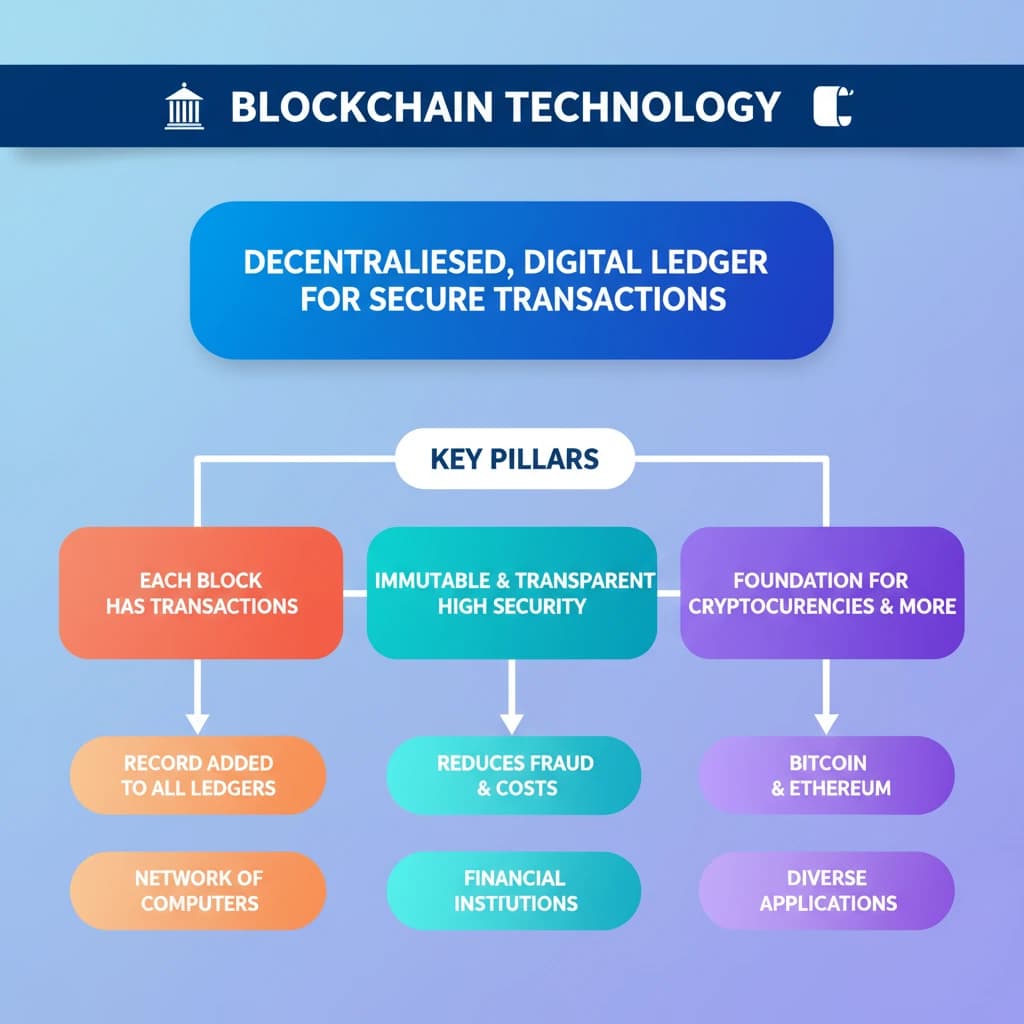
  • Blockchain is a decentralised, digital ledger recording transactions across a network of computers.
  • Each block contains multiple transactions, and a record is added to every participant's ledger.
  • Its decentralised nature ensures transactions are immutable, providing high security and transparency.
  • Blockchain is the foundation for cryptocurrencies like Bitcoin but has diverse applications.
  • Financial institutions use blockchain for secure transaction processing, reducing fraud and operational costs.
What is Blockchain Technology?

What is Blockchain Technology?

Medium⏱️ 7 min read✓ 95% Verified
economy

📖 Introduction

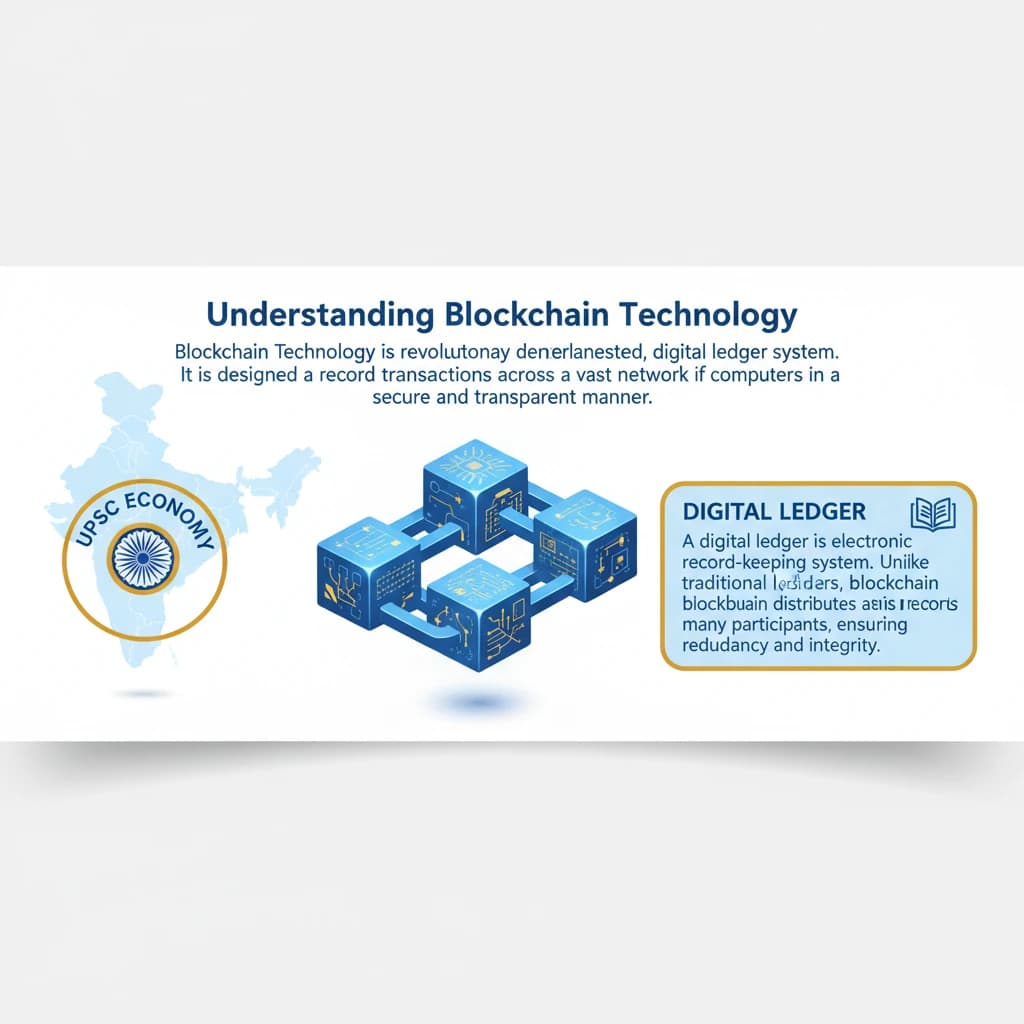
<h4>Understanding Blockchain Technology</h4><p><strong>Blockchain Technology</strong> is a revolutionary <strong>decentralised, digital ledger</strong> system. It is designed to record transactions across a vast network of computers in a secure and transparent manner.</p><div class='info-box'><p>A <strong>digital ledger</strong> is an electronic record-keeping system. Unlike traditional ledgers, blockchain distributes this record across many participants, ensuring redundancy and integrity.</p></div><h4>How Blockchain Works: Blocks and Transactions</h4><p>The fundamental unit of a blockchain is a <strong>block</strong>. Each block contains a collection of verified transactions, along with a timestamp and a cryptographic hash of the previous block.</p><p>When a new transaction occurs, it is first verified by the network participants. Once validated, it is added to a new block, which is then cryptographically appended to the existing chain of blocks.</p><p>Crucially, a record of this new block and its transactions is added to <strong>every participant's ledger</strong> within the network. This creates a distributed and redundant record, making it highly resilient.</p><h4>Decentralisation, Security, and Transparency</h4><p>The <strong>decentralised nature</strong> of blockchain technology is its core strength. It means no single central authority controls the ledger, eliminating a single point of failure or control.</p><p>This architecture ensures that once a transaction is recorded in a block and added to the chain, it becomes extremely difficult to alter or delete. Any attempt to tamper would require changing the record on a majority of the network's computers simultaneously, which is practically impossible.</p><div class='key-point-box'><p>This inherent design provides a high degree of <strong>security</strong> and <strong>transparency</strong>, making blockchain resistant to fraud and unauthorised modifications. All participants can view the ledger, ensuring accountability.</p></div><h4>Applications Beyond Cryptocurrencies</h4><p>While <strong>Blockchain</strong> is famously the underlying technology for <strong>cryptocurrencies</strong> such as <strong>Bitcoin</strong>, its potential applications extend far beyond digital currencies.</p><p>Its ability to create immutable and transparent records makes it valuable in various sectors where trust and verifiable records are paramount.</p><p>For instance, <strong>financial institutions</strong> have been actively exploring and implementing blockchain for secure and transparent transaction processing. This helps in reducing fraud, streamlining operations, and lowering operational costs significantly.</p><div class='exam-tip-box'><p>UPSC often asks about the broader applications of emerging technologies. Beyond cryptocurrencies, consider blockchain's use in supply chain management, healthcare, voting systems, and intellectual property rights for <strong>GS Paper III</strong>.</p></div>
Concept Diagram

💡 Key Takeaways

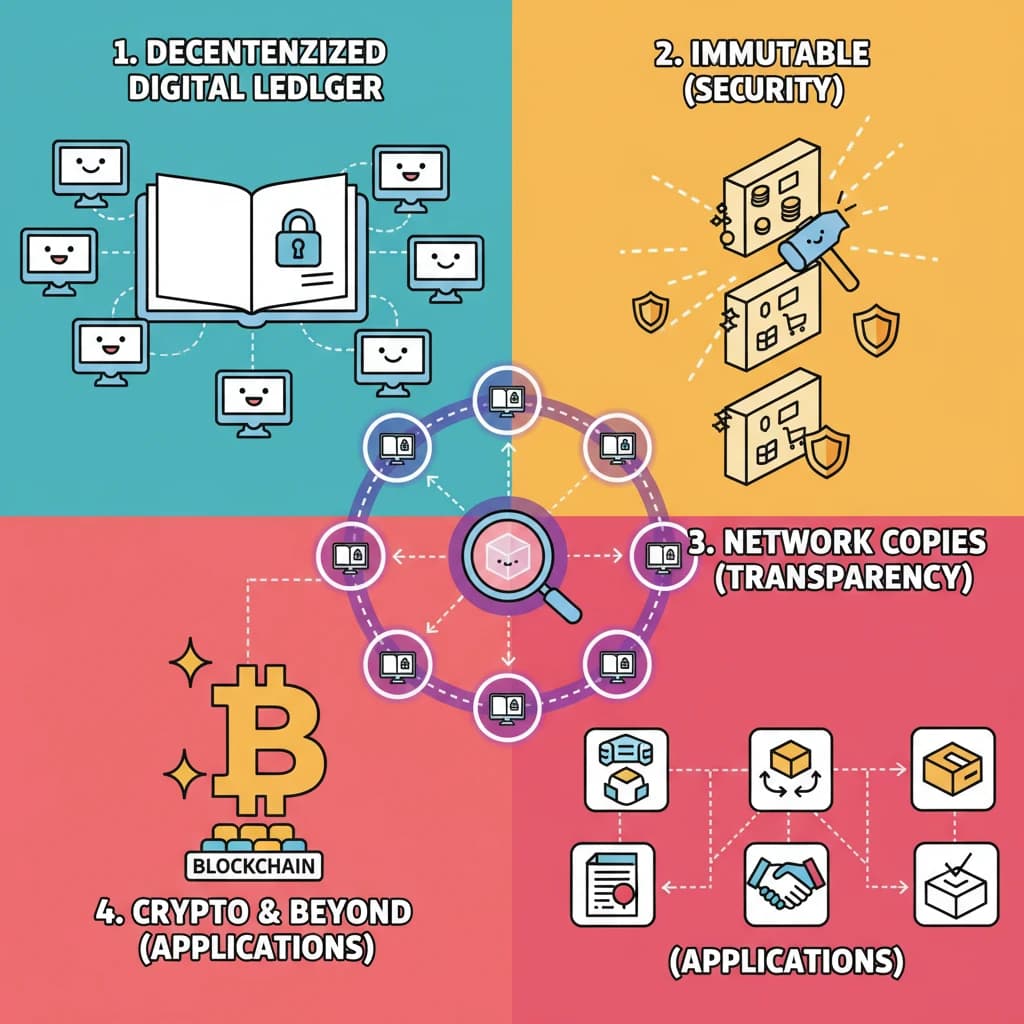
  • •Blockchain is a decentralised, digital ledger recording transactions across a network of computers.
  • •Each block contains multiple transactions, and a record is added to every participant's ledger.
  • •Its decentralised nature ensures transactions are immutable, providing high security and transparency.
  • •Blockchain is the foundation for cryptocurrencies like Bitcoin but has diverse applications.
  • •Financial institutions use blockchain for secure transaction processing, reducing fraud and operational costs.

🧠 Memory Techniques
Memory Aid
95% Verified Content

📚 Reference Sources

•Bitcoin Whitepaper by Satoshi Nakamoto
•IBM Blockchain documentation
•Reserve Bank of India (RBI) reports on Digital Currency
•Academic papers on Distributed Ledger Technology

Related Topics

Loading related topics...
Explore:Economy Topics·All Subjects·Daily Current Affairs·Editorial Analysis·Previous Year Questions·UPSC GPT
What is Blockchain Technology? - UPSC Economy