Loading page, please wait…
FDI in Insurance Sector - UPSC Economy
What is FDI in Insurance Sector in UPSC Economy?
FDI in Insurance Sector is a key topic under Economy for UPSC Civil Services Examination. Key points include: FDI in insurance increased to 100% for full domestic premium investment.. New Investment Friendliness Index to promote state competition.. NABFID to provide Partial Credit Enhancement for infrastructure bonds.. Understanding this topic is essential for both UPSC Prelims and Mains preparation.
Why is FDI in Insurance Sector important for UPSC exam?
FDI in Insurance Sector is a Medium-level topic in UPSC Economy. It is tested in both Prelims (factual MCQs) and Mains (analytical answer writing). Previous year UPSC questions have frequently covered aspects of FDI in Insurance Sector, making it essential for comprehensive IAS preparation.
How to prepare FDI in Insurance Sector for UPSC?
To prepare FDI in Insurance Sector for UPSC: (1) Study the comprehensive notes covering all key concepts on Vaidra. (2) Practice previous year questions on this topic. (3) Connect it with current affairs using daily updates. (4) Revise using key takeaways and mind maps available for Economy. (5) Write practice answers linking FDI in Insurance Sector to related GS Paper topics.
Key takeaways of FDI in Insurance Sector for UPSC
- FDI in insurance increased to 100% for full domestic premium investment.
- New Investment Friendliness Index to promote state competition.
- NABFID to provide Partial Credit Enhancement for infrastructure bonds.
- Pension sector to get a regulatory coordination forum and new products.
- High-level committee to review non-financial sector regulations.
- Reforms aim to boost capital, ease business, and strengthen financial markets.
FDI in Insurance Sector
Medium⏱️ 5 min read
economy
📖 Introduction
FDI in Insurance Sector: Enhanced Investment Cap
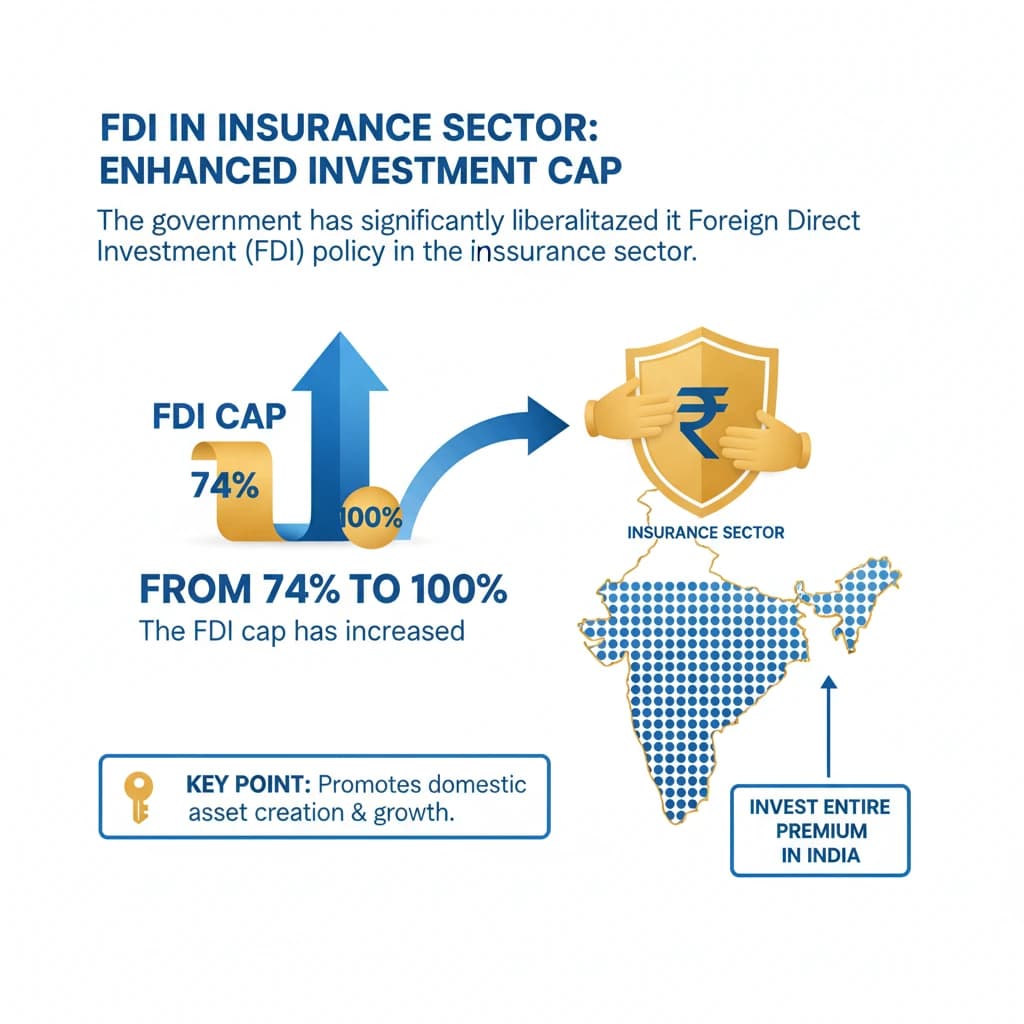
The government has significantly liberalized the Foreign Direct Investment (FDI) policy in the insurance sector.
The FDI cap has been increased from 74% to 100%.
This enhanced cap applies specifically to companies that commit to investing the entire premium collected in India.
This move aims to attract greater foreign capital, enhance competition, and improve efficiency within the Indian insurance market.
Investment Friendliness Index of States
A new framework is being introduced to rank states based on their investment friendliness.
This ranking framework is designed to foster competitive cooperative federalism among states.
It will encourage states to improve their business environment and attract more investments.
Credit Enhancement Facility by NABFID
The National Bank for Financing Infrastructure and Development (NABFID) will play a crucial role in infrastructure financing.
NABFID is mandated to establish a ‘Partial Credit Enhancement Facility’.
This facility is intended to support the development and liquidity of the corporate bond market, particularly for infrastructure projects.
Credit enhancement helps reduce the risk perception of corporate bonds, making them more attractive to investors.
Pension Sector Reforms
Efforts are underway to streamline the pension sector in India.
A dedicated forum will be established for regulatory coordination.
This forum will also focus on the development of new pension products to cater to diverse needs of the population.
High-Level Committee for Regulatory Reforms
To improve the ease of doing business, a high-level committee will be formed.
The committee's mandate is to review all non-financial sector regulations, including certifications, licenses, and permissions.
This initiative aligns with the government's broader agenda of deregulation and reducing compliance burden, which is a recurring theme in UPSC Mains GS-III questions on economic reforms.
💡 Key Takeaways
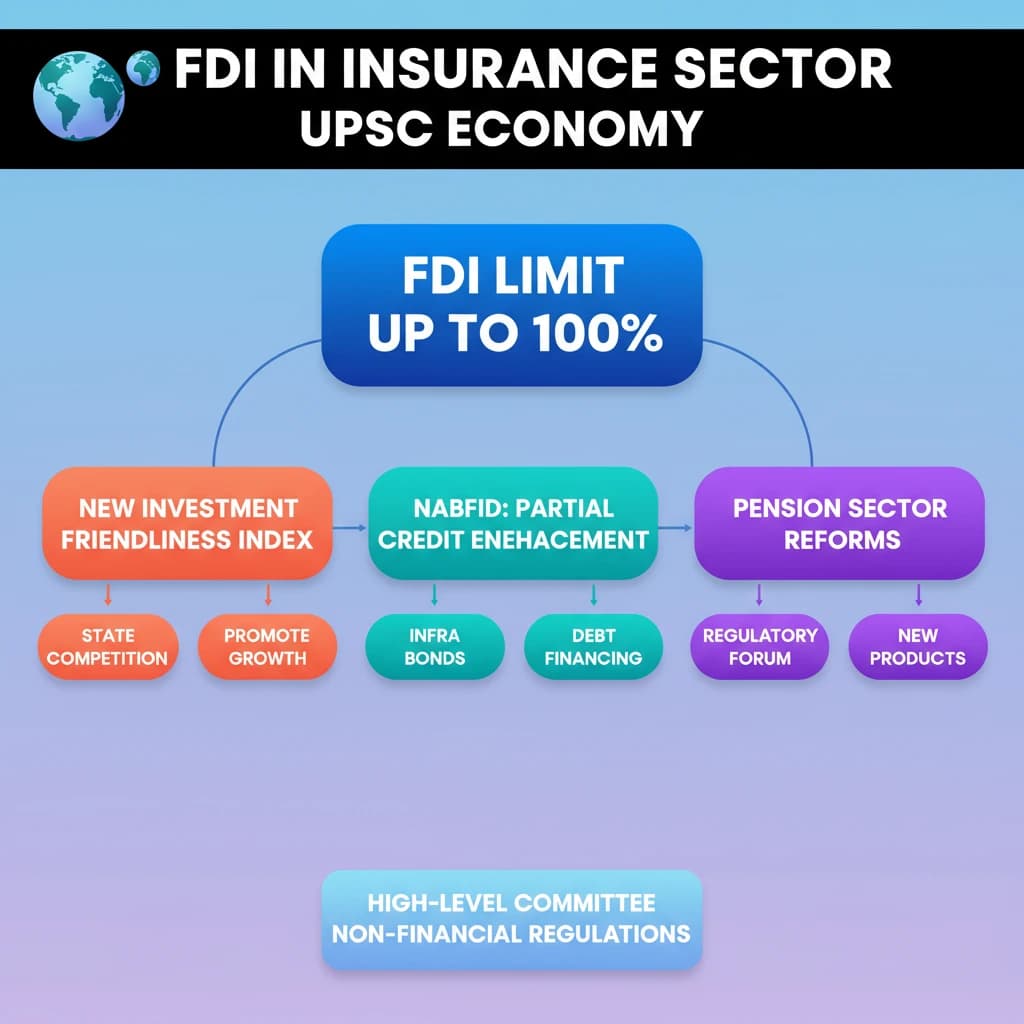
- •FDI in insurance increased to 100% for full domestic premium investment.
- •New Investment Friendliness Index to promote state competition.
- •NABFID to provide Partial Credit Enhancement for infrastructure bonds.
- •Pension sector to get a regulatory coordination forum and new products.
- •High-level committee to review non-financial sector regulations.
- •Reforms aim to boost capital, ease business, and strengthen financial markets.
🧠 Memory Techniques

95% Verified Content
📚 Reference Sources
•Union Budget documents (relevant year)
•Ministry of Finance reports on FDI policy
•IRDAI (Insurance Regulatory and Development Authority of India) notifications