Loading page, please wait…
Government Initiatives for Rubber Production: Schemes & Policy - UPSC Economy
What is Government Initiatives for Rubber Production: Schemes & Policy in UPSC Economy?
Government Initiatives for Rubber Production: Schemes & Policy is a key topic under Economy for UPSC Civil Services Examination. Key points include: Government initiatives aim for sustainable growth and self-sufficiency in natural rubber.. Key schemes include SIDNRs, Plantation Development, and Group Planting for farmer support.. 100% FDI is allowed in rubber plantations to attract capital and technology.. Understanding this topic is essential for both UPSC Prelims and Mains preparation.
Why is Government Initiatives for Rubber Production: Schemes & Policy important for UPSC exam?
Government Initiatives for Rubber Production: Schemes & Policy is a Medium-level topic in UPSC Economy. It is tested in both Prelims (factual MCQs) and Mains (analytical answer writing). Previous year UPSC questions have frequently covered aspects of Government Initiatives for Rubber Production: Schemes & Policy, making it essential for comprehensive IAS preparation.
How to prepare Government Initiatives for Rubber Production: Schemes & Policy for UPSC?
To prepare Government Initiatives for Rubber Production: Schemes & Policy for UPSC: (1) Study the comprehensive notes covering all key concepts on Vaidra. (2) Practice previous year questions on this topic. (3) Connect it with current affairs using daily updates. (4) Revise using key takeaways and mind maps available for Economy. (5) Write practice answers linking Government Initiatives for Rubber Production: Schemes & Policy to related GS Paper topics.
Key takeaways of Government Initiatives for Rubber Production: Schemes & Policy for UPSC
- Government initiatives aim for sustainable growth and self-sufficiency in natural rubber.
- Key schemes include SIDNRs, Plantation Development, and Group Planting for farmer support.
- 100% FDI is allowed in rubber plantations to attract capital and technology.
- The National Rubber Policy 2019 provides a comprehensive framework for sector development.
- Initiatives reduce import dependency, generate rural employment, and promote sustainable practices.
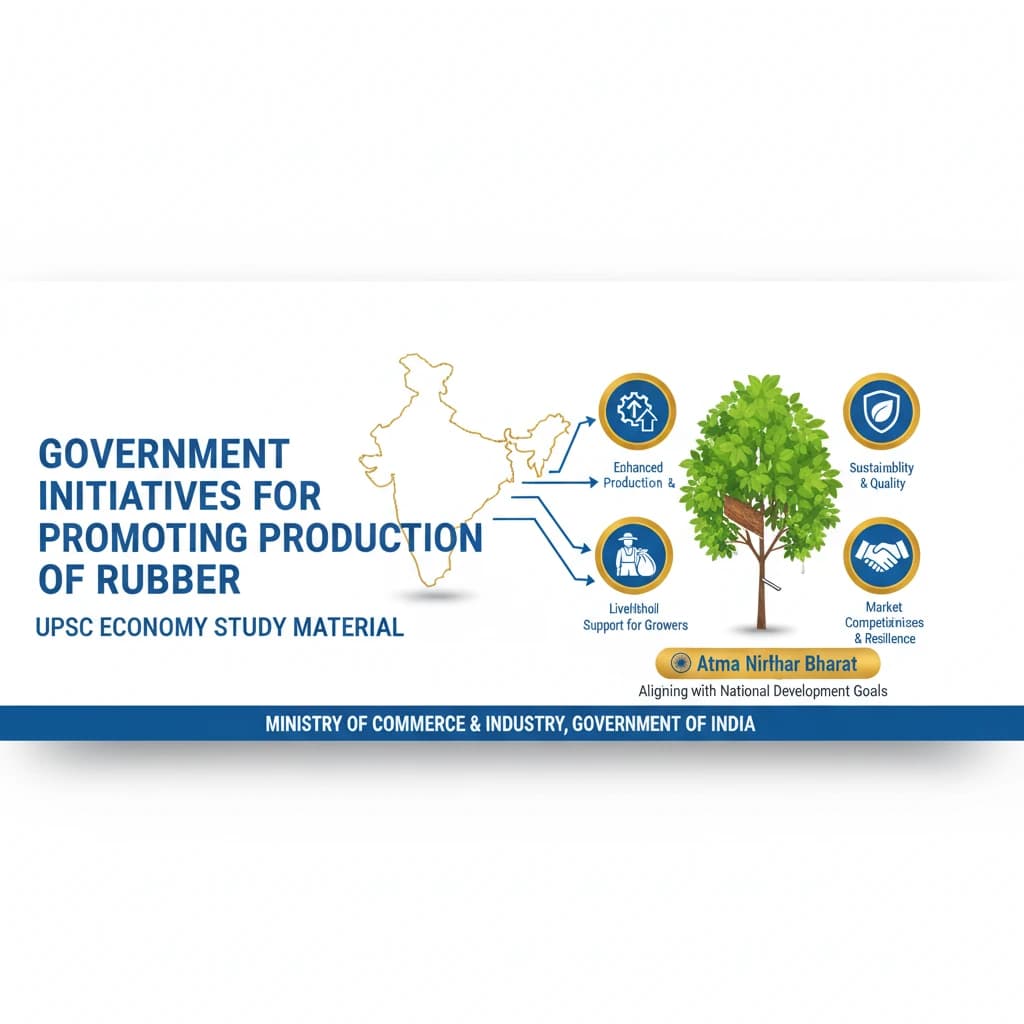
Government Initiatives for Rubber Production: Schemes & Policy
Medium⏱️ 8 min read
economy
📖 Introduction
Overview of Government Initiatives for Rubber Production
The Government of India has implemented several key initiatives to bolster the natural rubber sector. These measures aim to enhance production, improve productivity, ensure sustainability, and support the livelihoods of rubber growers across the nation.
The focus is on making the sector more competitive and resilient, aligning with broader agricultural and economic development goals. These initiatives address various aspects from plantation development to policy frameworks.
Sustainable & Inclusive Development of Natural Rubber Sector (SIDNRs)
The Sustainable & Inclusive Development of Natural Rubber Sector (SIDNRs) is a comprehensive program designed to promote the sustainable growth of rubber plantations. It emphasizes both ecological balance and socio-economic upliftment of farmers.
SIDNRs typically includes components like providing financial assistance for planting and replanting, promoting scientific cultivation practices, and supporting research and development in rubber technology.
The core objective of SIDNRs is to ensure the long-term viability of the natural rubber industry while integrating marginalized farmers into the value chain.
Rubber Plantation Development Scheme
The Rubber Plantation Development Scheme is a targeted initiative aimed at expanding the area under rubber cultivation and improving the yield of existing plantations. It is crucial for meeting the increasing domestic demand for natural rubber.
- It often involves providing subsidies for planting new rubber saplings.
- Support for adopting modern cultivation techniques is also a key feature.
- The scheme helps in replacing old, unproductive trees with high-yielding varieties.
Rubber Group Planting Scheme
The Rubber Group Planting Scheme encourages collective farming and resource sharing among small and marginal rubber growers. This approach helps in achieving economies of scale and better management of plantations.
Under this scheme, groups of farmers pool their land or resources to undertake rubber cultivation. This facilitates access to technical support, quality planting material, and collective marketing opportunities.
Understanding schemes like Rubber Group Planting is vital for UPSC GS Paper III (Agriculture), especially when discussing farmer collectives and cooperative farming models.
100% Foreign Direct Investment (FDI) in Rubber Plantations
The government permits 100% Foreign Direct Investment (FDI) in the plantation sector, including rubber. This policy aims to attract capital, technology, and expertise from abroad to boost the industry.
This liberalization of FDI policy is expected to enhance processing capabilities, improve infrastructure, and create more employment opportunities within the rubber value chain.
Allowing 100% FDI signifies the government's commitment to integrating the Indian rubber sector with global markets and attracting significant private investment.
National Rubber Policy 2019
The National Rubber Policy 2019 provides a comprehensive framework for the overall development of the natural rubber sector. It addresses various aspects from production to consumption and export.
Key objectives of the National Rubber Policy 2019 include increasing productivity, enhancing quality, promoting sustainable practices, and ensuring price stability for growers. It also focuses on value addition and export promotion.
Policies like the National Rubber Policy 2019 are crucial for UPSC Mains GS Paper III (Economy and Agriculture). Candidates should be able to discuss their objectives, provisions, and potential impact.
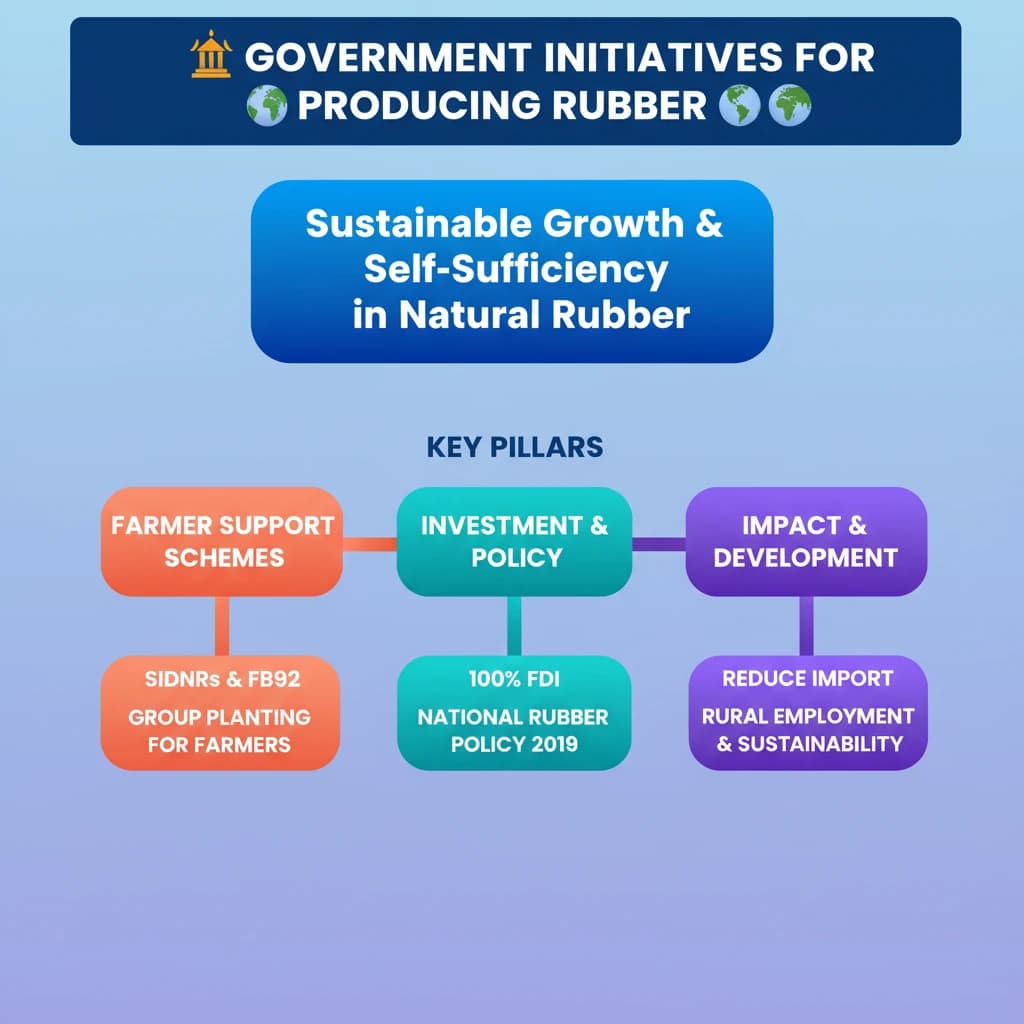
💡 Key Takeaways
- •Government initiatives aim for sustainable growth and self-sufficiency in natural rubber.
- •Key schemes include SIDNRs, Plantation Development, and Group Planting for farmer support.
- •100% FDI is allowed in rubber plantations to attract capital and technology.
- •The National Rubber Policy 2019 provides a comprehensive framework for sector development.
- •Initiatives reduce import dependency, generate rural employment, and promote sustainable practices.
🧠 Memory Techniques
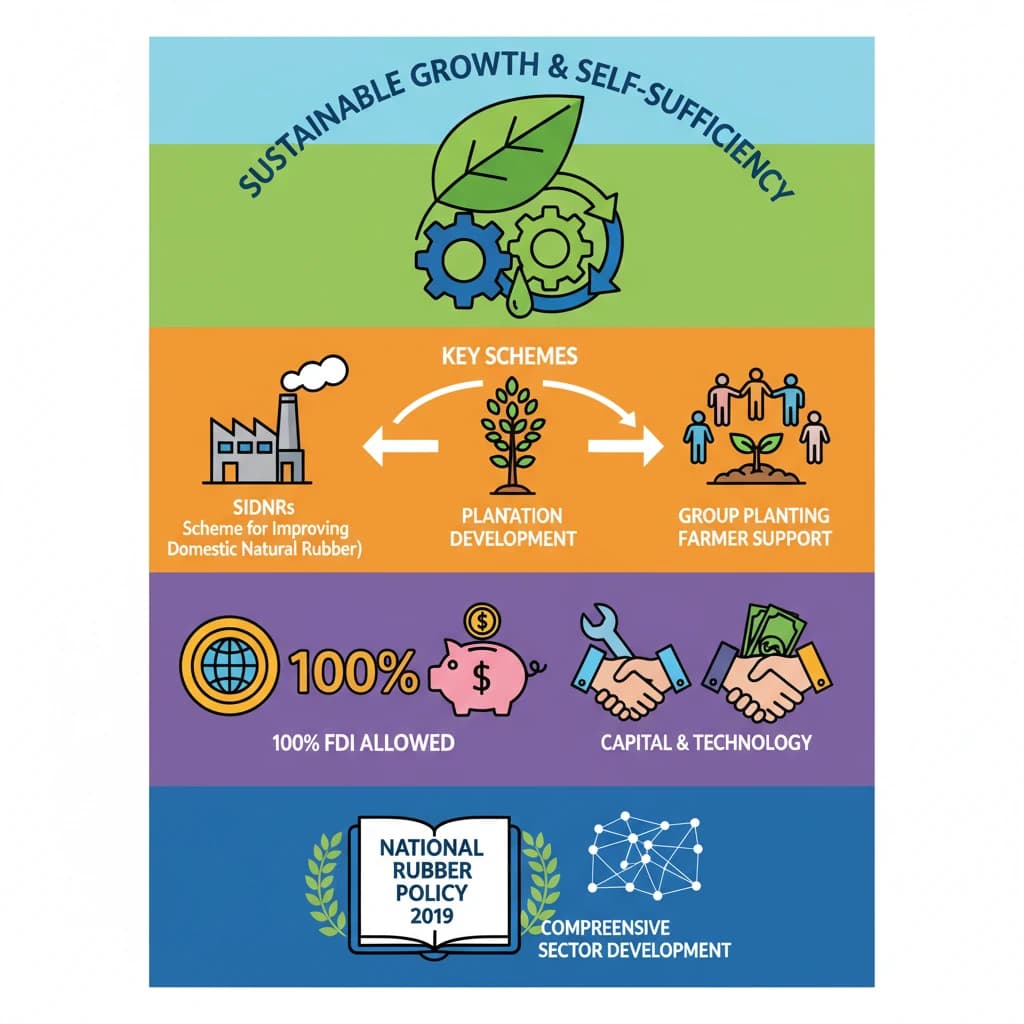
95% Verified Content
📚 Reference Sources
•Ministry of Commerce and Industry, Government of India reports
•Rubber Board of India official website
•Press Information Bureau (PIB) releases