Loading page, please wait…
Government Securities - UPSC Economy
What is Government Securities in UPSC Economy?
Government Securities is a key topic under Economy for UPSC Civil Services Examination. Key points include: Government Securities (G-Secs) are key instruments for government borrowing to finance expenditures.. The Government of India completed G-Sec borrowing for FY 2023-24.. RBI is expected to transfer a dividend to the government in FY25, similar to FY24.. Understanding this topic is essential for both UPSC Prelims and Mains preparation.
Why is Government Securities important for UPSC exam?
Government Securities is a Medium-level topic in UPSC Economy. It is tested in both Prelims (factual MCQs) and Mains (analytical answer writing). Previous year UPSC questions have frequently covered aspects of Government Securities, making it essential for comprehensive IAS preparation.
How to prepare Government Securities for UPSC?
To prepare Government Securities for UPSC: (1) Study the comprehensive notes covering all key concepts on Vaidra. (2) Practice previous year questions on this topic. (3) Connect it with current affairs using daily updates. (4) Revise using key takeaways and mind maps available for Economy. (5) Write practice answers linking Government Securities to related GS Paper topics.
Key takeaways of Government Securities for UPSC
- Government Securities (G-Secs) are key instruments for government borrowing to finance expenditures.
- The Government of India completed G-Sec borrowing for FY 2023-24.
- RBI is expected to transfer a dividend to the government in FY25, similar to FY24.
- RBI's surplus transfer to the government is mandated by Section 47 of the RBI Act, 1934.
- The Y.H. Malegam Committee (2013) recommended higher transfers of RBI's surplus to the government.
- RBI's surplus is determined by its income (interest on securities, fees, forex profits) minus expenditures (printing currency, salaries, provisions).
- RBI's dividend provides crucial non-tax revenue, impacting the government's fiscal deficit and overall borrowing needs.
Government Securities
Medium⏱️ 8 min read
economy
📖 Introduction
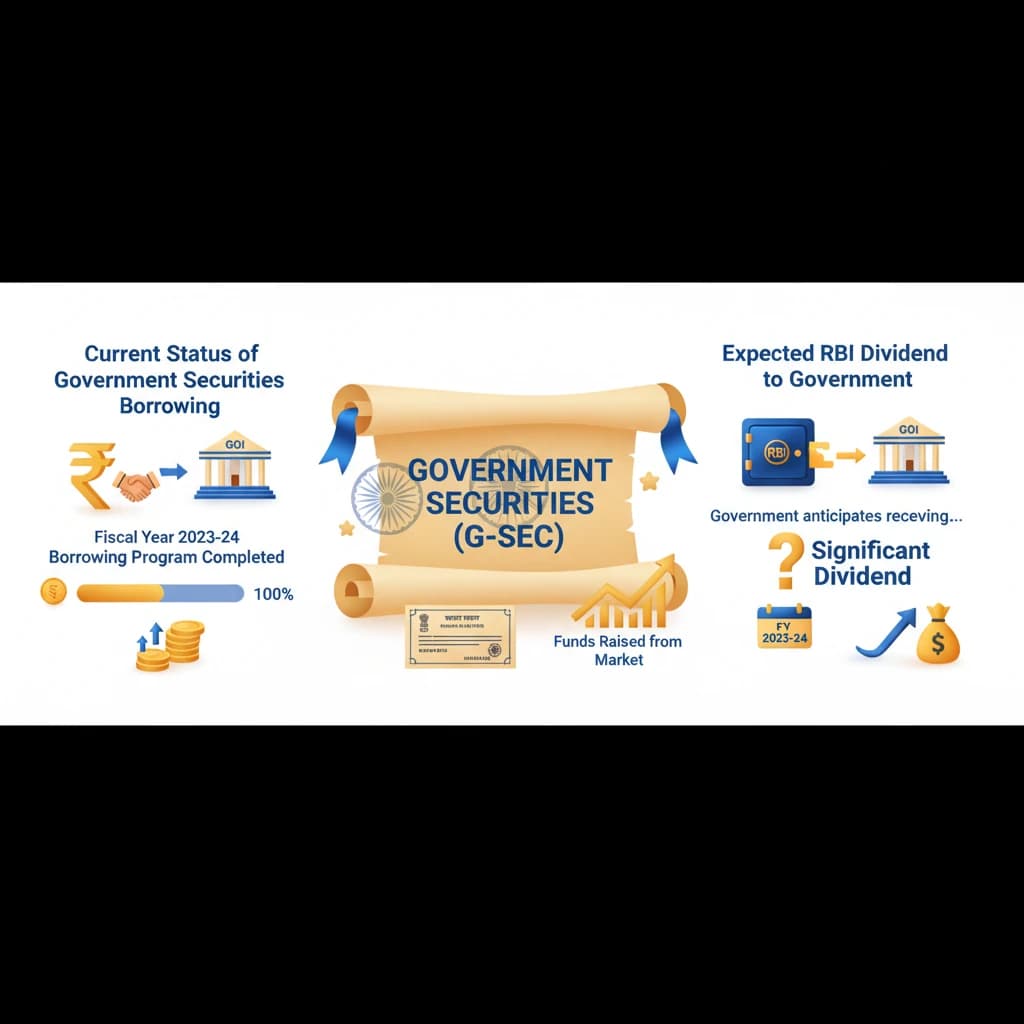
Current Status of Government Securities Borrowing
The Government of India has successfully completed its Government Securities (G-Sec) borrowing program for the fiscal year 2023-24.
This completion indicates that the government has raised the necessary funds from the market through the issuance of these securities for the current fiscal period.
Expected RBI Dividend to Government
The government anticipates receiving a significant dividend from the Reserve Bank of India (RBI) in the upcoming Financial Year 25 (FY25).
This expectation is based on a similar transfer that occurred in the previous Financial Year 24 (FY24), providing crucial non-tax revenue to the government.
RBI's dividend is a vital source of non-tax revenue for the government, directly impacting its fiscal position and expenditure capacity.
Legal Framework for RBI Surplus Transfer
The mechanism for the RBI to transfer its surplus funds to the Government of India is governed by specific provisions of the law.
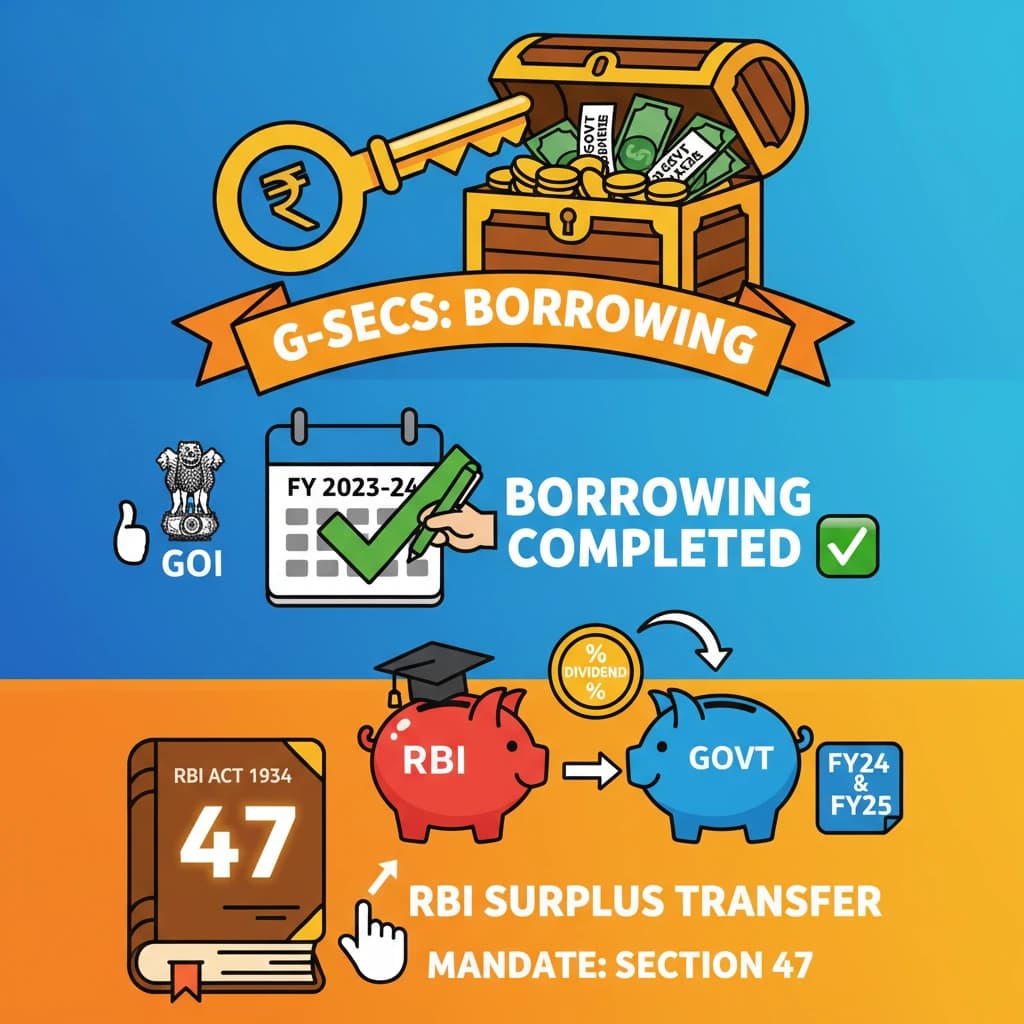
This transfer is explicitly outlined under Section 47 of the Reserve Bank of India Act, 1934.
Section 47, RBI Act, 1934: Mandates the RBI to transfer its net profits to the Central Government after making provisions for reserves and retained earnings.
Y.H. Malegam Committee Recommendations
In 2013, a technical committee led by Y.H. Malegam reviewed the framework for RBI's surplus transfer.
The committee recommended that a higher amount of the RBI's surplus should be transferred to the government.
Remember the Y.H. Malegam Committee (2013) in the context of RBI's dividend policy. It's a key reference for policy discussions on central bank autonomy and government finances in UPSC GS Paper 3.
Factors Determining RBI's Surplus
The actual amount of surplus that the RBI transfers to the government is a function of its income and expenditures during a financial year.
Understanding these components is crucial to comprehending the variability of the dividend amount.
Sources of RBI's Income:
- Interest on Securities: Earnings from holding government securities and other investments.
- Fees: Charges for various services provided to banks and the government.
- Profits from Foreign Exchange Transactions: Gains from buying and selling foreign currencies.
- Returns from Subsidiaries: Income generated by its wholly-owned subsidiaries like the Deposit Insurance and Credit Guarantee Corporation (DICGC).
RBI's Expenditures:
- Costs for Printing Currency: Expenses incurred in printing banknotes and minting coins.
- Interest Payments: Interest paid on deposits from commercial banks.
- Staff Salaries: Wages and benefits for its employees.
- Operational Expenses: Day-to-day administrative and operational costs.
- Provisions for Contingencies: Funds set aside for unforeseen events and risks, including the Contingency Fund and Asset Development Fund.
💡 Key Takeaways
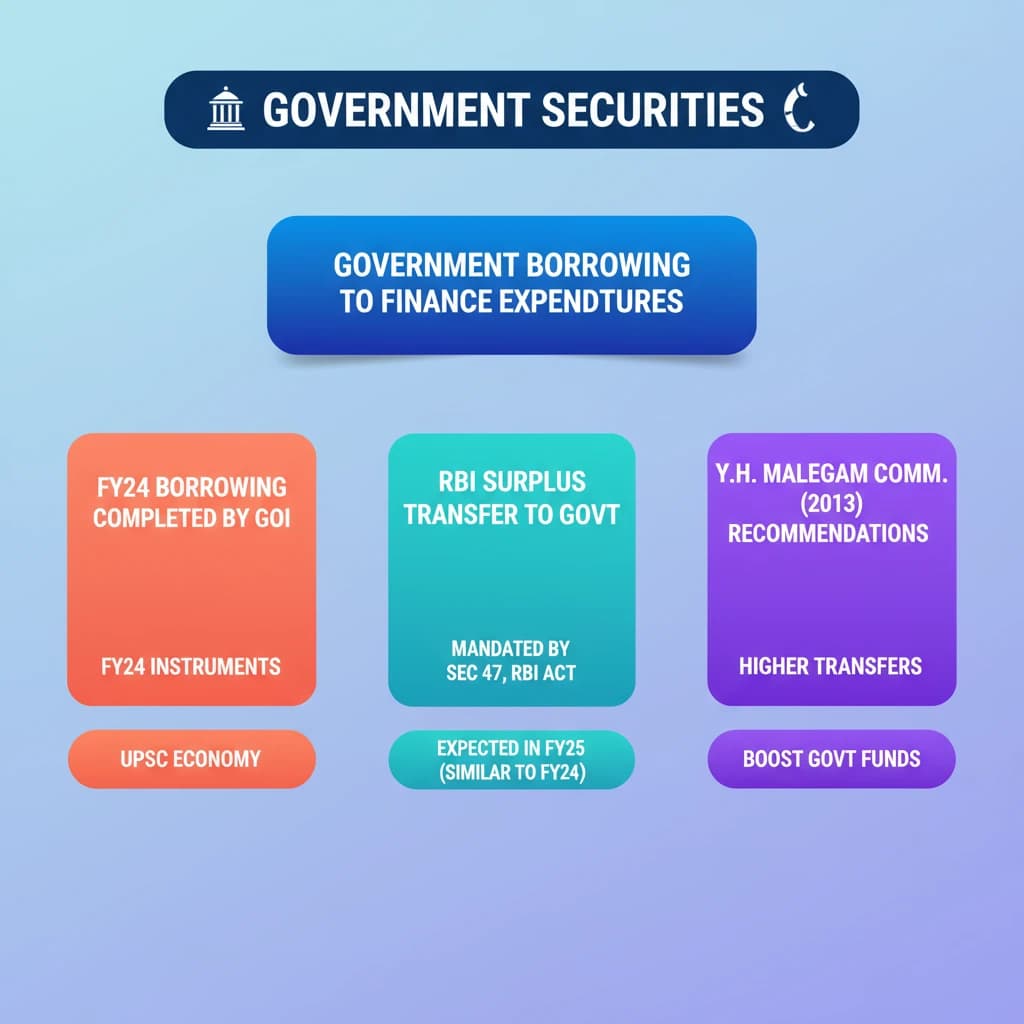
- •Government Securities (G-Secs) are key instruments for government borrowing to finance expenditures.
- •The Government of India completed G-Sec borrowing for FY 2023-24.
- •RBI is expected to transfer a dividend to the government in FY25, similar to FY24.
- •RBI's surplus transfer to the government is mandated by Section 47 of the RBI Act, 1934.
- •The Y.H. Malegam Committee (2013) recommended higher transfers of RBI's surplus to the government.
- •RBI's surplus is determined by its income (interest on securities, fees, forex profits) minus expenditures (printing currency, salaries, provisions).
- •RBI's dividend provides crucial non-tax revenue, impacting the government's fiscal deficit and overall borrowing needs.
🧠 Memory Techniques
95% Verified Content
📚 Reference Sources
•Reserve Bank of India Act, 1934
•Reports of Y.H. Malegam Committee (2013)
•General economic news and analysis on RBI dividend and government finances