Loading page, please wait…
Indian Oil Market Outlook to 2030: IEA - UPSC Economy
What is Indian Oil Market Outlook to 2030: IEA in UPSC Economy?
Indian Oil Market Outlook to 2030: IEA is a key topic under Economy for UPSC Civil Services Examination. Key points include: The IEA's 'Indian Oil Market Outlook to 2030' forecasts India's oil demand and supply trends.. India is a major global oil consumer and highly import-dependent, making such reports crucial for policy.. The outlook informs strategies for energy security, refining capacity expansion, and energy transition.. Understanding this topic is essential for both UPSC Prelims and Mains preparation.
Why is Indian Oil Market Outlook to 2030: IEA important for UPSC exam?
Indian Oil Market Outlook to 2030: IEA is a Medium-level topic in UPSC Economy. It is tested in both Prelims (factual MCQs) and Mains (analytical answer writing). Previous year UPSC questions have frequently covered aspects of Indian Oil Market Outlook to 2030: IEA, making it essential for comprehensive IAS preparation.
How to prepare Indian Oil Market Outlook to 2030: IEA for UPSC?
To prepare Indian Oil Market Outlook to 2030: IEA for UPSC: (1) Study the comprehensive notes covering all key concepts on Vaidra. (2) Practice previous year questions on this topic. (3) Connect it with current affairs using daily updates. (4) Revise using key takeaways and mind maps available for Economy. (5) Write practice answers linking Indian Oil Market Outlook to 2030: IEA to related GS Paper topics.
Key takeaways of Indian Oil Market Outlook to 2030: IEA for UPSC
- The IEA's 'Indian Oil Market Outlook to 2030' forecasts India's oil demand and supply trends.
- India is a major global oil consumer and highly import-dependent, making such reports crucial for policy.
- The outlook informs strategies for energy security, refining capacity expansion, and energy transition.
- It highlights the need for diversification of oil sources and accelerated adoption of renewable energy.
- Understanding IEA projections is vital for UPSC topics like energy security, climate change, and economic planning.
Indian Oil Market Outlook to 2030: IEA
Medium⏱️ 5 min read
economy
📖 Introduction
Introduction to the IEA Outlook
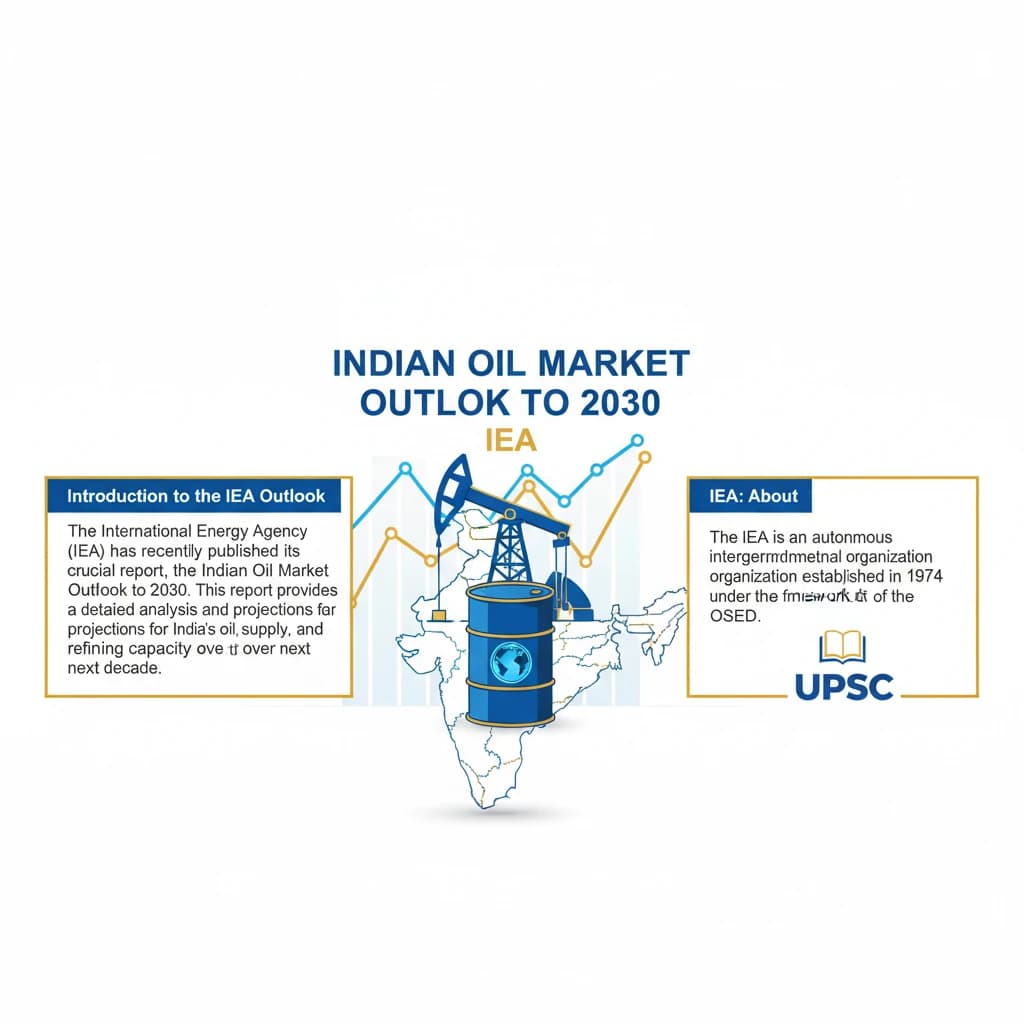
The International Energy Agency (IEA) has recently published its crucial report, the Indian Oil Market Outlook to 2030. This report provides a detailed analysis and projections for India's oil demand, supply, and refining capacity over the next decade.
The IEA is an autonomous intergovernmental organization established in 1974 under the framework of the Organisation for Economic Co-operation and Development (OECD). It works to ensure reliable, affordable, and clean energy for its member countries and beyond.
Significance for India
This outlook is particularly significant for India, which is one of the world's fastest-growing energy consumers and a major oil importer. The report's findings can influence national energy policy, investment decisions, and strategic planning.
The Indian Oil Market Outlook to 2030 helps policymakers and industry stakeholders understand future trends. It covers aspects like demand growth drivers, supply constraints, and the potential impact of energy transition policies.
UPSC Relevance: Understanding such reports is vital for GS-III Economy (Energy, Infrastructure, Growth) and GS-II International Relations (Energy Diplomacy). The IEA's projections often form the basis for questions on India's energy security challenges and strategies.
💡 Key Takeaways
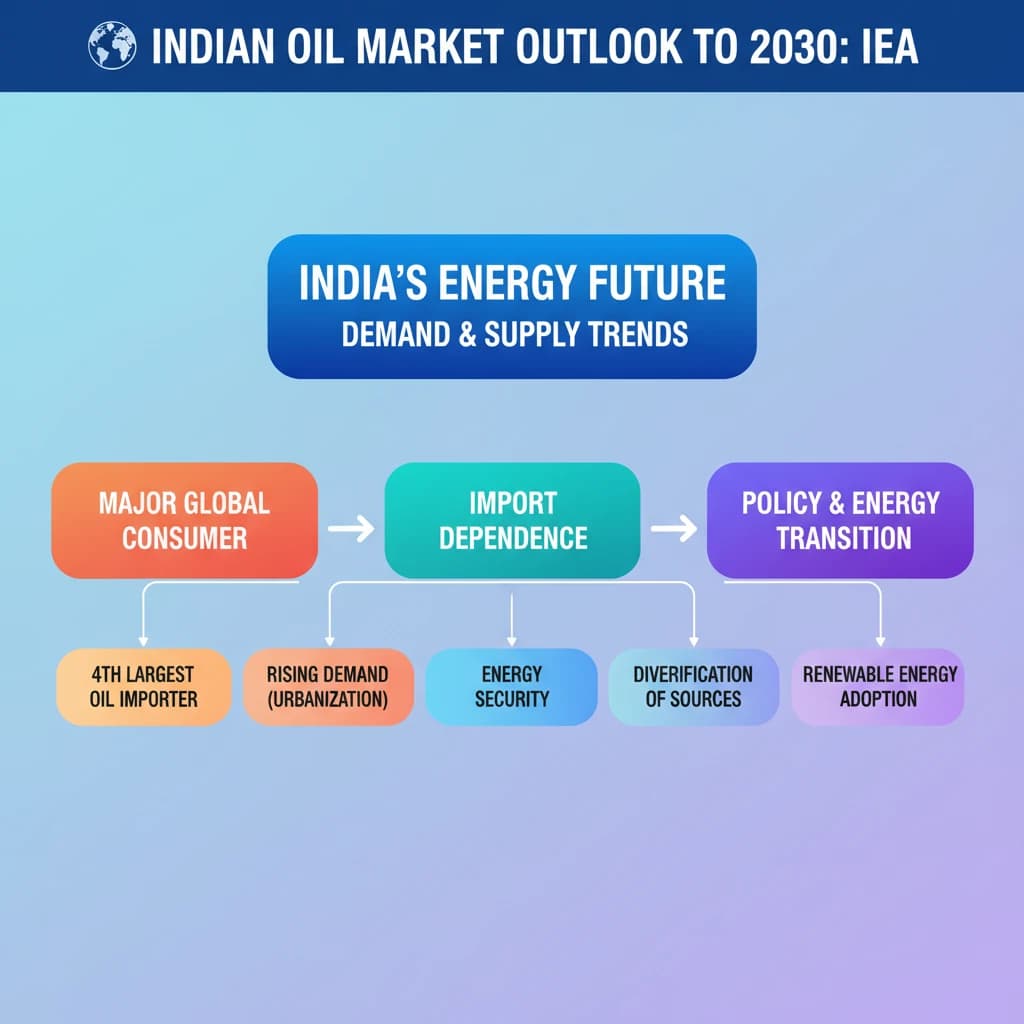
- •The IEA's 'Indian Oil Market Outlook to 2030' forecasts India's oil demand and supply trends.
- •India is a major global oil consumer and highly import-dependent, making such reports crucial for policy.
- •The outlook informs strategies for energy security, refining capacity expansion, and energy transition.
- •It highlights the need for diversification of oil sources and accelerated adoption of renewable energy.
- •Understanding IEA projections is vital for UPSC topics like energy security, climate change, and economic planning.
🧠 Memory Techniques
95% Verified Content
📚 Reference Sources
•Ministry of Petroleum and Natural Gas, Government of India reports
•NITI Aayog energy policy documents
•Economic Survey of India