Loading page, please wait…
India’s Concerns on EU’s CBAM and Deforestation Norms - UPSC Economy
What is India’s Concerns on EU’s CBAM and Deforestation Norms in UPSC Economy?
India’s Concerns on EU’s CBAM and Deforestation Norms is a key topic under Economy for UPSC Civil Services Examination. Key points include: India views EU's CBAM and EUDR as unilateral trade barriers.. CBAM aims to price carbon emissions in imported goods to the EU.. EUDR requires proof that products are not linked to recent deforestation.. Understanding this topic is essential for both UPSC Prelims and Mains preparation.
Why is India’s Concerns on EU’s CBAM and Deforestation Norms important for UPSC exam?
India’s Concerns on EU’s CBAM and Deforestation Norms is a Medium-level topic in UPSC Economy. It is tested in both Prelims (factual MCQs) and Mains (analytical answer writing). Previous year UPSC questions have frequently covered aspects of India’s Concerns on EU’s CBAM and Deforestation Norms, making it essential for comprehensive IAS preparation.
How to prepare India’s Concerns on EU’s CBAM and Deforestation Norms for UPSC?
To prepare India’s Concerns on EU’s CBAM and Deforestation Norms for UPSC: (1) Study the comprehensive notes covering all key concepts on Vaidra. (2) Practice previous year questions on this topic. (3) Connect it with current affairs using daily updates. (4) Revise using key takeaways and mind maps available for Economy. (5) Write practice answers linking India’s Concerns on EU’s CBAM and Deforestation Norms to related GS Paper topics.
Key takeaways of India’s Concerns on EU’s CBAM and Deforestation Norms for UPSC
- India views EU's CBAM and EUDR as unilateral trade barriers.
- CBAM aims to price carbon emissions in imported goods to the EU.
- EUDR requires proof that products are not linked to recent deforestation.
- Both regulations pose compliance challenges and potential cost increases for Indian exporters.
- India is engaging diplomatically and considering WTO challenges.
- These measures highlight the growing intersection of trade and environmental policy.
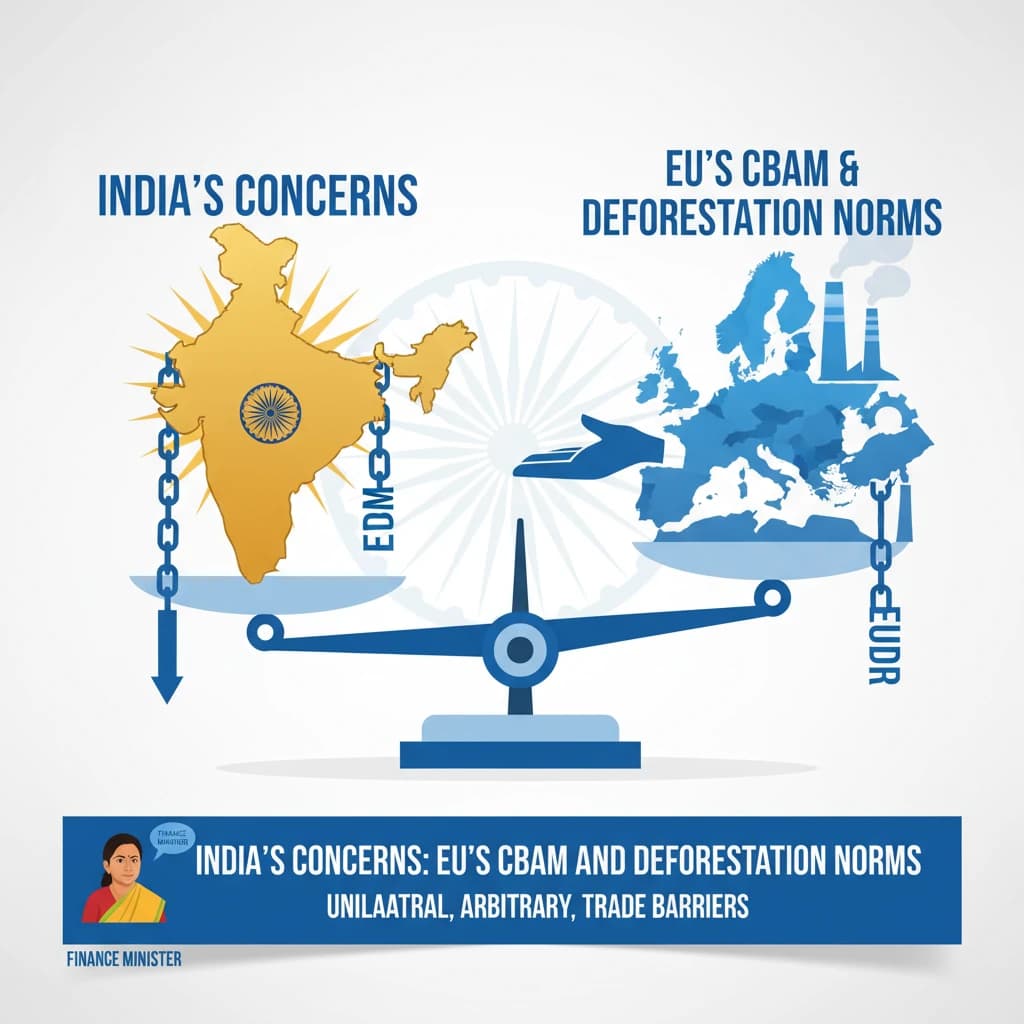
India’s Concerns on EU’s CBAM and Deforestation Norms
Medium⏱️ 7 min read
economy
📖 Introduction
India's Concerns: EU's CBAM and Deforestation Norms
India has expressed significant apprehension regarding two major European Union initiatives: the Carbon Border Adjustment Mechanism (CBAM) and the European Union Deforestation Regulation (EUDR).
India's Finance Minister has characterized these measures as unilateral, arbitrary, and essentially trade barriers designed to negatively impact Indian industries.
Understanding the Carbon Border Adjustment Mechanism (CBAM)
The Carbon Border Adjustment Mechanism (CBAM) is a key instrument of the EU aimed at leveling the playing field regarding carbon emissions.
Its primary goal is to impose a fair price on the carbon emissions embedded in the production of certain carbon-intensive goods imported into the EU.
This mechanism also seeks to encourage cleaner industrial production practices in non-EU countries by incentivizing them to reduce their carbon footprint.
Understanding the European Union Deforestation Regulation (EUDR)
The European Union Deforestation Regulation (EUDR) mandates stringent requirements for operators and traders.
Those placing specified commodities on the EU market or exporting them must provide verifiable proof.
This proof must demonstrate that their products do not originate from recently deforested land and do not contribute to forest degradation.
Key Point: Both CBAM and EUDR are perceived by India as protectionist measures, potentially hindering its export competitiveness and violating principles of free and fair trade.
⚡️ UPSC Insight: Questions on international trade regulations, environmental diplomacy, and their impact on India's economy are common in GS-II and GS-III. Understand the implications for India's export sectors.
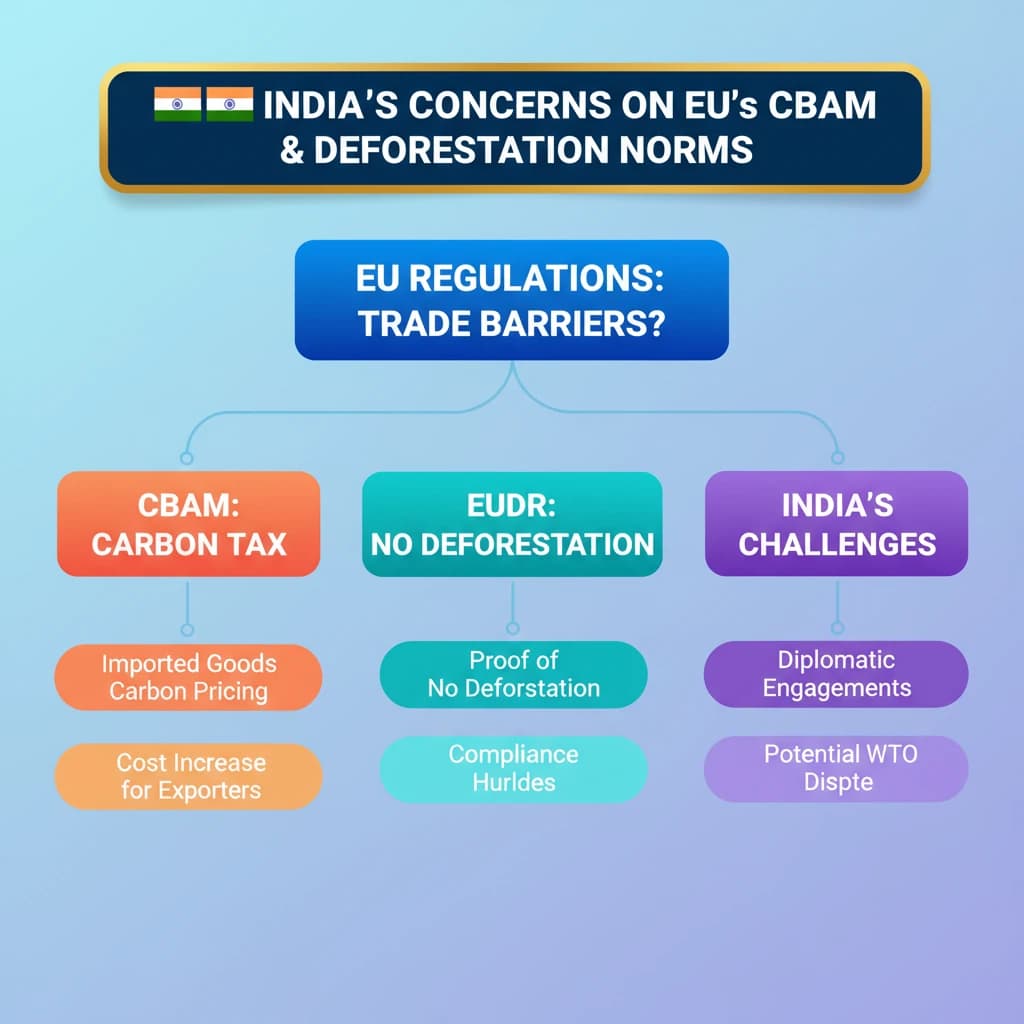
💡 Key Takeaways
- •India views EU's CBAM and EUDR as unilateral trade barriers.
- •CBAM aims to price carbon emissions in imported goods to the EU.
- •EUDR requires proof that products are not linked to recent deforestation.
- •Both regulations pose compliance challenges and potential cost increases for Indian exporters.
- •India is engaging diplomatically and considering WTO challenges.
- •These measures highlight the growing intersection of trade and environmental policy.
🧠 Memory Techniques
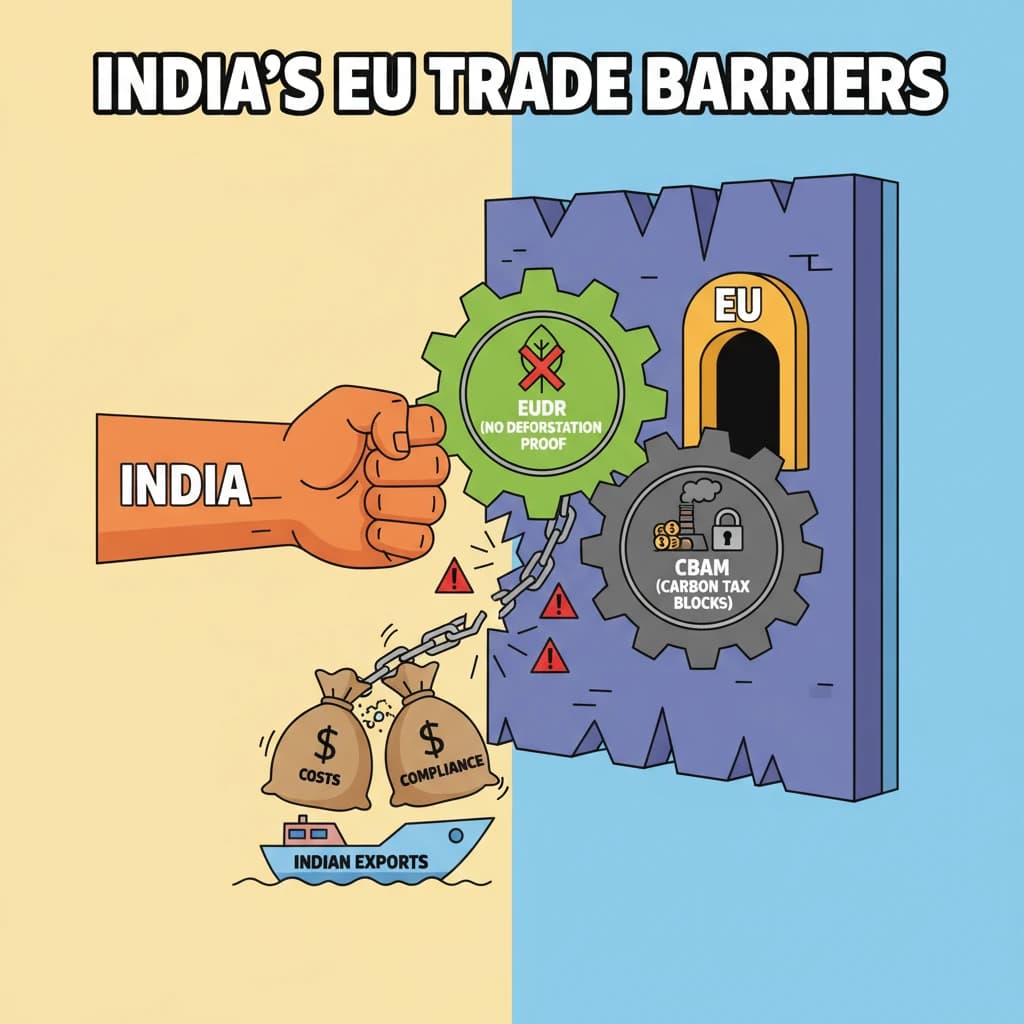
90% Verified Content
📚 Reference Sources
•European Commission Official Websites (for CBAM and EUDR details)