Loading page, please wait…
India's Economic Rise: Key Drivers - Recovery, Demographics, & Diplomacy - UPSC Economy
What is India's Economic Rise: Key Drivers - Recovery, Demographics, & Diplomacy in UPSC Economy?
India's Economic Rise: Key Drivers - Recovery, Demographics, & Diplomacy is a key topic under Economy for UPSC Civil Services Examination. Key points include: India shows strong post-pandemic recovery with a 4.2-point rise in Economic Capability.. Future Resources score increased by 8.2 points, signaling significant demographic dividend potential.. India's non-aligned strategy enables navigation of complex global dynamics.. Understanding this topic is essential for both UPSC Prelims and Mains preparation.
Why is India's Economic Rise: Key Drivers - Recovery, Demographics, & Diplomacy important for UPSC exam?
India's Economic Rise: Key Drivers - Recovery, Demographics, & Diplomacy is a Medium-level topic in UPSC Economy. It is tested in both Prelims (factual MCQs) and Mains (analytical answer writing). Previous year UPSC questions have frequently covered aspects of India's Economic Rise: Key Drivers - Recovery, Demographics, & Diplomacy, making it essential for comprehensive IAS preparation.
How to prepare India's Economic Rise: Key Drivers - Recovery, Demographics, & Diplomacy for UPSC?
To prepare India's Economic Rise: Key Drivers - Recovery, Demographics, & Diplomacy for UPSC: (1) Study the comprehensive notes covering all key concepts on Vaidra. (2) Practice previous year questions on this topic. (3) Connect it with current affairs using daily updates. (4) Revise using key takeaways and mind maps available for Economy. (5) Write practice answers linking India's Economic Rise: Key Drivers - Recovery, Demographics, & Diplomacy to related GS Paper topics.
Key takeaways of India's Economic Rise: Key Drivers - Recovery, Demographics, & Diplomacy for UPSC
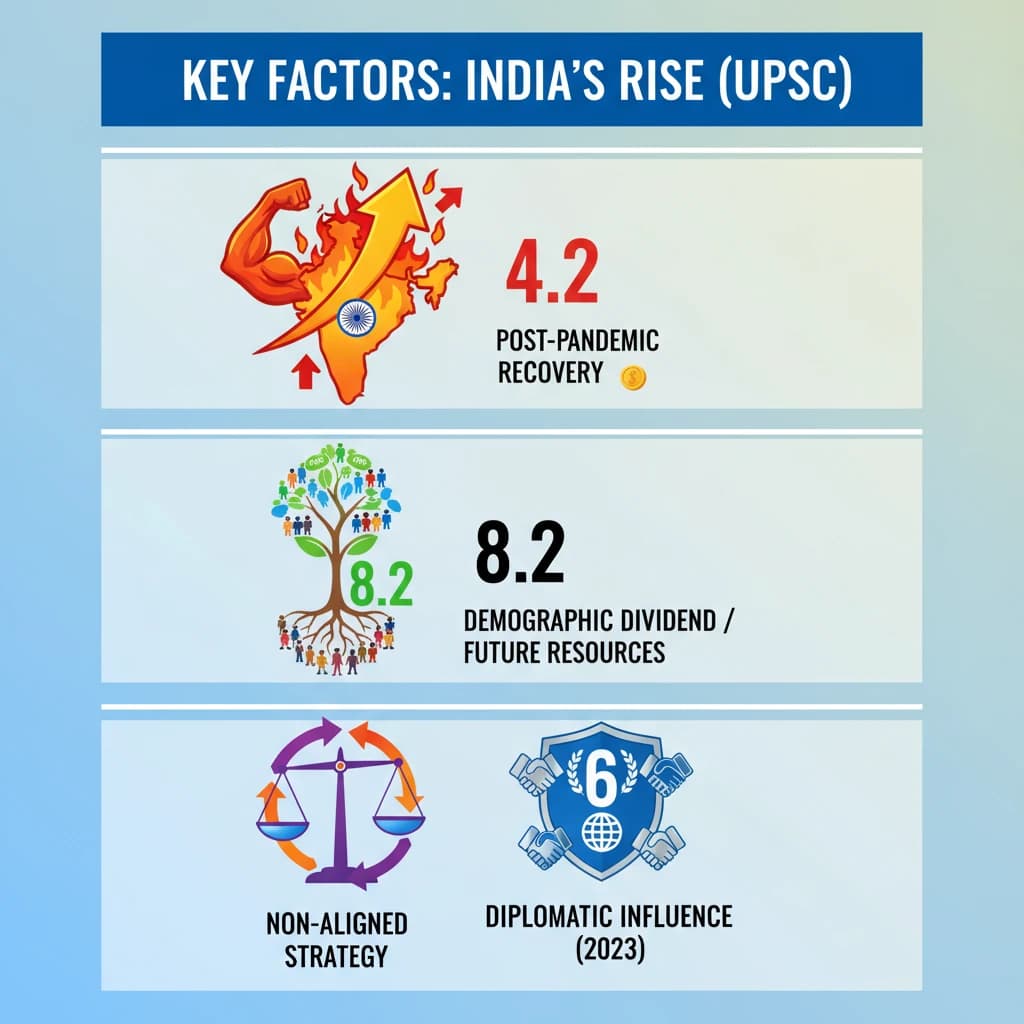
- India shows strong post-pandemic recovery with a 4.2-point rise in Economic Capability.
- Future Resources score increased by 8.2 points, signaling significant demographic dividend potential.
- India's non-aligned strategy enables navigation of complex global dynamics.
- Ranked 6th in diplomatic influence in 2023, showcasing active multilateral role.
- Sustained economic growth and strategic foreign policy are key pillars of India's rise.
India's Economic Rise: Key Drivers - Recovery, Demographics, & Diplomacy
Medium⏱️ 10 min read
economy
📖 Introduction
India's Economic Resurgence Post-Pandemic
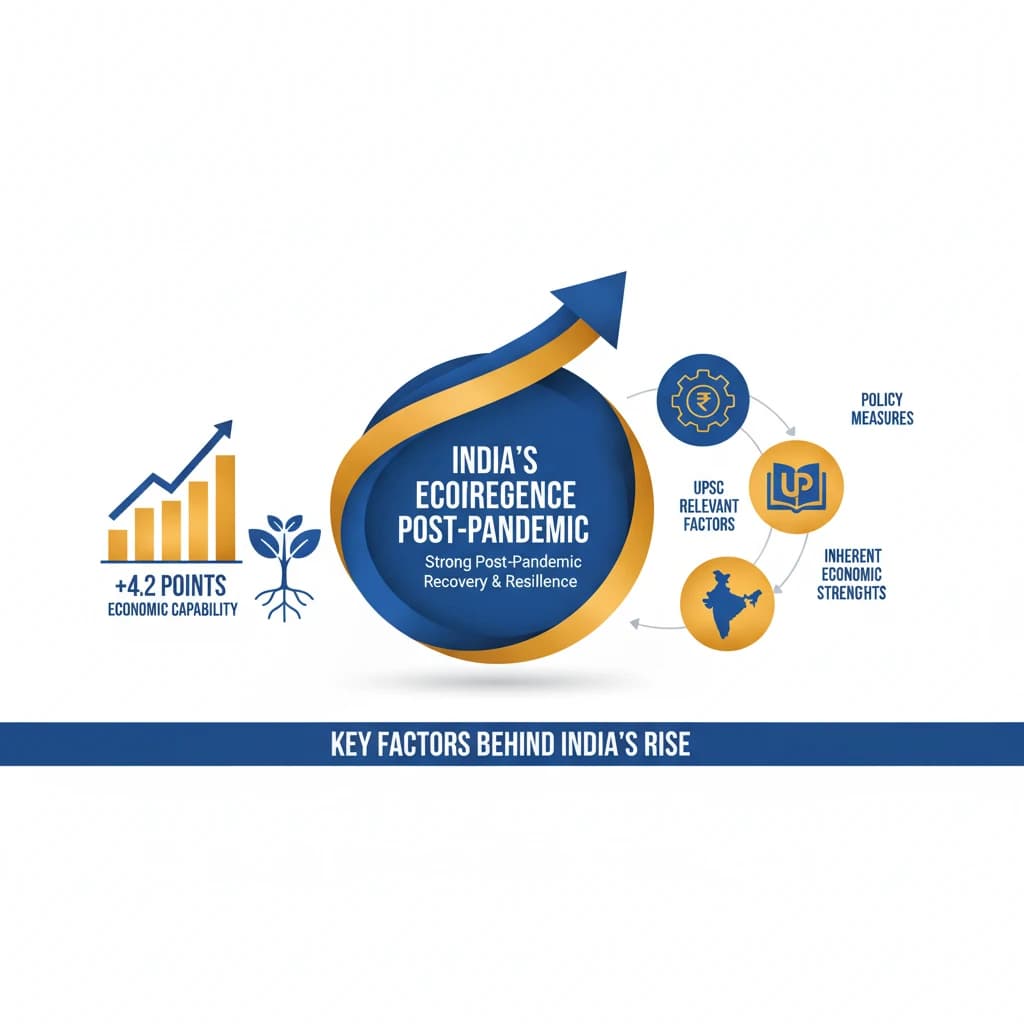
India has demonstrated a strong post-pandemic recovery, showcasing remarkable resilience in its economic performance. This resurgence is a testament to various policy measures and inherent economic strengths.
India's Economic Capability has seen a significant increase of 4.2 points. This metric reflects the nation's overall capacity to generate wealth and sustain growth.
Boosting Future Resources and Demographic Dividend
The nation's potential for future growth is further highlighted by an increase in its Future Resources score. This indicates a robust outlook for long-term economic prospects.
The Future Resources score for India increased by an impressive 8.2 points. This substantial rise signals the strong potential of India's demographic dividend.
The demographic dividend refers to the economic growth potential that can result from shifts in a population’s age structure, primarily when the share of the working-age population (15 to 64 years) is larger than the non-working-age share.
Non-Aligned Strategy and Global Diplomatic Influence
India's foreign policy, characterized by its non-aligned strategy, has proven instrumental in navigating the intricate landscape of complex global dynamics. This approach allows India to maintain autonomy in its international relations.
In 2023, India achieved a significant milestone, ranking 6th in diplomatic influence globally. This high ranking underscores its growing stature on the international stage.
This strong diplomatic standing showcases India's active role in multilateral forums, where it contributes to global governance, peace, and development initiatives.
Understanding India's non-aligned strategy and its evolution is crucial for UPSC Mains GS Paper 2 (International Relations). Link it to India's strategic autonomy.
💡 Key Takeaways
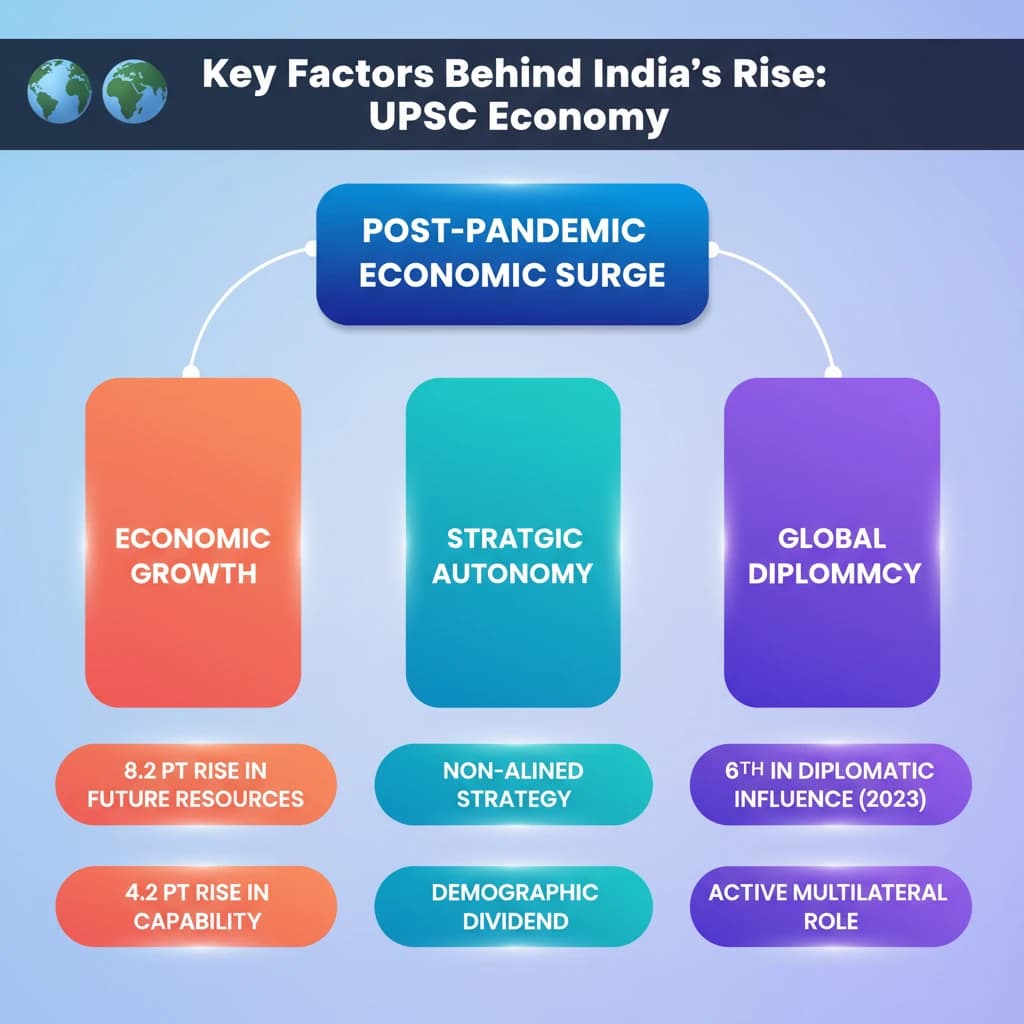
- •India shows strong post-pandemic recovery with a 4.2-point rise in Economic Capability.
- •Future Resources score increased by 8.2 points, signaling significant demographic dividend potential.
- •India's non-aligned strategy enables navigation of complex global dynamics.
- •Ranked 6th in diplomatic influence in 2023, showcasing active multilateral role.
- •Sustained economic growth and strategic foreign policy are key pillars of India's rise.
🧠 Memory Techniques
95% Verified Content
📚 Reference Sources
•International Monetary Fund (IMF) reports
•World Bank reports
•Ministry of Finance (Government of India) publications
•Ministry of External Affairs (Government of India) reports