Loading page, please wait…
Infrastructure and Development - UPSC Economy
What is Infrastructure and Development in UPSC Economy?
Infrastructure and Development is a key topic under Economy for UPSC Civil Services Examination. Key points include: Infrastructure is foundational for economic growth and social development.. India's infrastructure development has evolved from state-led to a mixed model.. Asset Monetisation (via NMP) is a key strategy to fund new infrastructure by leveraging existing assets.. Understanding this topic is essential for both UPSC Prelims and Mains preparation.
Why is Infrastructure and Development important for UPSC exam?
Infrastructure and Development is a Medium-level topic in UPSC Economy. It is tested in both Prelims (factual MCQs) and Mains (analytical answer writing). Previous year UPSC questions have frequently covered aspects of Infrastructure and Development, making it essential for comprehensive IAS preparation.
How to prepare Infrastructure and Development for UPSC?
To prepare Infrastructure and Development for UPSC: (1) Study the comprehensive notes covering all key concepts on Vaidra. (2) Practice previous year questions on this topic. (3) Connect it with current affairs using daily updates. (4) Revise using key takeaways and mind maps available for Economy. (5) Write practice answers linking Infrastructure and Development to related GS Paper topics.
Key takeaways of Infrastructure and Development for UPSC
- Infrastructure is foundational for economic growth and social development.
- India's infrastructure development has evolved from state-led to a mixed model.
- Asset Monetisation (via NMP) is a key strategy to fund new infrastructure by leveraging existing assets.
- PM Gati Shakti ensures integrated planning and execution of infrastructure projects.
- Robust infrastructure improves competitiveness, reduces logistics costs, and attracts investment.
Infrastructure and Development
Medium⏱️ 12 min read
economy
📖 Introduction
Understanding Infrastructure and Development
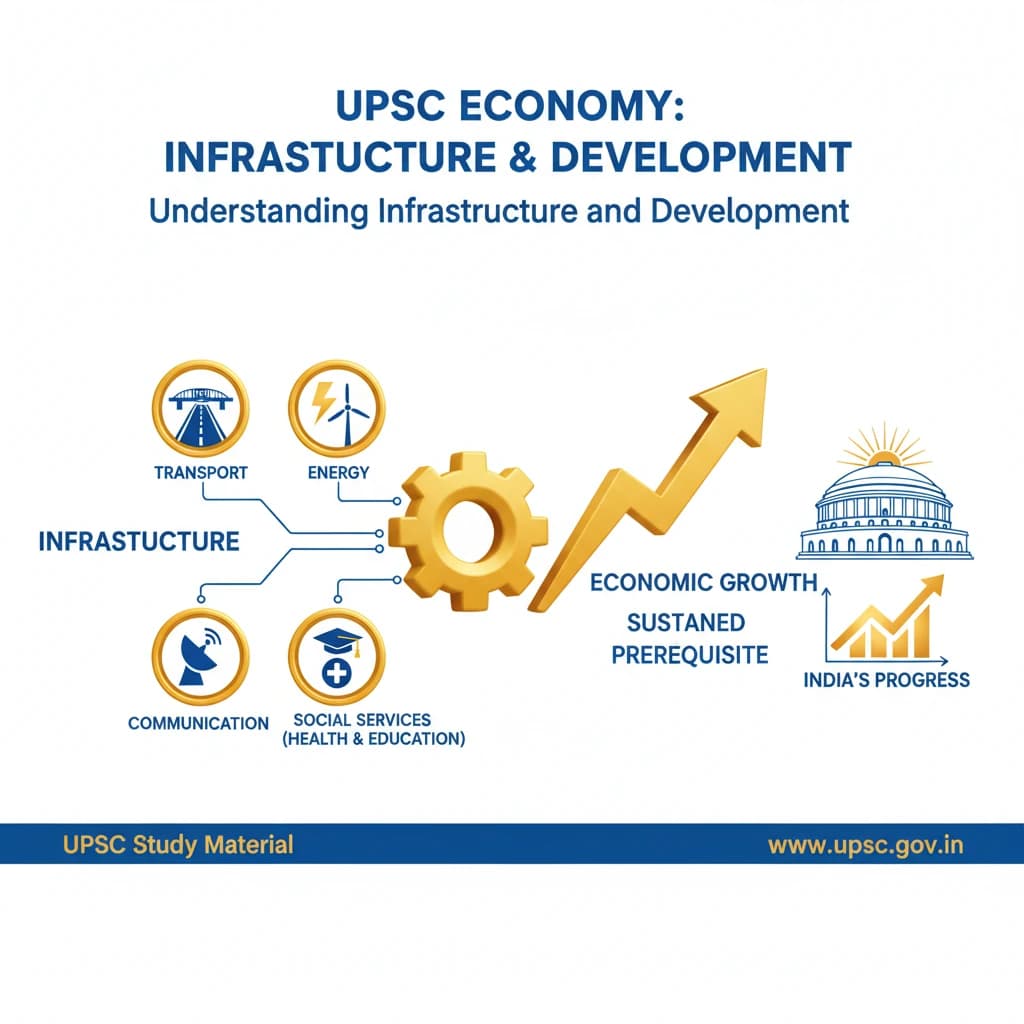
Infrastructure refers to the fundamental facilities and systems serving a country, city, or area, including the services and facilities necessary for its economy to function. It encompasses a wide range of sectors such as transport, energy, communication, and social services like health and education.
The development of robust infrastructure is a critical prerequisite for sustained economic growth and social progress. It facilitates trade, attracts investment, creates employment, and improves the overall quality of life for citizens.
Key Infrastructure Sectors:
- Economic Infrastructure: Roads, railways, ports, airports, power, telecommunications, irrigation.
- Social Infrastructure: Education, healthcare, sanitation, housing, water supply.
Infrastructure Development in India
India has historically faced significant challenges in developing adequate infrastructure to support its large and growing population and economy. Post-independence, various Five-Year Plans focused on building foundational infrastructure, primarily through public sector investments.
In recent decades, there has been a growing emphasis on accelerating infrastructure development through a mix of public, private, and hybrid financing models. Initiatives like the National Infrastructure Pipeline (NIP) and PM Gati Shakti aim to streamline planning and execution.
Importance of Infrastructure for India:
- Boosts manufacturing and services sectors.
- Enhances connectivity and reduces logistics costs.
- Attracts Foreign Direct Investment (FDI).
- Generates large-scale employment opportunities.
- Improves access to essential social services.
Raising of Asset Monetisation Target
Asset Monetisation is a strategy employed by the government to unlock the value of underutilised or non-core public assets. Instead of selling assets, it involves transferring revenue rights to private parties for a specified transaction period in return for an upfront payment, a revenue share, or investment in the asset.
The Indian government has set ambitious targets for asset monetisation, particularly through the National Monetisation Pipeline (NMP). This initiative aims to generate significant resources for new infrastructure creation by leveraging existing brownfield assets.
UPSC often asks about innovative financing mechanisms for infrastructure. Understanding asset monetisation, its objectives, and challenges is crucial for both Prelims and Mains, especially in GS Paper III (Economy).
The core objective of increasing the asset monetisation target is to bridge the infrastructure funding gap. It seeks to bring in private sector efficiency, technology, and capital into the operation and maintenance of public assets, while the ownership remains with the government.
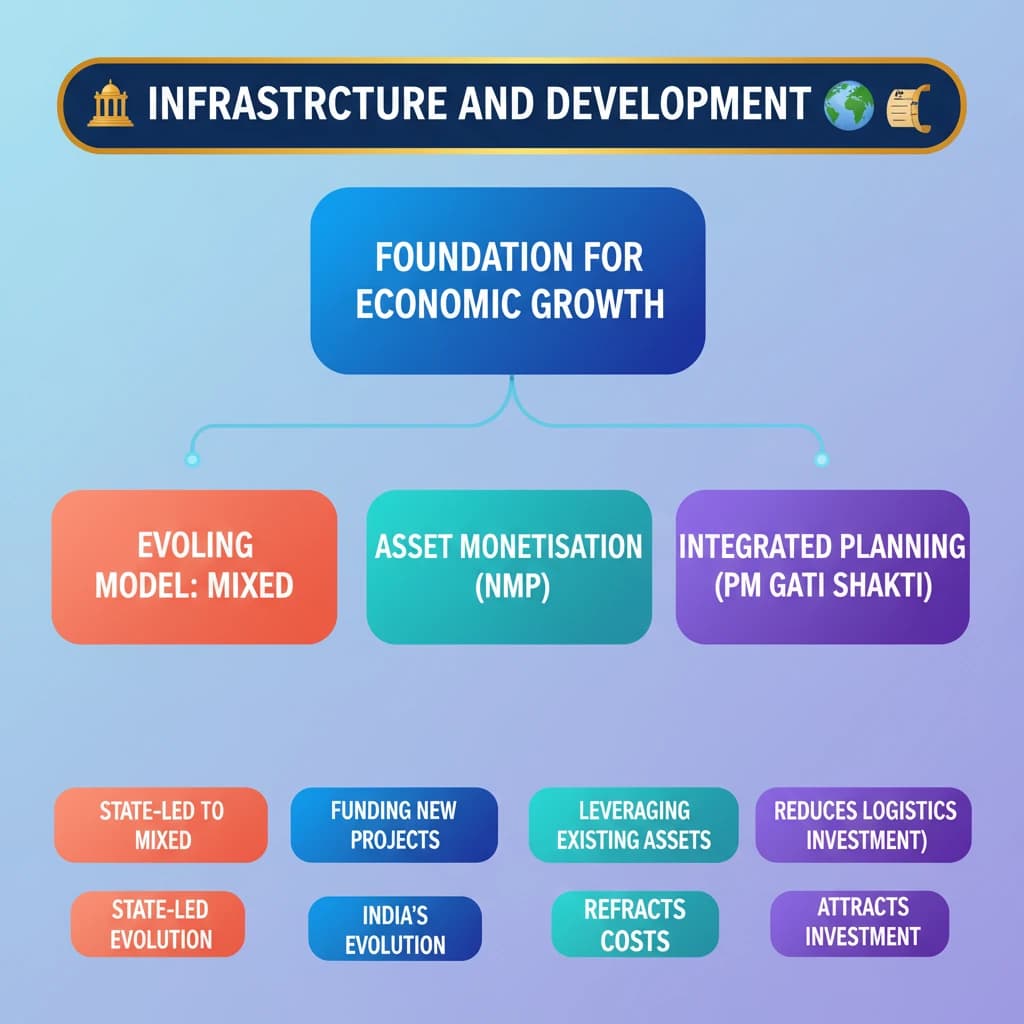
💡 Key Takeaways
- •Infrastructure is foundational for economic growth and social development.
- •India's infrastructure development has evolved from state-led to a mixed model.
- •Asset Monetisation (via NMP) is a key strategy to fund new infrastructure by leveraging existing assets.
- •PM Gati Shakti ensures integrated planning and execution of infrastructure projects.
- •Robust infrastructure improves competitiveness, reduces logistics costs, and attracts investment.
🧠 Memory Techniques

95% Verified Content
📚 Reference Sources
•Ministry of Finance, Government of India (Economic Survey)
•Press Information Bureau (PIB) releases on PM Gati Shakti
•Reserve Bank of India (RBI) publications on infrastructure financing