Loading page, please wait…
Insurance Sector in India - UPSC Economy
What is Insurance Sector in India in UPSC Economy?
Insurance Sector in India is a key topic under Economy for UPSC Civil Services Examination. Key points include: India is the 10th largest insurance market globally, 2nd among emerging markets, with 1.9% share.. Projected to be the fastest-growing insurance market by IRDAI, reaching USD 222 billion by 2026.. Insurance density increased from USD 11.1 (2001) to USD 92 (2022); life insurance at USD 70, non-life at USD 22.. Understanding this topic is essential for both UPSC Prelims and Mains preparation.
Why is Insurance Sector in India important for UPSC exam?
Insurance Sector in India is a Medium-level topic in UPSC Economy. It is tested in both Prelims (factual MCQs) and Mains (analytical answer writing). Previous year UPSC questions have frequently covered aspects of Insurance Sector in India, making it essential for comprehensive IAS preparation.
How to prepare Insurance Sector in India for UPSC?
To prepare Insurance Sector in India for UPSC: (1) Study the comprehensive notes covering all key concepts on Vaidra. (2) Practice previous year questions on this topic. (3) Connect it with current affairs using daily updates. (4) Revise using key takeaways and mind maps available for Economy. (5) Write practice answers linking Insurance Sector in India to related GS Paper topics.
Key takeaways of Insurance Sector in India for UPSC
- India is the 10th largest insurance market globally, 2nd among emerging markets, with 1.9% share.
- Projected to be the fastest-growing insurance market by IRDAI, reaching USD 222 billion by 2026.
- Insurance density increased from USD 11.1 (2001) to USD 92 (2022); life insurance at USD 70, non-life at USD 22.
- Insurance penetration rose from 2.7% (2000) to 4% (2022).
- Received ~Rs. 54,000 crore (USD 6.5 billion) in FDI between 2014-23.
- Key metrics: Insurance density (premium per person) and Insurance penetration (premium as % of GDP).
Insurance Sector in India
Medium⏱️ 8 min read
economy
📖 Introduction
Introduction to India's Insurance Sector
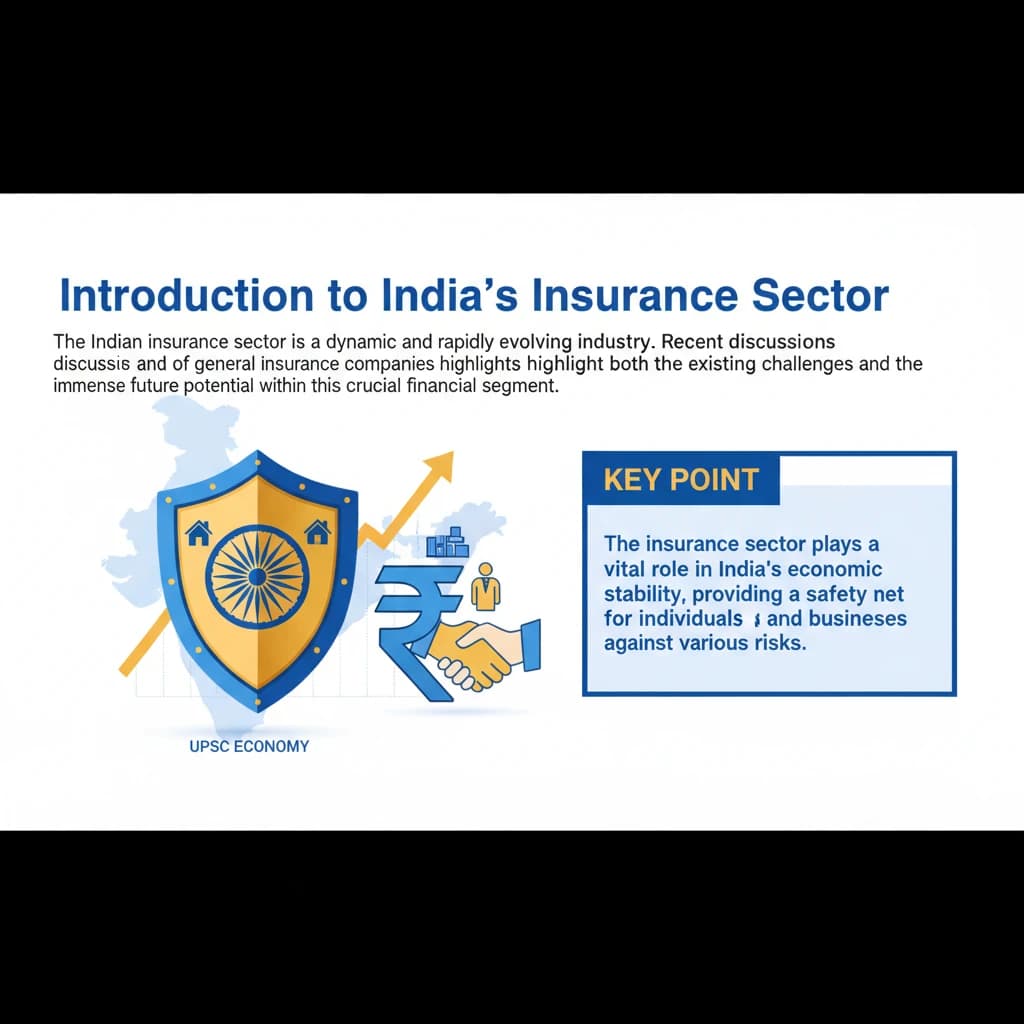
The Indian insurance sector is a dynamic and rapidly evolving industry. Recent discussions among heads of general insurance companies highlight both the existing challenges and the immense future potential within this crucial financial segment.
The insurance sector plays a vital role in India's economic stability, providing a safety net for individuals and businesses against various risks.
Global Market Position
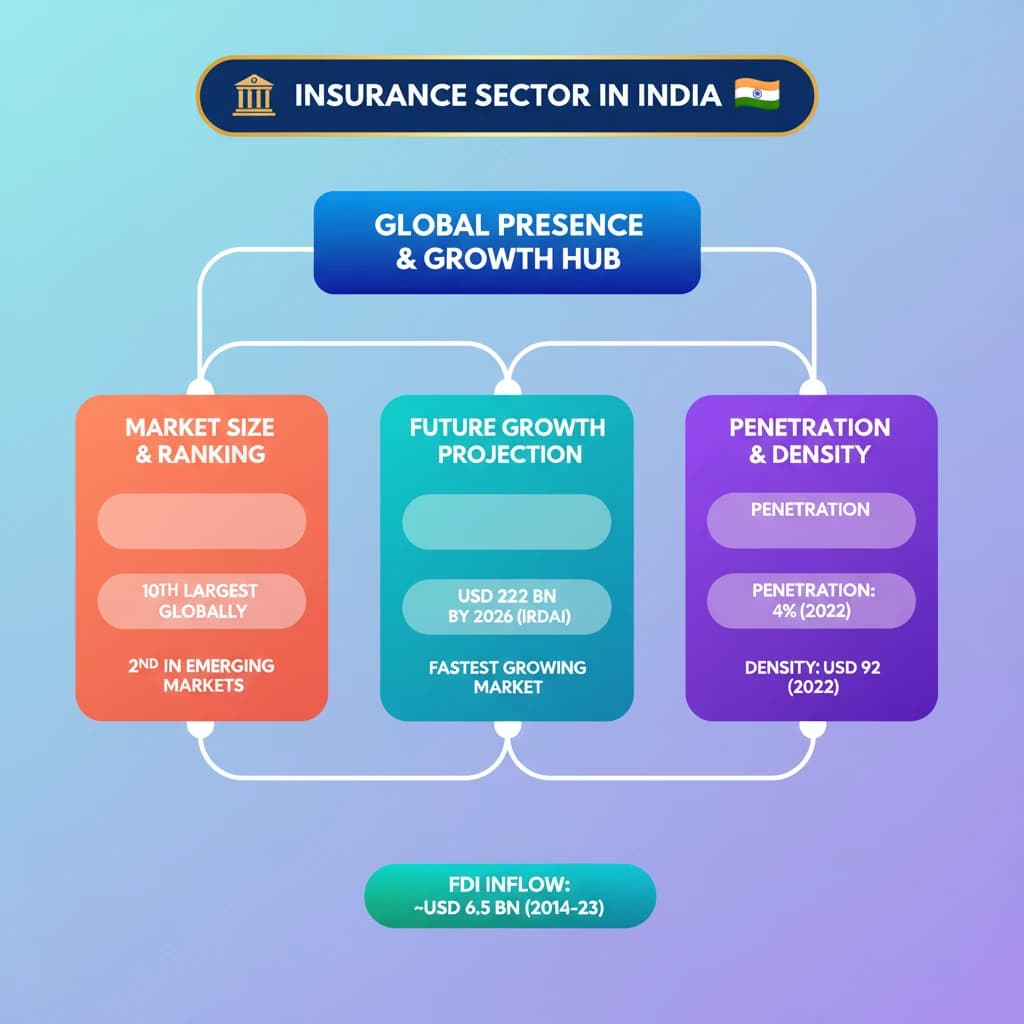
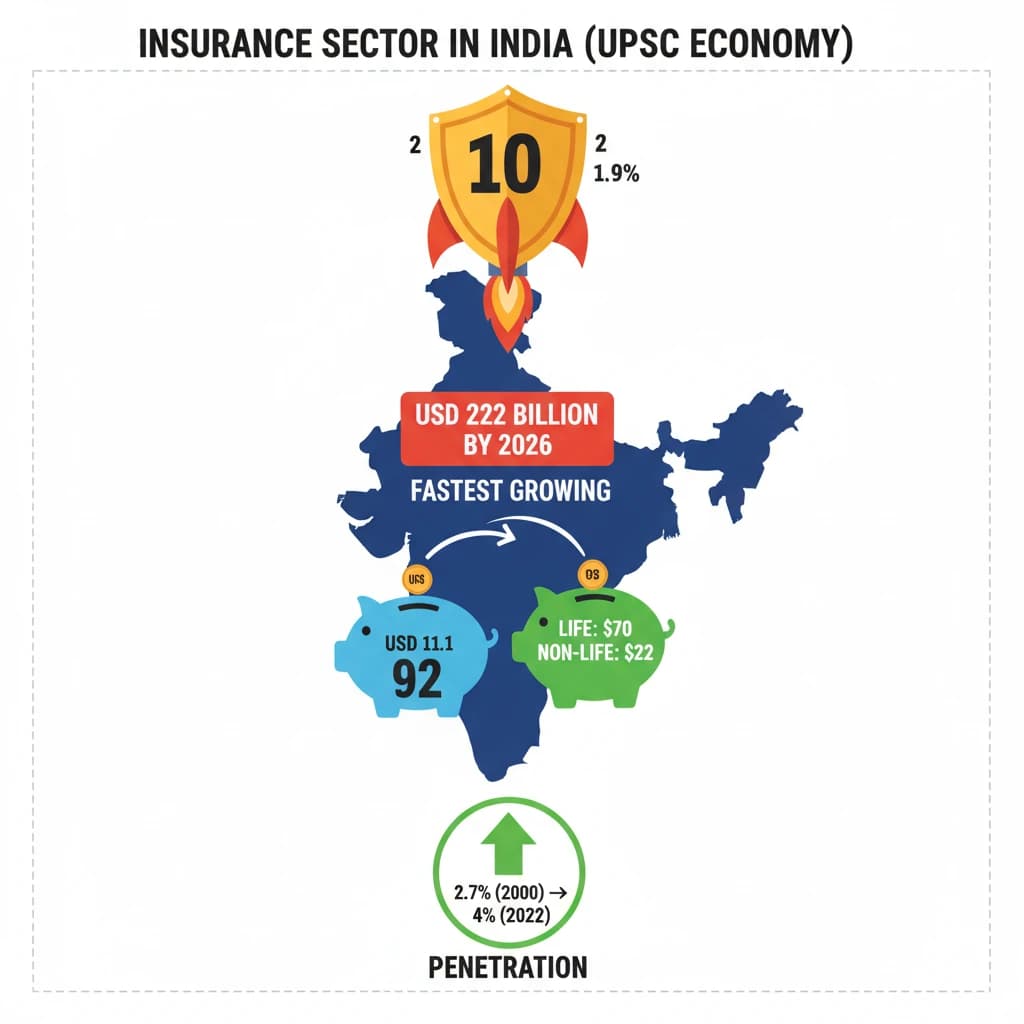
India holds a significant position in the global insurance landscape. It is currently ranked as the 10th largest insurance market worldwide.
Among emerging markets, India's standing is even more prominent, securing the 2nd largest position. Its estimated global market share is approximately 1.9%.
Future Potential and Growth Trajectory
The Insurance Regulatory and Development Authority of India (IRDAI) projects a robust future for the sector. India is anticipated to become the fastest-growing insurance market globally within the next decade.
This projected growth is expected to outpace developed economies such as Germany, Canada, Italy, and South Korea.
Market Size Projection
The overall size of the Indian insurance market is set for substantial expansion. It is projected to reach an impressive USD 222 billion by 2026.
Understanding Insurance Density
Insurance density is a key metric that measures the average insurance premium per person in a country. It indicates the level of insurance penetration relative to the population's economic capacity.
India's insurance density has shown remarkable growth, increasing from USD 11.1 in 2001 to USD 92 in 2022.
- Life insurance density contributed USD 70 to this figure.
- Non-life insurance density accounted for USD 22.
Understanding Insurance Penetration
Insurance penetration is another critical indicator, defined as the total insurance premiums as a percentage of a country's Gross Domestic Product (GDP). It reflects the extent to which insurance is utilized within the economy.
India's insurance penetration has steadily improved, rising from 2.7% in 2000 to 4% in 2022.
Foreign Direct Investment (FDI) in Insurance
The Indian insurance sector has attracted significant foreign capital, underscoring its appeal to international investors. Foreign Direct Investment (FDI) plays a crucial role in injecting capital and expertise into the industry.
Between 2014 and 2023, the sector received nearly Rs. 54,000 crore (USD 6.5 billion) in FDI.
For UPSC, understanding the difference between insurance density and insurance penetration, along with their trends, is crucial for both Prelims (factual questions) and Mains (economic analysis). Note the growth figures and India's global standing.
💡 Key Takeaways
- •India is the 10th largest insurance market globally, 2nd among emerging markets, with 1.9% share.
- •Projected to be the fastest-growing insurance market by IRDAI, reaching USD 222 billion by 2026.
- •Insurance density increased from USD 11.1 (2001) to USD 92 (2022); life insurance at USD 70, non-life at USD 22.
- •Insurance penetration rose from 2.7% (2000) to 4% (2022).
- •Received ~Rs. 54,000 crore (USD 6.5 billion) in FDI between 2014-23.
- •Key metrics: Insurance density (premium per person) and Insurance penetration (premium as % of GDP).
🧠 Memory Techniques
95% Verified Content
📚 Reference Sources
•Insurance Regulatory and Development Authority of India (IRDAI) Annual Reports (general knowledge for figures and projections)