Loading page, please wait…
Maritime Vision 2047 - UPSC Economy
What is Maritime Vision 2047 in UPSC Economy?
Maritime Vision 2047 is a key topic under Economy for UPSC Civil Services Examination. Key points include: Maritime Vision 2047 aims for India to be a top maritime nation by 2047, targeting ports, cargo, ship ownership, and shipbuilding.. India plans to achieve a port handling capacity of 10,000 million metric tonnes per annum by 2047.. Significant investment of Rs 80 lakh crore is planned for projects like Vizhinjam, Vadhavan, and Galathea Bay mega ports.. Understanding this topic is essential for both UPSC Prelims and Mains preparation.
Why is Maritime Vision 2047 important for UPSC exam?
Maritime Vision 2047 is a Medium-level topic in UPSC Economy. It is tested in both Prelims (factual MCQs) and Mains (analytical answer writing). Previous year UPSC questions have frequently covered aspects of Maritime Vision 2047, making it essential for comprehensive IAS preparation.
How to prepare Maritime Vision 2047 for UPSC?
To prepare Maritime Vision 2047 for UPSC: (1) Study the comprehensive notes covering all key concepts on Vaidra. (2) Practice previous year questions on this topic. (3) Connect it with current affairs using daily updates. (4) Revise using key takeaways and mind maps available for Economy. (5) Write practice answers linking Maritime Vision 2047 to related GS Paper topics.
Key takeaways of Maritime Vision 2047 for UPSC
- Maritime Vision 2047 aims for India to be a top maritime nation by 2047, targeting ports, cargo, ship ownership, and shipbuilding.
- India plans to achieve a port handling capacity of 10,000 million metric tonnes per annum by 2047.
- Significant investment of Rs 80 lakh crore is planned for projects like Vizhinjam, Vadhavan, and Galathea Bay mega ports.
- Focus on sustainable shipping with clean fuels like ammonia, hydrogen, and electricity.
- Port Turnaround Time has drastically improved from over 40 hours to 22 hours, surpassing the US and Singapore.
- Key legislative reforms (Major Port Authority Act, Inland Vessels Act, Recycling of Ships Act) are driving growth, with new bills (Coastal Shipping, Merchant Shipping) upcoming.
- National Maritime Heritage Complex at Lothal is being built to revive India's ancient shipbuilding legacy.
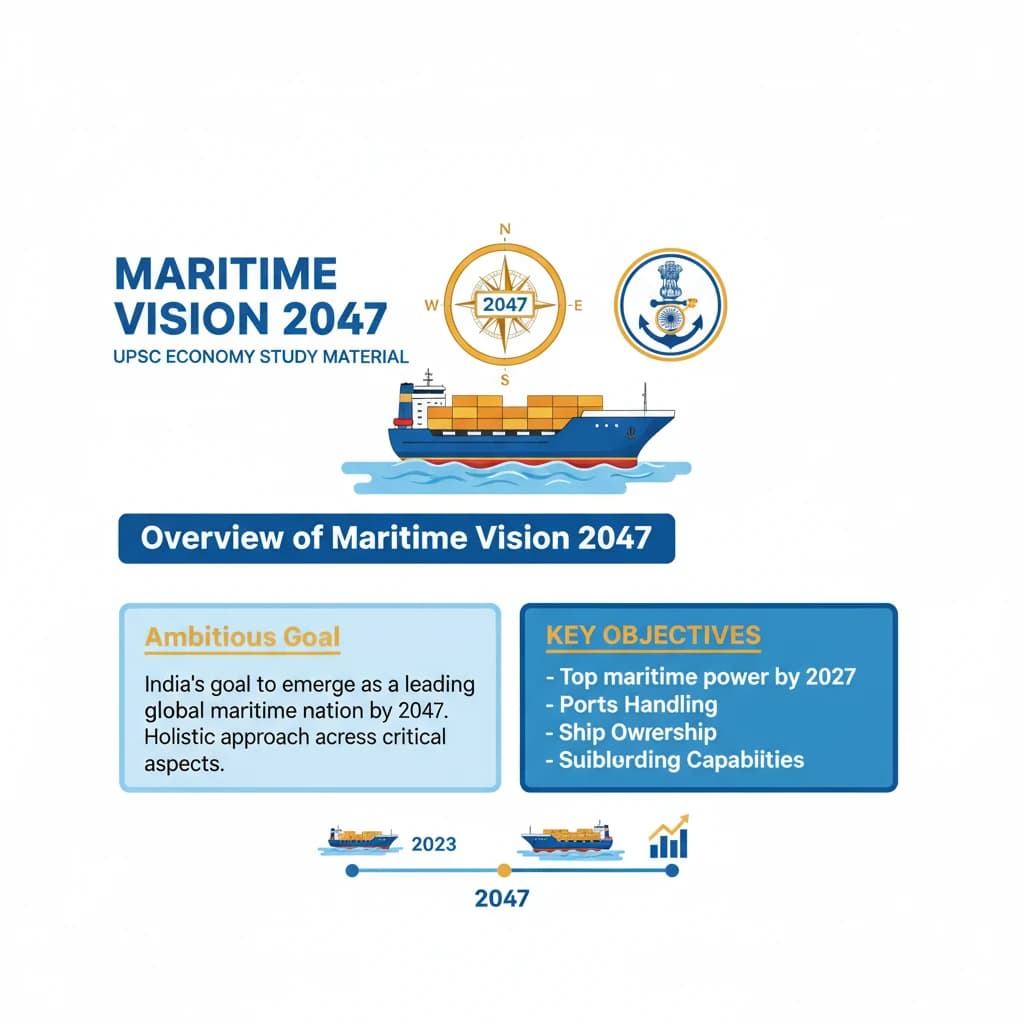
Maritime Vision 2047
Medium⏱️ 10 min read
economy
📖 Introduction
Overview of Maritime Vision 2047
The Maritime Vision 2047 outlines India's ambitious goal to emerge as a leading global maritime nation by the year 2047. This vision encompasses a holistic approach, focusing on critical aspects of the maritime sector.
The primary objective is to become a top maritime power across key indicators such as ports, cargo handling, ship ownership, shipbuilding capabilities, and comprehensive sectoral reforms.
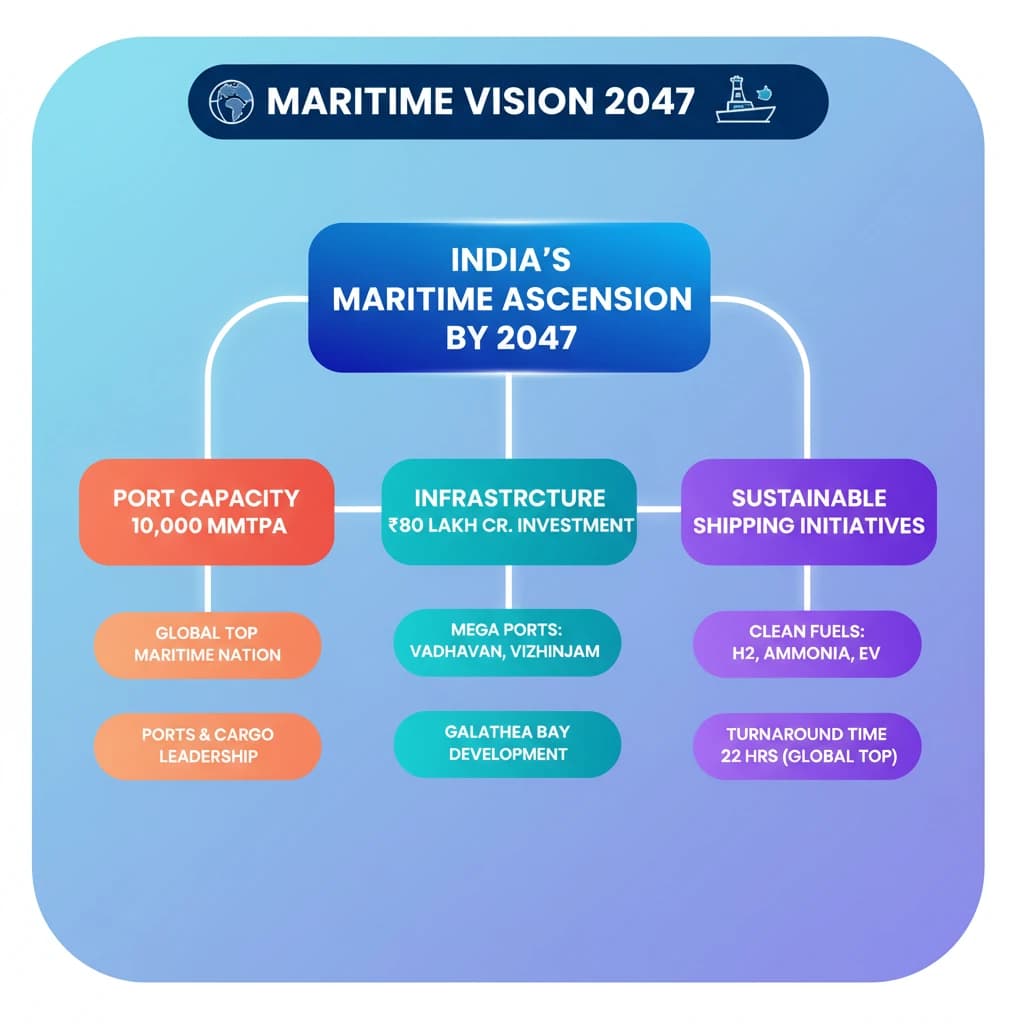
A significant target under this vision is to dramatically enhance India's port handling capacity. The aim is to achieve a capacity of 10,000 million metric tonnes per annum by 2047, reflecting a massive scale-up in infrastructure and operational efficiency.
Investment in Maritime Infrastructure
To realize these ambitious goals, India has planned substantial investments in its maritime infrastructure. A staggering Rs 80 lakh crore is earmarked for key projects across the sector.
Key infrastructure projects include:
- The development of the Vizhinjam international seaport in Kerala.
- Construction of a new mega port at Vadhavan in Maharashtra.
- Establishment of another new mega port at Galathea Bay in the Nicobar Islands.
Technological Advancements for Sustainability
The vision places a strong emphasis on environmental sustainability within the maritime sector. This involves pioneering advancements in ship propulsion technology.
Efforts are underway to build ships powered by clean fuels. These include innovative alternatives such as ammonia, hydrogen, and electricity, aligning with global efforts to reduce carbon emissions from shipping.
Operational Efficiency: Port Turnaround Time
Significant improvements have already been made in the operational efficiency of Indian ports, particularly in reducing Port Turnaround Time. This metric is crucial for global competitiveness and trade flow.
Port Turnaround Time has improved dramatically:
- Reduced from over 40 hours to just 22 hours.
- This improvement positions India favorably, surpassing countries like the US and Singapore in this specific aspect.
A Port Turnaround Time represents the total duration a ship spends in port, encompassing unloading, loading, performing other necessary operations, and preparing for its subsequent voyage.
Revamped Legislative Framework
A robust and modern legislative framework is vital for accelerating growth in the maritime sector. Several key acts have already been implemented to streamline operations and encourage development.
Existing legislative reforms include:
- The Major Port Authority Act, 2021, enhancing governance and autonomy of major ports.
- The Inland Vessels Act, 2021, modernizing regulations for inland waterways.
- The Recycling of Ships Act, 2019, promoting environmentally sound ship recycling practices.
Further legislative advancements are anticipated with the upcoming Coastal Shipping Bill, 2024, and the Merchant Shipping Bill, 2024. These bills are expected to further boost coastal shipping, shipbuilding, and ship recycling activities in India.
Preserving Maritime Legacy
The Maritime Vision 2047 also acknowledges and seeks to revive India's rich maritime history and shipbuilding heritage. This is being achieved through dedicated cultural and historical initiatives.
The National Maritime Heritage Complex is currently under construction at Lothal. This complex aims to celebrate and revive India's ancient and illustrious shipbuilding legacy, connecting the past with future aspirations.
💡 Key Takeaways
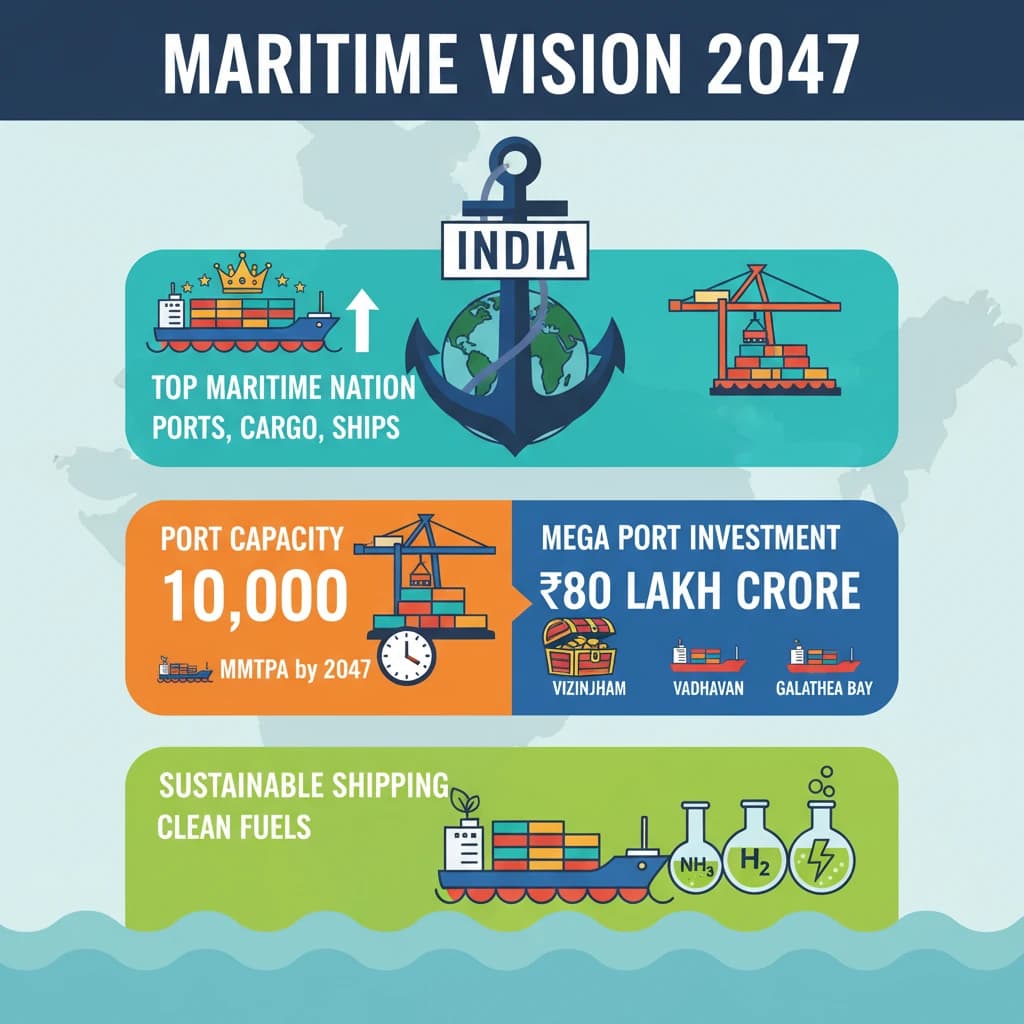
- •Maritime Vision 2047 aims for India to be a top maritime nation by 2047, targeting ports, cargo, ship ownership, and shipbuilding.
- •India plans to achieve a port handling capacity of 10,000 million metric tonnes per annum by 2047.
- •Significant investment of Rs 80 lakh crore is planned for projects like Vizhinjam, Vadhavan, and Galathea Bay mega ports.
- •Focus on sustainable shipping with clean fuels like ammonia, hydrogen, and electricity.
- •Port Turnaround Time has drastically improved from over 40 hours to 22 hours, surpassing the US and Singapore.
- •Key legislative reforms (Major Port Authority Act, Inland Vessels Act, Recycling of Ships Act) are driving growth, with new bills (Coastal Shipping, Merchant Shipping) upcoming.
- •National Maritime Heritage Complex at Lothal is being built to revive India's ancient shipbuilding legacy.
🧠 Memory Techniques
95% Verified Content
📚 Reference Sources
•Ministry of Ports, Shipping and Waterways, Government of India (Official documents and press releases)
•Press Information Bureau (PIB) releases regarding Maritime Vision 2047 and related projects