Loading page, please wait…
Mormugao Port Authority (MPA) - UPSC Economy
What is Mormugao Port Authority (MPA) in UPSC Economy?
Mormugao Port Authority (MPA) is a key topic under Economy for UPSC Civil Services Examination. Key points include: Mormugao Port was commissioned in 1888, initially for Goa's mining industry.. It was designated a Major Port in 1964, boosting iron ore exports to Japan.. A 1965 plan aimed for deep-water access to compete with Brazil and Australia.. Understanding this topic is essential for both UPSC Prelims and Mains preparation.
Why is Mormugao Port Authority (MPA) important for UPSC exam?
Mormugao Port Authority (MPA) is a Medium-level topic in UPSC Economy. It is tested in both Prelims (factual MCQs) and Mains (analytical answer writing). Previous year UPSC questions have frequently covered aspects of Mormugao Port Authority (MPA), making it essential for comprehensive IAS preparation.
How to prepare Mormugao Port Authority (MPA) for UPSC?
To prepare Mormugao Port Authority (MPA) for UPSC: (1) Study the comprehensive notes covering all key concepts on Vaidra. (2) Practice previous year questions on this topic. (3) Connect it with current affairs using daily updates. (4) Revise using key takeaways and mind maps available for Economy. (5) Write practice answers linking Mormugao Port Authority (MPA) to related GS Paper topics.
Key takeaways of Mormugao Port Authority (MPA) for UPSC
- Mormugao Port was commissioned in 1888, initially for Goa's mining industry.
- It was designated a Major Port in 1964, boosting iron ore exports to Japan.
- A 1965 plan aimed for deep-water access to compete with Brazil and Australia.
- The Harit Srey program (Oct 2023) offers discounts for green fuel vessels.
- MPA is crucial for India's maritime trade and green shipping initiatives.
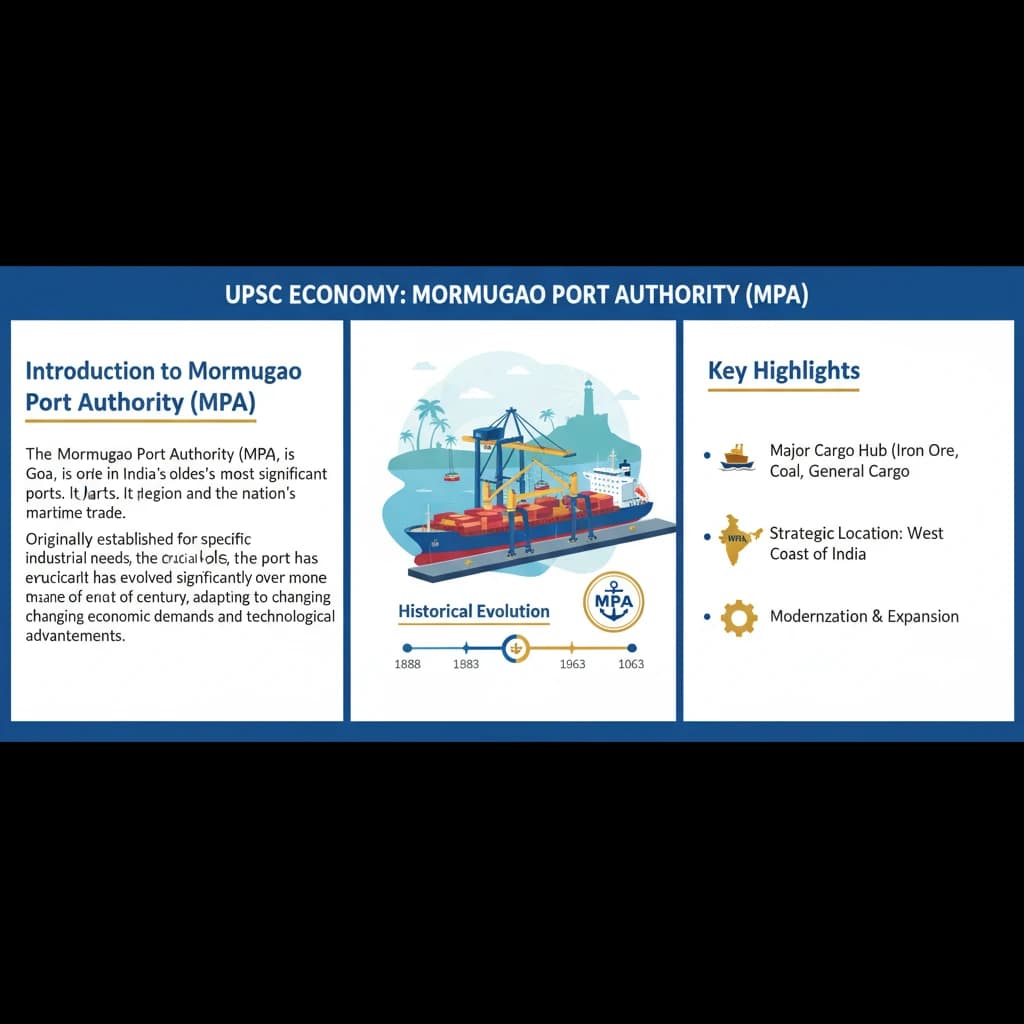
Mormugao Port Authority (MPA)
Medium⏱️ 6 min read
economy
📖 Introduction
Introduction to Mormugao Port Authority (MPA)
The Mormugao Port Authority (MPA), located in Goa, is one of India's oldest and most significant ports. It plays a crucial role in the economic landscape of the region and the nation's maritime trade.
Originally established for specific industrial needs, the port has evolved significantly over more than a century, adapting to changing economic demands and technological advancements.
Historical Development and Commissioning
The Mormugao Port was officially commissioned in 1888. Its initial development was closely linked to the burgeoning mining industry in Goa.
Commissioning Year: 1888
Primary Driver: Rise of mining as a key industry in Goa.
This led to its strategic development as an Indian ore terminal, facilitating the export of mineral resources from the region.
Designation as a Major Port
Recognizing its growing importance and strategic location, Mormugao Port was officially declared a Major Port in 1964 by the Government of India.
Major Port Designation: 1964
This status signifies its national importance and inclusion in central government development plans.
Strategic Growth Factors: Iron Ore Exports
A significant driver for the dramatic growth of Mormugao Port was the surge in iron ore exports.
This growth was particularly fueled by high Japanese demand during their period of industrial reconstruction post-World War II. India, and specifically Mormugao, became a vital supplier.
Future-Oriented Development Plans
To maintain its competitive edge and enhance capabilities, a Perspective Plan was established in 1965. This plan aimed at modernizing the port's infrastructure.
Key Objectives of 1965 Plan:
- Development for deep-water access.
- Enhancement of high-capacity loading facilities.
The goal was to enable Mormugao Port to effectively compete with global giants like Brazil and Australia in the lucrative iron ore market.
Green Transition: Harit Srey Program
In a significant move towards environmental sustainability, the Harit Srey program was launched in October 2023.
The Harit Srey program is a crucial example of India's commitment to Green Shipping, a topic often relevant for UPSC Mains GS-III (Economy, Environment).
This initiative offers substantial discounts on port charges to vessels that utilize green fuel and achieve zero emissions of harmful substances like nitrogen oxides and sulphur oxides.
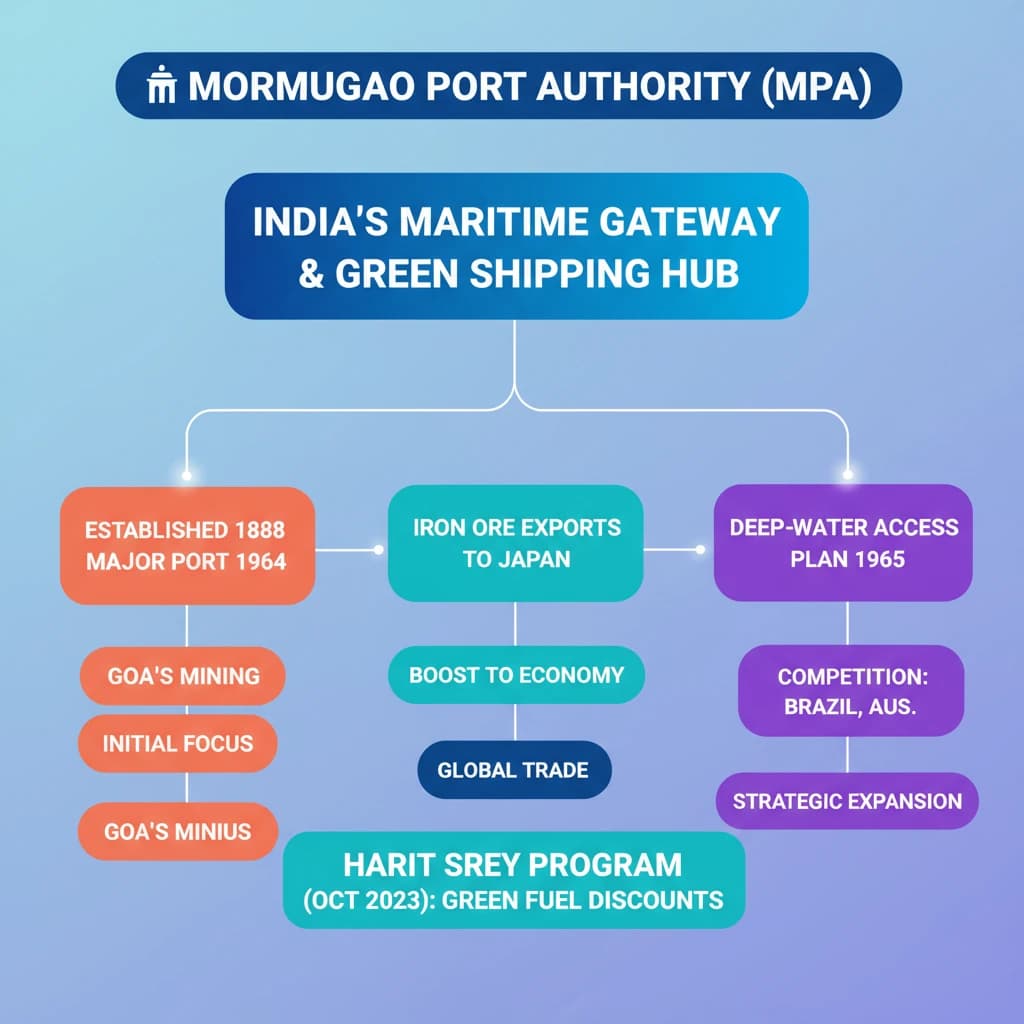
💡 Key Takeaways
- •Mormugao Port was commissioned in 1888, initially for Goa's mining industry.
- •It was designated a Major Port in 1964, boosting iron ore exports to Japan.
- •A 1965 plan aimed for deep-water access to compete with Brazil and Australia.
- •The Harit Srey program (Oct 2023) offers discounts for green fuel vessels.
- •MPA is crucial for India's maritime trade and green shipping initiatives.
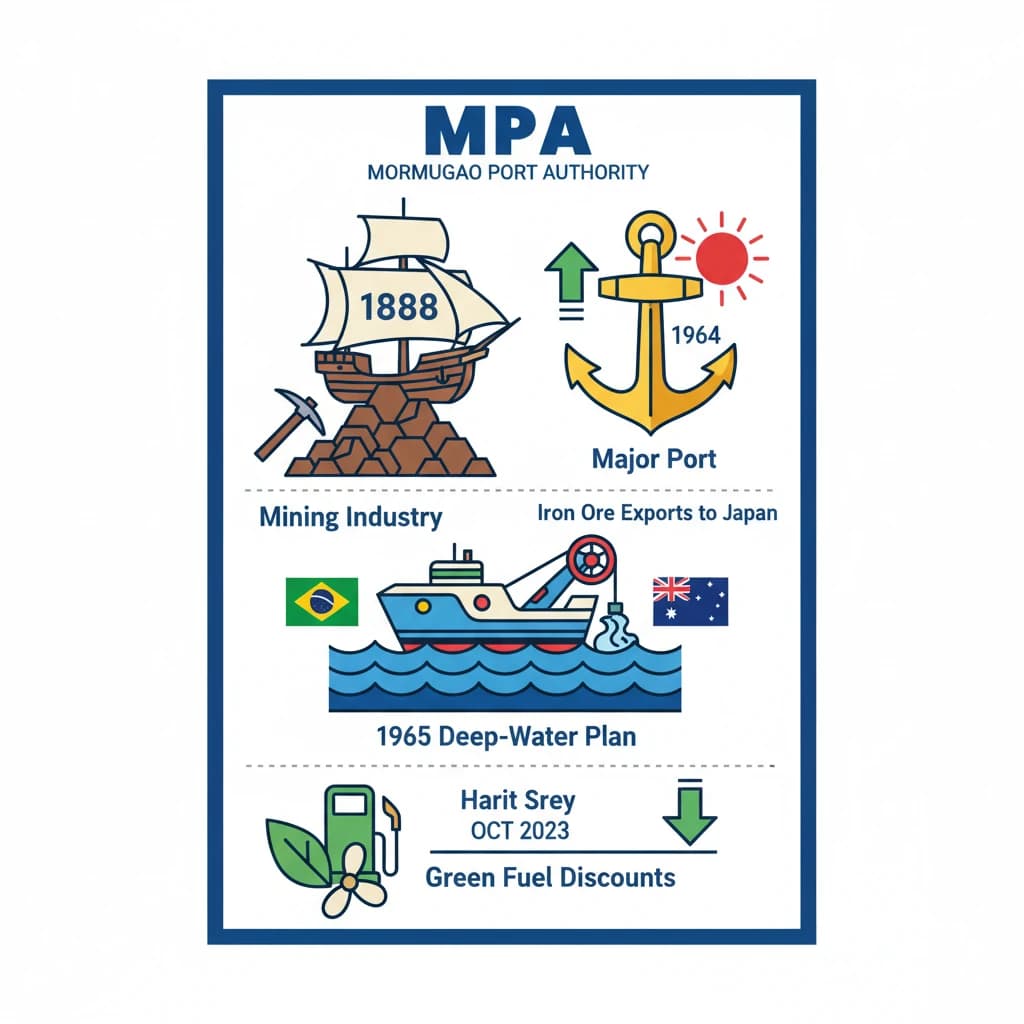
🧠 Memory Techniques
98% Verified Content
📚 Reference Sources
•Official website of Mormugao Port Authority (for Harit Srey details)
•Ministry of Ports, Shipping and Waterways, Government of India publications