Loading page, please wait…
Need of Reforms in Tea Industry - UPSC Economy
What is Need of Reforms in Tea Industry in UPSC Economy?
Need of Reforms in Tea Industry is a key topic under Economy for UPSC Civil Services Examination. Key points include: Indian tea production dropped significantly in 2023 (Assam -11%, WB -21%), leading to a 13% domestic price rise.. Extreme weather and climate change are primary causes of production loss, particularly for premium first/second flush teas.. Export prices fell by 4%, indicating declining global competitiveness.. Understanding this topic is essential for both UPSC Prelims and Mains preparation.
Why is Need of Reforms in Tea Industry important for UPSC exam?
Need of Reforms in Tea Industry is a Medium-level topic in UPSC Economy. It is tested in both Prelims (factual MCQs) and Mains (analytical answer writing). Previous year UPSC questions have frequently covered aspects of Need of Reforms in Tea Industry, making it essential for comprehensive IAS preparation.
How to prepare Need of Reforms in Tea Industry for UPSC?
To prepare Need of Reforms in Tea Industry for UPSC: (1) Study the comprehensive notes covering all key concepts on Vaidra. (2) Practice previous year questions on this topic. (3) Connect it with current affairs using daily updates. (4) Revise using key takeaways and mind maps available for Economy. (5) Write practice answers linking Need of Reforms in Tea Industry to related GS Paper topics.
Key takeaways of Need of Reforms in Tea Industry for UPSC
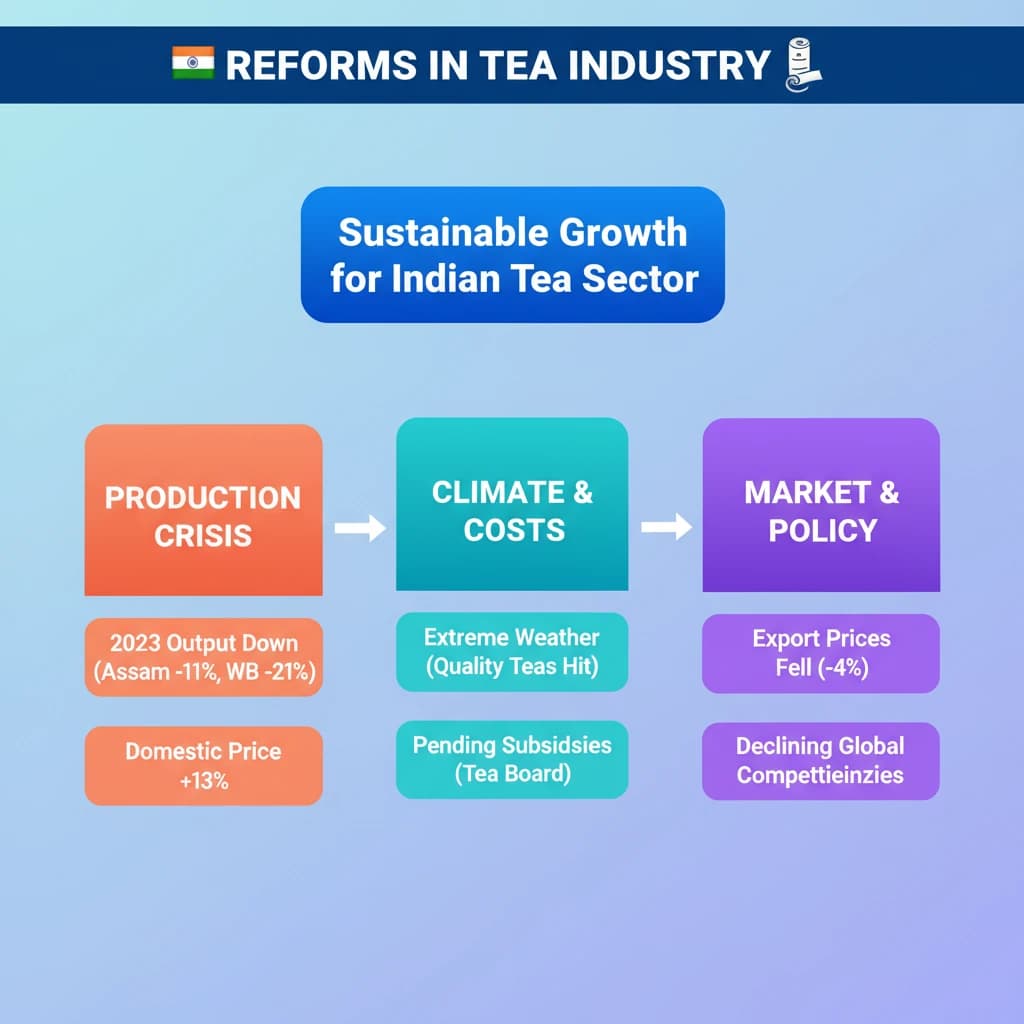
- Indian tea production dropped significantly in 2023 (Assam -11%, WB -21%), leading to a 13% domestic price rise.
- Extreme weather and climate change are primary causes of production loss, particularly for premium first/second flush teas.
- Export prices fell by 4%, indicating declining global competitiveness.
- Pending subsidies from the Tea Board are adding to the financial burden on the industry.
- Reforms are crucial for the sustainable development and long-term viability of the Indian tea sector.
Need of Reforms in Tea Industry
Medium⏱️ 8 min read
economy
📖 Introduction
Introduction to the Need for Reforms
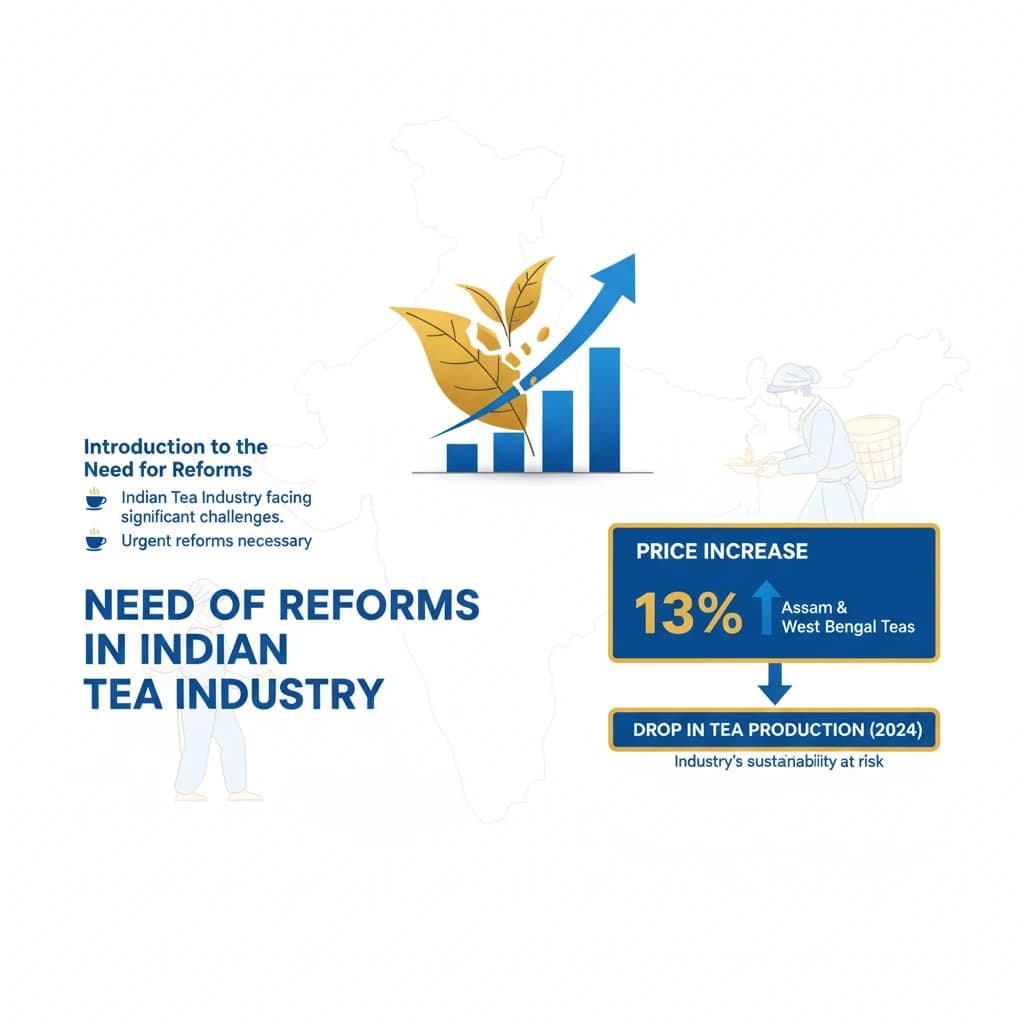
The Indian Tea Industry is currently facing significant challenges, necessitating urgent reforms. A notable price increase of approximately 13% for Assam and West Bengal teas has been observed.
This surge in prices is directly attributed to a substantial drop in tea production in 2024. The industry's sustainability is at risk, highlighting the critical need for strategic interventions.
Key Challenge: The primary driver for reform is the imperative to ensure sustainable development in the face of declining production and market pressures.
Current State of the Indian Tea Industry
The Indian tea sector, a significant contributor to the agricultural economy, is grappling with multiple issues. Recent trends indicate a concerning downturn in key performance indicators.
These challenges collectively impact the profitability and long-term viability of tea plantations and associated livelihoods.
Recent Production and Price Trends
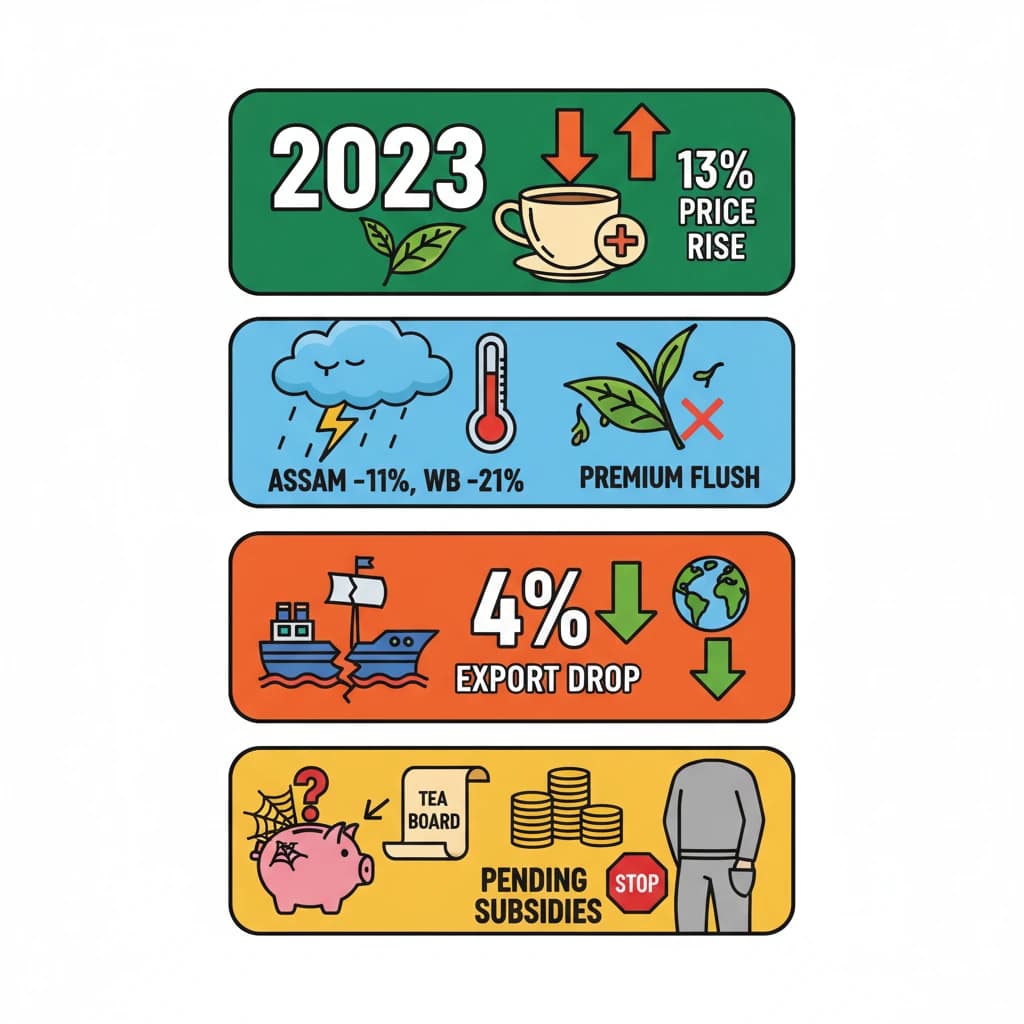
Tea production witnessed a significant decline in 2023. West Bengal experienced a drop of around 21%, while Assam saw an 11% reduction.
Impact of Production Drop: This decrease directly led to a 13% increase in domestic tea prices, affecting consumers and indicating supply-side stress.
Root Cause: Extreme weather events and broader climate change impacts are identified as major contributors to these production losses, threatening future harvests.
Impact on Premium Products
The crop losses predominantly affected the first and second shower of monsoon teas. These are traditionally considered the best quality teas of the year, commanding premium prices.
The loss of these high-value products severely impacts the industry's overall profitability and cash flows, especially for smaller growers and estates.
Challenges in the Export Market
Despite domestic price increases, the export market for Indian tea has shown a discouraging trend. Export prices have fallen by 4% this year, indicating a loss of competitiveness.
This decline in export value further strains the financial health of the industry, which relies on international markets for a significant portion of its revenue.
Financial Burden: Pending Subsidies
The industry is facing additional financial pressure due to pending subsidies from the Tea Board. These subsidies are crucial for developmental work carried out by estates in recent years.
Financial Strain: The non-receipt of these due funds has exacerbated the financial burden on tea growers, particularly during a period of reduced production and profitability.
Global Tea Landscape
Understanding India's position requires a look at global statistics. The global tea market is substantial, with significant production and consumption figures.
Global Tea Statistics (2022):
- Total Global Production: 6,478 million kg
- Global Tea Consumption: 6,209 million kg
UPSC Insight: Questions on the Tea Industry often link to agricultural policy, climate change impacts on crops, international trade, and the role of commodity boards like the Tea Board of India. Be prepared to discuss challenges and potential solutions.
💡 Key Takeaways
- •Indian tea production dropped significantly in 2023 (Assam -11%, WB -21%), leading to a 13% domestic price rise.
- •Extreme weather and climate change are primary causes of production loss, particularly for premium first/second flush teas.
- •Export prices fell by 4%, indicating declining global competitiveness.
- •Pending subsidies from the Tea Board are adding to the financial burden on the industry.
- •Reforms are crucial for the sustainable development and long-term viability of the Indian tea sector.
🧠 Memory Techniques
95% Verified Content
📚 Reference Sources
•General knowledge of Indian economy and agriculture