Loading page, please wait…
Omnibus SRO Restrictions - UPSC Economy
What is Omnibus SRO Restrictions in UPSC Economy?
Omnibus SRO Restrictions is a key topic under Economy for UPSC Civil Services Examination. Key points include: RBI's Omnibus SRO Framework standardises self-regulation for all its Regulated Entities.. The framework sets common objectives, governance, and eligibility for SROs, with RBI retaining sector-specific powers.. SROs leverage industry expertise for oversight, compliance, and consumer protection.. Understanding this topic is essential for both UPSC Prelims and Mains preparation.
Why is Omnibus SRO Restrictions important for UPSC exam?
Omnibus SRO Restrictions is a Medium-level topic in UPSC Economy. It is tested in both Prelims (factual MCQs) and Mains (analytical answer writing). Previous year UPSC questions have frequently covered aspects of Omnibus SRO Restrictions, making it essential for comprehensive IAS preparation.
How to prepare Omnibus SRO Restrictions for UPSC?
To prepare Omnibus SRO Restrictions for UPSC: (1) Study the comprehensive notes covering all key concepts on Vaidra. (2) Practice previous year questions on this topic. (3) Connect it with current affairs using daily updates. (4) Revise using key takeaways and mind maps available for Economy. (5) Write practice answers linking Omnibus SRO Restrictions to related GS Paper topics.
Key takeaways of Omnibus SRO Restrictions for UPSC
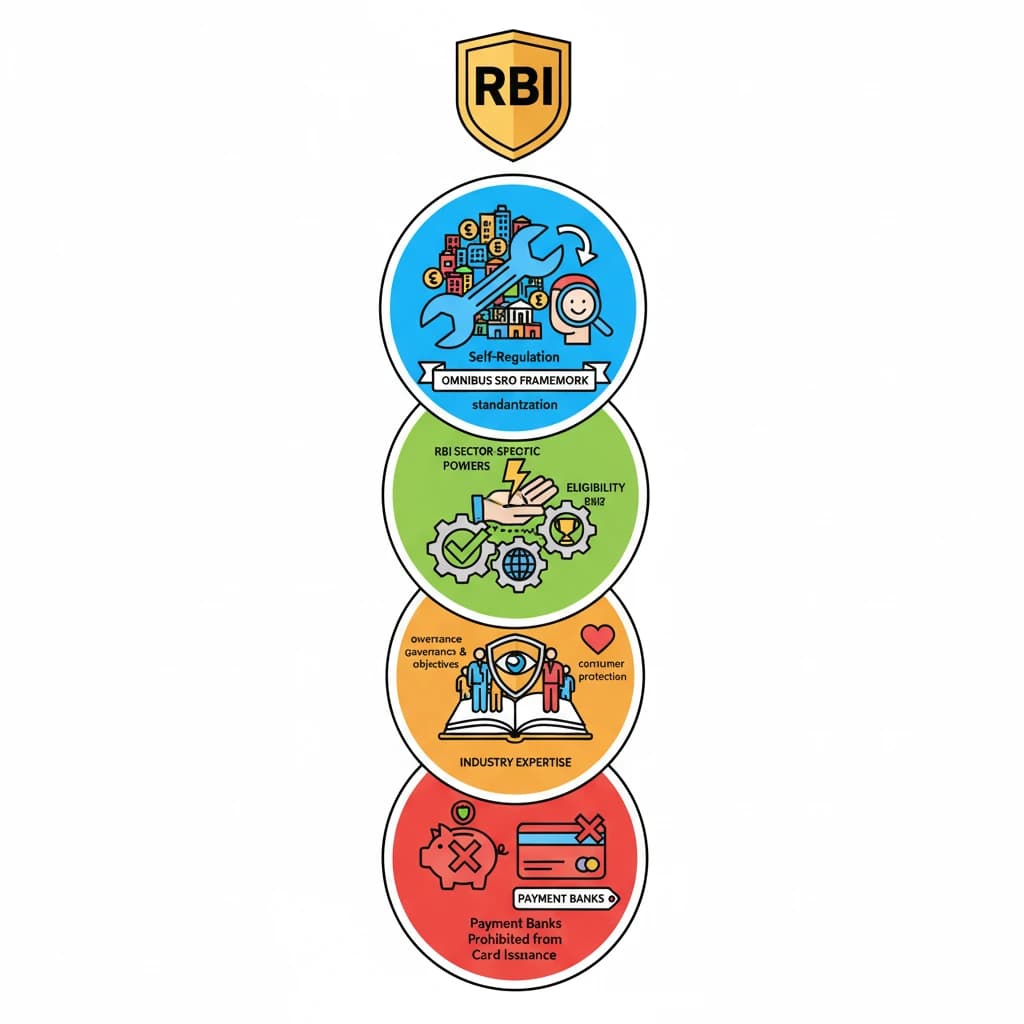
- RBI's Omnibus SRO Framework standardises self-regulation for all its Regulated Entities.
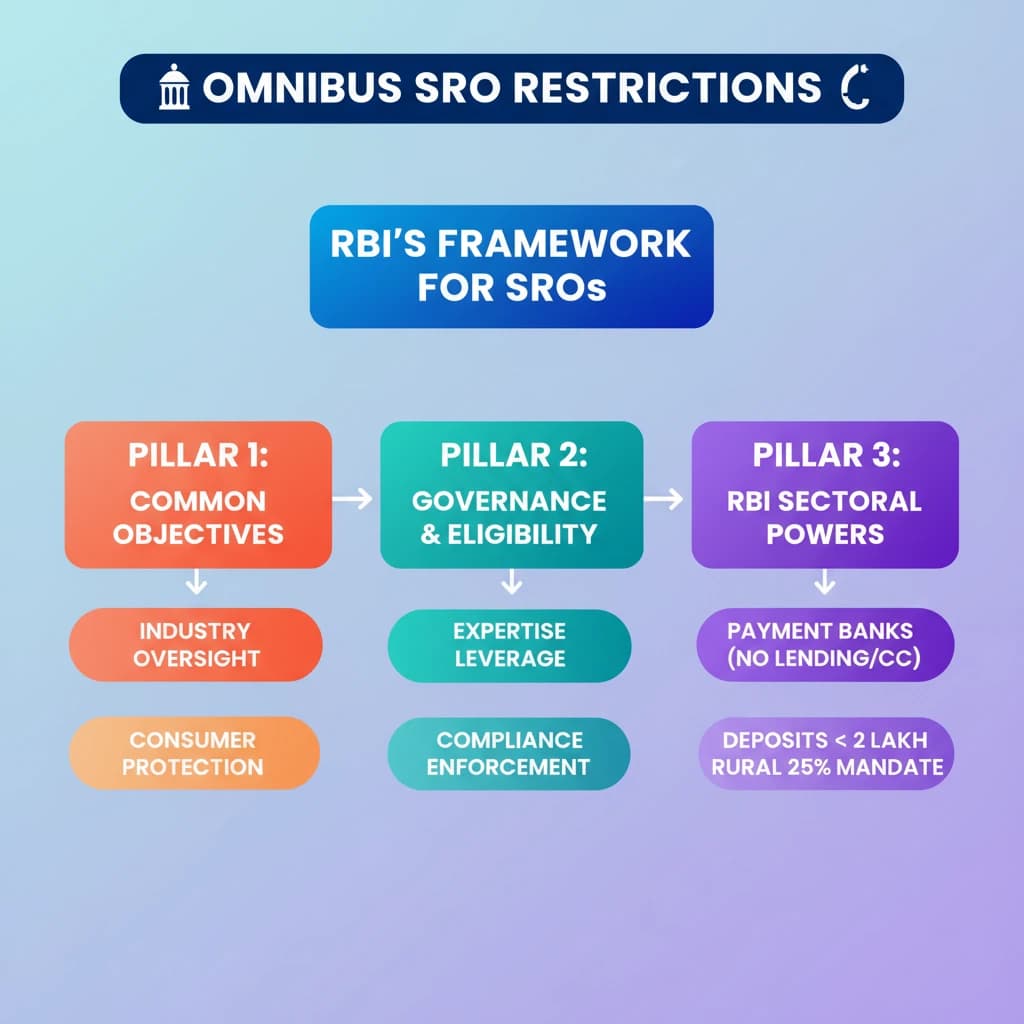
- The framework sets common objectives, governance, and eligibility for SROs, with RBI retaining sector-specific powers.
- SROs leverage industry expertise for oversight, compliance, and consumer protection.
- Payment Banks are RBI-regulated entities prohibited from lending and credit card issuance.
- Payment Banks focus on deposits (up to Rs 2 lakh), remittances, and digital payments, with a 25% rural outreach mandate.
Omnibus SRO Restrictions
Medium⏱️ 8 min read
economy
📖 Introduction
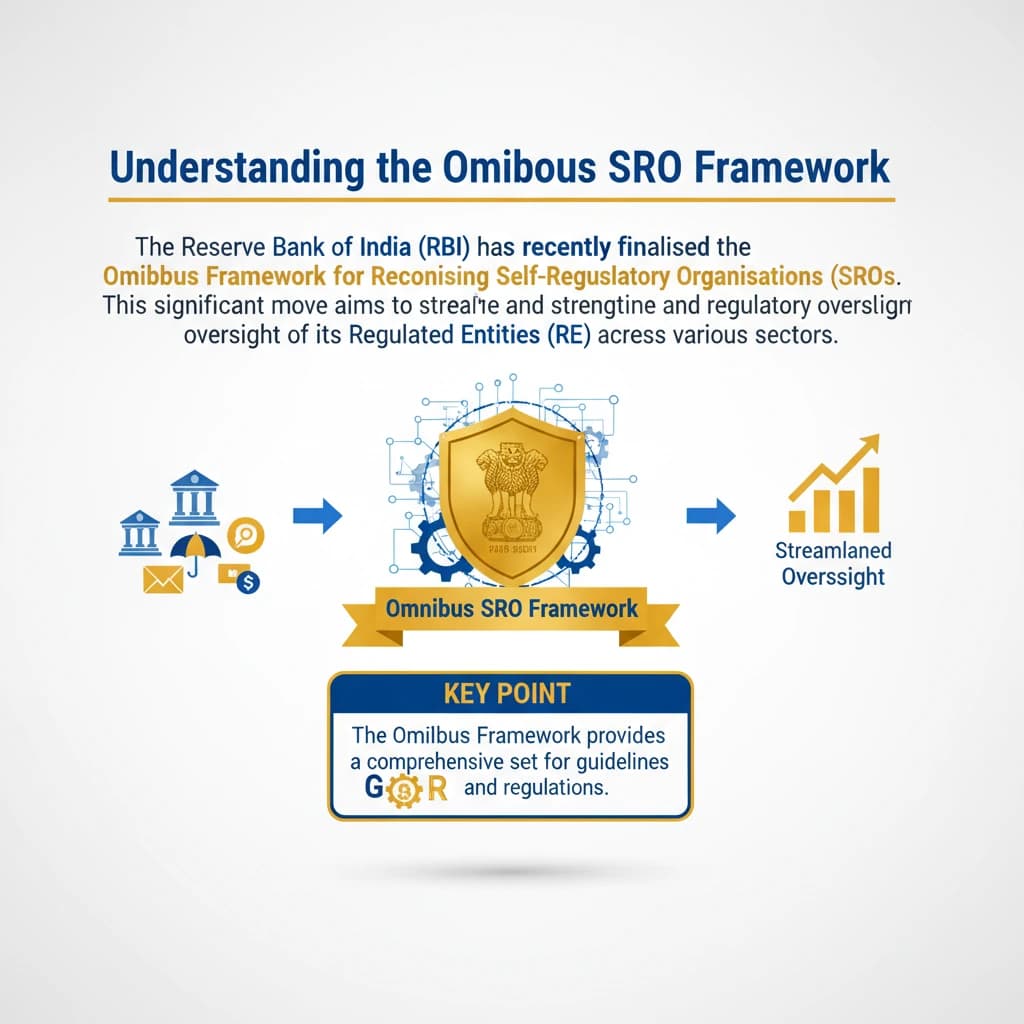
Understanding the Omnibus SRO Framework
The Reserve Bank of India (RBI) has recently finalised the Omnibus Framework for Recognising Self-Regulatory Organisations (SROs). This significant move aims to streamline and strengthen the regulatory oversight of its Regulated Entities (RE) across various sectors.
The Omnibus Framework provides a comprehensive set of guidelines and regulations. Its primary goal is to facilitate a coordinated and integrated approach to regulatory oversight, while also allowing for necessary sector-specific guidelines.
Core Components of the SRO Framework
The framework establishes common objectives, functions, eligibility criteria, and governance standards for all SROs. These standards apply universally, irrespective of the specific sector an SRO operates within, ensuring a baseline of quality and integrity.
It also meticulously defines the membership criteria and terms for entities wishing to join an SRO. While these represent the minimum requirements set by the RBI, recognised SROs are actively encouraged to develop and implement their own best practices, fostering continuous improvement.
The Reserve Bank retains the flexibility to impose sector-specific additional conditions. These conditions will be specified when the RBI invites applications for the recognition of SROs for particular segments of the financial market.
Payment Banks: An Example of RBI's Regulated Entities
Payment Banks are a specific category of Regulated Entities under the RBI's purview. They operate with a distinct set of restrictions and permitted activities, designed to promote financial inclusion while managing risks.
Prohibited Services for Payment Banks
Payment Banks are explicitly prohibited from conducting lending operations. This means they cannot provide loans or advances to individuals or businesses. Additionally, they are restricted from issuing credit cards.
Due to these prohibitions on lending, Payment Banks are also exempt from the Priority Sector Lending (PSL) regulations. These regulations typically mandate traditional banks to lend a certain percentage of their funds to specific sectors like agriculture, education, and small businesses.
Rural Outreach Requirements for Payment Banks
To ensure broader financial inclusion, Payment Banks have a mandatory rural outreach requirement. At least 25% of a Payment Bank’s physical access points must be established in rural centers.
Major Activities Performed by Payment Banks
- Accepting Deposits: They can accept deposits from individuals and small businesses. The current limit is set at Rs 2 lakh per account.
- Remittance Services: Facilitating domestic money transfers and providing efficient remittance services.
- Card Issuance: Issuing ATM/Debit cards, prepaid payment instruments (PPIs), and other electronic payment methods.
- Internet Banking: Offering comprehensive internet banking services, including online fund transfers and bill payments.
UPSC Insight: Understanding the distinct operational model of Payment Banks and the rationale behind the Omnibus SRO Framework is crucial for GS-III (Economy) and GS-II (Governance). Focus on their role in financial inclusion and regulatory architecture.
💡 Key Takeaways
- •RBI's Omnibus SRO Framework standardises self-regulation for all its Regulated Entities.
- •The framework sets common objectives, governance, and eligibility for SROs, with RBI retaining sector-specific powers.
- •SROs leverage industry expertise for oversight, compliance, and consumer protection.
- •Payment Banks are RBI-regulated entities prohibited from lending and credit card issuance.
- •Payment Banks focus on deposits (up to Rs 2 lakh), remittances, and digital payments, with a 25% rural outreach mandate.
🧠 Memory Techniques
98% Verified Content
📚 Reference Sources
•Reserve Bank of India (RBI) Notifications and Circulars (Omnibus Framework for Recognising Self-Regulatory Organisations for its Regulated Entities)
•Reports of the Committee on Comprehensive Financial Services for Small Businesses and Low-Income Households (Nachiket Mor Committee)