Loading page, please wait…
Origin and Evolution of the Environmental Ship Index (ESI) - UPSC Economy
What is Origin and Evolution of the Environmental Ship Index (ESI) in UPSC Economy?
Origin and Evolution of the Environmental Ship Index (ESI) is a key topic under Economy for UPSC Civil Services Examination. Key points include: The Environmental Ship Index (ESI) initiative began on 1st January 2011.. ESI's database is administered by the International Association of Ports and Harbours (IAPH).. Its core purpose is to identify and reward ships with better-than-standard air emission performance.. Understanding this topic is essential for both UPSC Prelims and Mains preparation.
Why is Origin and Evolution of the Environmental Ship Index (ESI) important for UPSC exam?
Origin and Evolution of the Environmental Ship Index (ESI) is a Medium-level topic in UPSC Economy. It is tested in both Prelims (factual MCQs) and Mains (analytical answer writing). Previous year UPSC questions have frequently covered aspects of Origin and Evolution of the Environmental Ship Index (ESI), making it essential for comprehensive IAS preparation.
How to prepare Origin and Evolution of the Environmental Ship Index (ESI) for UPSC?
To prepare Origin and Evolution of the Environmental Ship Index (ESI) for UPSC: (1) Study the comprehensive notes covering all key concepts on Vaidra. (2) Practice previous year questions on this topic. (3) Connect it with current affairs using daily updates. (4) Revise using key takeaways and mind maps available for Economy. (5) Write practice answers linking Origin and Evolution of the Environmental Ship Index (ESI) to related GS Paper topics.
Key takeaways of Origin and Evolution of the Environmental Ship Index (ESI) for UPSC
- The Environmental Ship Index (ESI) initiative began on 1st January 2011.
- ESI's database is administered by the International Association of Ports and Harbours (IAPH).
- Its core purpose is to identify and reward ships with better-than-standard air emission performance.
- It incentivizes the maritime industry to adopt cleaner technologies and operational practices.
- Ports use ESI scores to offer incentives, promoting environmental sustainability in shipping.
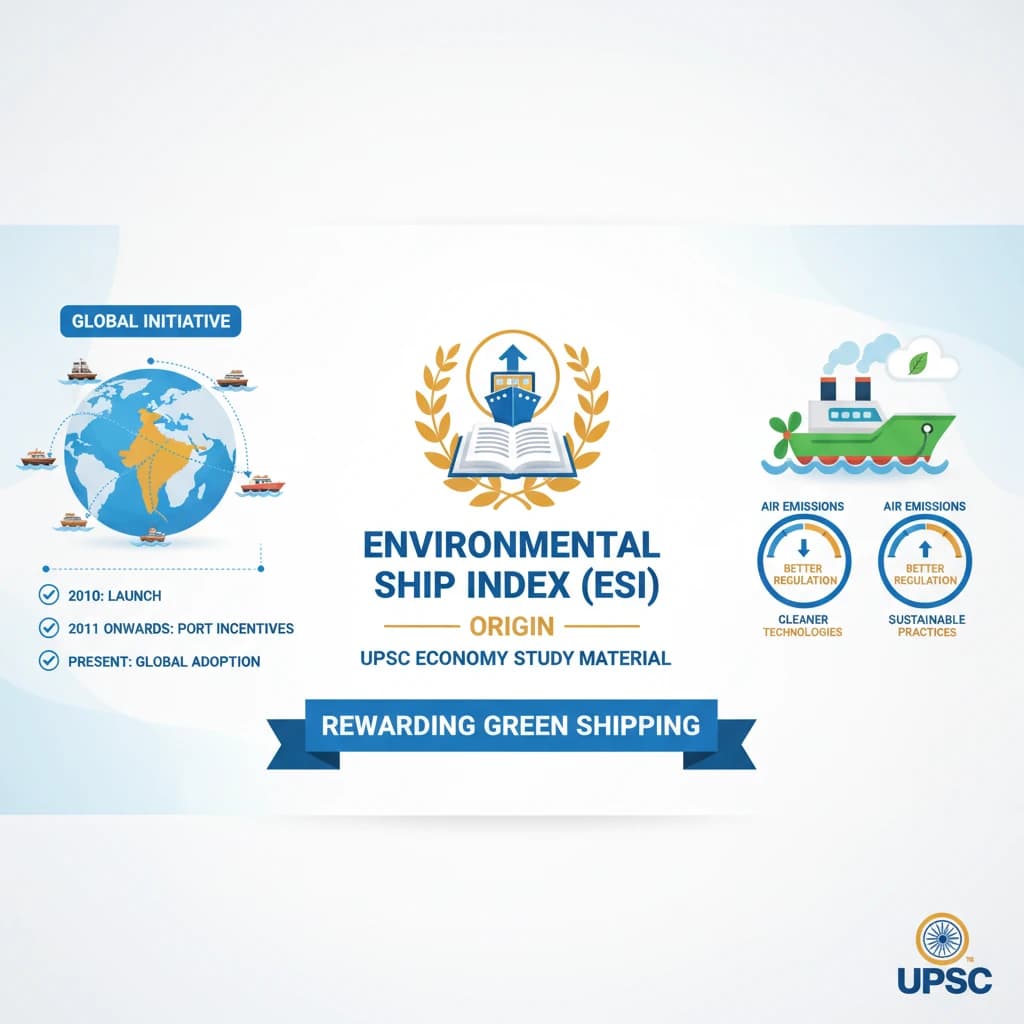
Origin and Evolution of the Environmental Ship Index (ESI)
Medium⏱️ 7 min read
economy
📖 Introduction
Introduction to the Environmental Ship Index (ESI)
The Environmental Ship Index (ESI) is a crucial initiative designed to identify and reward ships that demonstrate superior environmental performance. It specifically targets vessels that perform better than regulatory standards in reducing air emissions.
This index actively encourages the adoption of cleaner shipping technologies and more sustainable operational practices across the global maritime industry.
The primary goal of the ESI is to foster environmental sustainability within the global maritime sector. It achieves this by providing transparency regarding the environmental performance of individual ships.
Commencement and Administration of ESI
The ESI Initiative officially commenced its operations on 1st January 2011. This launch marked a significant global effort to incentivize greener shipping practices.
Since its inception, the comprehensive database for the Environmental Ship Index has been under the expert administration of the International Association of Ports and Harbours (IAPH).
The IAPH, a leading global trade association for ports, plays a vital role in managing the ESI database. This ensures its integrity, broad adoption, and consistent application among ports and shipping lines worldwide.
Purpose and Environmental Impact
The ESI provides a quantifiable measure of a ship's environmental performance. It assesses emissions related to nitrogen oxides (NOx), sulphur oxides (SOx), and greenhouse gases (GHG). Additionally, it considers the vessel's capability for shore power connection.
By highlighting and rewarding cleaner vessels, the ESI contributes significantly to reducing air pollution in port areas and mitigating the overall climate impact of maritime transport.
Understanding the ESI is crucial for UPSC aspirants, as it directly relates to environmental governance, sustainable development, and international cooperation in maritime transport. This topic often appears in GS Paper III (Environment & Economy).
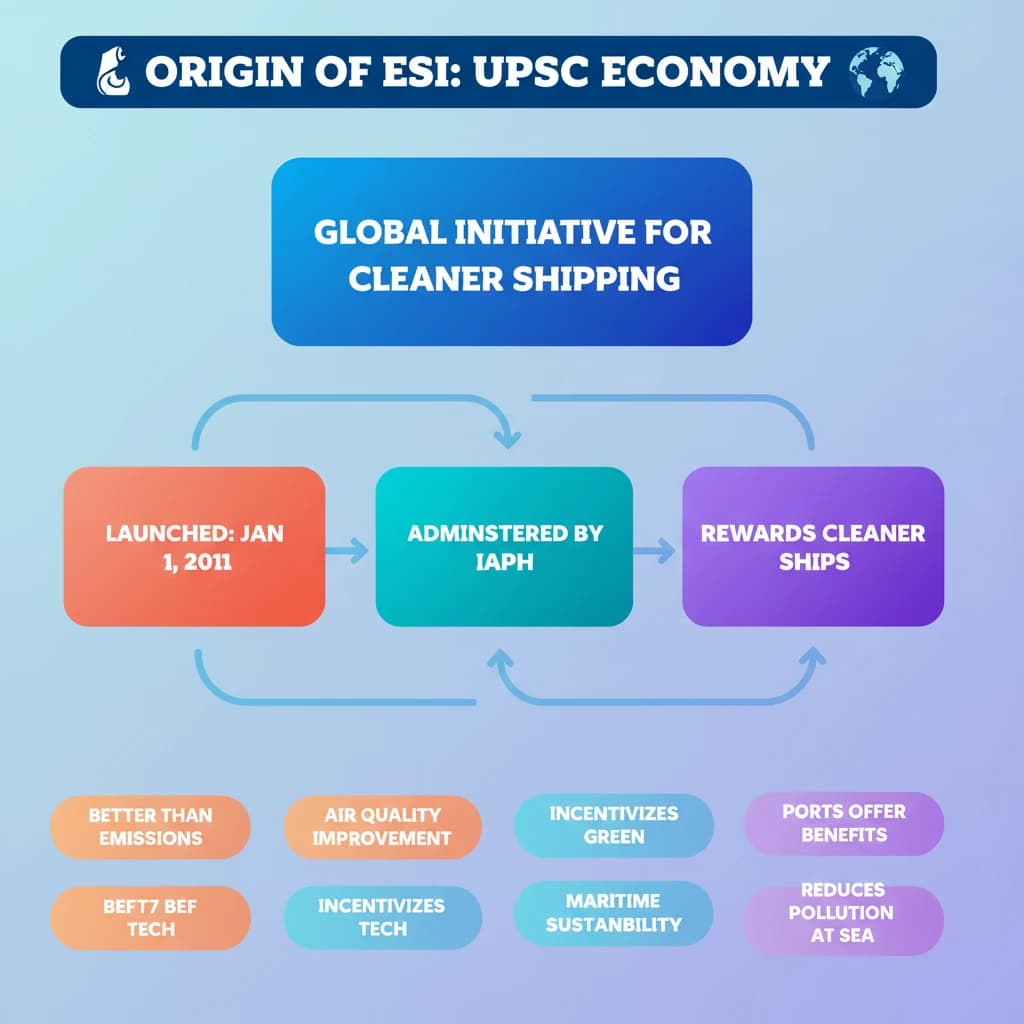
💡 Key Takeaways
- •The Environmental Ship Index (ESI) initiative began on 1st January 2011.
- •ESI's database is administered by the International Association of Ports and Harbours (IAPH).
- •Its core purpose is to identify and reward ships with better-than-standard air emission performance.
- •It incentivizes the maritime industry to adopt cleaner technologies and operational practices.
- •Ports use ESI scores to offer incentives, promoting environmental sustainability in shipping.
🧠 Memory Techniques

95% Verified Content
📚 Reference Sources
•International Association of Ports and Harbours (IAPH) Official Website (for ESI details)